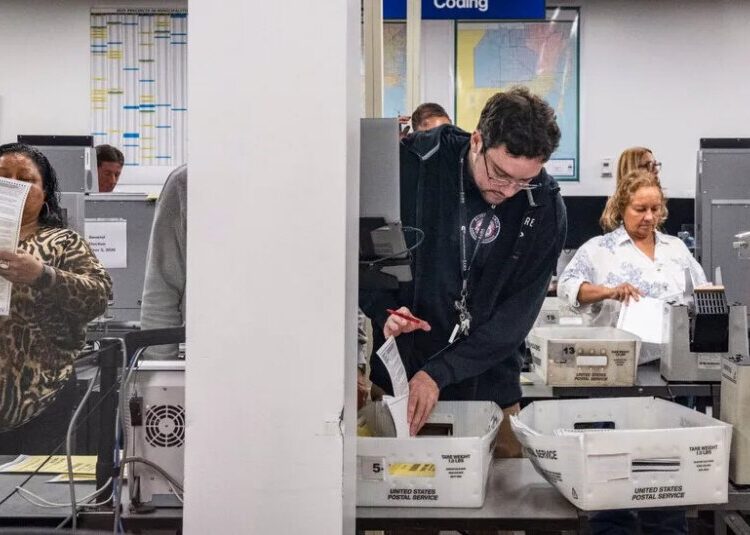
The Nov. 3 midterm elections are already groundbreaking.
It’s the most expensive election cycle in U.S. history in terms of political ad spending, with more than $11 billion expected to be spent, according to analysis firm AdImpact. States have redrawn congressional maps between censuses at a rate the National Conference of State Legislatures says has not been seen since the 1800s, as parties try to secure victories. And Donald Trump has an historically low approval rating for a President heading into the midterms.
This election is also set to see massive turnover on Capitol Hill, with dozens of members of Congress resigning, retiring, or seeking other office.
Read More: Republican Panic Sets In Over Prospects of a Massive Blue Wave
Depending on the results, it could see a number of identity barriers broken, too. A record 26 women are vying for Governor posts across the country, according to Rutgers University’s Center for American Women and Politics. A handful of candidates for Congress could also become national historic firsts if they win.
Here’s who to watch out for.
First Black Speaker of the House?
Rep. Joseph Rainey of South Carolina is believed to be the first Black American elected to the U.S. House in 1870. He also was the first Black American to preside over the House of Representatives—albeit temporarily—during a debate on an appropriations bill providing for the management of Native American reservations in 1874.
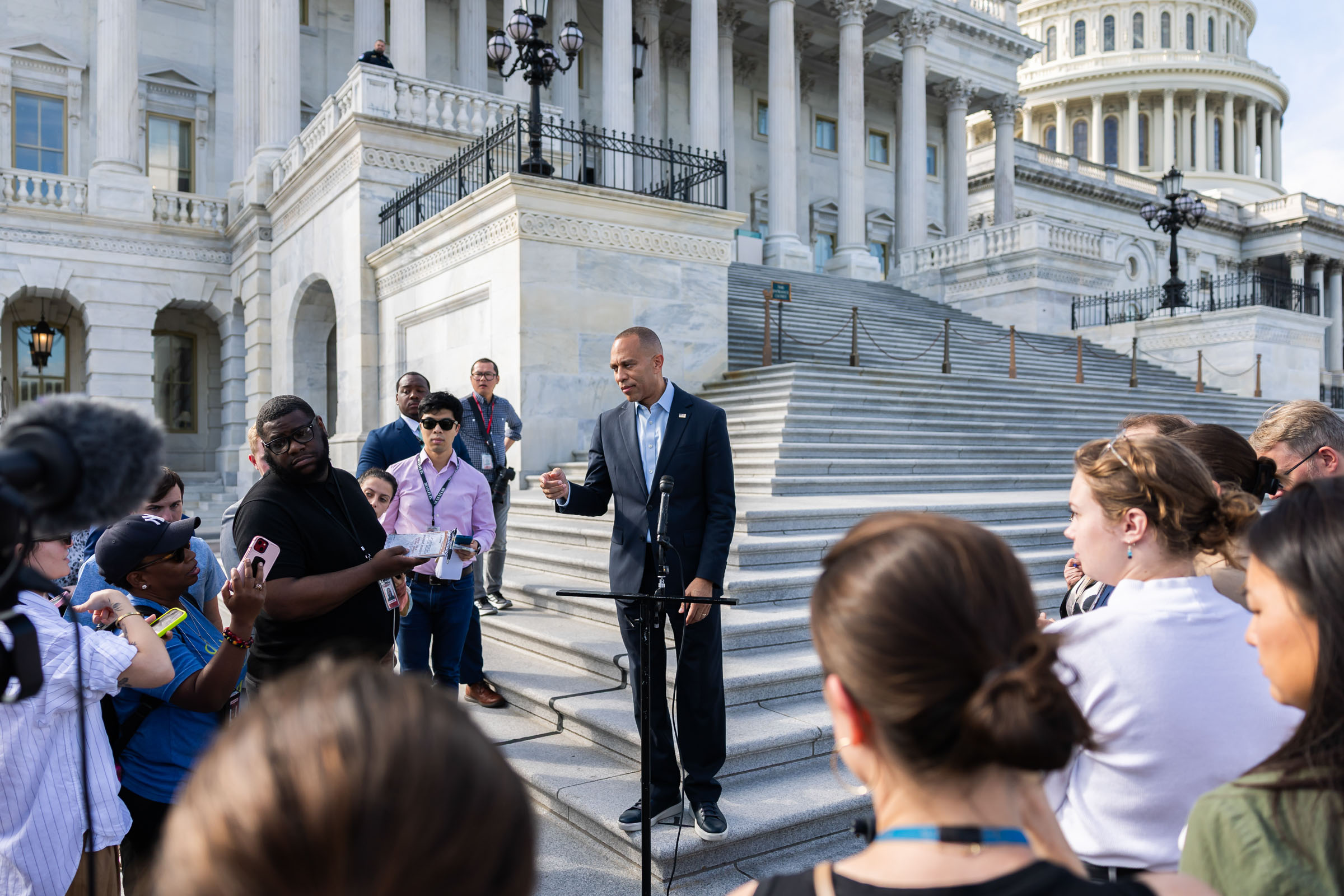
But no Black person has served as Speaker of the House. That could change if an anticipated blue wave in November gives Democrats the majority. House Minority Leader Hakeem Jeffries has broad support in the New York congressional district he represents and is on track for re-election in a race against Republican opponent Lewis Mizrahi that is widely considered uncompetitive. Jeffries, who served in Congress for nearly 14 years, was elected unopposed in 2022 as House Democratic Leader, succeeding Speaker Emerita Nancy Pelosi and making him the first Black leader of a major political party in Congress. But the path to the speakership isn’t guaranteed, as the center-left Jeffries may have to unite an ideologically fractious Democratic caucus.
First Muslim Senator?
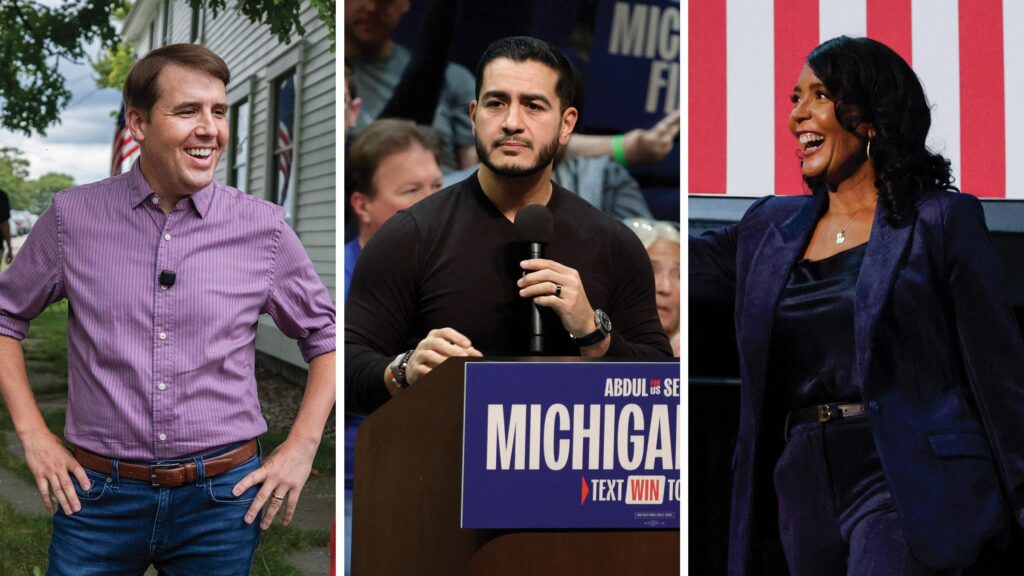
Michigan Democrat Abdul El-Sayed, a former local public health director and podcaster who has never held elected public office, could become the first Muslim U.S. Senator if he beats Republican candidate Mike Rogers. El-Sayed leads, according to public opinion polling, though Michigan electoral results can be unpredictable.
El-Sayed has run on a progressive platform, including advocating for Medicare for All and ending U.S. military funding to Israel, which has ruffled some moderate and Jewish Democrats. His identity has also become a campaign target for Republicans: Rogers and Donald Trump have tried to link El-Sayed and his family to the transnational extremist group Muslim Brotherhood, and El-Sayed has been pressured to reaffirm his commitment to the Constitution over his faith, which defenders have said reflects the Islamophobia he faces.
“I’m not running to be the first Muslim anything,” El-Sayed told CNN in August. “I just want to be a really, really great senator for my state.”
Read More: ‘We’re Proving It Works’: Inside the DSA’s Push to Remake the Democratic Party
First openly gay male Senator?
The first openly LGBT person elected to the U.S. Senate was Sen. Tammy Baldwin (D, Wis.), who was elected in 2012, but Chris Pappas, a Democratic House member who has represented New Hampshire’s 1st congressional district since 2019, could become the first out gay man serving in the U.S. Senate. Pappas, 46, married his partner, lawyer Vann Bentley, in 2023. He is also a vocal LGBT rights advocate in Congress. “I’m not thinking much about history right now,” Pappas told the New York Times in an interview. “I’m really thinking every day about the struggles of New Hampshire.”
Pappas is running against Republican nominee John E. Sununu, a former U.S. Senator seeking to reclaim his seat from retiring Sen. Jeanne Shaheen. Pappas leads in public opinion polling. While Republicans have largely not made Pappas’ sexuality a focus of their political campaigns, the GOP has alleged that Pappas failed to disclose a relationship with a corporate lobbyist.
First Korean-American governor?
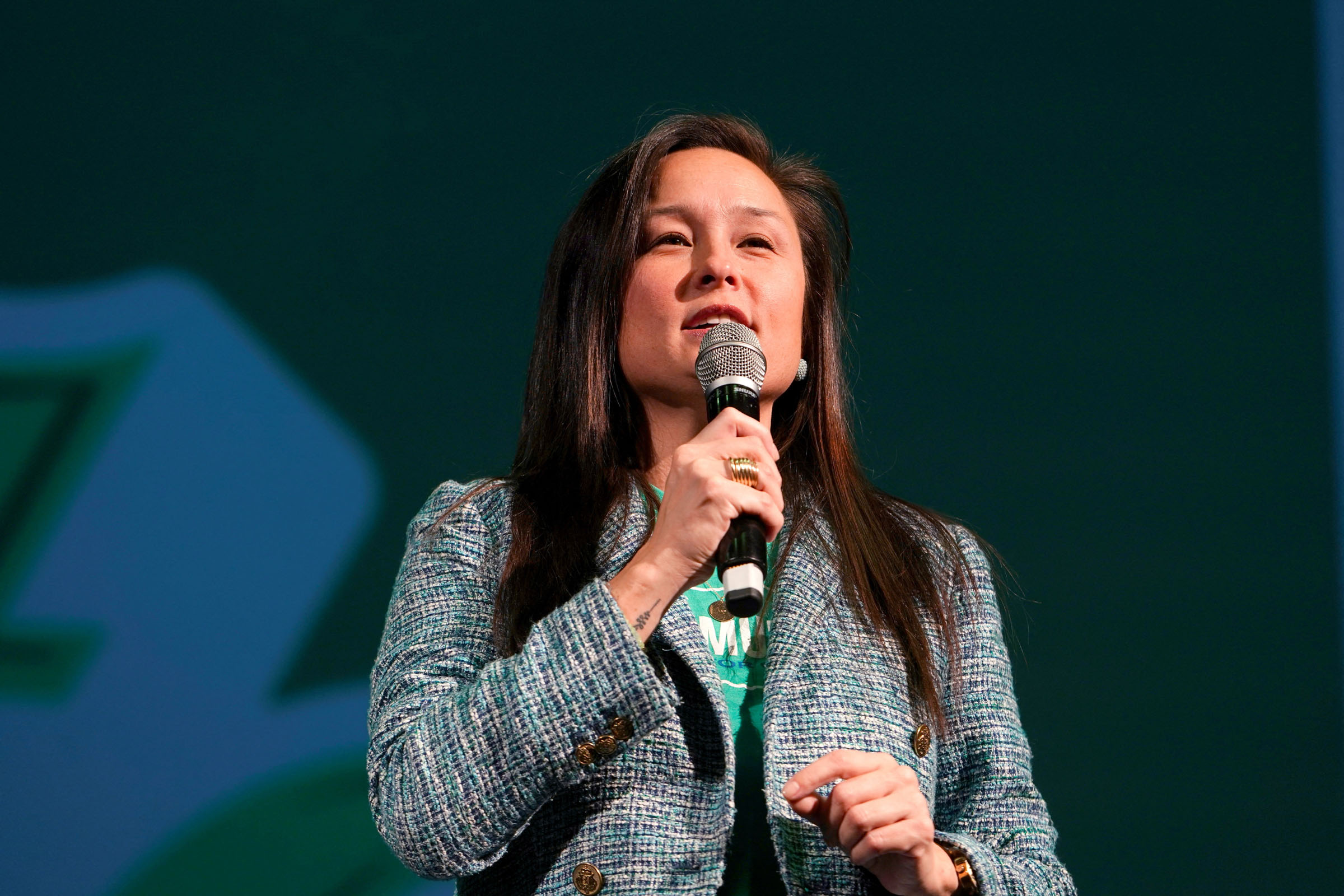
Cyndi Munson, a Democrat, was the first Asian-American woman elected to Oklahoma’s state legislature and currently serves as the lower chamber’s minority leader. She now aims to replace the term-limited Republican Gov. Kevin Stitt and become the first Korean-American governor in the U.S., though a recent poll shows her Trump-backed opponent, Republican former state senator Mike Mazzei, leading.
Read More: The 7 Key Governor Races to Watch in the Midterm Elections
First Black female governors?
Keisha Lance Bottoms is the Democratic nominee running against Republican billionaire Rick Jackson to replace the term-limited Georgia Republican Gov. Brian Kemp. Polls have been mixed and most forecasters have rated the race a toss-up.
If Bottoms wins, she would not only become the state’s first Black and first female governor; she could also become one of the U.S.’s first Black female governors, an honor she might share with Minnesota gubernatorial candidate Lisa Demuth. Bottoms told ABC News in October that the potential milestone is “much more personal” for her. “My family goes back at least five generations in Georgia,” she said. “I’m a descendant of slaves on both sides.” Stacey Abrams, the former minority leader of Georgia’s state House, previously tried to become the first Black female governor, but fell short in the 2018 and 2022 elections.
Bottoms was the mayor of Atlanta from 2018 to 2022, presiding during the COVID-19 pandemic, and shocked the state’s political establishment when she said she would not seek re-election. She has faced criticism from Jackson and others for walking away from the job. She since served in the Biden Administration in various roles, including as a senior adviser and leading the White House Office of Public Engagement.
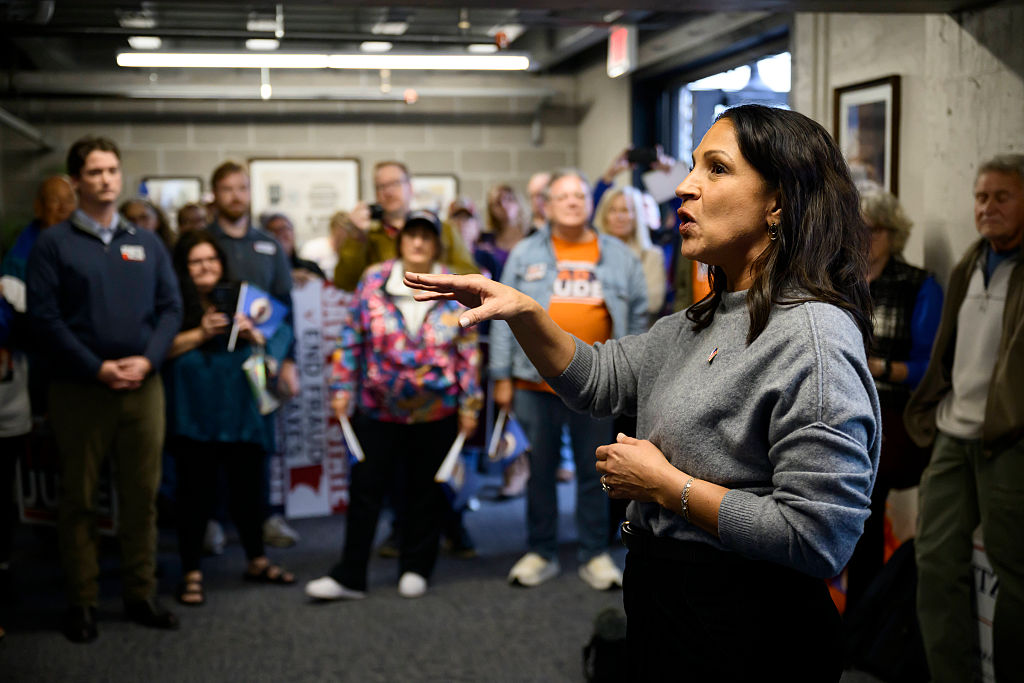
In Minnesota, whoever wins the race for governor will break the state’s glass ceiling, as no woman has ever been elected to lead the state. Senator Amy Klobuchar is the Democratic nominee, while Republicans nominated Demuth, a state representative since 2018 and speaker of the state House since 2025.
“I look forward to serving—if given the opportunity, your trust in me—as the first female governor here in the state of Minnesota and the first Black woman to serve as governor of any state in the United States,” Demuth said in her mid-October debate with Klobuchar. Polls, however, show voters leaning toward Klobuchar, as Demuth faces stiff political headwinds from being associated with Trump, who has frequently attacked Minnesota.
First Native American female governors?

In 2018, Deb Haaland made history as one of the first Native American women, alongside Sharice Davids, to be elected to Congress. Haaland is a member of the Laguna Pueblo, a federally recognized tribe in New Mexico that has existed longer than the U.S. has. As a congresswoman, she focused on environmental justice, climate change, and missing and murdered indigenous women. In 2021, Haaland became the Biden Administration’s Interior Secretary. Haaland is now running to become governor of New Mexico, and she could potentially make history again, this time as one of the first Native American women to lead any state.
But to do so, Haaland, a Democrat, must defeat her Republican opponent Gregg Hull, who was formerly the mayor of Rio Rancho. So far, polls show Haaland leading.
In Alaska, Bernadette Wilson, who is of Aleut heritage, is a Republican candidate for governor. Wilson, a conservative activist and former radio host, has the backing of President Trump, but veteran Sen. Lisa Murkowski, a moderate Alaska Republican, and her father, former Gov. Frank Murkowski, both endorsed Wilson’s Democratic opponent, Jonathan Kreiss-Tomkins, whom Wilson trails in the polls. Forecasters, however, rate the race as a toss-up.
First Native American female Senators?
At least four Native American men have served in the U.S. Senate, but no Native American woman ever has—yet.
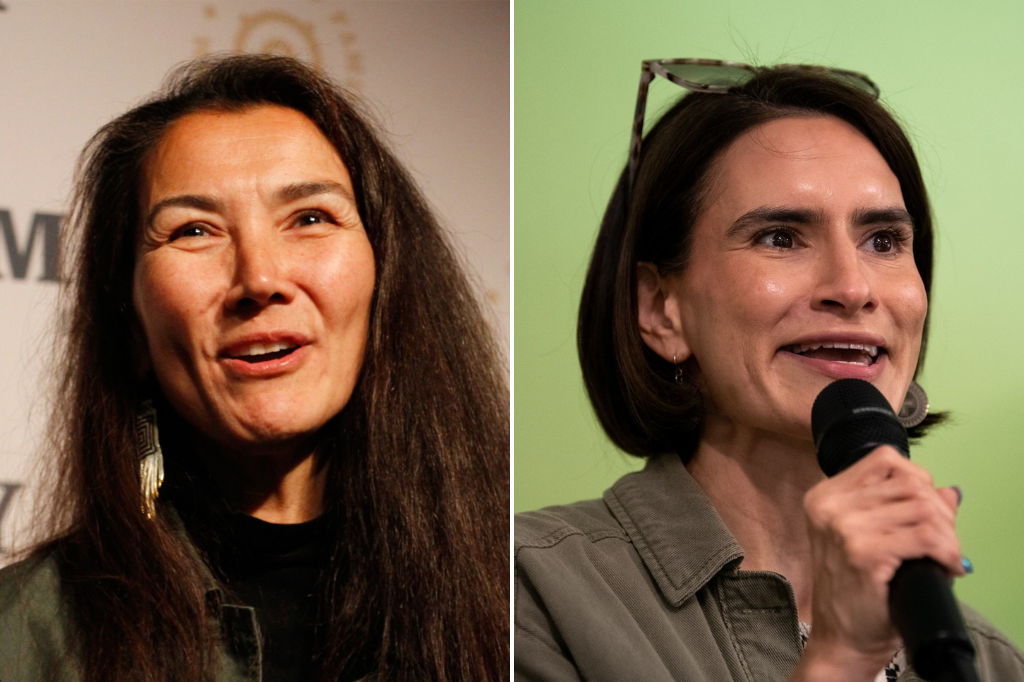
When Yup’ik Alaska Native Mary Peltola was first elected to the U.S. House in an August 2022 special election to replace the late Representative Don Young, she became the first Alaska Native member of Congress and the first woman to represent Alaska in the chamber. If she beats incumbent Republican Sen. Dan S. Sullivan—and polls show her slightly leading—she could become the first Alaska Native Senator as well as one of the first Native American women in the Senate.
Read More: Alaska Governor Orders Probe Into Peltola Campaign Over Alleged Spoiler Scheme
In Minnesota, Democratic Lt. Gov. Peggy Flanagan is running for the Senate and could also become one of the first Native American women in the chamber. That is, if Flanagan—a member of the White Earth Band of Ojibwe, the largest federally recognized tribe in Minnesota—beats GOP nominee and political newcomer Michele Tafoya. Polls show Flanagan leading.
“I’m not running to make history, but it’s about damn time there was a Native American woman serving in the United States Senate,” Flanagan said on the campaign trail in October. “And she might as well be from White Earth.”
The post 10 Candidates Who Could Make History in the Midterms appeared first on TIME.