James Biddle would have eaten at Wagshal’s if the chicken hadn’t looked warty.
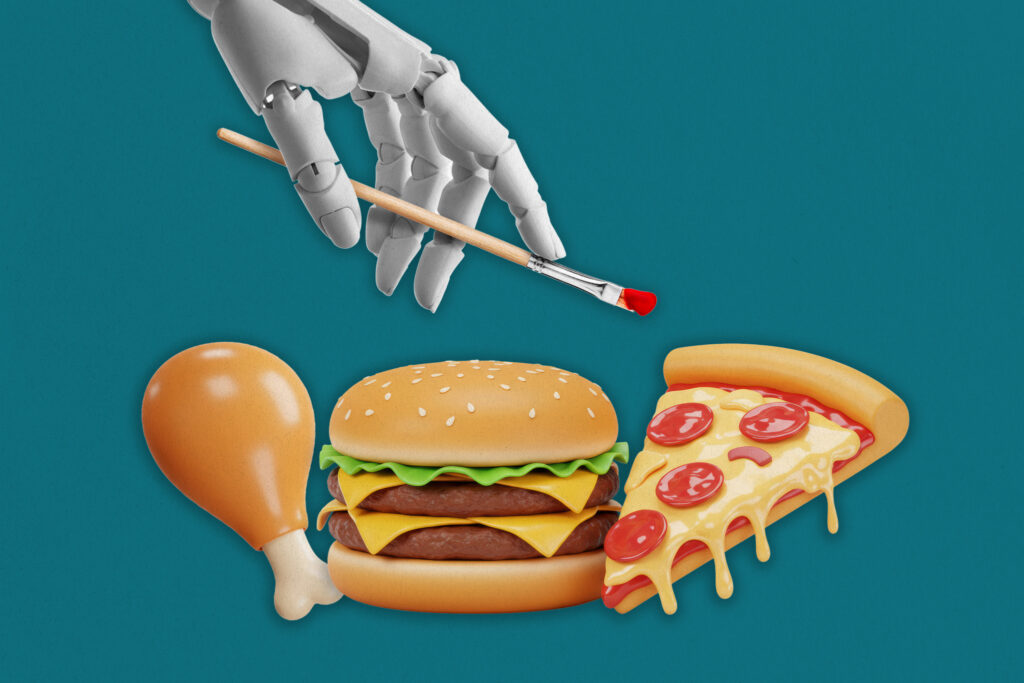
Searching for a quick bite in Northwest Washington this month, he stopped, like generations of Washingtonians before him, at the century-old deli. On the menu screen over the order counter, he saw something that made him pause. The images of pizza, burgers and tenders appeared clearly generated with artificial intelligence.
“What does that mean for the quality of their other operations if the front of their business is like that?” he recalled thinking. “I don’t know if I want to go here anymore.”
He snapped a picture and posted it on Reddit. The ensuing online mob agreed with him — yes, the fried chicken looked strange and bulbous, like “those gourds covered in tumors,” one person wrote.
The post is one of many that have in recent months targeted small businesses and restaurants in D.C. for using artificial intelligence in their marketing, launching virtual debates about what place the technology has within real-life communities.
One of the city’s most famed establishments went the wrong kind of viral over an AI poster showing a questionably leaking breakfast burrito, which one commenter said looked like was “vomiting on you.” An A-frame board outside a local shawarma restaurant at the Wharf made waves online for suspiciously neat stacks of loaded fries topped with what looked to chatters like “tiny eyeballs.” And a popular brunch spot posted an image of someone holding a bag of bagels — with their arm facing the wrong direction. That ended in an internet firestorm, too.
For detractors, it’s about more than some unsightly art.
“It brought up a broader discussion about truth in advertising that I think is really worth talking about in this age of consumer deception and AI slop invading every space we occupy,” Biddle said. “There are a lot of restaurants that are going belly up, and I think people are feeling very defensive over their experience eating in D.C.”
The perceived polish of AI
Bill Fuchs makes sandwiches for a living. He has for over 35 years, since he bought Wagshal’s from a family that operated the D.C. deli for five decades. He’s 78, and admits he might be a little out of touch. But he never expected the kind of hate he received after Biddle posted about his AI menus — which, he said, are meant to be “representations” of the deli’s food.
“Are they exactly the same?” he said. “No. All these things we do are trying to give people an understanding.”
He said he doesn’t see his use of AI as different from the public using it in their daily lives to, say, “find out they need a new garage door.” Sales are down, he said, and the local restaurant industry is facing a brutal stretch. He said he can’t spare the $8,000 per month he used to spend on marketing, platform oversight and content creation. “Do you know how many sandwiches I have to make for that?” he said.
Besides, he noted, there exists a long tradition of exaggerated food advertising. “You honestly believe [ads] on TV are what’s really going on?” he said. “It’s all been edited or orchestrated. And image is important, but at the end of the day, it’s still how things taste.”
Most of all, he wishes people would try the food before they judge, he said. “I want my customers to be happy,” he said, adding he does everything he can to try to make sure they are. “It’s changing the way we do business, the idea that we have to be right 100 percent of the time.”
Jeff Lee, an associate professor of marketing at American University, said he sees why small business owners might feel pulled toward using AI: the perceived polish.
“Part of it might be aspirational, like ‘Oh, now we have the ability to have access to something that can make food look great,’” he said. “But what they’re giving up is that if you start actually creating photos of products that you don’t sell, then that becomes the problem.”
Businesses generating these images tend to use older, free AI models that can give food images an unrealistic quality, such as stray black dots and odd textures. Reactions to the uncanny images tend to be extreme because “we all have to eat,” he said, and the new imagery is “so visceral.”
Modern social media advertising requires not only professional quality but frequency — businesses strengthen their algorithmic success by posting nearly every day. But good posts take time.
“Imagine you created the perfect ad for your cereal, but you used glue in it and it took you five hours to make,” Lee said. “You can’t do that every single day or every other day. It seems that AI is more scalable.”
Most of the negative response, Lee said, comes down to what people expect of their local haunts. Larger companies using AI might seem lazy to consumers, he said, and could create a different kind of backlash. But local businesses are built on trust.
“The smaller ones are taking a hit here because they’re local, we can talk to the owner, they’re human, they’re relatable,” he said. “When they start using AI, all of a sudden it cuts against that feeling of connection and humanness.”
An ‘old-timey business’
Scott Auslander, the general manager at Northwest bakery Bread Furst, comes from what he calls “an old-timey business” — the food and beverage industry. “Not a place where AI is really going to make a huge dent, right?” he said.
Last month, he and his staff made AI posters to promote the sandwiches they were selling at a neighborhood event, printed copies and wheat pasted them around town. They were “just some folks in an office playing with ChatGPT,” Auslander said. He didn’t anticipate the negative reaction.
In response, the bakery hired a content creator and posted photos of its staff with handwritten signs promising not to use AI again. It’s now one of the bakery’s most engaged posts.
Grubb’s Pharmacy in Northeast made a similar apology post after using artificial intelligence to promote its new tea lab. Like Bread Furst’s, the second post got more attention than the first.
“They wouldn’t have gone viral if they didn’t handwrite some signs,” said Charles House, a 40-year-old Petworth resident who has followed the drama. “Being human is what made them go viral and made anyone see the post at all, really.”
In Washington, a town of people willing to burn shoes and start boycotts over companies’ lobbying practices, Lee, the professor, said he is not surprised AI has become a touchpoint.
“We’re having a lot of these conversations around using AI responsibly, and in D.C., we’re talking about data centers,” he said. “All that combined, that’s making this very much a moment where we want to talk about how we’re using AI.”
House, a video producer, said he’s been asked to start using AI in his work and knows it may be unavoidable. He knows that small businesses with limited resources could benefit from some AI usages.
“If they’re using it for their tax forms or to organize their inventory, then whatever,” he said. “But it becomes an issue when they’re replacing something they used to do with a person and presenting a lower quality version to the public.”
Fuchs, Wagshal’s owner, said he used to hire a photographer to take pictures of each menu item. It took a full day to shoot four or five sandwiches, at $200 each, he said. So, for now, he said he’s sticking with AI.
The post Local mom-and-pops are embracing AI food slop, and residents are revolting appeared first on Washington Post.