Oil shipments through the Strait of Hormuz have rebounded in the past few months, as tankers have braved constant Iranian attacks to get their cargo out of the Persian Gulf.
The recovery rests largely on the efforts of an enigmatic South Korean shipping company.
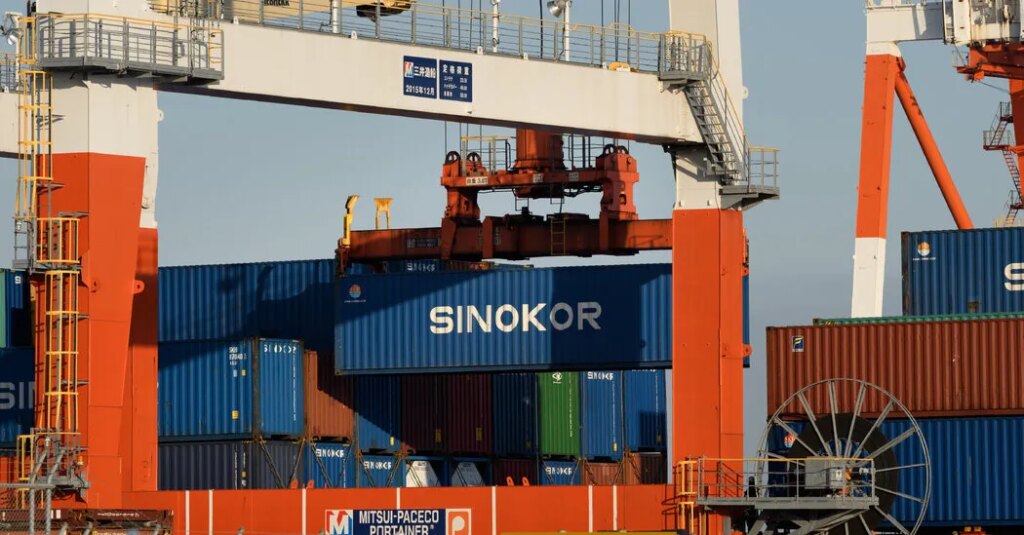
That company, Sinokor, has accounted for about a half of the tanker transits through the strait since the beginning of September, according to Lloyd’s List Intelligence, a maritime analysis firm.
“They’ve played a huge role in getting oil out of Hormuz, no doubt,” said Tomer Raanan, a senior maritime intelligence analyst at Lloyd’s List.
But concentrating so much oil in the hands of one tanker company could be adding to the cost of shipments out of the Middle East and across the world — rates that have already been pushed higher by the greater risk the war has forced on much of the global oil trade.
In an exceptionally well-timed bet, Sinokor, led by a father and son who are little known even in South Korea, began a buying spree in the two months before the United States and Israel attacked Iran at the end of February. It is now, by some counts, the largest operator of supertankers in the world.
While many tankers are tied up shuttling oil through the strait, creating shortages elsewhere, Sinokor’s growth has given it outsize power, said Kristoffer Barth Skeie, an equity analyst specializing in tanker companies for Arctic Securities.
“They have succeeded in cornering the market,” he said.
Sinokor owns 129 very large crude carriers — the industry name for tankers capable of carrying two million barrels of oil — up from 42 in December, according to BRS Shipbrokers.
Sinokor’s chairman, Chung Tae-soon, and his son, Chung Ga-hyun, have kept a low profile in South Korea. His father’s only public role seems to be as the head of the South Korean association that oversees Baduk, the board game also known as Go.
Founded in 1989, Sinokor operated the first container liner service between South Korea and China — a joint venture between South Korean and Chinese entities that started three years before the two nations established diplomatic ties. Chung Tae-soon eventually took full control of the company, according to South Korean media reports.
Employees of Sinokor declined to take calls from a reporter seeking comment from the company.
Sinokor’s dominance of Strait of Hormuz traffic was in part made possible by the U.S. military, which since May has run an extensive operation to shield vessels from Iranian drone and missile attacks. The operation was aimed at neutralizing Iran’s threat to shipping and encouraging tanker operators to come back to the strait.
Many shipping companies have stayed away, but Sinokor and shipping companies controlled by the governments of the United Arab Emirates, Saudi Arabia and Kuwait have returned in earnest.
Many of the journeys that Sinokor is making through the strait are known as ship-to-ship transfers. They work like this: Tankers carry oil through the Strait of Hormuz to the Gulf of Oman, and then transfer it to tankers that travel to the importing countries, mostly in Asia. Some Sinokor ships also sail directly to Asia, according to several analysts.
Despite the great efforts to get crude out, the price of oil remains far higher than before the war. That’s in part because demand for oil remains strong, and because of fears that the United States and Israel will again attack targets in Iran, which might then target Persian Gulf energy facilities.
Even if hostilities cease, companies that own and operate tankers will continue to charge more to get oil out of the gulf, analysts say.
“It’s never going to be back to its prewar days, when shipping through the strait was cheap and easy and everybody did it,” said Rosemary Kelanic, a director at Defense Priorities, a research organization focused on foreign affairs.
The concentration of tankers in the hands of fewer players may have long-term implications for freight rates. Last year, the top three supertanker owners controlled 16 percent of the market, compared with 27 percent today, said John Cotzias, a co-founder of Xclusiv Shipbrokers, a Greek firm.
Veson Nautical, a maritime analysis firm, estimates that Sinokor spent $5.6 billion buying 70 tankers since the start of this year. Sinokor now owns 14 percent of the roughly 940 supertankers in operation. The next-largest owner and manager of very large crude carriers, China Merchants Group, controls about 5 percent of the market.
All along, shipping rates are rising. Tankers chartered for the 15-day run between the Persian Gulf and the Gulf of Oman have surged past $1 million per day, up from about $120,000 a day last year, Mr. Cotzias said.
“I’ve never seen these kind of rates,” he added.
Max Meizlish, a research fellow at the Foundation for Defense of Democracies, a research organization, said, “It seems very clear that this is part of Sinokor’s strategy — that they want to be a major player in setting freight rates.”
Meanwhile, mariners on ships in the Strait of Hormuz are working in dangerous conditions. More than 35 ships were attacked in October, more than in any other month of the war. Iran has struck at least seven Sinokor ships since July, including three in October, and 11 sailors were injured in an attack in July.
The Persian Gulf Strait Authority, a regulatory agency that Iran created in May in an attempt to establish authority over the strait, said last week that vessels belonging to Sinokor had committed the highest number of passage violations in recent months.
Manoj Yadav, the head of the Forward Seamen’s Union of India, said he believed that shipowners had made maximizing profits a priority over ensuring the safety of sailors. Some shipping companies are paying higher wages to those willing to pass through the Strait of Hormuz, but that is not enough to cover the risks, he said.
The post How a Little-Known Company Dominated the Persian Gulf Oil Trade appeared first on New York Times.