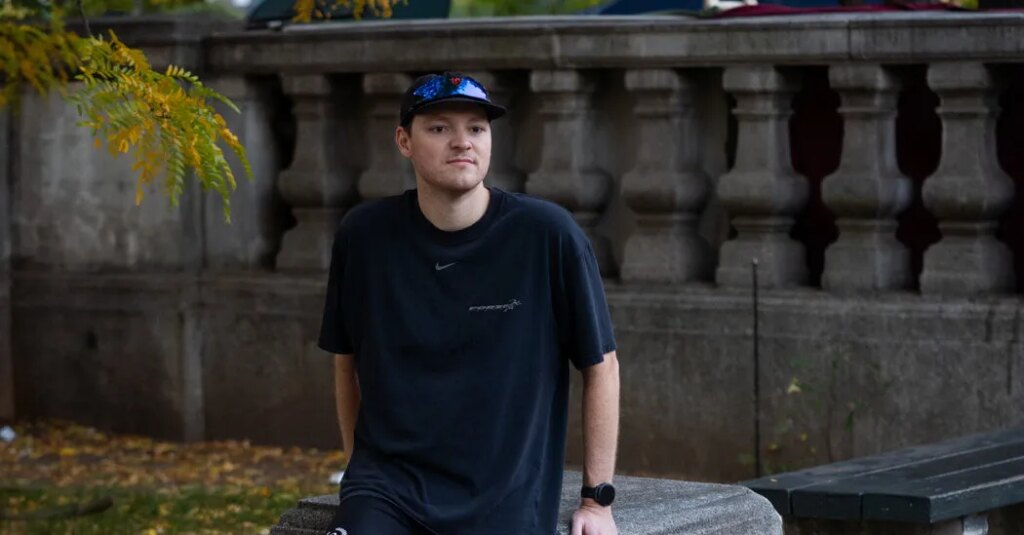
When Michael Conway lines up for the New York City Marathon on Sunday, he will have spent thousands of dollars before even starting to run across the Verrazzano-Narrows Bridge.
Mr. Conway, 30, is serious about his running. He owns five pairs of running sneakers, each of which cost at least $160 and serves a different training purpose. Edible liquid gels to sustain him set him back hundreds more each year.
Then there are the fees for New York’s many competitive races, which he needs to run to gain entry into the marathon. And if his friends and family want to see him cross the finish line in Central Park, they’ll have to pay $60 to watch from the metal bleachers.
“A lot of people talk about just wanting to finish,” said Mr. Conway, a creative strategist based in Brooklyn. “If I don’t have a sub-4 time, I’ll be pissed.”
He represents one of the millions of people who have taken up running seriously in recent years. But while the sport has long been celebrated as cheap and accessible, the culture of racing — especially in New York — is often anything but.
Amateur athletes now routinely shell out thousands of dollars each year on carbon-planted shoes, track club memberships and race fees, not to mention fuel pouches and flashy apparel.
It can be a pricey endeavor, but the challenges of marathoning are not purely financial. Plenty of runners reach the finish line each year without premium gear. The recent boom in the sport’s popularity has made Sunday’s race an experience that not many are able to access.
Nearly a quarter of a million people applied to run the New York City Marathon through the lottery this year. Those runners are effectively throwing their names in a large hat and hoping their entry gets pulled. Just 1 percent, or 2,400, gained access that way.
In some sense, the problem is one of supply and demand, as the city’s physical size isn’t getting any bigger. Yet some have argued that the organization behind the marathon, New York Road Runners, could do more to make racing more affordable and accessible for ordinary people.
Roughly 60,000 people are set to run this year’s race.
Thousands of bibs are reserved each year for those who gain entry through time qualification. About a quarter of the bibs are set aside for people who raise money for charity. This leaves relatively few ways for everyone else to squeeze into the marathon — that distinctly New York experience.
One option is to participate in Road Runners’ popular 9+1 program, which requires runners to complete nine races and one volunteer opportunity in order to qualify for the marathon.
However, that program was overhauled in June, drawing sharp criticism from some runners.
Starting in 2028, participation will be based on a drawing, and runners will have to pay $99 to join 9+1. They will then have to pay more to enter each of the required races.
Mr. Conway described the new policy as forcing runners to pay for “the privilege to buy the privilege to buy the privilege to get into the marathon.” He said he spent roughly $350 to participate in the nine runs for this year.
New York Road Runners argues that it has taken serious steps to ease various costs associated with the marathon. It points to the fact that it has not raised its $255 marathon entry fee for its members in a decade, and that Mayor Zohran Mamdani has provided 350 free tickets to spectators for the finish line.
“Our goal as a local nonprofit is to have a positive impact on the city, its residents and visitors,” Road Runners said in a statement. “Through our work, we center making running more accessible for all people — maintaining affordability for our community.”
New York is not alone in facing skyrocketing demand. In June, the London Marathon announced that it would be expanding the 2027 race to two days.
Sunday will be Matt Portillo’s sixth New York Marathon and seventh overall. Mr. Portillo, 38, has time-qualified for all but one race in his life, allowing him to save on hundreds of dollars in race fees each year.
In that way, he considers himself privileged, but he wants to see fewer people taking part in the New York Marathon who are “already good at running” or who have the financial resources to compete in race after race.
“I want to see opportunities for people where they don’t have to pay to play or perform to play,” Mr. Portillo said.
In Mr. Conway’s view, running in races requires a certain level of materialism. But, he added, you can always “opt out of the system,” lace up your sneakers and enjoy the crisp fall air as you run on your own.
“There’s nothing stopping me from going to Central Park tomorrow morning and running 26.2 miles,” Mr. Conway said. “That’s still a marathon.”
The post Shoes, Fees, Competition: Why the Marathon Is Out of Reach for Many appeared first on New York Times.