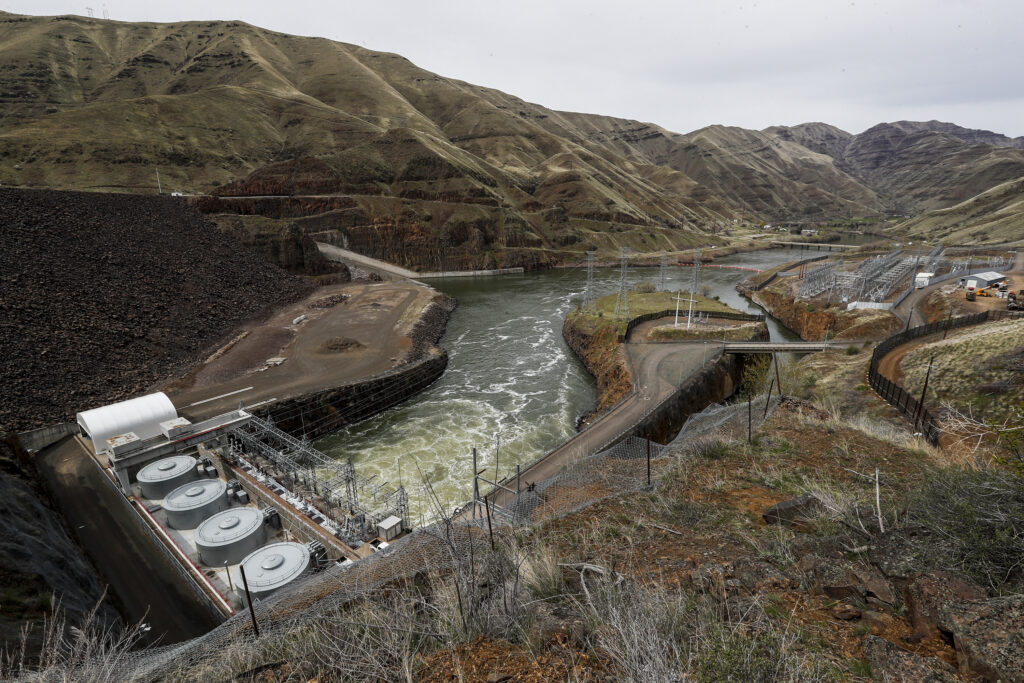
In 2003, the operator of three hydroelectric dams on the Snake River, which makes up part of the border between Idaho and Oregon, applied to renew its 50-year license. After more than 23 years of bureaucratic wrangling involving local and federal officials, the issue still has not been resolved.
This interminable episode highlights an important aspect of the permitting reform bill under consideration in Congress: Not only is reform needed to meet America’s soaring energy needs, but — contrary to the claims of its critics — it’s also essential to safeguard the nation’s natural resources.
Much of the excruciating delay for the Snake River dams, collectively known as the Hells Canyon complex, is due to a provision in the Clean Water Act called Section 401. The text requires any infrastructure projects on the nation’s waterways to receive certification from the state and tribal governments where they are located.
For Hells Canyon, which produces enough energy to power 750,000 homes, that meant seeking approval from both Idaho and Oregon. Because the two jurisdictions had competing demands, the process dragged on for 16 years — long after the original license expired in 2005. That essentially froze the application, since federal regulators were unable to begin their own lengthy environmental reviews until the state certifications were complete.
That endless process is typical for hydroelectric license renewals. It’s also bad for the environment. Hydroelectric plants can temporarily extend operations through year-to-year licenses, but uncertainty about a dam’s future discourages its operators from investing in environmental upgrades, such as improved turbines that raise oxygen levels in waterways and pose less danger to fish.
Long licensing fights are also expensive — and annoying. For some operators, the process is too much to bear — as was the case for Kelley’s Falls Dam in New Hampshire, which shut down in 2024 instead of going through the rigmarole. This could prove to be a serious issue in the coming years: Hundreds of U.S. hydroelectric plants are up for relicensing over the next decade, totaling more than 16 gigawatts of electrical capacity.
Frustratingly, states often use the 401-certification process to impose mandatory conditions that go beyond the infrastructure in question. The Hells Canyon case, for instance, included mandates to work with nearby landowners to improve irrigation practices and to make improvements to a separate dam operated under a different license.
Sometimes, the demands have nothing to do with water quality at all. In 2011, a dam in Missouri was required to contribute to a feral pig eradication effort in order to renew its license.
Keep this in mind when opponents of permitting reform claim that the bipartisan deal negotiated by Sens. Sheldon Whitehouse (D-Rhode Island) and Martin Heinrich (D-New Mexico) would “roll back” essential protections. That is a persuasive argument for many reasonable people. Upon closer inspection, it’s a scare tactic.
The tweaks in the compromise bill would not eliminate any of the core protections in the Clean Water Act. They would merely prevent them from being weaponized. For instance, the legislation would impose a strict one-year deadline to complete the 401-certification process and narrow what states can demand of projects to concerns that directly affect water quality. For hydroelectric plants, which make up more than a quarter of U.S. renewable energy, these reforms could prove essential to keeping them running and improving.
Of course, hydropower — like all energy projects — comes with its own environmental trade-offs. Dams can damage river ecosystems, an issue that hydroelectric operators have spent enormous amounts of time and money to address. But anyone who cares about wildlife must weigh those impacts against the threat of climate change, which requires economically competitive clean energy to address. To build and preserve that infrastructure, permitting reform is crucial.
The same is true for communities that want to remove dams, either because they no longer make sense economically or because they have outlived their original purpose. The effort to take down four dams on the Klamath River, which straddles Oregon and California, took decades to accomplish. The United States has hundreds of smaller dams with no functional use. Many of them once powered mills that are long gone. But they take years to tear down.
Countless other examples illustrate how bureaucracy gets in the way of protecting ecosystems. Federal permitting processes, for instance, have long been used to block forest wildfire management projects. They have also delayed repairs for crucial infrastructure, as was the case for the Potomac sewer line that failed last year, resulting in the worst sewage spill in U.S. history.
Some environmentalist groups understand these issues but still oppose the Senate permitting deal because it would remove legal barriers for constructing fossil fuel infrastructure. Indeed, states such as New York have used the 401-certification process to block natural gas pipelines.
Yet these tactics, too, have been bad for the environment. The lack of pipelines in New England has not eliminated the need for energy, and renewable sources have been unable to meet the region’s needs. So states resort to importing liquefied natural gas by ship and rely heavily on heating oil, both of which are significantly more carbon-intensive than piped gas.
For far too long, the environmental movement has been dominated by a culture of “no,” with activists focused on stopping any development. Imagine what the movement might be able to accomplish if activists shifted toward a mindset of trying to get to “yes” — that is, yes to more clean energy, more transmission lines and more innovations that improve grid efficiency. These would be big wins for the economy and the environment.
The post An environmentalist’s case for permitting reform appeared first on Washington Post.