Regarding the Oct. 25 news article “Lawmakers press for fishing limits on menhaden as osprey losses mount”:
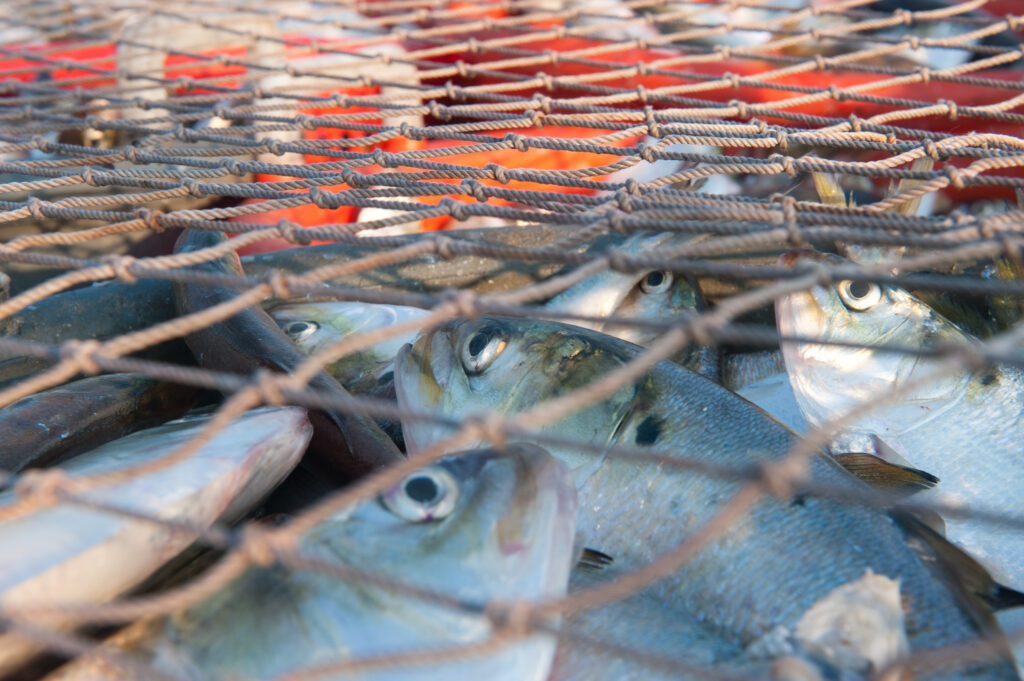
It is critical that action be taken to reduce the excessive harvesting of menhaden, a fish that ospreys depend on for their survival. My family lives on a large creek off the Magothy River, which flows into the Chesapeake Bay. When we moved here in 2018, we were delighted to learn that we had a great view of an osprey nest in the cove just off our deck. For six years, we watched in awe as these amazing raptors successfully raised two to three chicks each season.
The last three summers have been tragic for the ospreys, not just on our creek but across the Magothy River. The summer of 2023 was the last time that osprey chicks were successfully raised in our nest, and we have not seen chicks in other nests near us or out on the river. The adult ospreys still return every March, but we see far fewer fish being caught by the adults, and they are very small compared with previous years. We have also observed that the adult ospreys may have migrated south much earlier for the past two years.
A significant reduction in menhaden fishing is critical and needs to happen as soon as possible. The Atlantic States Marine Fisheries Commission’s November decision to potentially reduce the total quota by as much as half may not be enough, but is the minimum that needs to happen to begin to replenish the supply of these critical fish.
Lori Stewart, Arnold, Maryland
Menhaden overfishing in the Chesapeake Bay has been an issue for decades, so I’m not impressed by a recent letter from members of Congress expressing their concerns.
Congress can conduct more surveys, establish more commissions, wring its hands and throw money at the issue, but this does little to address the problem. But at least these members are doing something, unlike the two senators from Virginia who declined to sign the letter.
Virginia remains the only Atlantic state that allows large-scale menhaden reduction fishing despite the threat to the environment and warnings from conservationists and local fishermen. Given another opportunity to step in, Democratic Sens. Mark Warner and Tim Kaine, both in office for more than a decade, stepped out.
Jan T. McCarthy, Keswick, Virginia
Cheers to Wendell Berry
I really appreciated Tamar Haspel’s Oct. 28 Food column, “How small-farm romanticism undercuts our agricultural reality.” I recently visited my brother Tom in Henry County, Kentucky. That’s Wendell Berry territory.
I have been there many times, but this time I finally visited the Berry Center and library. My brother is living on Rankley Farm with his wife and two sisters. There, they are raising beef cattle and calves, some of which have been sold to the Our Home Place Meat program, which was started by the Berry Center.
We also drove by the Berry Farm and the cabin where Berry did most of his writing, which is between River Road and the Kentucky River. I had with me a book of his poems that I borrowed from Shirlington Library, and visiting the area allowed me to appreciate the writing a bit more.
And Haspel is correct that some crops need to be done on a large scale, but not pigs.
Ray C. Isaacs II, Arlington
The bay states
The subheading accompanying the Oct. 28 Metro article “Up for reelection in Md., Moore stumps for his brethren in Va.” referred to Maryland as the “Bay State.” Of course, that moniker officially belongs to Massachusetts. However, this does suggest an intriguing proposition.
I lived in Massachusetts for 20 years and never heard anyone say they were going “to the bay” for the weekend. Conversely, both geographically and culturally, Maryland fairly embraces the Chesapeake Bay. I suggest that enterprising politicians from the two states propose a swap: Let Maryland claim the “Bay State” appellation, and Massachusetts can rightfully call itself the “Cradle of Liberty.” Talk about a win-win proposition.
Steve Fahey, Olney
The most important test for school food policies
The Oct. 27 news article “States move to take ultra-processed foods off the school lunch menu” reported the Santa Ana Unified School District apparently didn’t set out to try to eliminate ultra-processed foods. The district’s nutrition director said he simply wanted to cook more things from scratch.
That is an admirable goal, but it is not the same as banning foods based on how they are manufactured. Even with California’s generous funding and the district’s access to local agriculture and existing kitchens, the district has needed years to expand its approach. Many districts lack those advantages.
A recent review from the Carver Center for Agriculture & Nutrition, a nonprofit that I lead as chairman, highlights that school lunches are among the most nutritious meals American children eat. Decades of nutritional improvements have produced measurable gains. We should build on that success, not put it at risk.
A food’s processing classification alone cannot tell us its nutritional value. A broad prohibition could exclude affordable, nutrient-dense foods while doing little to address what children actually consume.
The test for any new school food policy should be straightforward: Does it measurably improve nutrition? Can schools afford and deliver the food? And will children eat it?
Andy Curliss, Des Moines
Letter submissions
Send letters to [email protected].
Submissions must be exclusive to The Post and should include the writer’s address and day and evening telephone numbers. Letters are subject to editing and abridgment. Please do not send letters as attachments. Because of the volume of material we receive, we are unable to acknowledge submissions; writers whose letters are under consideration for publication will be contacted.
The post This critical fish is disappearing. I can see the results from my window. appeared first on Washington Post.