Plenty of novels have struck a popular chord, capturing a cultural mood, an epoch or a widespread anxiety. But few have charted the hard-boiled-to-highbrow trajectory of the 2002 Italian best seller “Romanzo Criminale.”
A bloodstained gangster saga, “Romanzo Criminale” takes place against the backdrop of “the years of lead,” the era of upheaval in the 1970s and 1980s, when bombings and murders by far-left and far-right militants terrorized Italy. It was a hit as a novel and as a 2005 film, and a cultural sensation as a television series from 2008 to 2010.
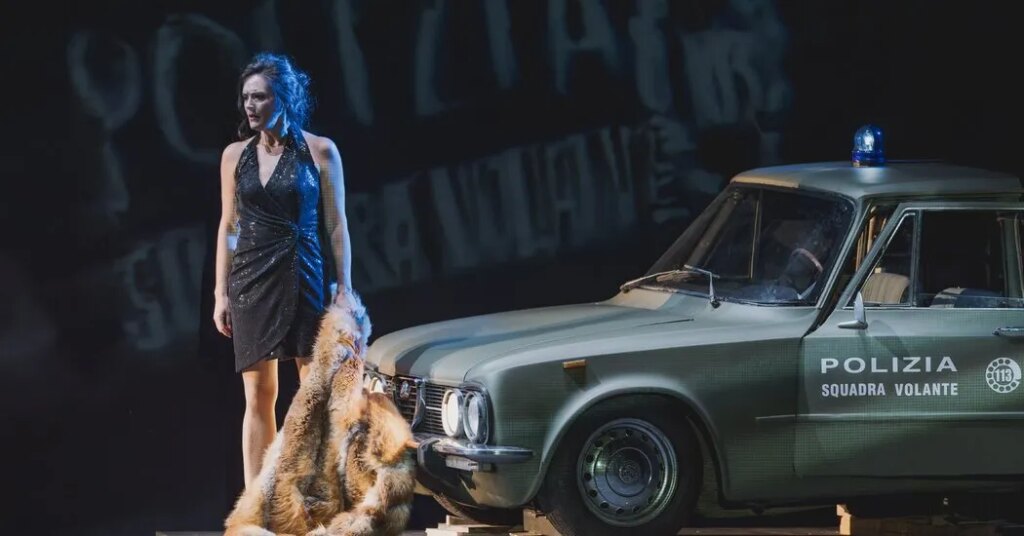
Now it has been turned into an opera, which debuted last week in Florence at one of Italy’s main opera houses, to eight minutes of curtain calls.
Written by Giancarlo De Cataldo, a judge with a literary bent, “Romanzo Criminale” follows lowlife hoodlums as they claw their way to the top of Rome’s criminal underworld, only to come crashing down. In Italy, the four main protagonists — Libano, Freddo, Dandi, Bufalo — are household names, as familiar as the four Musketeers.
Packed with greed, passion, betrayal and too many murders to count, the plot was a natural for an operatic treatment.
“Those were turbulent, violent years,” Mr. De Cataldo said in an interview last week, before the dress rehearsal at the Maggio Musicale Fiorentino theater.
He wrote the novel a few years after serving as a judge in criminal proceedings against dozens of members of the “Banda della Magliana” (Magliana Gang), a notorious criminal organization that ruled Rome in the late 20th century. The novel’s characters are the literary amalgams of those real-life mobsters, many of whom were ultimately convicted and imprisoned.
Commissioning a new opera is always a gamble, financial and otherwise, even in the land that gave birth to the genre. But the longstanding appeal of “Romanzo Criminale” convinced Carlo Fuortes, the general manager of the Florentine theater, that it was a risk worth taking.
Audiences “already have their own personal experience” with the story, he said, “which allows them to appreciate it more.”
Mr. Fuortes assembled a team that included Mr. De Cataldo, who has nursed the novel through all its incarnations and wrote the libretto, and the composer Nicola Piovani, who won an Academy Award for best original score, for the 1997 film “Life is Beautiful.”
To direct, Mr. Fuortes enlisted Massimo Popolizio, a famous actor who had a starring role in the 2005 film as il Terribile, the first mob boss killed by the upstart thugs.
Some characters haunt you, Mr. Popolizio said. “I’m 65 now, the film is more than 20 years old and I have white hair and a beard, I look completely different, but when I get into cabs, the drivers say: ‘Ah Terribile, ciao,’” he laughed. “Romanzo Criminale,” he said, “is a world that’s become part of history, it’s become ingrained.”
His staging presents Rome as a bleak asphalt-and-concrete neighborhood. The characters smoke, play pinball and pool, and fight and kill each other. There is a brothel scene with nudity.
Friday’s premiere aired live on one of Italy’s national television stations — a coup for an opera — and some 100,000 people tuned in according to the company that measures television audience, a respectable showing for an opera.
“Romanzo Criminale” is “a unique case in the history of Italian literature,” said Aldo Grasso, one of Italy’s most prominent television critics, of the work’s metamorphoses. “It’s easier to make an opera based on something everyone knows,” he added.
Mr. De Cataldo, 70, who retired as a judge in 2022, said he used the Magliana Gang “as a pretext” to recount a specific period of Italian history, drawing “a grand historical panorama” of those unsettled decades.
In the novel, film and the series, the vicissitudes of the gang intersect with key events from that period of Italian history. Among them are the 1978 kidnapping and assassination of former Prime Minister Aldo Moro by the left-wing Red Brigades, and the 1980 bombing at the Bologna train station by a right-wing group that killed 85 people.
With ties to politicians, the Vatican and sundry organized crime groups, “it’s as though the Magliana Gang was a sort of lens for those terrible years,” Mr. Grasso said.
Mr. De Cataldo noted that the gang “has become such a legend that people have even attributed things to it that it had nothing to do with.”
He and Mr. Piovani, the composer, wrote the opera together, in daily contact, following in the footsteps of many librettists and composers in history. They decided to strip away most of the political and historical undercurrents, to focus on a handful of people.
“It would have ended up longer than ‘The Ring of the Nibelung,’” Wagner’s four-opera cycle, Mr. Piovani said. Instead, the new work pares down “Romanzo Criminale” to its “most intense, passionate elements,” he said, merely touching on the gang’s broader connections.
As general manager, Mr. Fuortes has been looking to refresh Italy’s storied opera tradition.
Earlier this year, he commissioned the filmmaker Luca Guadagnino to direct John Adams’ “The Death of Klinghoffer,” a work based on the 1985 hijacking of the Italian cruise ship Achille Lauro by Palestinian terrorists that has been plagued by protests and boycotts, especially in the United States.
But the future is new operas, he said.
“Renewing the repertoire, creating new works is essential,” he said. “We’ve reached the point where either we stop, and nothing new gets done anymore,” or opera learns to speak to a contemporary audience.
“Romanzo Criminale,” he said, does just that.
The post Taking the Saga of a Criminal Gang From Page to Screen to Opera Stage appeared first on New York Times.