In today’s edition … Trump is going home to campaign in red Florida … We ask you about Halloween … but first …
Primary bad blood still simmers
America’s greatest poet once said: “Now we got problems, and I don’t think we can solve ‘em.”
And, boy, was she right about politics.
Politicians who ran against each other in primaries this cycle are openly warring in the campaign’s final days, exposing deep fissures within their respective parties.
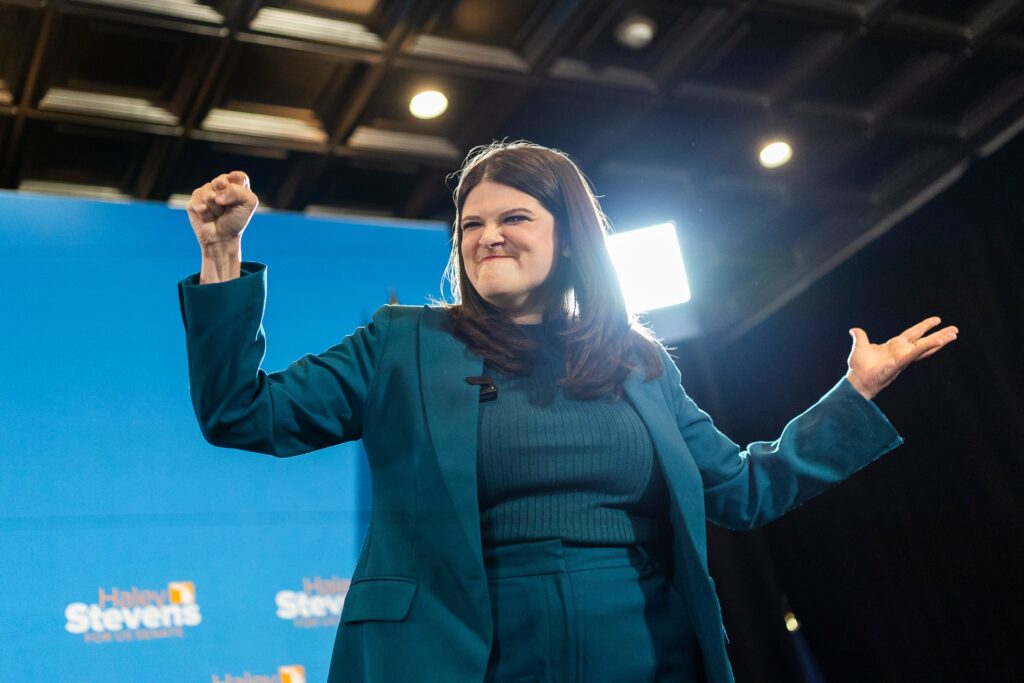
The most notable rift this cycle may have been between Democrat Abdul El-Sayed, Michigan’s progressive Senate nominee, and Rep. Haley Stevens, the more centrist politician El-Sayed defeated in the primary. This week, their complicated relationship took a turn when Stevens’s fiancé, Jason Turkish, said he will vote for Mike Rogers, the Republican nominee in Michigan, and castigated El-Sayed for his views on Israel.
“When he says ‘genocide’ over and over again, when he refuses to condemn an ad that says Jews are to blame for the price of bananas, he makes my community less safe,” Turkish said, referring to an ad on the cost of aid to Israel that did not come from El-Sayed’s campaign, which distanced itself from the spot.
Stevens told CNN on Wednesday night that they are a “household divided” and that she still supported El-Sayed. And late yesterday, the El-Sayed campaign said he and Stevens will hold a unity rally together next week.
“I’m the weirdest loser in this country, okay? That Senate [primary] race was months ago. I hugged it out. Of course I’m voting … for our Democratic nominee for Senate,” Stevens told CNN, “but I want to encourage this campaign to shut out the hate and to call it out and to make people who are in my coalition … feel comfortable about coming to the polls.”
Though El-Sayed and Stevens are now set to publicly join hands, other politicians in key states have yet to do the same:
- Maine Gov. Janet Mills has not endorsed Troy Jackson, Maine’s Democratic Senate nominee, though she announced yesterday that she voted for him. Mills mounted a short-lived Senate run, but failed to overcome upstart Graham Platner, who Jackson backed. When Platner flamed out, Jackson became the nominee with the help of Platner’s political machine. Mills still hasn’t fully gotten behind the candidate, in part because Jackson openly criticized Mills and her administration, accusing her of caring too much about big business and failing to get things done during his gubernatorial bid this year. A source close to Mills told me the two had been working on a meeting, but Jackson’s campaign decided not to move forward.
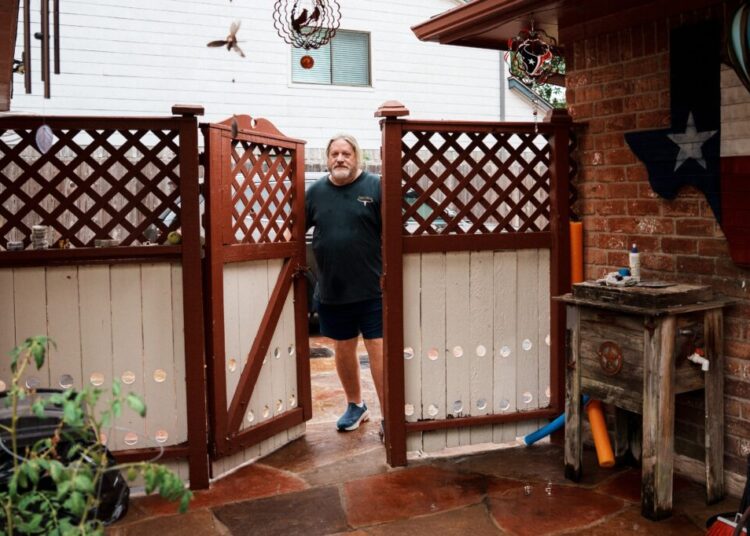
- James Talarico, the Democratic Senate nominee in Texas, defeated Rep. Jasmine Crockett in a contentious primary earlier this year. After the primary, Crockett, who is Black, alleged that racism contributed to her loss. Last month, Crockett’s leadership PAC released a list of endorsements, but it didn’t include Talarico. While she has said she would support the Democratic ticket, she has not campaigned on his behalf.
- In Texas, open animosity exists between Sen. John Cornyn and Ken Paxton, the Republican nominee who defeated the incumbent in a primary earlier this year. Cornyn called Paxton “unfit” for office and a “crook” during the primary. After his loss, Cornyn said he would not help Paxton’s campaign or raise money for him, calling him a “bad candidate,” but the senator said he’d vote for the ticket. The blood between the two is so bad that President Donald Trump has lambasted Cornyn for not doing more for Paxton, whom he endorsed in the primary.
- And in South Carolina, Rep. Ralph Norman has openly said he can’t support Darline Graham, the Republican Senate nominee who defeated him in the primary. Norman has said he will not campaign for Graham and that his family won’t vote for her. He has committed to supporting others on the Republican ticket.
Politics has become a deeply messy arena, and primary campaigns often turn personal because candidates have fewer policy disagreements.
But with so much on the line in these midterm elections, some political watchers — Democrats and Republicans — don’t understand why these candidates can’t get past their egos and help their party win.
“This is an example of where party is more important than person,” said Nirav Shah, a former gubernatorial and Senate candidate in Maine who lost to Jackson in the state’s last-minute caucus to replace Platner. Shah has since endorsed Jackson and campaigned alongside him.
The race between Shah and Jackson, who first ran against each other in the gubernatorial primary, was sometimes heated. They disagreed on issues, and while it didn’t get deeply personal, a clear divide remained. But Shah said, once he lost, he simply understood it as, “It is time to move on. The people spoke.”
Republicans are certainly loving the simmering anger among Democrats, with Bernadette Breslin, spokeswoman for Senate Republicans’ campaign arm, arguing the discord shows the candidates face a “fractured Democratic coalition hurting their chances of success in Senate battlegrounds.”
“I view [political disagreements] as part of the sport of being in the arena, and if you are going to get sore so much so that you can’t get behind your team, then you don’t have thick enough skin to be in politics,” Shah said. “If it is merely about the political and the policy and you can’t get over that, then politics may not be the game for you.”
As that great poet says, “Band-aids don’t fix bullet holes.” And many of these aggrieved candidates with healthy egos feel that.
Want this in your inbox?
Start your day with The Washington Post’s flagship political newsletter. Sign up here.
From across the newsroom
- Brash architect of Trump’s midterm strategy could become midterm scapegoat, from Nancy Cook.
- Midwestern retirees helped turn Florida red. Now they could turn it blue, from Laura Beveridge.
- An attack ad dredged up her wounded childhood. Amy Acton tells how she healed, from Karen Tumulty.
- Senate Democratic report alleges Trump foreign policy moves wasted $19 billion, from Noah Robertson.
- Republicans launch investigations into Peltola campaign, from Matthew Choi, Jeremy Roebuck and Victoria Bisset.
- U.S. economy grew at a fast clip this summer, thanks to consumer, business spending, from David J. Lynch.
What I’m watching
Trump continues his barnstorming across red states this evening with a campaign rally in Daytona Beach, Florida. As with his recent campaigning in Ohio, South Carolina and Texas, Trump is showing up in a state he won handily in 2024, but in which Republican candidates are facing competitive elections this year.
Rep. Byron Donalds is a close Trump ally who has found himself in a closer-than-expected gubernatorial race with former representative David Jolly, who served in the U.S. House as a Republican from 2014 to 2017, but is now a Democrat. A recent New York Times-Siena University poll has Donalds up 4 percentage points — within the margin of error, and far lower than Trump’s 13 percentage point victory in the state in 2024.
Donalds is walking a tightrope bringing Trump in to campaign with him. Trump’s popularity has plummeted as his tariffs and war with Iran have contributed to ongoing issues with inflation. In what seems to have been an attempt to create some distance with the unpopular president, Donalds, like several other Republicans in tight races this year, cut many references to Trump and Trump’s endorsement of Donalds from his campaign website this fall.
Trump also holds unpopular opinions about data centers, which have become a hot topic in the Florida election and which Trump has called “the golden goose.” Jolly has made anti-data center messaging a key part of his campaign, promising to institute a moratorium on data centers in Florida on his first day as governor if elected. It’s a popular stance: A Post-ABC News poll this month found two-thirds of Americans oppose the construction of data centers in the United States. Even more (72 percent) oppose data centers in their communities.
Trump, meanwhile, has said anyone who opposes them wants their community to be “backwards and poor.”
I’ll be watching to see if Trump gets into the data center wars, and, if so, how the Florida audience responds to his remarks. And I’ll be watching next week to see if this late-campaign decision to publicly align himself with Trump pays off for Donalds.
In your local paper
Philadelphia Inquirer: Philly has followed New York City’s lead and appointed a rat czar, who will work to reduce the number of rats in the city and run a new public rat tracking dashboard. (Why didn’t they just put Gritty put in charge of it?)
Bangor Daily News: A team of volunteer divers announced this week that they discovered the wreck of a Canadian ship sunk by a Nazi sub off the coast of Maine. The discovery ends the 82-year mystery of the final resting place of the SS Cornwallis, which was sunk by a Nazi U-boat that had just landed two Nazi spies in Maine.
The News & Observer: Vice President JD Vance recently faced one of the toughest questions a politician can be asked during a campaign stop in North Carolina: Eastern or Lexington barbecue? See how he answered.
From you
Many Early Brief readers said they take voting seriously and try to read as much as they can about candidates from as many sources as possible.
“In evaluating candidates it’s important to become aware of their views over the long term, rather than relying exclusively on what they say during campaigns,” said David Olsen. “My strategy requires constant attention to diverse sources, rather than engagement only in the weeks or months before an election.”
Marcia Hirt-Reigeluth wrote to say she sometimes spends several days reading up on candidates before deciding which way to vote and likes to read the candidates’ responses to the questions posed by the League of Women Voters.
“If there is no response — I cross the candidate off the list, because if they can’t be bothered to answer the questions and explain their ideas, I can’t be bothered to vote for them,” said Hirt-Reigeluth.
Peter Storandt said that he has used AI to complement his news reading, asking his AI assistant to give him daily summaries of political polling through election day.
But some people aren’t so eager to incorporate AI into their election prep.
“Personally, I don’t need AI to potentially distort information,” wrote Rich Lando, who said his two local papers in Memphis, the Commercial Appeal and the Daily Memphian, keep him well informed politically.
Send a reply
Just in time for Halloween, a Bureau of Labor Statistics report earlier this week found candy and chewing gum prices are up 7.7 percent from last year. Has inflation impacted your Halloween preparation? What other unexpected areas of your life are being affected by rising costs?
Let me and your fellow Early Brief readers know at [email protected].
Thanks for reading. You can follow me on X at @merica.
The post Primary bad blood is still simmering in key midterm races appeared first on Washington Post.