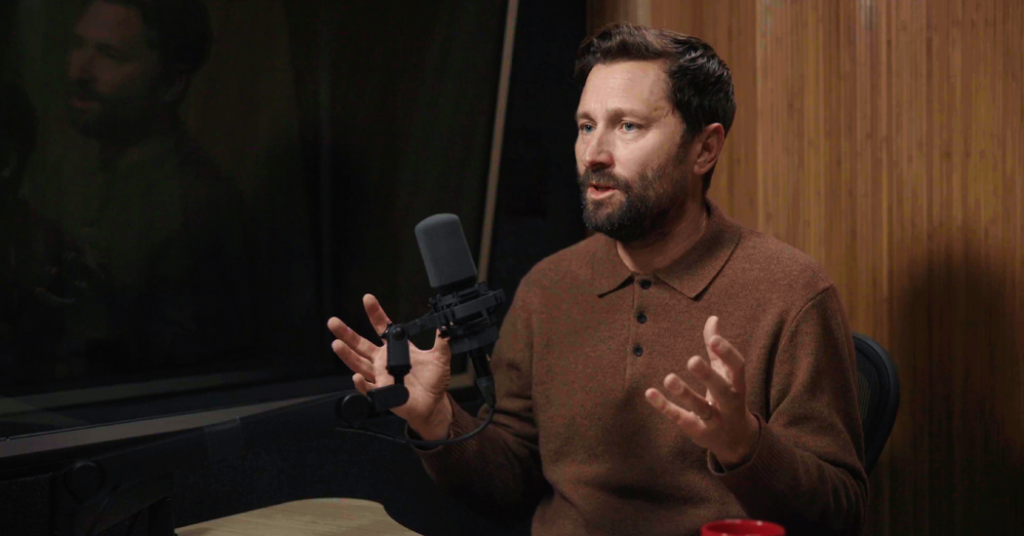
This is an edited transcript of “The Ezra Klein Show.” You can listen to the episode wherever you get your podcasts.
If Republicans keep the Senate, if they perform better in the House than people expect, a lot will come down to one man, and that man is not Donald Trump. It’s Elon Musk.
At this point, Musk has given around $450 million to the Republican campaign effort. That makes him the single largest donor in any election cycle ever.
Musk’s contributions are now one-quarter of all campaign donations Republicans have received. And yet the size of this, and what it throws into relief, is how hard it is to conceptualize how much money he really has.
Because for Musk, with a net worth of around a trillion dollars, giving $300 million, $400 million, is like the median American household giving, like, $100. It is for him nothing, and yet it is reality warping for the rest of us.
But his money is not Elon Musk’s only source of power. There’s his control of X, of Starlink, of SpaceX, of Neuralink, of Tesla. He has power over wealth, attention and critical infrastructure that no human being has ever had at this level, at least once you’re outside the range of, say, a Donald Trump or a Xi Jinping — somebody who controls a superpower as a state.
That’s not what Musk has, and yet he has this almost statelike thing that is completely pursuant to his whims.
So what does he want to do with it? What is he doing with it? What is this world he is flexing his power and taking real risk to build?
Quinn Slobodian is a professor of international history at Boston University. He’s the author of several books, including “Globalists,” “Hayek’s Bastards,” and very relevant here, “Muskism,” which he co-wrote with Ben Tarnoff.
Ezra Klein: Quinn Slobodian, welcome to the show.
Quinn Slobodian: Very happy to be here.
Elon Musk is flexing a lot of power right now. He’s made the largest-ever set of campaign donations from one person in one cycle. It’s now $450 million — all of it to Republican groups. His alone is one-quarter of all G.O.P. donations this cycle.
What is he trying to buy?
I think he’s trying to entrench the dependency that he already enjoys. One is through his financial role in the U.S. political economy — and, by extension, the global economy.
SpaceX now is one of the world’s top tech companies. Tesla is a large part of the tech portfolio that people hold in their pension funds and in their individual investor accounts.
That means that if you attack Musk, you’re also kind of attacking one of the pillars of the U.S. political economy. So that’s the money side.
On the machine side, he’s trying to make the world ever more dependent on his infrastructures — the use of SpaceX as really the monopoly launch provider to put things into low Earth orbit, the rolling out of low Earth orbit satellites with Starlink as the default communications medium for battlefield operations and for rural consumers and so on.
But then there’s what I would think of as the messaging or the media piece of that. There he has much more targeted trying to produce communicative ecosystems in which his way of framing social problems and solutions to social problems is uncontested and uncontestable.
His purchase of Twitter, in October 2022, long described as one of the biggest business failures in American history, has proved to have been quite effective, I would say. So that people are caught in an echo chamber of his creation.
His targeting of the midterms and his flexing of his own power to make or break candidates, as he wishes, is a way he hopes to fine-tune that control over the media and messaging ecosystem and get out ahead of what he worries would be a regulatory wave that would accompany a Democratic majority.
What’s interesting to me about the description you give there is you could imagine someone with Musk’s portfolio of interests seeing a very different strategy as optimal.
Because the work he does is so intertwined with the government — being highly associated with one partisan side of the fight in America and in Europe with the right-wing parties he’s been boosting — it creates risk.
You talk about entrenching dependence. But he’s also creating a situation where, in 2029, if you have President Jon Ossoff or President Gavin Newsom or President Alexandria Ocasio-Cortez, and a Democratic Congress, reliance on SpaceX, on Starlink, on Grok in the Pentagon could maybe be seen as a huge risk.
So from that side, this doesn’t all look purely rational, like a master businessman just entrenching himself. It looks like a man who believes things and is actually risking quite a lot to push those beliefs upon the world.
Yeah, it’s an unusual approach. The way that corporate leaders have usually tried to exercise their influence on the political landscape in the past has been slightly more from behind the scenes, of course. But I would say that he’s, again, working on two tracks.
One is to deepen that financial and structural dependency such that even if a President Ossoff or a President A.O.C. comes into power, they have a limited ability to rein in his central, fulcrum role in the health of the stock market and its dominance in certain key frontier sectors. Their hands would still be tied, I think.
But at the same time, he can use this tactic of hyperpolarization, which he’s obviously taken as his own kind of trademark, even among his own Silicon Valley leadership class, to potentially become the favored partner for a future ruling administration.
And that’s also the way he’s approaching the relationship to far-right parties in Europe. A rational person would try to come up with some kind of compromise with the ruling parties in Western Europe, to make peace with the E.U. in some way to gain market access.
He has taken an opposite approach. He’s gone on a full-frontal attack against Brussels and the existing legacy centrist parties, and tried to ally with what I’ve long thought of as who he sees as the Teslas of politics — the AfDs, the Restore Britains — that he hopes will come from marginality and nowhere to completely disrupt and destroy the legacy institutional parties of social democracy and Christian democracy.
So it’s high risk — but potentially also high reward if you find yourself in a pole position for a changing model of governance across the board.
I do think Musk is somebody who works backward from visions of possible futures.
I want to play a clip from an interview he recently gave The Economist where he describes how things are going to play out over a five-to-10-year time frame.
Archival clip of Elon Musk: It would be an exercise in vanity for me to think that I would be controlling a supergenius A.I. that is vastly smarter than me. What my biological neural net tells me is that the most important thing for A.I. safety is to be maximally truth-seeking and curious. If that’s the case, I think it will foster humanity.
Zanny Minton Beddoes: So let’s unpack that. You’re sure that humans will no longer be in control in 10 years’ time?
Musk: I think it is unlikely, in the same way that, if the difference in intelligence between A.I. and humans is vastly greater than the difference in intelligence between A.I. and chimpanzees, it’s hard to imagine that the chimpanzees would be in charge.
The whole first half of this Economist interview he gave is like this, where he’s very casually describing a world where, within a decade, money won’t exist, human beings have lost control of the entire world, and he is not even really in control of his own companies anymore.
Yeah.
What does “truth-seeking and curious” mean to Musk?
To Musk, the curious part, in his own terms, means that, given the likelihood of superintelligence exceeding human intelligence at some time in the near future, then we would need to make sure that it wants to keep humans around for its own interest, and either its own entertainment or ——
Yeah, I’ve heard him describe this as he wants an A.I. that would find it more entertaining to have us in the world than not to have us in the world.
Yeah. And the even more extreme version of that is, in line with simulation theory — which is that if we are just existing in a digital simulation that has been created by a future alien race or a hyper-advanced human race, then we want to keep things entertaining enough here in this reality show of the present such that they wouldn’t terminate the programming. In his own terms, that’s how he describes the goal there.
It’s interesting because it really tracks with what have been pretty substantial changes in his attitude toward A.I., even across the last 10 years. And we know that in 2015, he started OpenAI with Sam Altman, really at that time under the influence of the Swedish philosopher Nick Bostrom, whose book “Superintelligence” had come out the year before.
The overwhelming threat at that point was the possibility of a runaway digital superintelligence which, in the most famous example, might turn us all into paper clips if it got the wrong kind of a prompt.
So at that time, he seemed to have one big message, which was: Let’s hit the brakes, slow it down and make sure that we’re aligning the values of the A.I. with our own.
But at the same time, he’s starting Neuralink. As he starts Neuralink, the way he describes it, in fact, directly to Altman and in other cases, is that Neuralink is designed to accelerate our fusion with network technologies so that a human-machine symbiote, as he calls it, will be able to stay out ahead of that Skynet digital superintelligence.
So that’s the first phase of Musk’s A.I. thinking: We need to augment human consciousness to make sure that we are accelerating a better version of the A.I. against the evil A.I.
We must become the robots to not be destroyed by the robots.
Exactly.
This attitude changes almost overnight in November 2022 with the launch of ChatGPT. With the launch of ChatGPT and the realization by him and the entire Silicon Valley entrepreneurial and leadership class that L.L.M.s and generative A.I. were the new growth story that they’d been looking for, for years. Suddenly, his whole discourse about A.I. changed.
Instead of it being the digital superintelligence that was a concern, now it was the woke L.L.M. that had been trained on the progressive posts and internet discourse of the era of Black Lives Matter, defend trans kids, #MeToo. And iconically, the image of Google Gemini’s generated image of the Black founding fathers stood in for people like Musk and Marc Andreessen as the danger of this new phase of A.I., which, in the most memorable description, Musk said he feared would “turn him into a woman of color.”
So if that’s your new fear, then what do you do in response? You create an anti-woke A.I., and that is precisely what xAI is and what Grok was.
The truth-seeking part is really his market proposition against what he sees as the alternative models of OpenAI and Anthropic, which have been shot through, as he describes it, and contaminated with the “woke mind virus.”
But also in this period that we’re describing, he has gone through a pretty big political transformation.
The Musk of 2012, 2013, was pro-Obama and seems to have had fairly banal Silicon Valley politics. The Musk of 2022 does not. He’s really becoming the leader of what we now call the tech right.
So the shift on wokeness for him, and the shift in his politics, I think, predates in some ways his shift on A.I.
How do you understand what that shift was?
Well, when the Obama administration wanted to do a big push into renewables to reduce dependency on fossil fuels, and thus also help to get out of the Middle East, then Musk was able to profit from that — getting this nearly half-billion-dollar loan from the Department of Energy.
Into the Biden administration, that demand for electric autonomy, as we call it, still existed, but now it was also part of a pro-worker, pro-union push. Which meant that Musk wasn’t one of the favored companies for the Biden White House.
Yeah, he famously does not get invited to the electric vehicle summit.
He gets snubbed in a way that is roughly equivalent to the Trump roast at the White House Correspondents’ Association dinner as the initiating incident of a feeling of: If you don’t like me, then forget you. I’m going to create my own club.
Of course, the upswell of social movements making demands around racial justice, gender justice, that were, of course, entering the workplaces of Silicon Valley, too, that were producing new pressures — open letters, walkouts — this became a site of real combative anger for the C.E.O. class, which felt that this labor class was now exercising power over them, the management, in a way that was repellent.
But also the Covid containment measures become something that really both triggers Musk’s anger at his inability to shape the regulatory world around his own needs and also a time where he gets a lot of validation for his opposition to the containment measures.
His tweet where he says, “The coronavirus panic is dumb” is his first tweet with one million likes.
Trump responds: This is outrageous, reopen the Fremont factory. And then Musk goes ahead and just does it anyway, actually against California orders, and gets away with it.
This also points to something else that I think is relevant in his rightward turn, which is his immersion into the world of social media and Twitter, in particular — which we think of as less a kind of corrupting process of his rationality and more as his iterative attempt to figure out how to trigger processes that end up actually enriching him and expanding his power.
What can look like a dissipation online or online brain rot is often actually corresponding with movement upward in the value of his stocks and his personal net worth.
It’s in 2021 when everyone is online and on their phones that he becomes the richest man in the world. And it’s by, as people have described, making himself into a human meme stock.
What he finds out on Twitter is that polarization, rather than being a handicap for his accumulation model, is actually a real accelerant for it.
Well, you’re saying polarization, and that is part of it. But polarization is also a method of getting attention.
Of course.
And this is a way in which I think Trump and Musk have very similar psychologies. It’s so interesting with him the way all the parts are always connected.
But I don’t think people — I don’t think I had a really good sense of how rapidly his fortune has expanded. In 2020, he has, according to estimates, $39 billion.
Now, it’s a lot of money. If I had $39 billion, I’d be stoked.
He now has a trillion dollars — in six years. In 2020, he had 4 percent of the wealth he has now.
And what has happened inside those years is not that his company has made a lot of money. He does not have highly profit-generating — I mean, I’m not saying there are no profits, but what happened with SpaceX, what happened with Tesla, it’s not that they began showing profits that shifted Musk’s net worth.
What happened? How did he go from $40 billion to a trillion dollars in six years?
The price-to-earnings ratio of his companies are completely outrageous compared to their competitors. But they speak to something else he has perfected in practicing, what we talk about in the book as financial fabulism — this projection not of a current set of fundamentals or a current revenue model but the promise of being able to open up perhaps infinite future revenues.
He becomes the most iconic example of that. Tesla is something that’s able to plausibly present itself as the future of motorization and then maybe also the future of humanoid robots.
SpaceX has the ability to say: Listen, we delivered on a drop in over 90 percent of the cost of putting matter into orbit — internet with more than 11,000 satellites in space with over 12 million subscribers, tangibly changing the ability to win wars in places like Ukraine.
These things are real things you can point to if you want to persuade yourself that, if you’re going to make a bet, you make it on this man.
Well, let me hold you on that for a second because one thing I often see, and I think of it as a genuine kind of intellectual mistake, is that people want the people they don’t like to not be impressive.
I think there is a big strain of thought that exists on the left now, as they’ve understandably turned against Elon Musk and his politics. But what he has built is incredible. And it’s real.
We can talk about profits or nonprofits and price-to-earnings ratios, but you can use Starlink. You can drive in a Tesla. They really have made sending tonnage into space relatively affordable in a way that it wasn’t before. Musk really did do that.
Yeah. And one of the ways he did that, I think, is by being ahead of the curve with the move back toward deglobalization, reshoring, re-territorialization of production models, as well.
What do you mean by that?
I mean that when he founded SpaceX, in 2002, one of the ways he radically cut the cost of putting matter into orbit was by bringing a lot of the production in-house — so making bespoke or making themselves a lot of the components that they need for their rockets, not relying on subcontractors, not relying on kind of lengthy procurement models, but speeding everything up and bringing it all in-house.
Tesla famously did this, as well. When they built the gigafactories, they were trying to bring as much of the supply chain as they could under the roof of one factory. This meant that exactly in 2020, when automakers got absolutely slammed by the closing of borders, Tesla got hit, but they bounced up much more quickly. It was really one of the things that gave them the possibility to bounce back.
So before those big supply shocks, before Covid, before Ukraine, actually, Musk was already using a partially decoupled model of production.
I completely agree with you that it’s a real stumbling block for many critics who simply want to short circuit to this idea that he’s just a liar and a grifter, or even simply a crony capitalist. In fact, he’s not just a crony capitalist because he’s often pushing out the technological frontier for economies that do business with him.
I think that brings together a couple of interesting things here. As you mentioned, to justify the valuations, Musk is not just selling a vision of the world that he has already achieved.
He’s selling a different vision of the future. He described what it was to The Economist, so I want to play that here.
Archival clip of Beddoes: What will your companies be doing in 10 years? And how will they make money?
Musk: Well, you can really think of the economy as digital and physical intelligence. You need the end effectors in the form of humanoid robotics. You need, basically, lots of bots. In a nutshell, you need lots of bots.
And then you can go from intelligence manifesting itself only digitally to shaping atoms. And you say: What is an economy? An economy is the production of goods and provision of services. And if you have vast numbers of robots with vast amounts of digital intelligence, you have a sort of a quasi-infinite economy. So the future is going to be very, very different from the past.
So this is currently the promise of what I would call Musk industries, which is not necessarily that he is going to individually dominate A.I. It’s that they are going to be the conglomerate of companies that takes A.I. out of bits and into atoms — that they will dominate the A.I.-robotics intersection.
I think whether they will or won’t is obviously something we can’t know. But I think there’s something worth getting at, on a deeper level, of the world being envisioned and promoted here, which is: What is the role that human beings play in this future?
I mean, it’s a very difficult one to sell. One of the strange things about that interview is that he says economically, civilizationally, we’re moving to a situation of, if not subordination, then simply marginalization by superintelligence. So for that to be the goal toward which you’re working is, first of all, very difficult to build consent and legitimacy for, obviously.
But it also requires a huge amount of synergies between neighboring technologies. One of the ways he has actually unlocked the level of fortune he has this year is by making progress toward bringing together that vertically integrated Musk industries model under one label.
It has only been recently that xAI absorbed X.com, and then SpaceX in turn absorbed xAI. Now he’s vocally calling for the merger of Tesla and SpaceX, which would be the largest merger in history, and would precisely bring together the part of his empire that does atoms in the form of humanoid robots with the part that does the A.I. under the umbrella of SpaceX.
But then I think one aspect of Muskism that we need to keep our eye on is that he’s actually propelled by the need to create an impression of invulnerability — which is actually belied by the truth.
If you pick up the SpaceX prospectus and read through the risk factors, the No. 1 risk factor is national legislation. These are the things that actually keep Musk up at night — the moves being made by national governments to throw sand in the treads of the tank that he’s trying to drive toward his goal.
So that’s something to bear in mind, too: his impression of invulnerability is actually part of his political project.
And beneath the mechanism of legislation and the risk of legislation to him is also what populations believe. What they believe about the world, what they believe about him, what they want. And this, I think, brings together both a near-term and a long-term obsession.
Musk has, and you’ve written about this, a more specific conception of what he calls the woke-mind virus. When he is describing it, the metaphor is more like a computer virus than I think people realize.
What is, to him, the woke mind virus? Because I think it’s a little bit different than what people think of as wokeness.
Yes. The term “viruses of the mind” was coined by Richard Dawkins in the early 1990s — a well-respected, if an incendiary, conservative evolutionary biologist. And not, coincidentally, the same guy who coined the term “meme” in his book “The Selfish Gene,” from 1976.
And the two arguments work together: the meme and the mind virus. Both suggest that ideology and belief are nothing more than these discrete units that move between individuals mediated through, by the 1990s, network technologies. He is using a direct analogy between the computer virus and the religious belief.
Musk has absolutely swallowed this notion whole to the point that, I think if you want to understand how he understands politics or the problem of consent, or indeed the problem of truth, it’s inseparable from this idea of humans and machines being networked together into what he calls cybernetic collectives, within which problems of political affiliation, support, loss of support, dissent, anger are triggered always through the multiplication or the reduction of certain memes or certain mind viruses.
So because he saw the mind viruses of racial justice demands and so on leading to a dominance of a blocking coalition against him in the 2020s, then he needs to propagate the anti-woke mind viruses that will defeat those. This seems like an outrageous way of thinking about politics, but this is where what I talked about at the beginning as a communicative dependency becomes really important.
Because SpaceX now is an extraordinary end-to-end vertically integrated communicative space that reaches ——
What does that mean when you say “communicative space”?
I mean, it reaches from chatbots to satellites. And what he’s trying to do there, and what he’s selling the comparative advantage of SpaceX as having, is access to the real-world emotions of the humans who are posting on X.com.
He says you have a real-time news engine, opinion engine, update and feelings engine — meaning that your L.L.M. is also more au courant and up-to-date. And, of course, the implication is that if you can create that as a hermetically sealed silo, then you can also become the controller of that space of discourse.
The way that he has transformed X since his acquisition of Twitter is designed to boost exactly the kind of messages that come in closest proximity to his through actual monetization of the accounts involved.
There’s an extraordinary news story about the British far-right politician Rupert Lowe, who made a tweet about the incompatibility of Muslims with British civilization. And there was a follow-on report of how many thousands of pounds he’d actually earned through the circulation of memes through X.com.
So in Musk’s mind, he’s producing a mind-virus engine that he could also call truth. And if he can absolutely control the algorithms within which that is magnified or contained, then he will have domination over the media.
I want you to hold on the more ideological dimension of this belief. So when he understands the woke mind virus as a threat to truth-seeking, as a creation of a corrupted Western civilization that will have lost some of the values that drove it forward before — he talks a lot now about Western civilization — what is he saying specifically?
Here I think it’s actually helpful to come in through the back door through some of his science fiction obsessions. The “Foundation” series from Isaac Asimov is something he refers to constantly. His most recent child is named Seldon after the Hari Seldon figure in the “Foundation” series, who is described as a brilliant mathematician who introduces a discipline called psychohistory, which will ensure the survival of civilization through manipulation of the present.
It’s relevant because it’s a mixture of rationality and attention to mass emotion and the way that crowds operate and the way mobs work. The problem with Seldon’s plan is that it’s confronted with someone who’s even better at controlling emotions, which is someone called the Mule.
Musk’s understanding of communications is always this combination of a world of rationality and then a world of what he calls the limbic instinct or the animal impulses that drive us. He sees — and I don’t think he’s totally incorrect — the success of social networks as being the way that they draw on both of those resources.
He understands his own interventions as skillfully manipulating two of those simultaneously. So that, I think, helps to explain how he understands his role. It’s quite fascinating that the richest man in the world sees himself in a transitional function to really hand over human history to posthuman history.
The vision of superintelligences reducing us to the role of chimpanzees is not actually something anyone with any level of influence has tried to persuade the mass of people to go along with before. And that alone means that he plays with these categories of truth, curiosity and emotion in ways that I think can sometimes be jarring and unfamiliar.
A lot of it is unfamiliar, and when you hear Musk talk about this — for a person who operates with such a high sense of agency — he abandons agency. But you might imagine a person who felt that way not being that interested in day-to-day politics at the moment.
But he is, and this is where these twin obsessions, I think, come together. Maybe a way to get into this is to play this clip from “Rogan,” which I think connects some of what you’re talking about with the woke mind virus and truth-seeking to this idea he has that there is a central security vulnerability in Western civilization.
Archival clip of Musk: So we’ve got civilizational suicidal empathy going on.
And I believe in empathy. I think you should care about other people, but you need to have empathy for civilization, as a whole, and not commit to a civilizational suicide.
Joe Rogan: Also, don’t let someone use your empathy against you so they can completely control your state and then do an insanely bad job of managing it and never get removed.
Musk: The fundamental weakness of Western civilization is empathy. The empathy exploit. They’re exploiting a bug in Western civilization, which is the empathy response.
So I think, you know, empathy is good, but you need to think it through and not just be programmed like a robot.
When he says, “We’ve got civilizational suicidal empathy going on,” when he says that our civilization might be committing “suicide,” what is he saying is happening?
I mean, concretely, when he says something like that, he’s echoing a very common point of discussion on the European far right. To the far right and to Musk, the real problem with where society is going is not that there are a lot of people coming to Europe or the United States, or trying to. The problem is that the liberals have decided it’s a good idea to allow people from radically different cultures and radically different religions to come to the heart of Western civilization.
So that notion, that precise notion of suicidal empathy, is all about refugee policy and immigration policy, and it is at the heart of his demands for what he calls remigration.
But I think, at a deeper level, it comes to his unwillingness to tarry with the traditional concepts of modern political thought.
If you think about what every previous political thinker has been forced to contend with over the last 250 years, certainly in this country, it’s categories like democracy, popular sovereignty, some idea eventually of a care for the people, extended political versions of what you might call empathy, the ways in which communities are imagined as being composed of people who are relative peers or equals at some level.
I think Musk would see that whole legacy as part of the contamination of Western civilization by empathy. Social order becomes a programming problem, and in programming, attempts to transform the core code that you’re working on are not interpreted as a possibility for consensus building or compromise but simply sites of contamination that need to be programmed away.
When I have heard Musk defend this view, the argument he makes, the argument I think he’s getting at here, to extend what you’re saying, is that Europe and the United States — primarily what he’s talking about — have been, through empathy for individuals, allowing mass numbers of people to come into their countries who do not fundamentally share their values and their premises.
When he says here that you need to be careful not to have so much empathy for the individual that you don’t have empathy for a civilization as a whole, I think that’s what he’s describing.
I think it raises a number of questions here. One of the core ones to me is: How does his upbringing in apartheid South Africa influence or shape this set of concerns?
One doesn’t have a lot of documentary evidence to work with, so there’s a certain leap of interpretation that’s necessary. But it’s not a very big leap of interpretation.
One of the things we describe in the book is the way that being a minority privileged population, racially marked in South Africa, that drifted, through everyday life and one’s whole life course, in a way, past faceless colored masses of the African population helps to reinforce in very obvious ways a sense of the nonplayer characters and the playing characters.
South Africa itself is not a traditional modern nation-state in the sense that it’s built on an asymmetrical logic where the majority of the residents are actually just there insofar as they’re useful to the minority of residents.
So those old problems of: What is popular sovereignty? What is national self-determination? How can you get a group of people who live next to each other to see each other in bonds of reciprocal attention or minimal care? — these simply didn’t apply in late-apartheid South Africa.
It’s effectively one of the last decolonizing sites in the world. It lived on with that imperial two-tier logic much longer than the rest of the world did. So I think it’s easier for him to just set aside what to most political thinkers are things that need to be considered seriously.
I think it’s worth looking at how that breaks down concretely, as well. How have previous oligarchs, how have previous titans of industry, secured popular consent?
This is actually where the comparison to Fordism is helpful. Ford himself, virulent antisemite, violently anti-union, and yet Fordism is something we associate with collective bargaining agreements, upward generational mobility, the construction of the single-family breadwinner model, the welfare state, even.
How did that happen? Well, it happened because through social struggle, through enlightened legislation and through democratic pressure, a compromise or a social contract emerged in which people were minimally willing to go along with the way that this guy was going to design the factory and the way he was going to make his money.
What’s the equivalent for Musk? Where is the social contract that people like Musk are proposing? Where is the equivalent of Carnegie’s libraries in the case of Musk?
You can look concretely at the Musk Foundation, which few people have heard of but is one of the top 10 endowed private philanthropic foundations in the United States.
Why have few people heard of it? Because they routinely don’t spend the 5 percent of their assets that they’re required to do as a 501(c)(3) philanthropic foundation in the United States. And when they do, who do they give it to? As in the recent example, they gave it to a school called Ad Astra that is next to SpaceX in Texas that was designed pretty much exclusively for employees of Musk. That vision of outward-facing social purpose, his complete reneging of that, is itself quite extraordinary and sets him apart from others in his class.
Arguably, if empathy at a basic level is a woke mind virus, then the Gates Foundation is thoroughly infected with it. They have a vision of saving as many lives as possible, no matter where they are on the planet. Tons of critiques associated with that, of course, but a pretty standard way of trying to buy consent under conditions of grotesque inequality.
So it’s an extraordinarily bold affront to all of the normal ways historians have thought about how instability is stabilized in moments of extreme change. And what’s amazing for me is to see how resilient he’s been despite the depth of his provocations.
One of the reasons I wanted to have you on was because you wrote a book with Ben Tarnoff on Muskism that I think is important to understanding Musk — maybe to understanding some of the modern right.
The book is called “Hayek’s Bastards.” If you don’t mind, just tell me about the main argument of that.
The main argument of that is that there was a group of people who called themselves neoliberals — coined it in 1938. And when they called themselves neoliberals, they meant that they needed to figure out how to protect the principles of market freedom at a time when that was under challenge from, as they saw it, the left and the right.
So some of these people became quite famous: Milton Friedman, Friedrich Hayek, Gary Becker, George Stigler. And through the Cold War, of course, they exercised their political influence as well as they could and became favorites of Thatcher and Reagan. Come the end of the Cold War, one would think that they had reached their ultimate victory, right?
And yet, and this is what was so fascinating, when I went back to look at transcripts of the meetings that they were having, the papers they were publishing, as the Berlin Wall fell, as the Soviet Union fell apart, they were actually panicked about a new set of threats. The red enemy, as they often put it, had turned into a green one.
Remember, this was an early high point of activism against greenhouse gases and the dangers of what was then more often called the greenhouse effect and global warming than climate change.
They were worried about the resurgent demands for affirmative action and equality of representation in the workplace, equal pay. They were worried about minority sexual demands from the gay rights movement to the feminist movement.
So this becomes important because it creates the conditions for an alliance that would only really come to full fruition years later between people who wanted to defend free market freedoms as best they could with people who seemed to have opposition to those same progressive politics but for different reasons.
This is the moment of the paleoconservative alliance, for example, between a radical libertarian, like Murray Rothbard, with someone who is mostly interested in cultural nationalism, like Pat Buchanan.
Alternative for Germany is a perfect example of this, as well — founded by neoliberal economists who thought the euro was being mismanaged, creating alliances with ethnonationalists and opponents of Muslim immigration. How these two things ended up getting linked together seems to be an important question to figure out about our politics.
Well, one of the ways that I understand you as making the argument is that they’re linked together in the view that very fundamental categories and hierarchies that persist in society are natural. That they reflect I.Q. differentials, cultural differentials, people who are more or less fit either at the individual level, at the group level, etc.
And what I thought was interesting about this book in conversation with your Musk book is that, to me, there’s a lot of this sense, in the way Musk talks about the woke mind virus, that there are important hierarchies, categories in society, and that the danger comes from a constant progressive push or a woke push to dissolve them. That you can’t have Western civilization without the hierarchies upon which Western civilization was built.
I just interpret a lot of Musk’s political activity as not about free markets or any of these other things but about this.
Yeah. The subtitle to that book is “Race, Gold, I.Q. and the Capitalism of the Far Right.” And in all of those cases, there was an expressed belief that nature was an unequal place, and it distributed gains unequally, either through birth or territorial endowments, and that to deny that basic natural inequality was to pave the road to serfdom, as Hayek described it, in a new way.
Now it would be paved with green bricks and pink bricks instead of red bricks. And someone like Musk, I think, absolutely falls into that category.
Where I think the ’90s conversation gets updated and transformed in our present moment is especially around a category like I.Q. I.Q. is fascinating because in the 1990s, it came surging back. The arguments that put it back on the table were especially those of Charles Murray, the think tanker, and Richard Herrnstein, the Harvard psychologist, in their enormous best seller, “The Bell Curve,” from 1994.
That book said two things. It said at the one end of the bell curve, we’re going to get people whose I.Q. is going to be ever more determinative of economic success because of the knowledge economy we’re in. And at the low end of that bell curve, we’re going to have people who are going to be less and less able to perform in this knowledge economy, and they’re going to be a social problem.
And the incendiary part, of course, was that there are group differences in racial intelligence such that we can assume that there will be a disproportionately large number of Black people at that bottom end of the bell curve.
So the era of the knowledge economy is also the era of mass incarceration and the real turn toward more punitive police law-and-order policies. The way that this was mapped onto an idea of who is equipped and who isn’t for the big transition in how money will be made and jobs will look ends up being a pretty good kind of way to read that.
Why that’s different now is that, by their own statements, the tech leadership now assumes that almost all of those knowledge jobs are going to be automated away. So if I.Q. was predicting even at the far 10 percent of the curve for the people who would thrive in the coming internet world, then what happens if that has now been reduced to like 0.1 percent? Because all those other jobs — the coders, the project managers, the copywriters, the technical writers — are all going to be done by L.L.M.s and agents, which is what they are banking on.
Then you have a question where A.I. has actually eaten I.Q. And now you’ve gone from just a cognitive elite, which is what Herrnstein and Murray called it, to a hypersmall cognitive super-aristocracy.
I want to stay on this point because, to me, this coheres a lot of things in Musk that are puzzling from the outside. You’ve got this guy for whom the most important thing in the long-term vision is expanding the light cone of human consciousness through the stars.
There’s this bending of the psychic knee to the A.I. superiority. Musk is at the same time very worried about falling birthrates as he is destroying foreign aid, which can certainly help people thrive and be alive and live long lives and reproduce.
At the same time, he is virulently against the immigration policies of many of these countries. It’s like, where does this guy who, on the one hand, appears to believe in maximizing the quantity of consciousness fit with this guy who seems not to really like a lot of humanity? Where does this guy who believes in humanity fit with this guy who seems to be accelerating the A.I. turnover?
But if your sort of fundamental view of the world is about a kind of cognitive hierarchy, and you have certain views about where A.I. will sit in that, where different cultures sit in that, it’s not like one-to-one with any individual thing, not one-to-one with race, not even one-to-one with silicon versus flesh.
It’s just one-to-one with a certain vision of who or what qualifies as having the capacity to be a main character in this performance. Then a lot of it, I think, begins to fall into an unsettling, but a kind of coherent space.
I think there are a couple of ways to look at it.
One is to draw back on his grandfather’s ideology, which I hesitate to do too much because there’s no evidence that Musk himself was influenced by his maternal grandfather.
But his maternal grandfather, Joshua Haldeman, was a very active member of something called Technocracy Incorporated in Canada in the 1930s. And Technocracy Incorporated was proposing something very similar to what we’re talking about here.
It was about the dissolution of the existing price system, the dissolution of democracy altogether, the reduction of the unit of exchange and, I guess, store of value to something called an erg — which was the unit of energy that each human is able to produce in their life.
And the rational allocation of those ergs would be overseen by a very, very small but elite caste of engineers. That is an extremely far-fetched but very radical vision that actually, on the menu of existing political ideologies, probably comes the closest to what it seems Musk is describing.
But I think to get there, there are a few steps involved. To put it mildly.
[Both laugh.]
So there is the problem of the transition right now for Musk. I think it’s a central problem: How do we get from where we are now to this 10-year mile marker to the end of his life? Actually, he has no real plans for his succession.
One of the extraordinary things about SpaceX, from a corporate-law point of view, is that he has about 85 percent of the voting shares. If he dies tomorrow, you’d simply have to wait for those shares to be allotted.
I think he’s really banking on that transition having taken place in his own lifetime. How do you get there?
This is where the relationship to the “Hayek’s Bastards” discourse is actually relevant again. One of the arguments I make in that book is that under this atmosphere of uncertainty, in times of unrest, there is a tendency, as within the investor world, to do a flight to safety.
These far-right thinkers in association with neoliberal thinkers were offering different forms of refuge and safety where a certain value would be protected and more durable.
So those were things — your whiteness will save you, your access to a gold hoard will save you. Your citizenship value, which was one of Bannon’s talking points in the first Trump campaign, will save you.
The problem with Musk now is, if he’s saying that the people who will get through the filter are such a small minority, then how do you sell this vision to enough people to let you realize your goals in the medium term — except by defaulting to very shopworn scripts of ethnonationalism and social war?
So his decision to say: The way I’m going to win consent is simply to make you frightened of outsiders and make you believe you need my technology to save the lives of yourself and your family — is a way that politicians have used to justify a lack of material redistribution for over 100 years.
There’s actually nothing new about that, and it’s actually one of his, I would say, less innovative interventions, this belief that simply meming the fear of the invader will be enough to get you through that transitional moment until you get to, quite literally, liftoff or escape velocity.
I always thought the reason the Musk-Trump alliance was so potent, particularly in its early moments before Musk discredited himself as a direct actor through DOGE, was that they recognized in each other, and particularly Musk recognized in Trump — it’s why I think Musk endorsed him after the assassination attempt when Trump raised the fist — that Trump, in his third campaign for president, began to represent a return of masculine will to politics out of this era of woke, feminized, consensus-oriented politics.
For a lot of people, this was the idea of the builder, the industrialist, the Ayn Randian Superman.
The world spirit on horseback.
The world spirit on horseback. Yeah. Trump began to embody some of that. I don’t think he does now.
There’s this way in which, to Musk’s many, many, many fans — and pretty young to middle-aged male fans — that he represents this masculine conquering impulse.
It’s why some of the scary visions of the future he presents — at the level not of content but of texture — they don’t always scare people. Because to hear a person saying this is to hear a person saying: We will sally boldly forth and try to forge a glorious and unknown future for humanity. Even if it’s one that, on the face of it, barely seems like a future for humanity at all. But at least it is not afraid of the future.
Yeah, and I think it also sets up a Pascal’s wager or Roko’s Basilisk dynamic: The closer you are to him, the closer you adhere to his vision, the more likely it is that you’ll be one of the ones who gets through the filter.
So if he’s the one who is making the future, then to deny him would basically be to doom yourself to obsolescence — and that’s not an exchange that a lot of people are willing to make.
What’s amazing, really, is to see how resilient he’s been despite the depth of his provocations. But I think the important thing to see, just so as not to give him too much credit in this, is to see how he has actually managed to monopolize a lot of things that were the product of collective will, collective creation and collective intelligence.
That directs attention to the task of reform, which is: How can you dethrone Musk? Not in the sense of throwing away all of the technology that he produced by often piggybacking on other people’s innovations — but how can you create a different story whereby it’s the people, the nation, who decide this and not just one man and his posts?
Well that, I think, brings us back into the more material realm of immediate politics. Because one of the things that strikes me about what we are seeing now is that it is a fundamentally unstable equilibrium.
You have Elon Musk, whose companies, as you have described, are inextricably intertwined with politics. It would be hard to unwind the state from them.
But also by that very same token, if you’re a Democrat, the idea that you’re going to be dependent on Musk, and he can turn off Starlink if Ukraine or some other country or ally or even America is doing something he doesn’t like — that’s very, very dangerous. That intertwining with the state creates a vulnerability.
So it becomes very, very dangerous for him the more he becomes allied with a more extreme version of the right to have any left-wing or centrist candidates win really anywhere in the world in countries that are dependent on him.
At some point, either you end up in a situation where Musk needs to break the opposition to him or the state needs to contain the threat. It just seems fundamentally unstable.
It’s not like he gave $10 million. He just dropped $450 million like it’s nothing — because to him it is nothing.
The way that my co-author and I were talking about this — and we had, interestingly, more pragmatic conversations about Musk and Muskism in the book in Europe than we’ve had in the United States.
I think the proximity of Musk and the problems you’re describing to Americans makes it very hard to deal with it rationally. There’s such a desire to lash out at this level of cathexis — the suturing together of the future of the American economy with Musk and his products — that sometimes there’s a will to moralize and psychologize and just bat him away and denounce him without further reflection.
Whereas in Europe, we found that there was a three-R strategy that we were discussing. One is regulation, of course, and you could say that’s the route that the E.U. is taking.
The other model, though, is replacement. You look at what Musk has made, and you say: How much would it cost to make substitutes? And often the cost is very, very high.
But the third model is really to reimagine what the heck this tech is even for. And that’s where I think looking at the range of Musk’s history of business creation is actually helpful.
We alluded to this before, but the promise of electric autonomy, for example, that he was holding out when Tesla was mostly making E.V.s, but also when it was making solar panels and battery storage units, was actually much more socially useful and potentially inspiring than what he has done with his businesses ever since.
So I think one attitude there is to start from first principles and just say: What are we even investing in any of this for in the first place?
What do you want?
What do you want? And actually, one of the pedagogic virtues of Musk and his very monstrousness is he has made that question impossible not to ask. Because if the answer to that question is what we want is a continued level of being completely fused with this man, then I think a lot of people, on reflection, would not want that.
So he’s made us ask that question, and he knows that he’s put himself into a difficult situation with people asking that question — hence the impression of inevitability.
In The Economist interview, he said: It’s not like we can stop A.I. right now — that there’s no red button that says stop.
Actually, of course, there is.
Generative A.I., in its current model, requires an enormous amount of build-out of compute infrastructure that, right now, is being slowed down to the point of even stopping, through hundreds of moratoria across the country.
So it’s actually not true that there’s inevitability to the world that he’s imagining. It actually is true that we have options. Breaking out of that cosmic vector that he’s produced through the uses of the attention economy is the first step in that.
But it gets even more pragmatic than that. I’ll give you an example. In his newsletter this week, Paul Krugman — centrist liberal economist — has talked in two segments about nationalizing Starlink.
Paul’s only a centrist to you.
Right. Yeah. But this is actually not something that you would have expected him to talk about a few years ago. The use of the Defense Production Act, the comparisons to the nationalization of Montgomery Ward.
A pragmatic economist until recently would have said: If you nationalize a company that’s in the top 10 on the Nasdaq, you’re going to trigger a recession. There will be cascading effects of loss of confidence, repricing of risk ——
Loss of incentives for future companies to build this kind of capacity.
Absolutely. But the very fact that this controlled demolition of the very Muskist dependencies you’re describing is now being brought onto the agenda, I think, is very encouraging.
But this is what I actually mean by an unstable equilibrium. I saw those pieces from Paul. I thought they were very, very interesting. And as you say, it’s interesting that Paul — whom I call a progressive economist, but not a communist, not someone prone to nationalization — was talking about this.
I think it speaks to a world where you could really imagine a situation with a Democratic president, and Musk turns off Starlink at some critical moment, and the Defense Production Act is immediately engaged, and you do have this moment of genuine showdown.
I think from Musk’s perspective, this needs to be understood as a risk of what he’s doing and the way he’s acting. And from the other perspective, because you are getting to this position ——
And we should say, one reason I haven’t focused on the Ukraine Starlink question is, right now, the reporting is contested in a way I cannot untangle as to whether orders came from somewhere inside the Trump administration or were implied from somewhere in the Trump administration or the activity was from Musk.
I just don’t know the answer, and I can see it also being a miscommunication. These things happen, too. So I don’t want to say confidently what happened there.
But I think one can say relatively confidently that you could imagine a series of things happening where — and look, I don’t love Michael Bloomberg dropping $80 million at the end of the campaign, either — I don’t think this is the way campaigns should work — you begin having much more serious efforts at restricting the ability of megabillionaires to drop this much money.
Musk is a billionaire on a scale that somebody like Bloomberg cannot even touch. It is just rare for an individual person to have so much power that they’re not a state unto themselves, but they are some kind of state-capacity-size entity operating. It’s like the Vatican of technology that he’s got over there.
But I think it’s also important to keep in mind one of the things that I started this conversation talking about, which is the financial dependency. SpaceX is in the top 10 in the stock market indexes.
More than 50 percent of Americans hold some kind of equities or stocks. Most of those are directly or indirectly, mostly indirectly, through passive funds, connected to the health of Musk’s businesses. So let’s say 20 to 30 percent of Americans have some kind of stake there indirectly.
One of the things that Musk has proposed recently is that he give one stock in SpaceX to every American child. The proposal is that would happen through the Trump accounts, which are automatically made accessible to children in the United States.
If he goes through with his plan, then that number of American citizens goes up to about 50 percent. There you’re approaching a way of blackmailing, you could say, the American population away from following someone like Krugman’s plans by saying: Do you really want to hurt yourself? Are you going to hurt your child like that by punishing me, Musk, the person who’s keeping the stock market afloat?
And if you get into the granular questions of who owns the stock, it gets even more interesting. Who are the top 10 investors? The Ontario Teachers’ Pension Plan — huge amount of SpaceX stock. The primary educational target of the Trump administration and often Musk himself, Harvard University, is a huge holder of SpaceX. University of North Carolina.
When you see that, although high-profile and superficially startling moments of turning on and off drone connectivity in the battlefield are the sharp edge of the wedge, the base of what anchors the dominance of the Silicon Valley digital sector in the United States is really in the stock market itself.
The fact that that’s how we do redistribution, that’s how we do the social contract, is saying: You pay into this market-determined pension fund, and you will be paid out of it. And whoever is keeping that thing propped up arguably has the real power of saying what the social contract looks like.
Then I think sitting in that bidirectional dependency, but that real dependency, it’s maybe worth ending in a strange place, but I actually do think it’s an important one.
You mentioned that the conversations in Europe are maybe a little less prone to psychologizing than the conversations in America. The problem, though, is that Musk’s psychology is very important.
There’s something that he says a lot. I was there in 2016 at the ReCode conference — I was, actually, I think, one of the first people to write about this — when he was talking about how he believed it was very likely we lived in a computer simulation.
This is a sort of idea that Nick Bostrom, that philosopher you mentioned, is very associated with. But he has kept saying it, actually in somewhat stronger terms. I want to play this clip. This is Elon Musk on Walter Isaacson’s show:
Archival clip of Musk: I once had a dinner at my house with a physicist and a computer scientist, and they’re both leaders in their field. I asked: What do you think the probabilities are that we’re in a simulation?
The physicist said zero percent, and the computer scientist said 100 percent simultaneously. So I guess maybe I should go 50 percent. I don’t know. There are odd things that happen in this simulation, especially if you’re me.
Think about it: If you’re me, should all these things really be happening? Should I really be making spaceships to go to the moon and Mars? That doesn’t seem real.
The simulation theory is that, if you just imagine an advanced society would create lots of simulations, the way we make lots of video games, you just shouldn’t assume that we are living in the base reality.
That’s sort of the argument in a nutshell. But he goes further, and I get, in a psychological way, why. I’ve heard him say this now repeatedly that what really seems unlikely is to be Elon Musk — to be building starships and influencing global politics and having 250 million X followers, or whatever it is, and being the first trillionaire.
The mixture of a life that is so unlikely and also not grounded in some other ontology — not some religion or some other way of imagining the world — plus an attraction to the simulation hypothesis and, of course, to be a lifelong gamer.
I just think that for a person with as much power as he has, to have that kind of psychology to suspect that this is a game where your role in it is making big moves — I don’t really know how to describe that situation. But it is a distinctive one that we all now have a lot of exposure to.
There are a couple of varieties of the simulation theory, too. One is we are all simply just artifacts of this future civilization’s computer video game.
But the other is that most people are shadow people and a small number of people are actually player characters. And it seems like that’s the one that orients him most.
In the libertarian community that reflected a lot on these things, one of the people is Robin Hanson, the George Mason University economist, who said: What kind of ways would we conduct ourselves if this were true?
And he says: If this were true, then it would make sense to first care nothing about other people — so things like foreign aid and the welfare state would be frivolous things to spend time on — to be as entertaining as possible, to accumulate as much wealth as possible and to try to simply organize the world around you in as successful a way as you can.
There’s this radical reneging on anything like social responsibility that is only possible if you embrace this incredibly nihilistic reaffirmation of your megalomania. And the question is how to remove the props and struts that hold him up in that delusion, because it is not true, and he needs to be somehow persuaded from the outside that it’s not true.
If he continues to be incentivized to indulge in those ways of thinking, then he will never be required to be divested of that.
I think that’s a place to end. Always our final question: What are three books you’d recommend to the audience?
Well, there’s so much amazing work happening right now in the world of tech criticism and political economy, so I wanted to draw attention to three exceptional recent books that move up the stack from under the ground to the clouds and the apps.
The first book would be Thea Riofrancos’s book “Extraction: The Frontiers of Green Capitalism,” which is about something that we’ve put out of our minds for the last 18 months or so, which is the challenges of climate combined with a world that still operates according to the price mechanism and where the state can fit in.
None of these machines, certainly none of the data centers, would work without the raw materials being extracted somewhere from the earth and put into their circuitry. Thea gives a wonderful description of the political settlements and tensions and struggles that emerge in the process of doing so.
The second book would be a book by Nick Srnicek called “Silicon Empires.” I think one of the handicaps we have right now in talking about tech ideology and tech political economy is a lot of things get jumbled together. When you talk about semiconductors, it’s somehow also a discussion of frontier labs, it’s also a discussion of neoclouds and data centers. But these individual market sectors actually operate under very different dynamics. And I haven’t read anything yet better than Nick Srnicek as a calm, guided tour up the stack of what A.I. actually is as a built entity.
The third book is one I think is really special. It’s called “Against Tech Oligarchy” by JS Tan and Clarissa Redwine, and both of them were organizers within tech companies in Silicon Valley.
Clarissa Redwine led the successful organization of Kickstarter, and both of them were at Twitter trying to organize employees at the time of the Musk takeover.
What they draw attention to is the fact that class struggle and class politics exist in Silicon Valley inside of tech companies, and they give the insider’s view of how you practice class power inside of the tech sector. It’s interestingly not always, as they see it, through the old-fashioned model of getting recognition for a union. That can sometimes slow down some of the dynamics that draw people into social activism.
So it’s a very cleareyed and wonderfully written insight into something that I think most people know very little about.
Quinn Slobodian, thank you very much.
It’s my pleasure.
You can listen to this conversation by following “The Ezra Klein Show” on the NYTimes app, Apple, Spotify, Amazon Music, YouTube, iHeartRadio or wherever you get your podcasts. View a list of book recommendations from our guests here.
This episode of “The Ezra Klein Show” was produced by Rollin Hu. Fact-checking by Michelle Harris. Our senior engineer is Jeff Geld, with additional mixing by Aman Sahota and Isaac Jones. Our recording engineer is Aman Sahota. Cinematography by Kyle I. Kelley. Video editing by Julian Hackney, Kristen Williamson and Arpita Aneja. Our executive producer is Claire Gordon. The show’s production team also includes Marie Cascione, Annie Galvin, Kristin Lin, Emma Kehlbeck, Jack McCordick, Marina King and Jan Kobal. Original music by Pat McCusker. Audience strategy by Shannon Busta. The director of New York Times Opinion Shows is Annie-Rose Strasser. Transcript editing by Sarah Murphy and Marlaine Glicksman.
The Times is committed to publishing a diversity of letters to the editor. We’d like to hear what you think about this or any of our articles. Here are some tips. And here’s our email: [email protected].
Follow the New York Times Opinion section on Facebook, Instagram, TikTok, Bluesky, WhatsApp and Threads.
The post Elon Musk’s Endgame appeared first on New York Times.