D.C. government leaders are deliberating over whether to sue to block President Donald Trump’s planned triumphal arch, increasing the legal pressure on the project as a federal judge weighs whether to halt it, said three people who spoke on the condition of anonymity to discuss the potential legal filings.
City officials have privately discussed arguing that the 250-foot-tall arch would be illegal because it has not been approved by Congress and that the project would cause disruptions and harms to residents, the people said.
City leaders have not previously sued to block Trump’s construction projects, including his White House ballroom, his changes to the East Potomac golf course and other projects that have drawn local complaints. The D.C. attorney general’s office did not immediately respond to questions about the potential lawsuit, which could be filed as soon as Friday.
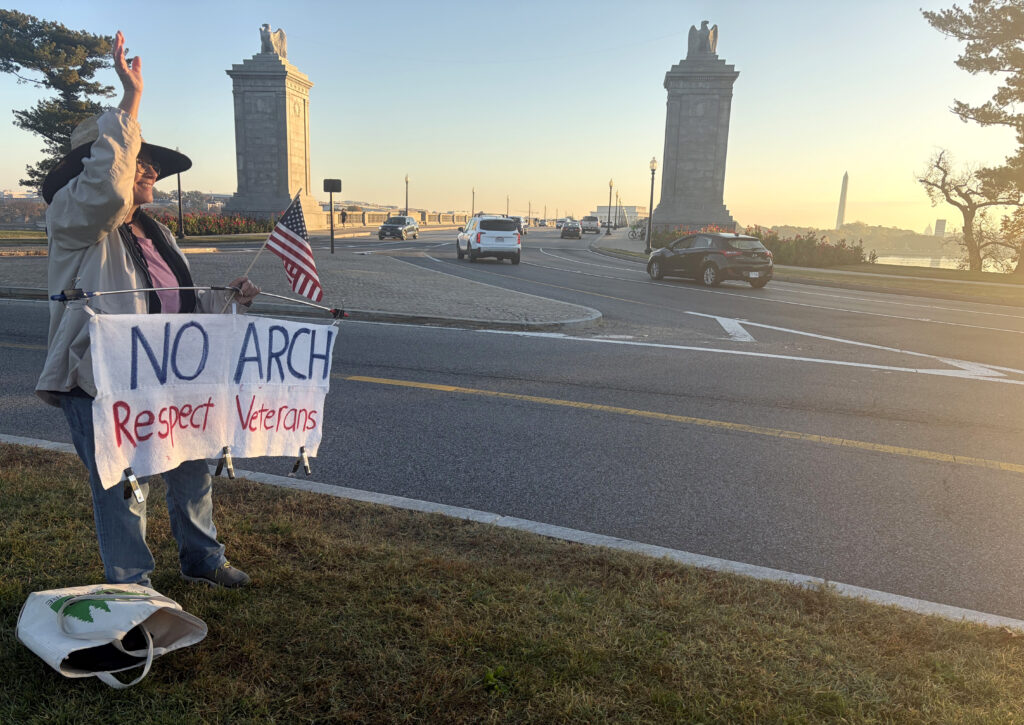
U.S. District Judge Tanya S. Chutkan is set to weigh arguments Friday afternoon in an existing lawsuit over whether the arch can proceed. Trump wants to build the arch in Memorial Circle, a traffic roundabout tucked inside Washington’s boundaries and near Arlington National Cemetery.
Trump administration lawyers have said that they hope to win approval for the arch from a federal review panel on Nov. 5 and begin construction immediately afterward. Trump and his deputies have said that the arch should be built to mark the nation’s 250th anniversary. They say they have the authority to build it because Congress in 1925 authorized a different project at the site, which was never built.
The administration also has increasingly defended the project on national security grounds, as it did with Trump’s ballroom, and the president last month said that he would use the planned tourist site as a “military complex.” Defense Secretary Pete Hegseth told Chutkan in a legal filing this week that the towering arch would be a “generational national defense opportunity” to fend off drones and other threats.
Three Vietnam War veterans and a historic preservationist have sued to stop the project, saying it is unlawful because it has not received explicit approval from Congress and would harm their experience of visiting the cemetery. They also say that Trump’s announcement that the arch would be converted to a military complex means it needs further reviews.
They have urged Chutkan to halt the project before Trump can break ground, citing the president’s demolition of the East Wing, the administration’s removal of trees at the East Potomac golf course, and other examples of officials outracing the courts.
“Time and time again, this Administration has demonstrated that, if not enjoined from doing so, it will take irreversible steps to render its unlawful pet projects a fait accompli,” lawyers for Public Citizen, which is representing the veterans and the preservationist, wrote Thursday night.
Arlington County, parks advocates, architects, Democratic members of Congress and other groups have also urged Chutkan to block the project.
The White House encouraged several veterans groups this week to endorse the arch, positioning it as a tribute to veterans. The largest of those groups — the Vietnam Veterans of America — has since been roiled by the decision, and the group’s president has disavowed the endorsement, saying that the organization is neutral on the project.
In the past, federal review panels — comprising a bipartisan mix of architects, urban planners and other experts appointed by multiple presidents — served as referees on construction projects in and around Washington. Their feedback could slow projects for months or years and lead to significant changes, if not stop them altogether.
But Trump has remade those panels, firing Biden holdovers and installing close aides and allies — including his executive assistant — who have swiftly approved his most controversial projects.
As a result, federal judges have found themselves refereeing aspects of Trump’s construction projects, sometimes to their visible frustration.
U.S. District Judge Richard Leon, a Bush appointee who oversaw initial litigation over Trump’s ballroom, castigated the administration’s arguments and eventually ruled in March that the project was probably illegal. He repeatedly said that he did not want to be consulted on minutiae related to the project.
“I have no desire or intention to be dragooned into the role of construction manager,” Leon wrote in an April opinion, after Trump insisted that Leon’s earlier ruling allowed him to keep building the ballroom.
But Leon and subsequent judges repeatedly allowed construction on the ballroom to continue as months of litigation played out, meaning that the project rapidly raced toward completion despite uncertainty over its legality.
Chutkan, an Obama appointee, has invoked the ballroom case when deliberating over the arch this year, imposing controls on the administration’s actions at the Memorial Circle site.
Meagan Flynn contributed to this report.
The post D.C. government weighs suit to stop Trump’s arch, saying it will harm the city appeared first on Washington Post.