In March 2024, when Haiti’s gangs had joined forces and parts of its capital were literally in flames, El Salvador’s president Nayib Bukele took to X and defiantly boasted: “We can fix it.”
Now, more than two and half years later, following the Oct. 18abduction of four Salvadoran soldiers who were members of a United Nations-backed international force, Mr. Bukele is making his move.
In a step backed by the Trump administration, El Salvador sent more than 2,000 soldiers to Haiti this week, in what experts say is one of the largest bilateral military deployments to the island, one that threatens to escalate an already precarious security situation on the ground.
The extraordinary military operation in the Caribbean, outside the framework of a U.N. backed mission, is highly unusual, raising questions about whether it represents a new, more aggressive form of intervention.
If successful, the move could raise Mr. Bukele’s international standing even further, as the leader who pulled Haiti out of crisis when other nations either refused to help or were incapable.
Experts, however, fear that Mr. Bukele’s reputation for a no-holds-barred approach to fighting illegal armed groups could result in large numbers of civilian casualties, escalating violence in a country that already has seen more than 5,000 killings this year.
“The risks and the stakes are incredibly high,” said Romain Le Cour, the director of the Haiti Observatory at the Global Initiative Against Transnational Organized Crime. “Are Bukele and his troops becoming the vehicle for a new form of intervention, more direct and less constrained by multilateral rules, that allies of Washington carry out on its behalf?”
In a post in Creole on X on Thursday, Mr. Bukele threatened to “teach the gangs a lesson.”
In the post, whichincluded a video showing soldiers getting on a plane and military gear apparently being loaded for transport. he added: “This is not an operation against the Haitian people, nor an invasion of Haiti.”
Mr. Bukele has gained worldwide renown because of his campaign to dismantle Salvadoran gangs, though critics say that has come at the cost of civil liberties.
The Salvadoran leader, in his post, suggested that he can now transfer his strategy to Haiti and help wrest the country back from gangs, succeeding, as Mr. Bukele noted, where the international community has failed.
“We went through the same suffering that Haiti is going through today,’’ Mr. Bukele wrote. “But we managed to escape it.”
The quick deployment of thousands of Salvadoran soldiers follows a United Nations-backed mission called the Gang Suppression Force that has struggled for a year to reach a similar troop level.
Haiti now has not one, but two, international forces battling thousands of gang members who have seized control of much of the nation’s capital of Port-au-Prince — in addition to private military contractors from abroad armed with drones who work with the Haitian National Police.
The United Nations on Friday confirmed that the Salvadoran forces will not be part of the Gang Suppression Force already on the ground. But it remained unclear how long they would stay or whose command the Salvadoran troops would be under. Mr. Bukele’s office did not respond to a request for more details on his plans for Haiti.
Mr. Bukele said El Salvador was paying for up to 90 percent of the mission, though a spokesman for U.S. Southern Command said the Trump administration provided at least one flight to transport Salvadoran troops, but declined to provide more details.
The U.S. State Department did not respond to a request for more information. The Department of Defense declined to comment.
President Trump spoke to Mr. Bukele on Tuesday and expressed support for his efforts to find and save the four abducted Salvadoran military personnel in Haiti, according to a U.S. official who spoke on the condition of anonymity to detail the conversation between the two leaders.
The conversation was first reported on Friday by Axios.
Mr. Bukele’s is resting his credibility to assist Haiti on his history of cleaning up his small Central American country, which was once among the world’s most dangerous, and is now among its safest. A decade ago, El Salvador had a staggering homicide rate, but Mr. Bukele incarcerated more than 80,000 gang members, many of them after mass criminal trials.
In 2022, he sent 10,000 troops to seal off a town and hunt for gang members. A year later, he sent 5,000 soldiers to a city where a police officer had been killed.
On Wednesday, Prime Minister Alix Didier Fils-Aimé of Haiti released a statement welcoming the deployment.
“The Haitian Government expresses its solidarity with the Salvadoran military personnel and their families, and reaffirms its determination to work with its partners to restore security and stability in the country,” his office’s statement said. (His office did not respond to requests for further comment.)
The last foreign military deployment to Haiti outside an official U.N. mission was in 2004, when the United States, Canada and France sent troops after the military deposed President Jean-Bertrand Aristide, according to Jake Johnston, a researcher for the Center For Economic Policy Research who has been tracking El Salvador’s flights to Haiti.
It was El Salvador’s largest foreign deployment, he added, since the country’s so-called soccer war with Honduras — in 1969.
Having overlapping and competing forces on the ground could spell trouble for Haiti, he said.
“On paper, this looks like a nightmare for coordination,” Mr. Johnston said. “Stepping back, there is a huge risk that increased security operations lead to lots of death and destruction but do little to address the broader ecosystem of violence.”
.
The Salvadoran deployment, experts said, is a blow to the U.N.-backed force, which has strict rules of engagement but has widely been viewed as too slow and timid.
The international mission did not respond to a request for comment.
Haiti has been in the throes of extraordinary levels of gang violence for at least five years. Its last elected president was assassinated in 2021, which sent the already volatile country into a spiral of violence. At least 22,000 people have been killed since.
In 2024, competing gangs teamed up in a coordinated effort to attack government institutions, such as police stations and prisons. Entire neighborhoods emptied out as people fled.
After an international police mission led by Kenya failed to quell the violence, the U.N. Security Council last year authorized the current force. Billed as an aggressive crime-fighting mission five times the size of the Kenyan-led mission and with arrest powers, it arrived in April.
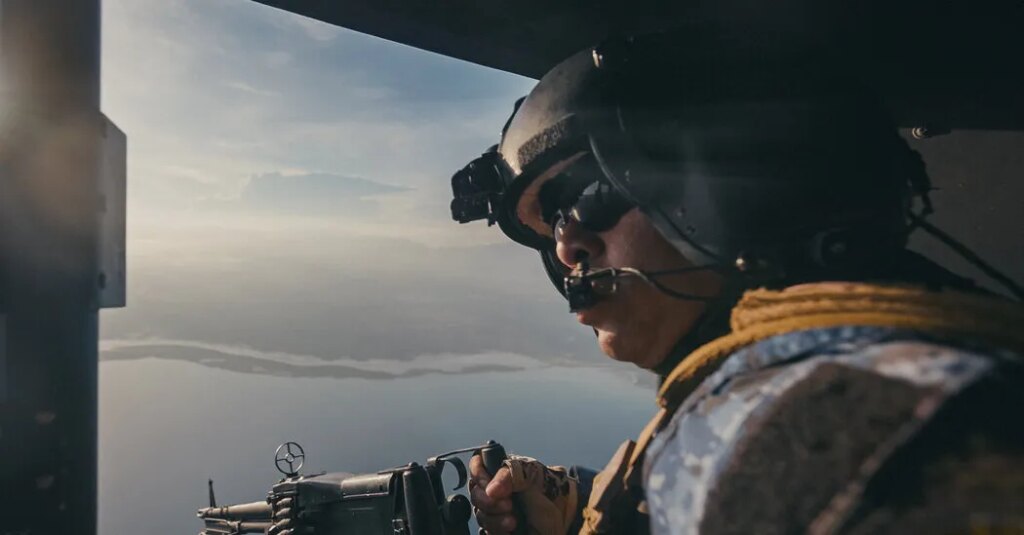
But six months in, it has about 2,000 of its promised 5,500 soldiers, from Chad Mongolia, and several other nations. Its helicopter unit is staffed by Salvadorans.
The four abducted Salvadorans came under fire while driving through a gang stronghold and have not been seen since. Remains were found last week, but have not been confirmed to belong to the men.
Mr. Bukele initially sent several hundred special forces to help the Gang Suppression Force look for the men, who were aviation technicians. But it is unclear whether the U.N.-backed force has continued the search, which could explain Mr. Bukele’s frustration.
“All we want is for our four aviation technicians to return home,” Mr. Bukele wrote.
Robert Fatton Jr., a Haiti-born political scientist at the University of Virginia, said the new Salvadoran mission shows that the force managed by the U.N. has so far been “incapable” of neutralizing the gangs.
“The question is whether these troops can do what Bukele thinks they can do, and whether the Trump administration is outsourcing the Salvadorans to bring a modicum of order in Haiti,” Mr. Fatton said. “It seems clear that the Haitian government is not in charge of what is taking place in its own territory.”
Zolan Kanno-Youngs and Eric Schmitt contributed reporting from Washington.
The post Could El Salvador’s Bukele Be Haiti’s Savior? appeared first on New York Times.