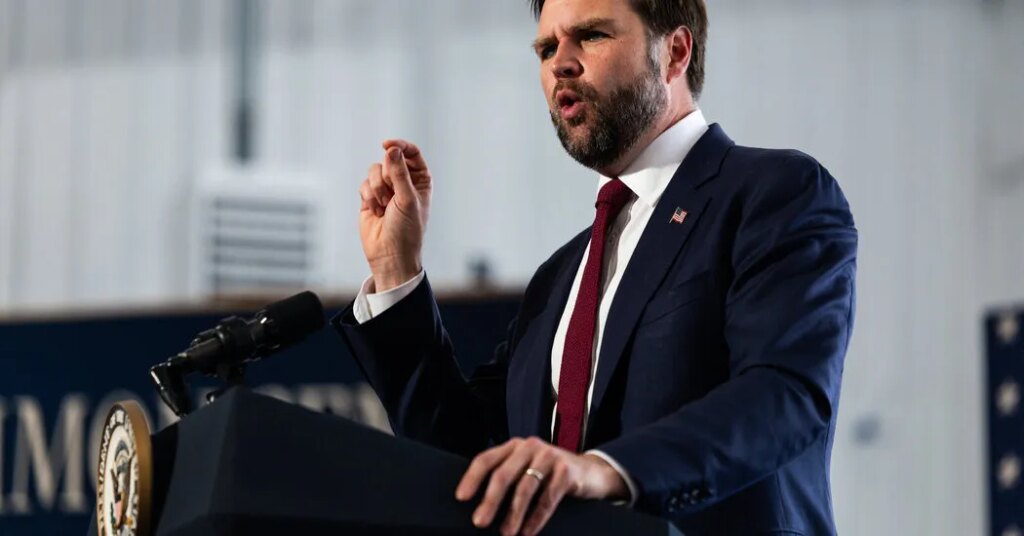
Vice President JD Vance has contacted a top Iranian political and military official to propose a renewal of comprehensive peace negotiations, according to a senior U.S. official and an Iranian official with knowledge of the communication.
Mr. Vance made the outreach in a letter sent last week via Qatari meditators and delivered Sunday to Gen. Mohsen Rezaei, the secretary of the Supreme National Security Council and former commander in chief of the Revolutionary Guards Corps, the officials said. In the letter, Mr. Vance suggested that American and Iranian officials meet soon, adding that he would lead the talks for the United States.
The proposal was received well by Iran’s leaders, many of whom view Mr. Vance as an influential figure who could help bring an end to hostilities, the Iranian official said. Mr. Rezaei was expected to formally reply by Thursday.
Mr. Trump read the vice president’s letter and approved it before it was sent to Tehran, the U.S. official said. The White House referred comment to Mr. Vance’s office. A spokesman for Mr. Vance declined to comment.
The outreach by the vice president comes at a tense moment. President Trump has been weighing a possible renewal of active strikes against Iran, potentially after next Tuesday’s midterm elections. The U.S. military has drawn up an expanded list of targets to strike, including energy infrastructure and other sites vital to the Iranian economy.
Iran has warned that it would retaliate fiercely, targeting infrastructure and underwater cables in the region. And U.S. officials said last week that Iran was in advanced stages of planning attacks against Americans in the Middle East and other regions.
Mr. Vance’s missive made clear that a resolution to the nuclear question was necessary and Iran’s nuclear program must be on the negotiating table from the start, both officials said.
Mr. Vance stressed in the letter the necessity of Iran and the United States’ resolving the conflict through direct negotiations, the officials said.
The Wall Street Journal reported earlier on Mr. Vance’s outreach to Iran.
The letter did not specify a time or place for talks to be held, but both officials said direct negotiations could potentially start as early as next week in Qatar or Turkey.
If Tehran accepts Mr. Vance’s offer, the negotiations would technically begin without a precondition, Iranian and American officials said.
“While our Brave Armed Forces are fully prepared to defend the Homeland, Iran continues to give diplomacy a chance to succeed,” Iran’s foreign minister, Abbas Araghchi, said Wednesday in a post on social media. “We remain in close and ongoing contact with intermediaries to review ideas that can ensure implementation of our 7-Day Plan in even less than a week.”
The letter marks Mr. Vance’s latest effort to try to end a conflict that has upended the global economy, divided the Republican Party and may contribute to Democratic victories next week. A recent poll from The New York Times and Siena University found that 65 percent of voters disapprove of Mr. Trump’s handling of the war in Iran.
The American official said Mr. Vance wrote to Mr. Rezaei because it became clear to U.S. officials that they needed to directly speak with someone in Iran’s leadership who had influence over the hard-liner faction, who are opposed to a deal, and the Revolutionary Guards.
Mr. Trump tasked Mr. Vance, who privately expressed opposition to going to war with Iran, with leading negotiations earlier this year. He traveled to Pakistan in April and met with Iranian leaders in a marathon session that ended without any resolution.
In recent weeks, there has been a frenzy of diplomatic efforts between senior officials from Qatar, Pakistan, Turkey and Saudi Arabia who traveled to Iran to discuss de-escalation. Two Iranian officials said these meetings were centered around mediators voicing concerns about the region falling into mayhem and destruction if another round of fighting resumes. Regional leaders have encouraged Iran to be flexible and give concessions on its nuclear program to avoid a war.
Mr. Rezaei was appointed to his role in August by Iran’s new supreme leader, Ayatollah Mojtaba Khamenei. His office has said that he met with the supreme leader recently and was instructed to get the country out of this current limbo status of “no war, no peace,” by following a seven-day plan that Iran has proposed to Washington, according to Iran’s state media.
Iran’s seven-day plan, which the United States has rejected, calls for a series of steps Washington must take, including lifting a naval blockade of the Strait of Hormuz and releasing some of Iran’s frozen assets. Iranian officials said Iran would then open the strait and immediately begin negotiations.
The post Vance Proposes Restarting Peace Talks in Outreach to Iranian Official appeared first on New York Times.