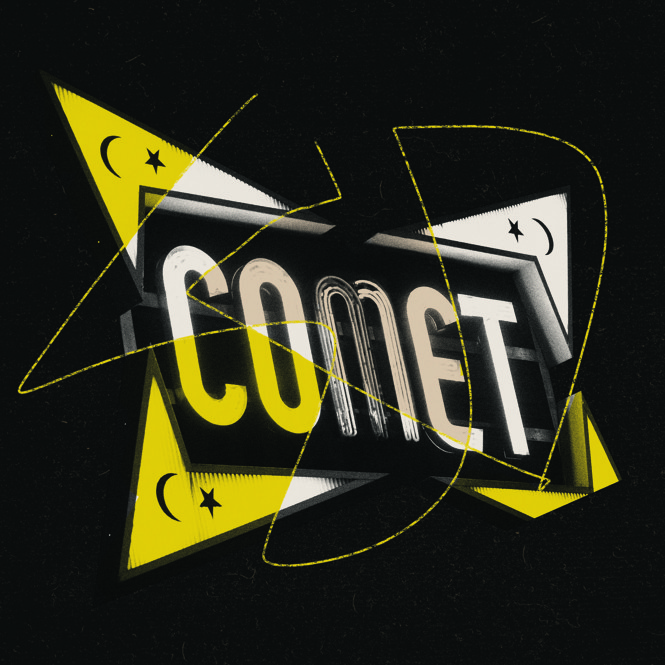
Editor’s Note: This story is one in a three-part series commemorating the 10-year anniversary of Pizzagate, a conspiracy theory that led to a shooting at the Washington, D.C., restaurant Comet Ping Pong in 2016. Read Kaitlyn Tiffany’s analysis on the legacy of Pizzagate and Ross Andersen’s story about Comet Ping Pong.
In the video, recorded from the dashboard of his Toyota Prius, he looks at times like he’s on the verge of tears. Edgar Maddison Welch makes a point to look into the camera when he speaks. That’s because the video is for his two children. He speaks slowly; it’s unclear whether he’s weighing each word or simply unsure of what to say. Somewhere in the back of the car are the AR-15, the shotgun, and the .38-caliber revolver he’s brought with him.
“I can’t let you grow up in a world that’s so corrupted by evil without at least standing up for you, and for other children,” he says. His demeanor is calm and there’s resignation in his voice. “Like I’ve always told you, we have a duty to protect people who can’t protect themselves and do for people who can’t do for themselves. That’s what I’m trying to do. I hope you understand that one day.”
Back home in Salisbury, North Carolina, his girlfriend was not pleased. He’d left the children with her early that morning, while she was still asleep. He’d texted her that he loved her, and she’d responded with a barrage of angry replies; “idk what the fuck Ur doing it’s really starting to freak me out,” she’d written. “Jus know that the ppl u love R suffering too back home.” This impromptu six-hour road trip was nothing more than a “selfish lil adventure.”
He did not see it that way. This was God’s work. Not long after leaving home, he’d texted a friend a verse from the Book of Isaiah: “He has sent me to comfort the brokenhearted and to proclaim that captives will be released and prisoners will be freed.” Tattooed on his back was a different verse from the same book—that “those who hope in the Lord” will be made strong in his image. “They will run and not grow weary, they will walk and not be faint.”
Welch, who went by his middle name, Maddison, must have felt, in that moment, like he was living the scripture. Near the end of his journey, he texted his friends, asking them to take care of his family. Finally, around 3 p.m. on December 4, 2016, he arrived at his destination: a family pizza restaurant in an affluent neighborhood of Washington, D.C.
He left his phone in the car but brought the guns. Holding an assault rifle across his chest, the 28-year-old walked through the front door of Comet Ping Pong in search of something that didn’t exist. The employees and families dining inside who saw him enter panicked and scrambled to leave. Just 24 minutes later, Welch walked out the same door, unarmed, with his hands in the air. Nobody had been hurt, but something had suddenly changed.
Welch had gone to Comet Ping Pong to look for proof of a global elite-pedophile ring in the basement. He’d been watching YouTube videos from online shock jocks, who suggested that Comet was the site of untold horrors. It made him feel sick. Maybe he thought he would come across a hidden room full of shackled children, or a network of tunnels. Perhaps, as the conspiracies suggested, he’d catch the Clinton or Podesta families in some grotesque act. The scenario he hadn’t prepared himself for was the one in which he found nothing at all. After firing three shots at the lock of the storage-closet door, Welch saw that it contained no secret room, no ring, no conspiracy.
The story of Welch, the Pizzagate shooter, as it is often told, is that of a man searching for a revelation that never arrived. But that’s not true. Welch experienced a genuine epiphany: It seems that, after entering, he could no longer deny the reality that Comet was, as any reasonable person could see, just a regular restaurant. Faced with the truth, he peacefully surrendered to police.
Those following the news experienced a revelation, too, only the opposite: Welch represented an incursion of a dark, lawless online world of lies into our reality. Ten years ago, this reckless act felt more like a glitch of internet-addled, lone-wolf vigilantism. Over time, Welch has become a sadly familiar archetype—a poster boy for a long-running crisis that includes QAnon and January 6. In the aftermath of Welch’s arrest, the gunman famously told The New York Times, “The intel on this wasn’t 100 percent.” He didn’t know it then, but the phrase would turn out to be a solid epitaph for our paranoid and turbulent times.
“We are a family of rescuers,” Welch’s mother, Terri Welch, wrote in a statement shortly after the shooting. Those who knew the family described her and the shooter’s father, Harry Welch, to me as both religious and civic-minded. Terri had become a volunteer firefighter in her mid-50s, and Harry Sr. seems to have done it all. According to his IMDb page, in addition to being a screenwriter, Harry Sr. was an NRA firearms instructor who taught gun-safety classes to elementary-school students; a foster parent; and a former member of drug task forces. He claims he has held seven Guinness World Records, only one of which could I find any evidence of: a 1986 record for most consecutive one-armed push-ups. While Welch was growing up, Harry Sr. served as executive director of Protect-A-Child, a nonprofit organization for preventing child abuse and abduction. The family ran an animal rescue too. Christian Dionne, Welch’s childhood friend, told me that their house was a “wild place,” full of dozens of dogs, as well as exotic and taxidermied animals, including at least one tiger.
Maddison—his friends sometimes called him Momo—had a magnetic personality. He was known to be easygoing and open. He was “the epitome of cool” even at a young age, Dionne said. A goofball obsessed with early-aughts shows such as Jackass and punch-you-in-the-nuts humor, he was privately nerdy. On weekend nights, Welch’s friends would hangout at Harry Sr.’s store for LAN parties, where they played Counter-Strike until the early hours. Welch was, according to Dionne, “very into weapons” and had scythes and throwing stars.
From what can be gleaned from court records and those who knew him, Welch’s life after high school suggests an optimistic, though frenetic personality. He was prone to taking bold action like his parents: In the fall of 2009, he embarked on an impulsive, poorly timed hike of the difficult, 500-mile Colorado Trail. A local newspaper interviewed him about his adventure, depicting him as indefatigable, energized by braving blizzard conditions and even fending off a bear. In 2010, he flew down to Haiti for three weeks with a church group after a devastating earthquake and helped rebuild an orphanage. According to the pastor who accompanied him, he became so invested in the kids that he would “forgo eating and give his food to the children.”
Welch surfed, hiked, and hung out with family, but he mostly seemed aimless. His employment history was spotty. “I had the impression he was basically kind of homeless for these periods,” Demian Ahn, the lead prosecutor in Welch’s case, told me. He was raising his two kids as a single parent. Some years later, he joined the local fire department as a volunteer firefighter and began working toward a paid role.
And then, 41 days before his arrest at Comet, on the way to his job at a grocery warehouse, Welch hit a boy with his Buick LeSabre. Thirteen-year-old Kenyatta Belton was badly injured and airlifted to the hospital. Welch, who was driving the speed limit and not impaired, reportedly stayed with Belton at the scene.
The accident, Welch’s parents told a reporter, changed his behavior. Belton survived, but it’s easy to imagine Welch drawing a parallel to a much earlier incident in his life—something he’d never talked about, according to a friend. In 1997, just before Welch turned 9, his brother, Harry Jr., died in a car accident. After the incident with Belton, according to The Washington Post, Welch suffered nightmares and was racked with guilt. He grew anxious and moody, and it seems like his life soon began to unravel. He was caring for his children during the day and working 12-hour shifts at night. At some point, the fire department removed Welch from its roster for being inactive.
The narrative that developed after the Pizzagate shooting was that Welch was something of a hyper-online lunatic. But compared with many of the extremists who followed, Welch had a scant online footprint. The 2009 local-news article about his hiking expedition mentions, with no other context, that the trip had “broken his addiction to the Internet.” Still, Welch had little more than a Facebook page. The Daily Beast reported that he’d “liked” a Facebook page for Alex Jones’s former conspiracy site, Infowars. Welch later told The New York Times that he thought Jones “touches on some issues that are viable but goes off the deep end.”
Ahn, who had access to Welch’s internet history, told me that he saw a high volume of online activity in the lead-up to the shooting, especially on Facebook Messenger. “His brain was moving so fast to try and connect dots to make sense of things and with a very undisciplined religiosity,” he said. Available court records, which include data collected from Welch’s phone, show one multihour online binge on the evening of December 1, 2016—mostly YouTube, Messenger, and lots of texting.
Welch told reporters that he’d first heard of Pizzagate through word of mouth. The conspiracy theory had surfaced online just before the 2016 presidential election; trolls and vigilante Reddit investigators had seized on leaked emails from Hillary Clinton’s campaign manager, John Podesta, and were suggesting that Washington elites had organized an elaborate child-trafficking ring that ran through places such as Comet Ping Pong.
In court evidence, you can see that Welch had sent friends links to feverish videos about Pizzagate that have since been taken down. In one, Jones tells his audience, “You have to go investigate it for yourself.” Another Infowars video explicitly references Comet Ping Pong and ends by calling out its owner, James Alefantis: “Either you are the unlucky victim of a fake-news onslaught [due to your own poorly initiated publicity] or a decades-old pedophile ring operating in the power-hoarding shadows of Washington, D.C., is about to be opened from your front door.”
Four days after sending the video, Welch walked through that front door. Three months later, he pleaded guilty to interstate transportation of firearms and ammunition, and assault with a dangerous weapon. At his trial, his friends and family spoke to his character, spirituality, and devoted parenting. Comet Ping Pong employees delivered emotional testimony about their post-traumatic stress and how Welch had shaken their community with violence. Some offered their empathy to Welch, who apologized at his sentencing but did not explicitly renounce Pizzagate.
Welch was sentenced to 48 months in prison. And, on May 28, 2020, he was released into the early months of the pandemic. His life, or what can be gleaned from it through social media and news reports, seemed to follow two paths at once. The first shows a man embracing his second chance: Welch got a job at a restaurant and reunited with his girlfriend—the one he’d left with the kids. The pair had two children together after his release. Welch appears to have made a new Facebook account, using the name “Eddie Wood.” Photos on his and his girlfriend’s profiles show Welch quite active: hiking with his family, smiling with his parents at a Christmas carnival, attending a comics convention. He appears consistently happy—always making funny faces for the camera. Scrolling through the idyllic posts, I was reminded of a quote he’d given to his hometown paper in 2009: “I can’t imagine what the rest of the world offers.”
Welch’s second path is documented via police blotters and obituaries. In February 2024, Welch and his girlfriend were arrested early one morning. Welch was booked after a cop found heroin and drug paraphernalia in his car; his girlfriend received extra charges for hiding meth on her during their jail booking. In his mug shot, Welch appears disheveled, his eyes nearly closed. On Christmas Day 2024, Welch was booked by Kannapolis, North Carolina, police for a failure to appear in court for possession of drug paraphernalia.
And then, on January 4, 2025, police stopped a vehicle that Welch was riding in. The officer—the same one who had arrested him a few days earlier—recognized Welch and approached his door. Welch pulled out a handgun and pointed it at the officer. Officers told him to drop the weapon. He did not. The officers opened fire. Welch was taken to the hospital, where he died from gunshot wounds on January 6.
What is somebody supposed to do with the entirety of Welch’s awful story? It’s possible to see Welch as little more than a selfish bully. Or a sad sack, a once-popular kid who peaked in high school, who didn’t get out and then watched his life fall apart. Maybe he was a dupe who immediately realized he was wrong after going too far. A devoted dad led astray by the lies of others, or a religious nut who abandoned his girlfriend and children after watching some YouTube videos.
Ten years on, as I’ve pored over the contents of his ruined life and spoken with the few people who were willing to relive the story with a reporter, all that’s clear is how little Welch, the man, means to Pizzagate. When he failed to give conspiracy theorists the evidence they craved that day, they dubbed him a crisis actor. He was neither memorialized nor remembered, other than as a harbinger of the darkness that might follow in the then-new Trump era. The only thing that made him newsworthy at all was the potential violence he’d been prepared to carry out. His legacy may be best captured by a portion of the original URL of the Daily Beast’s story about the shooting: fake-news-delivers-real-gunman.
What exactly did the Pizzagate movement mean to Welch? Ahn, the prosecutor, told me he believed that Welch’s fears and anger around Pizzagate were genuine. Unlike a lot of other modern shooters, who seem to be performing for an online audience, he didn’t film his attack, and it doesn’t appear that he did it for clout. Nor does it seem like Welch made any attempts to capitalize on his infamy with the Pizzagate crowd. He seems to have been a true believer. And yet, there is no record that he continued with the cause after prison. When he got out, he went back to his life in Salisbury.
For the rest of society, Welch primarily functioned as a model for the rise of a type of guy who, faced with his own unmooring, finds momentary purpose in a durable, networked fantasy. “If you don’t have a whole lot going on in your life, we’ve seen people can get so wrapped up in these narratives that they start acting as if they’re real,” Logan Strain, a co-host of the QAnon Anonymous podcast, told me. “It becomes this participatory soap opera.”
Two years after Welch entered Comet Ping Pong, Matthew Wright barricaded a bridge to the Hoover Dam with an armored vehicle, holding a sign that read Release the OIG report, referring to a set of documents that QAnon believers thought would expose Democrats engaging in criminal and conspiratorial behavior. Then there was Cesar Sayoc—a man who sent 16 pipe bombs to CNN, as well as Barack Obama, Joe Biden, Hillary Clinton, and other politicians critical of Donald Trump. His van, discovered at the time of his arrest, was covered in 4chan-style memes. The Tree of Life shooter, Robert Bowers, was posting on the alt-right social network Gab up until opening fire in the synagogue. David DePape, who had been obsessed with Pizzagate and QAnon content, broke into the home of Nancy Pelosi and assaulted her husband with a hammer.
These men left behind digital breadcrumbs that would become the hallmarks of a modern extremist—mounting evidence of people becoming more and more angry, frantic, and erratic until they finally take matters into their own hands. Some observers trace a straight line from Welch to the individuals who, fueled by a false belief that the 2020 election had been stolen, stormed the Capitol on January 6, 2021. “It’s all people reaching the climax of the fever dream,” Strain said. “And it starts to unravel as they cross the threshold.” When that happens, some, like Welch, lay down their weapons; others turn to unspeakable violence.
The underlying dynamics behind the YouTube-to-gunman pipeline are nothing new. In his famous 1964 essay, “The Paranoid Style in American Politics,” Richard Hofstadter wrote, “We are all sufferers from history, but the paranoid is a double sufferer, since he is afflicted not only by the real world, with the rest of us, but by his fantasies as well.” The difference now is that our technology compounds and democratizes that suffering via an algorithmic feedback loop of fantasies that grow only more angry and deranged. Today, we can all be sufferers of history twice over: once by real-world violence, and again by the imagined world that the paranoid force us to attend to.
Moments before Welch was sentenced, a Comet Ping Pong employee addressed the defendant directly. “I’m almost sorry you were duped,” the employee said. “That you fell into the trap of an orchestrated game created by hateful people whose intention it is to create fear and mistrust amongst the public. I’m almost sorry that the same people that inspired you to travel from North Carolina and come to my place of work with an assault rifle now believe you’re a hired actor. That’s how misinformation works and the game is played.”
There’s grace in those words. They also illustrate the cycle of suffering bestowed on those who choose to submit to lies. Pizzagate didn’t end when Welch found nothing. To the conspiracy machine he briefly served, he was ultimately little more than a useful idiot, grist for the mill. His death eight years later made only brief headlines, overshadowed by the anniversary of the Capitol riots and a forthcoming Trump inauguration. Many of those who had trafficked the lies that led Welch to Comet Ping Pong didn’t even note his passing.
Welch’s is a particularly American tragedy. “Maddison was always, especially after his brother died, looking for something to believe in,” Dionne, his childhood friend, told me. And so Edgar Maddison Welch entered a pizza parlor hoping to find a monster. Turns out, it was him.
The post The Martyr of Pizzagate appeared first on The Atlantic.