Morgan Bazilian is the director of the Payne Institute for Public Policy at the Colorado School of Mines.
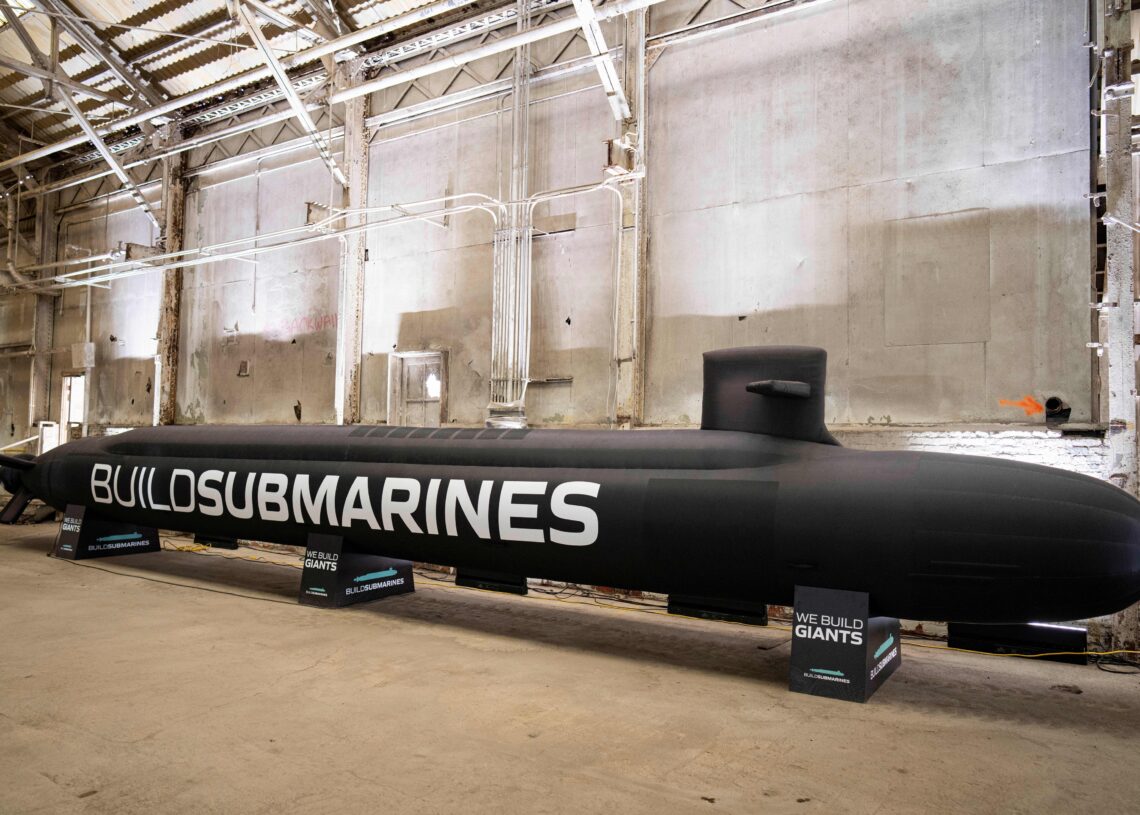
Earlier this month, President Donald Trump and Defense Secretary Pete Hegseth went to Sparrows Point, the old Bethlehem Steel shipyard south of Baltimore, to mark a massive new investment in American submarines. The defense company Anduril will spend $3.7 billion of its own money to build a yard there, and the Navy has awarded it a contract worth up to $2.9 billion.
The new facility, Arsenal-2, could go a long way toward repairing the United States’ submarine industrial base. But it will succeed only if the U.S. takes steps to strengthen the entire supply chain.
Since 2011, the Navy has ordered about two attack submarines per year, but production has recently averaged just 1.2 per year. Adm. Daryl Caudle, chief of naval operations, told Congress in May that output will reach two per year around 2032 — four years later than the Navy projected in 2023. A third of the current fleet is undergoing or awaiting maintenance, and the U.S. has agreed to sell three submarines to Australia under the AUKUS defense partnership, contributing to the need for more boats.
The production shortfall is largely because submarines and their supply chains are extraordinarily complex. Only a few suppliers can cast and forge the large parts of a submarine’s propulsor, the device that drives the vessel through the water. The boat’s hull steel depends on a handful of mills and furnaces able to produce plate at the required sizes. Sonar arrays carry thousands of ceramic transducers that few companies in the world can make to U.S. Navy standards, and a Pentagon rule will next year bar defense contractors from purchasing China-sourced rare earth magnets that submarines rely on. Even the rubberlike tiles that help hide a submarine from enemy sonar are glued on with adhesives so finicky that changing the recipe can mean a long round of retesting.
Much of the focus in Washington is on the two companies that assemble attack submarines, General Dynamics Electric Boat in Connecticut and Huntington Ingalls’s Newport News Shipbuilding in Virginia. The Anduril facility is an effort to expand submarine production beyond the traditional builders. But equally important is the long chain of smaller firms — roughly 70 percent of which have no competitor — supplying those companies with critical components.
Congress and the Navy should hold the Anduril deal to three standards.
First, Arsenal-2 must add supplier capacity, not compete for it. The danger with any new shipyard is that it buys castings from the same overbooked foundry as existing yards and hires inspectors away from their suppliers, lengthening the queue elsewhere. To avoid this, the Navy and its prime contractors should give small manufacturers firm multiyear purchase commitments and help them finance new equipment and facilities.
Second, hiring for the Maryland shipyard should enlarge the skilled workforce. The project is expected to create direct jobs for 3,100 people. Anduril says it will recruit from commercial aerospace and automotive companies, high schools, and vocational schools — a sensible plan. If the company instead lures experienced welders and inspectors away from Electric Boat, Newport News and their suppliers, the industry gains far less.
Third, and perhaps most important: The components produced by Arsenal-2 must shorten submarine build schedules. The facility’s initial work will center on parts such as torpedo tubes, which will be delivered to Electric Boat and Newport News for final submarine assembly. A torpedo tube delivered early does little if the receiving yard lacks the labor or space to install it, so the Navy needs to align Anduril’s deliveries with the builders’ integration plans.
In 2024, the Government Accountability Office found that the Navy lacked a consistent way to judge whether its spending raised output. Anduril’s pay-for-results contract, which rewards demonstrated production outcomes, gives Congress a chance to demand better evidence. Lawmakers should note how many parts are accepted or sent back, and whether finished submarines actually exit the yards sooner.
No single plant will restore U.S. shipbuilding capacity immediately. When Arsenal-2 begins operations in 2030, what matters is whether attack submarines leave Connecticut and Virginia earlier because of parts arriving from Maryland. Bethlehem Steel’s Fairfield yard in Baltimore was celebrated during World War II for building 384 Liberty ships, an achievement that relied on engines made in machine shops nationwide. If Arsenal-2 is to be similarly lauded for increasing U.S. submarine production, nurturing the growth of small factories feeding the program will be essential.
The post What it will take to revive America’s submarines appeared first on Washington Post.