Nearly two decades after its last reincarnation folded, Life magazine is coming back to life.
The iconic magazine, known for its red-box logo and devotion to visual storytelling, will start publishing again next month as a quarterly print magazine. It enters a fractured media landscape that is worlds away from the publication’s midcentury heights of acclaim, before the internet, social media and artificial intelligence upended the business model of magazine publishing.
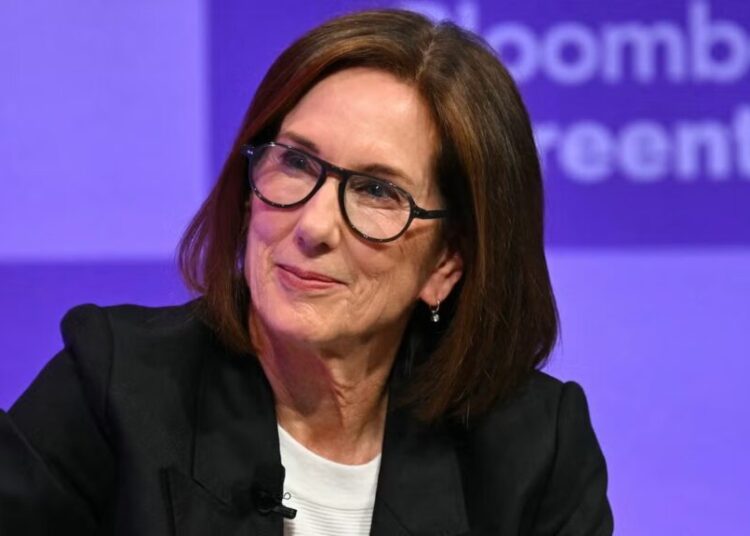
But Karlie Kloss, the model and entrepreneur who is backing the project through her Bedford Media company, says the legacy of the brand deserved to be reinvigorated and brought into the 21st century. In addition to a website and a social media presence, Life plans to expand into short-form video, documentary films and events.
“What made Life extraordinary was its ability to make the world feel closer,” Ms. Kloss said. “And our responsibility is to preserve and to protect that legacy.”
Life magazine was started in 1936 by Henry Luce, the founder of Time and Fortune magazines. Its first issue featured on its cover a black-and-white photograph by Margaret Bourke-White of the concrete Fort Peck Dam in Montana, part of President Franklin D. Roosevelt’s New Deal. It sold out instantly.
A monument to the power of photojournalism, Life magazine documented mid-20th-century America, including World War II, the space race and the civil rights movement. It showcased the work of photographers like Robert Capa, Alfred Eisenstaedt and Gordon Parks, leading to indelible images like one of a sailor kissing a woman in Times Square on V-J Day in 1945 and portraits of Marilyn Monroe and James Dean. It also first published Ernest Hemingway’s entire novella “The Old Man and the Sea” and commissioned Norman Mailer to cover the 1969 Apollo 11 moon landing.
The magazine’s circulation peaked in the 1960s, reaching more than eight million copies. But as the popularity of television began to upend the magazine industry, Time Inc. stopped publishing the weekly magazine in 1972. Life restarted in 1978, this time as a monthly magazine, until 2000, when Time Inc. announced it would cease regular publication.
Daniel Okrent, who was the editor of Life magazine from 1992 to 1996, said that despite the value of the Life logo and the quality of the content, it was “a constantly unprofitable magazine” throughout history.
“That’s the difficulty they’re walking into, not to mention the difficulty of a print product in this era,” he said. “Those that exist, exist because of the beneficence of wealthy patrons,” he added.
For the last 25 years, Life has appeared either as the occasional special issue or, briefly, as a weekly supplement for newspapers. A collection of its photos has been publicly available on Google since 2008, while the full archive of more than 10 million images is now held by People Inc., the publishing company that has part of the old Time Inc. portfolio.
Ms. Kloss acquired the rights to Life from Dotdash Meredith, the previous name of People Inc., in 2024 and put together a team to reimagine what it could look like in the modern era, which included the creative director Richard Turley, who had senior editorial roles at MTV, Bloomberg Businessweek and Interview magazine.
Mr. Turley said the new editors had taken the DNA of the old Life magazine but had not tried to produce a facsimile of it.
“The one thing that we really took from it was just this way that you have these kind of kaleidoscopic views of what it means to be human on the earth,” he said, adding: “One of the real joys when you look at those old magazines — and I’ve spent quite a long time doing that over the last few months — is that you never knew what was on the next page.”
Mr. Turley recruited Hugo Lindgren, a former editor of The New York Times Magazine; Eve Lyons, a former Times photo editor; and Caryn Ganz, a former Times pop music editor, as part of the core editorial team (details of which were reported earlier by the newsletter Puck).
In a letter from the editors to readers published on Wednesday, they paid tribute to Luce’s original prospectus for Life, which ends with: “to see and to take pleasure in seeing; to see and be amazed.” The team said it had used more than 120 contributors to create the first issue, themed “Where Are We Now?,” which “offers a window into an America searching for meaning: scientists and artists, entrepreneurs and athletes, children and octogenarians, coal miners and drone makers.”
The issue will come out on Nov. 23 as a large-format, 250-page print magazine retailing for $45, combining news photography with long-form journalism. There are no traditional print ads; instead the first issue is sponsored by Rivian and Figma.
“We’re living in this extraordinary time where there’s an abundance of images, but that doesn’t necessarily mean we’re seeing more deeply,” said Ms. Lyons, the director of photography. “I think there is a lot of value in slowing down and making looking feel meaningful.”
In the interview, Ms. Kloss said she was not involved in editorial decisions at the magazine, but was instead helping to build a business around the Life brand “that allows it to endure.”
Ms. Kloss, who is married to Joshua Kushner, a co-owner of Bedford Media and the brother of President Trump’s son-in-law Jared Kushner, previously bought the fashion publication i-D magazine and relaunched it last year. She is also a part-owner of W magazine.
“Building a successful media business takes time, and we’re focused on making measurable progress toward profitability rather than rushing to meet some arbitrary deadline,” Ms. Kloss said.
The post Life Magazine, Chronicler of 20th-Century America, Rises Again appeared first on New York Times.