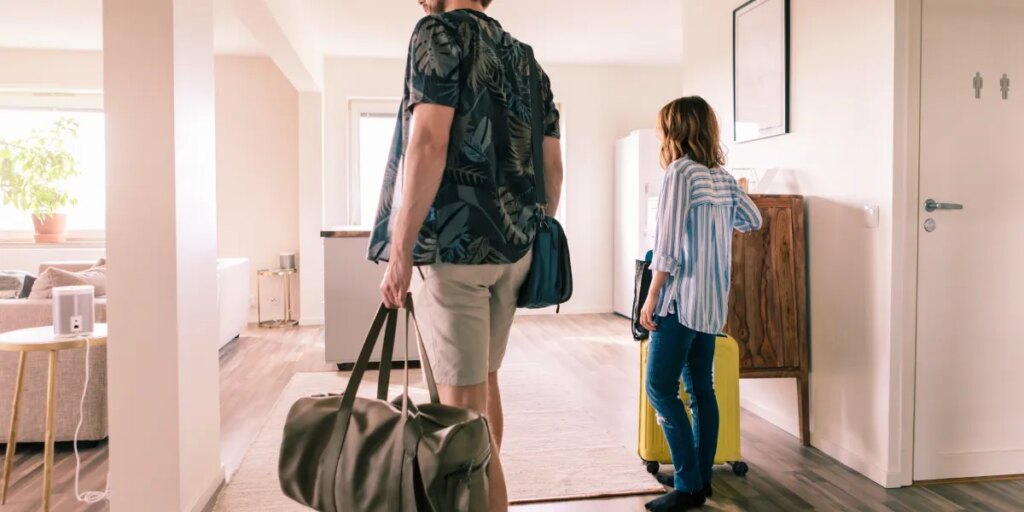
Airbnb guests who are tired of spending the final hour of their vacation stripping beds and scrubbing pans are about to get a break. Many hosts are not happy about it.
Under a new “reasonable house rules and requests” policy announced Oct. 20, Airbnb hosts generally can no longer ask guests to “complete tasks that require significant effort or time, or would typically be performed by a cleaner.” The company names three examples: stripping the bed, taking trash offsite, and washing and putting away dishes. The policy applies worldwide to reservations booked on or after Nov. 20, 2026. Existing bookings aren’t affected.
The change targets one of travelers’ most persistent complaints about the platform: paying a cleaning fee, then being handed a chore list anyway. CEO Brian Chesky acknowledged the frustration in 2022, saying checkout tasks should be reasonable. What’s new is a written policy with enforcement.
What Airbnb’s new rules actually ban
Hosts now choose from seven standard house rules. These cover maximum overnight guests, quiet hours, events, pets, smoking and vaping, commercial photography, and locking up at checkout. Anything beyond those counts as a “request.” Guests must follow house rules but are only encouraged to honor requests.
Lighter requests are still allowed, including asking guests to leave dishes in the sink, gather used towels, and sort trash and recycling. Airbnb says local circumstances can justify exceptions. Examples include requiring animal-proof trash bins in bear country or shorter showers during drought restrictions.
The policy goes beyond chores. Hosts must disclose all rules and requests in a designated section of the listing before booking. They can’t add new ones later through messages, signs in the home, or in person. Hosts also may not impose their own fines or penalties on guests; Airbnb points them instead to AirCover, its host damage-protection program. They can’t restrict access to advertised features, and any fee for an advertised feature must be included in the price shown at booking. Separate contracts are limited to situations such as legal or homeowners association requirements.
Requests that break the policy will be flagged in the listing editor, and hosts can appeal. If a violation persists, Airbnb may issue warnings, post a notice on the listing alerting guests, or reduce the listing’s visibility in search results.
Guests aren’t completely off the hook. Airbnb’s ground rules still require them to follow house rules, and the company says it may impose consequences for repeated or severe violations. It also says guests shouldn’t leave a listing in a condition that requires excessive or deep cleaning.
“House rules help guests understand what hosts expect, but we’ve heard from our community that they can be confusing, onerous, and hard to manage,” an Airbnb spokesperson said in a statement. “So we’ve redesigned them to make them easier to discover and clearer to set, alongside a new policy that keeps requests reasonable, with no surprises.”
Hosts push back with a petition and a blackout
The backlash was quick. A Change.org petition urging Airbnb to reverse the restriction has topped 10,000 signatures, up from the more than 5,000 CBS News reported days earlier. “These are not professional cleaning duties,” the petition argues. Some hosts are planning a booking blackout on Nov. 20, the day the policy takes effect, by closing their calendars. Others have threatened to leave the platform, remove kitchen access, or raise prices.
“Seems those Millennial loonies at Airbnb have [completely] lost the plot,” one host wrote on Reddit. “It seems they are taking ‘Stay like at home’ a bit too far.”
Another predicted guests would pay for it in reviews: “Just wait until guests start getting 3-star reviews instead of a 5-star review they would have gotten if only they’d taken 20 minutes to wash their pile of dishes.”
Not every host is opposed. “As a 13-year host and [long-time] guest, I think it’s wild that people add chores,” one wrote. A former host said hosts “have brought this on themselves with increasingly long and crazy demands and increasingly high cleaning fees,” calling the new rules “a reasonable way to curb that while still maintaining basic cleanliness/decency.”
Guests say it’s long overdue
Travelers have mostly cheered. “If I don’t have to clean dishes in a budget hotel with a kitchen suite, then an Airbnb…I shouldn’t have to clean either,” one guest wrote on Reddit.
“Hosts brought this upon themselves,” another said. “They charge high cleaning fees and still expect guests to do all the major cleaning. Customers complained, and now hosts are acting like they’re the victims.”
Some commenters say chore lists had already pushed them back to hotels. That raises the question of whether the new rules can win back travelers who left Airbnb over fees and hassle.
Many observers expect hosts to pass the extra work on to guests. Airbnb does not cap cleaning fees, and since April 2025, hosts have been able to fold them into the total price instead of listing them separately. Some hosts have already said they will hire more cleaning help and raise rates to cover it. If many do, the policy could make an already pricey platform even more expensive, undercutting the affordability complaints it was meant to address.
A business that keeps growing
The fight comes as Airbnb is posting some of its strongest results in years. In the second quarter, revenue rose 17% year over year to $3.6 billion, and the company raised its full-year outlook. Airbnb, which started in 2007 with air mattresses on a San Francisco apartment floor, now counts more than 5 million hosts and more than 2.5 billion guest arrivals all-time.
Airbnb has rewritten host rules under pressure before, including its 2019 crackdown on parties and nuisance guests. This time the test is whether the hosts who supply its homes accept the new rules or follow through on their threats to walk away.
The post Airbnb guests no longer have to wash dishes or strip beds. Furious hosts are threatening to boycott and raise cleaning fees appeared first on Fortune.