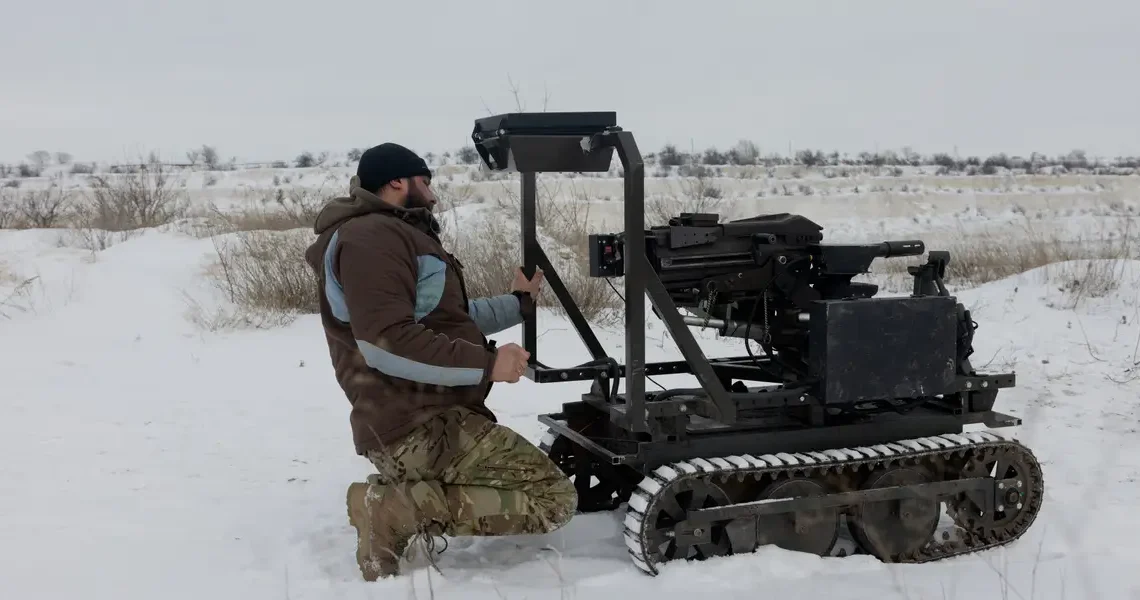
Ukraine is mounting grenade launchers on ground robots, allowing its forces to bring useful firepower closer to Russian troops without sending in soldiers to pull the trigger.
Grenades have long been important in Ukraine’s fight against Russia’s invasion, particularly in close-quarters trench combat, but the battlefield is changing.
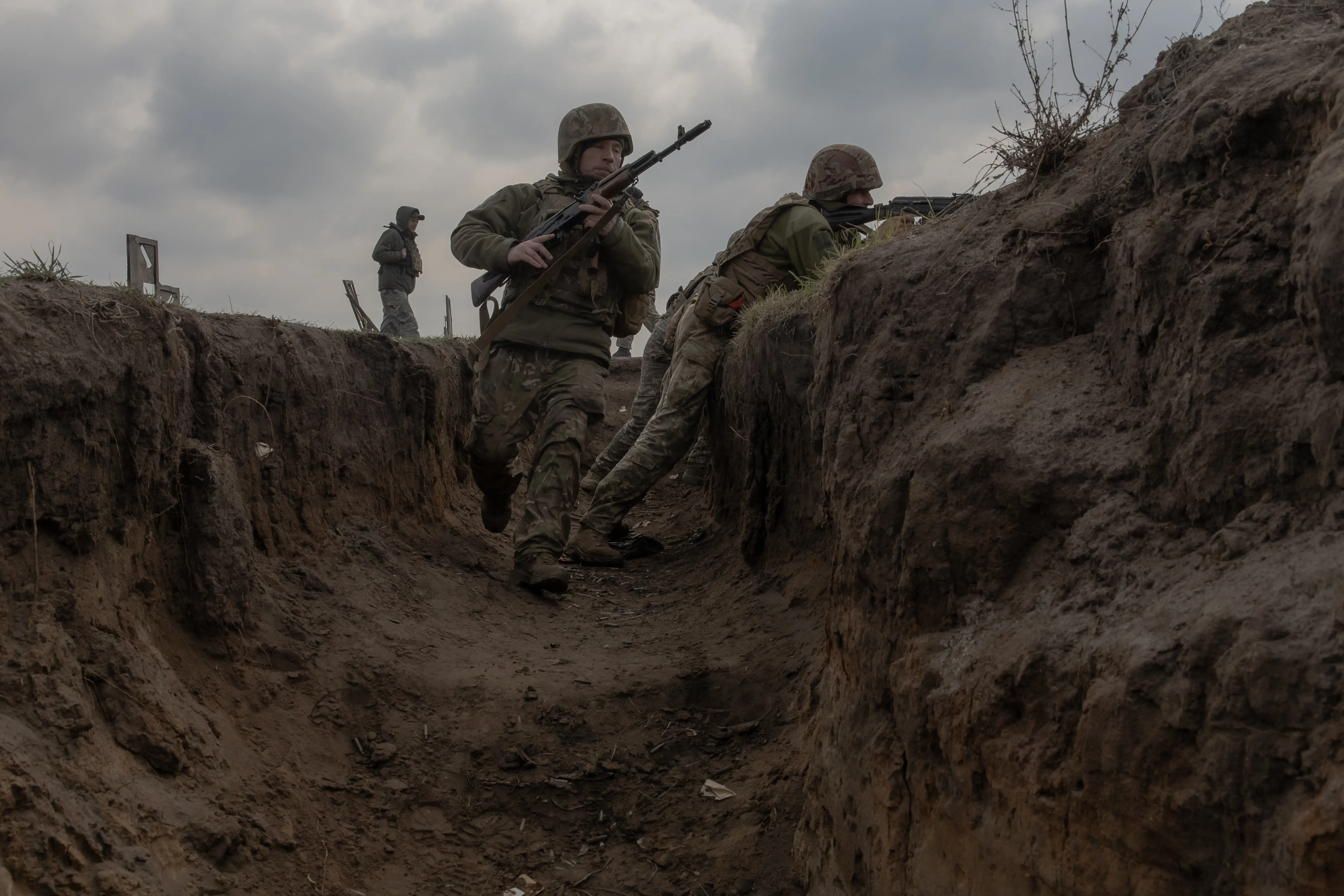
Troops increasingly fight in smaller force concentrations from scattered defensive positions rather than heavily manned continuous trench networks. Meanwhile, the growing “kill zone, which is swarming with drones, makes it harder for troops to approach these front-line positions. While infantry remains critically important, drones and robots are bridging the gap and taking over more and more missions, from logistics to medevac to assault.
Defense manufacturers told Business Insider that grenade launchers are increasingly being mounted on uncrewed ground vehicles, or UGVs, allowing soldiers to strike Russian positions from a safer distance.
Oleg Fedoryshyn, the director of R&D for the Ukrainian robotic and defense company DevDroid, told Business Insider that grenade launchers are useful because soldiers “don’t need to see the enemy to hit him.”
A soldier in hiding is easier to hit with a grenade launcher than, say, a machine gun, which is a line-of-sight weapon.
Now, soldiers can mount them on ground robots so that they don’t have to put themselves in harm’s way. A soldier-carried grenade launcher might have a range of a few hundred meters, but using a robot, an operator can be tens of kilometers away.
DevDroid’s TW-40 ground robotic system has a range of 70 kilometers on paved roads and up to 50 kilometers off-road, making it effective in the kill zone. And the mounted grenade launcher has a reach of 1.5 kilometers.
Ukraine has been using soldier-carried and truck-mounted grenade launchers since before Russia began its full-scale invasion in February 2022. The robots deliver similar firepower without risking human lives.
Ukraine’s Third Army Corps, for example, said in September that it used grenade launchers on robots to “dismantle enemy positions” in its Operation Vivaldi, characterizing it as “a new tactic.”
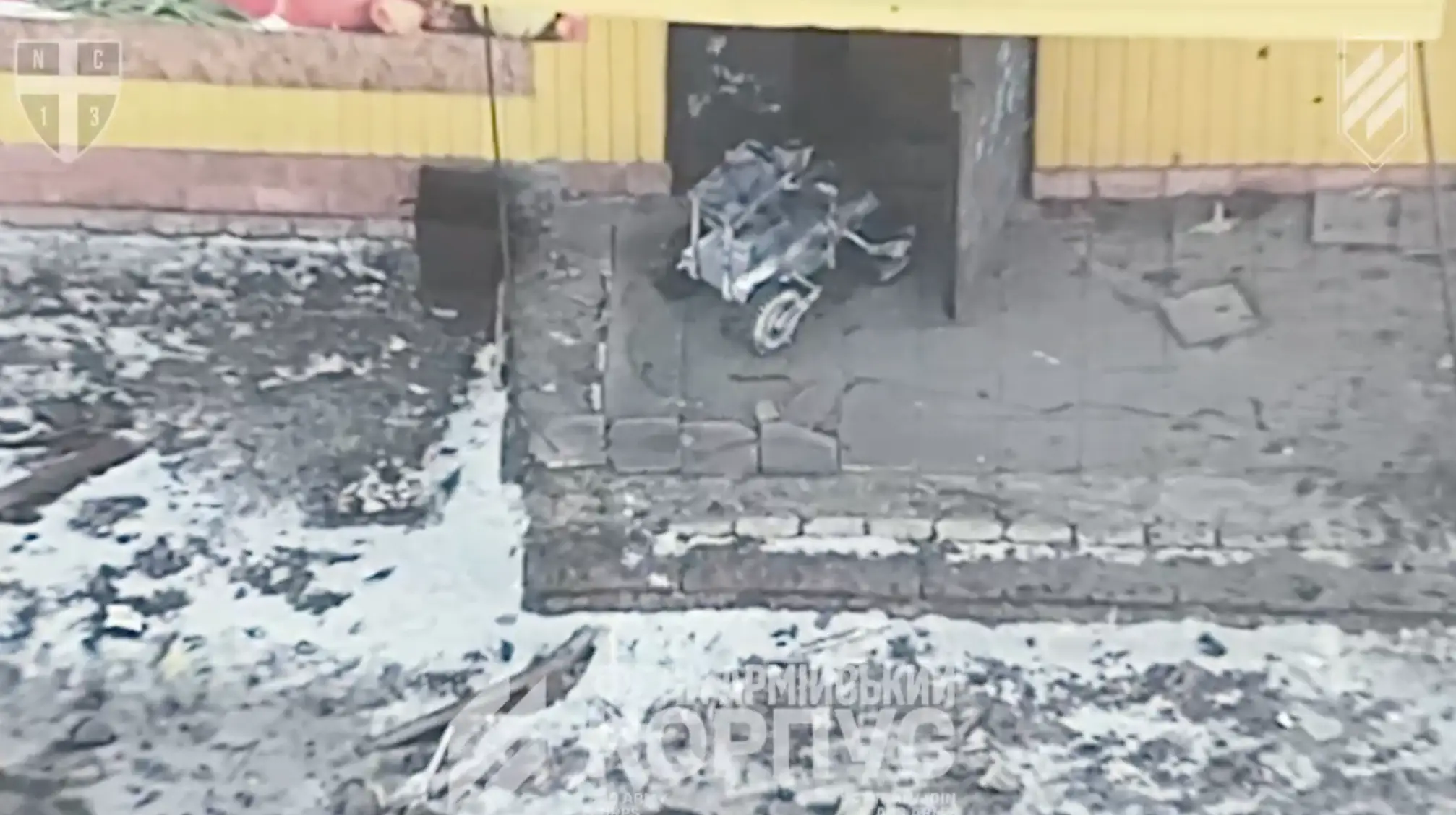
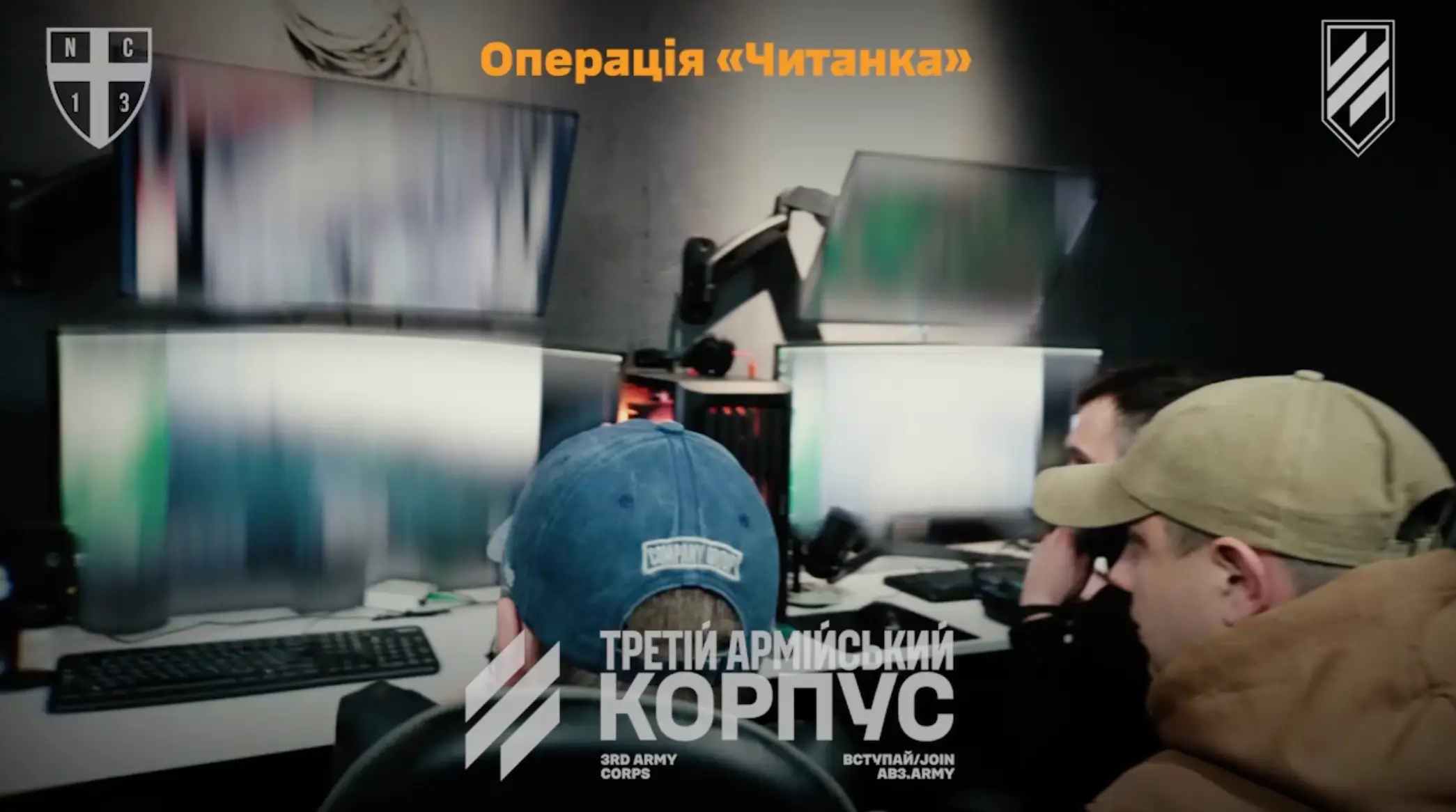
“Equipped with dual Bullspike grenade launchers, the UGVs attacked Russian positions before detonating directly inside the enemy’s shelters. The occupiers believed they were under assault by an entire assault squad; in reality, they were being pulverized by the Third Assault Brigade’s robots,” the brigade wrote on Telegram.
It said that robots were able to strike, put psychological pressure on Russian forces, and clear the position “all without putting our infantry at risk.”
“This is a tactic never before seen in the history of warfare. The robots were controlled by operators from a secure shelter located tens of kilometers away from the front line.”
Robots armed with grenade launchers are another example of how this war is blending elements of old warfare with new, advanced technologies. In this war, it’s not uncommon to see drones dropping grenades or electronic warfare sharing the battlefield with artillery.
In addition to grenade launchers, robots can also fire other weapons, such as RPGs and American-made M2 Browning machine guns.
DevDroid’s goal with its systems is “to change all roles that we can change to save people’s lives,” Fedoryshyn said.
That goal is shared by Ukraine’s soldiers, defense industry, and leadership. Oleksandr Yabchanka, the head of the robotic systems for Ukraine’s Da Vinci Wolves Battalion, told Business Insider that Ukraine is constantly working to increase the distance between troops and the fighting.
“Our philosophy is, above all, to preserve our personnel,” he explained. “We strive to position our fighters as far as possible from the line of contact and the zones of highest risk — the so-called ‘kill zones.'”
Other manufacturers say they’re seeing a shift in how soldiers use armed robots in combat.
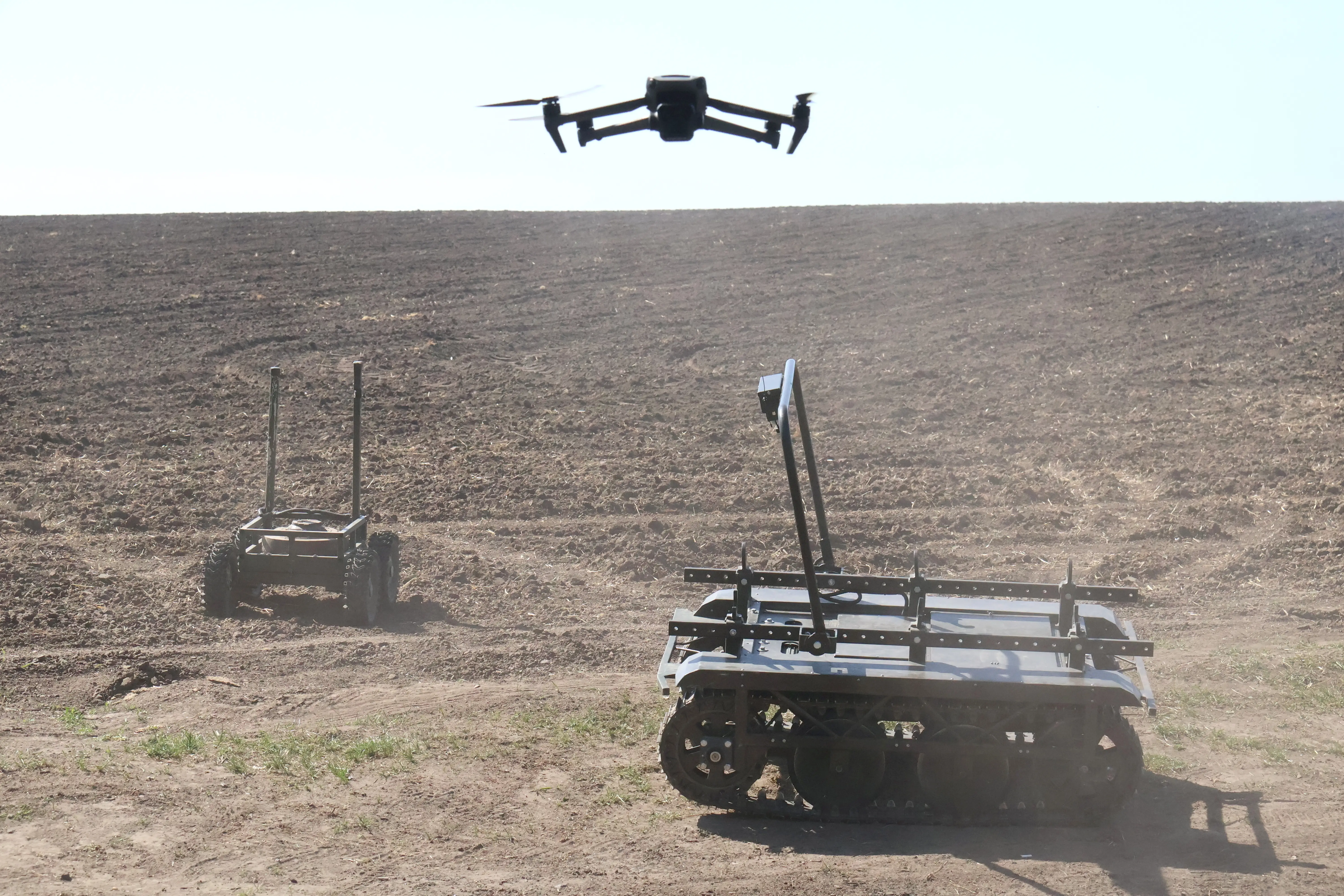
Defense firm Frontline Robotics makes the Buria autonomous remote weapon station, which allows soldiers to fire grenade launchers and other weapons remotely. Early last year, Ukrainian forces were hiding them in prepared locations to stop Russian advances.
“But right now, everything has changed,” Mykyta Rozhkov, chief business development officer, told Business Insider, pointing to the growing drone saturation on the battlefield.
Now, it’s being mounted on UGVs, creating small tanks that can advance toward Russian positions without exposing troops.
DevDroid’s Fedoryshyn said robots armed with grenade launchers are most effective when paired with robots carrying machine guns and aerial drones that can spot targets and direct fire.
Robots can be used to transport gear, evacuate the wounded, blow up enemy positions, lay mines, and fire various types of weaponry. Their use has increased dramatically. Ukraine’s defense ministry said in June that it had contracted over 22,000 uncrewed ground vehicles so far in 2026, nearly twice as many as all of the previous year.
The Da Vinci Wolves’ Yabchanka said that he sees that “many units have begun employing UGVs. This usage has already become widespread. Ground-based robotic systems are becoming an integral part of combat operations for most units deployed along the line of contact.”
As UGV use grows, Rozhkov said that Frontline Robotics’ goal is to “provide different robotic solutions to get people outside the danger zone. So just to keep the line with the robots.”
Read the original article on Business Insider
The post Ukraine is arming war robots with grenade launchers to hit the Russians so its soldiers don’t have to get too close appeared first on Business Insider.