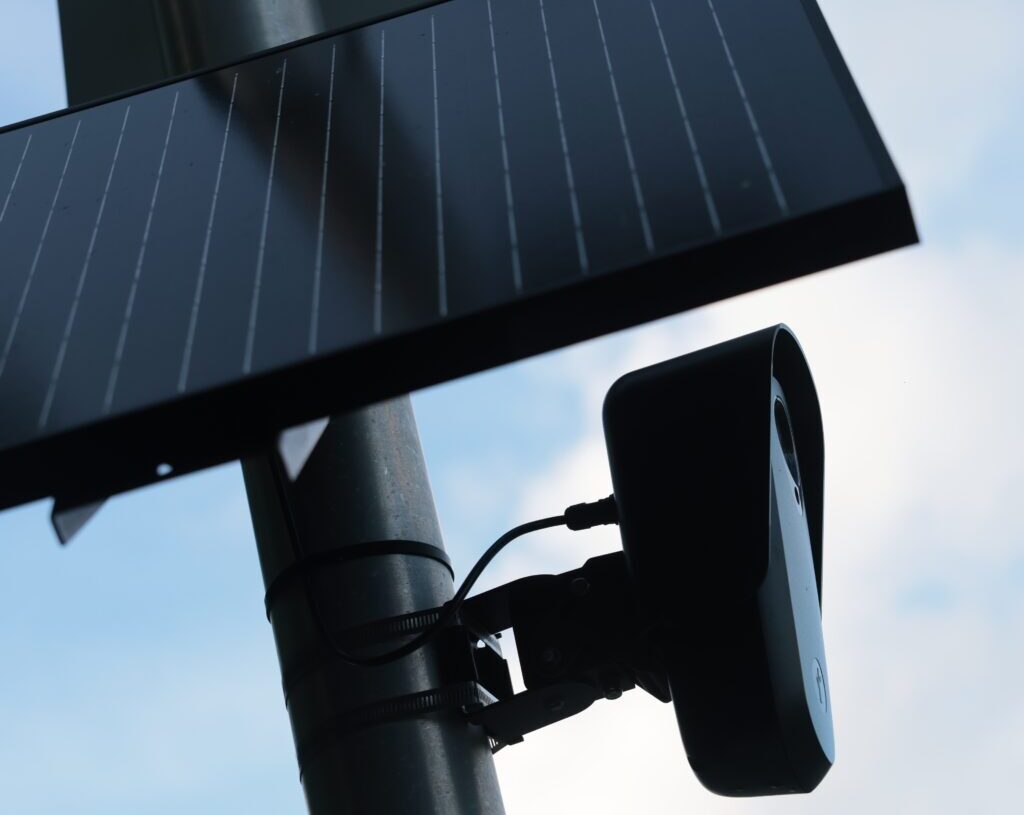
The mystery of the unclaimed roadside cameras in one Florida county remains unsolved, and now there’s another one to confound residents.
On Oct. 19, county employees set out to remove automated license plate cameras from 12 locations across St. Lucie County where officials said the devices had been installed without permits on county rights-of-way.
But when crews arrived, the cameras were already gone.
“Whoever had the permits, or whoever put them up, had removed them all,” county spokesperson Erick Gill said.
It was the latest twist in a saga that began last month, when St. Lucie County, on Florida’s east coast, prepared to remove automated license plate readers made by Flock Safety.
The county was among dozens of local governments across Florida that decided to remove the cameras, which law enforcement agencies use to record passing vehicles’ license plates to levy fines and investigate crimes — and which have drawn scrutiny over police misuse and data privacy concerns. County officials thought they had 52 of the devices. But they found more than a dozen cameras they hadn’t known about, unnerving residents and raising questions about who had installed them.
In September, county staff posted notices at the unpermitted cameras, giving those responsible 30 days to remove them. The deadlines ranged from Oct. 16 to Oct. 20, depending on when staff posted the notices.
Since the notices were posted, some ownership questions have been answered, but not all. The St. Lucie County Sheriff’s Office claimed three of the cameras. Police in the cities of Fort Pierce and Port St. Lucie subsequently identified five additional cameras on the county’s list as their own.
But while police have claimed some of the devices, questions remain about who owned the others, who removed them, and what data they had collected in the months when they were operating.
The county does not plan to investigate those questions, Gill said.
“Our goal was to get the cameras out of the right-of-way within 30 days,” Gill said. “We accomplished that goal.”
Hannah Galindo, a 31-year-old Port St. Lucie resident who launched an online petition over the summer calling for the removal of Flock cameras, questioned the county’s decision not to investigate.
“It sounds like when you do something wrong, and you don’t want to get caught, and you kind of just want to sweep it under the rug,” Galindo said.
In response to that criticism, Gill said, “We do not have the resources to investigate who installed them.”
Gill said the county’s camera count changed as staff determined that some cameras they initially thought were on county rights-of-way were on city rights-of-way, meaning they had no authority to remove them. Right-of-ways are not clearly marked, and boundaries have changed over time, he said.
That was the case with the two cameras belonging to Fort Pierce, which the city plans to keep, Fort Pierce Police Department spokesperson Michael Santiago said. County crews mistakenly bagged the cameras, he said, prompting Santiago to contact the county and have crews return to remove the bags.
Three of the cameras on the county’s list belonged to the Port St. Lucie Police Department but have since been removed by Flock, department spokesperson Brittany McNally said. McNally said one of those cameras was previously permitted.
Confusion over the permitting process seems to have played a part in the mystery.
A Flock representative told county staff that law enforcement had advised the company that a single permit could cover multiple cameras, Gill said. The county required individual permits, he said, and the apparent miscommunication could help explain why some cameras lacked permits or initially went unclaimed.
Gill could not identify which agency had provided that guidance or how many cameras were affected.
“So that was a miscommunication either by [Flock] or law enforcement,” Gill said.
McNally said a single permit can cover multiple cameras under certain circumstances but did not explain those circumstances or whether they applied to these devices. “Flock Safety and its subcontractors coordinate directly with the appropriate permitting authorities regarding camera installations and are responsible for following the applicable permitting requirements,” she said.
Flock has faced permitting questions before. In 2024, a Forbes investigationfound that the company had installed cameras without proper permits in several states, including Florida.
A spokesperson for Flock did not respond to emailed questions about who operated and removed the cameras or the apparent confusion over permitting requirements.
Galindo said the cameras’ disappearance has only raised more questions, including about the information they collected. She wants to know who has it and what they are doing with it.
“That data could be anywhere,” she said.
The post Mystery of Flock cameras got murkier when officials tried to get rid of them appeared first on Washington Post.