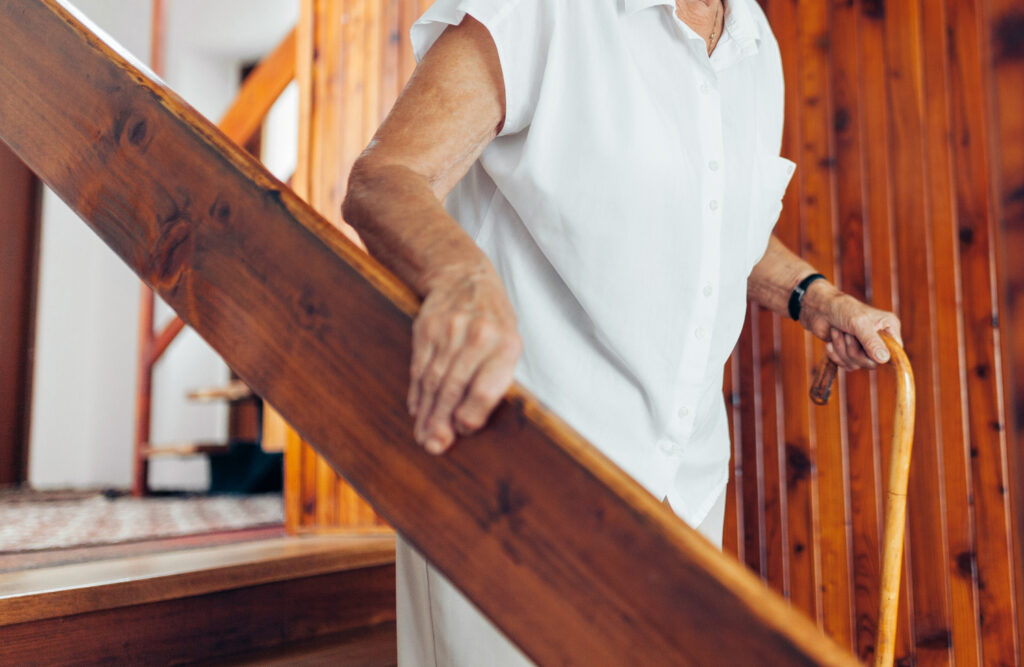
Practically everyone accepts that adults inevitably become frail as they age. They walk more slowly, become weaker and struggle with everyday activities. This is just a normal part of growing older, according to conventional wisdom, as if aging were a one-way street of physical decline.
But this is a misconception. A growing body of research shows that improvements in cognitive and physical function are possible with age. In fact, a fascinating new study demonstrates that a structured program of vigorous walking can do more than just slow the progression of frailty; it can reverse it.
The research recruited participants from 14 retirement communities in the Chicago area, some catering to affluent residents and others serving primarily low-income older adults. That diversity was deliberate, said Margaret Danilovich, a physical therapist and lead author of the paper.
All participants were classified as pre-frail or frail based on a standardized assessment that included fatigue, appetite, grip strength measurement, and difficulty climbing stairs or walking short distances. Their mean age was about 79, and they were largely sedentary at the start of the study. Nearly two-thirds used walkers or canes.
Participants were randomly assigned to two groups, both of which participated in three 45-minute exercise sessions per week. For the first month, the two cohorts grew accustomed to walking and gradually increased the intensity of the workouts. Then, research assistants changed tactics: They pushed participants in one group to reach more than 70 percent of their maximum heart rate using standardized prompts that encouraged participants to pick up their pace and walk as fast as they safely could. The other group exercised for the same amount of time but was instructed to walk at a relaxed, casual pace.
After 16 weeks, nearly 70 percent of participants in the high-intensity group became less frail, as assessed using the same measures of strength, activity and general health as at the start of the study. While there was also improvement in the casual walking group, the risk of frailty was nearly three times lower for those encouraged to walk at the faster pace.
This was a gratifying finding for Danilovich, who believes that societal attitudes toward aging are preventing older adults from achieving optimal health outcomes. Older people are often told to take it easy and stick to gentle exercises based on the assumption that this is the most they can handle.
“You go to a senior center, and all the exercise classes are seated,” she said. Though such an approach is probably well-intentioned and driven by concerns about older adults’ safety, “we are not actually giving them the intervention they need to get better.”
These entrenched assumptions about aging are so pervasive that when Danilovich and her team started recruiting retirement communities, some declined to participate. “This sounds dangerous,” they told her. They couldn’t fathom the idea of putting frail older adults through an intensive exercise program.
But that only made the research even more imperative, Danilovich told me. She and her colleagues wanted to demonstrate not only that older adults could engage in vigorous exercise safely, but that doing so could improve their physical functioning.
Across more than 3,300 exercise sessions, the researchers recorded only one fall directly related to the intervention, which caused no injury. In addition to a greater reduction in frailty, the high-intensity group experienced larger improvements in walking speed and distance traveled. They also took nearly 1,000 more steps per day than the casual walking group — a substantial difference considering that frail adults average less than 2,000 daily steps. “This was really unlocking the ability to actually do more and get out more,” Danilovich said.
She acknowledged barriers to making such structured exercise programs more commonplace. Insurance may cover physical therapy sessions, but these tend to focus on rehabilitation and restoring basic mobility rather than building strength and endurance. Group exercise classes in residential facilities may lack the staff needed to provide individualized coaching and encouragement. And widespread myths about aging may dissuade older adults, their families and health care providers from attempting more challenging exercise regimens.
Danilovich hopes that her research will encourage clinicians and fitness instructors to reconsider what they recommend to older adults. She also encourages older individuals, in consultation with their physicians, to push themselves beyond their usual comfort level. During walks, “try to just pick up the pace a little bit to give yourself that challenge,” she said. Embrace that it may feel hard, but recognize that training can help improve your overall function.
Her overriding message is not to treat age alone as a limitation. “People in their 80s and even 90s have the capacity to get stronger, to move better and potentially reverse frailty,” Danilovich said. This is a hopeful — and evidence-based — insight that could help more people live better for longer.
Do you have questions about exercise and frailty? Please write to me; I will feature reader comments and questions in a future edition of The Checkup newsletter.
The post Frailty in older adults is not inevitable. Here’s how to reverse it. appeared first on Washington Post.