Serbia’s longtime nationalist strongman, Aleksandar Vucic, conceded defeat Sunday in a general election held after his once-tight grip on power was weakened by nearly two years of student-led street protests.
Serbia’s vote for a new Parliament came just six months after voters in neighboring Hungary rejected their own populist nationalist leader, Viktor Orban, a close ally of Mr. Vucic. The Serbian leader had adopted many of the Hungarian’s authoritarian methods — and, at the end, his gracious acceptance of defeat, as well.
“It is clear that we have lost these elections,” Mr. Vucic said in a surprisingly early speech congratulating the victors, a new political grouping called Student List-Students Win. He said that the slate of candidates selected by protesting student had won at least 135 seats in Serbia’s 250-member legislature, compared with around 105 for his own party.
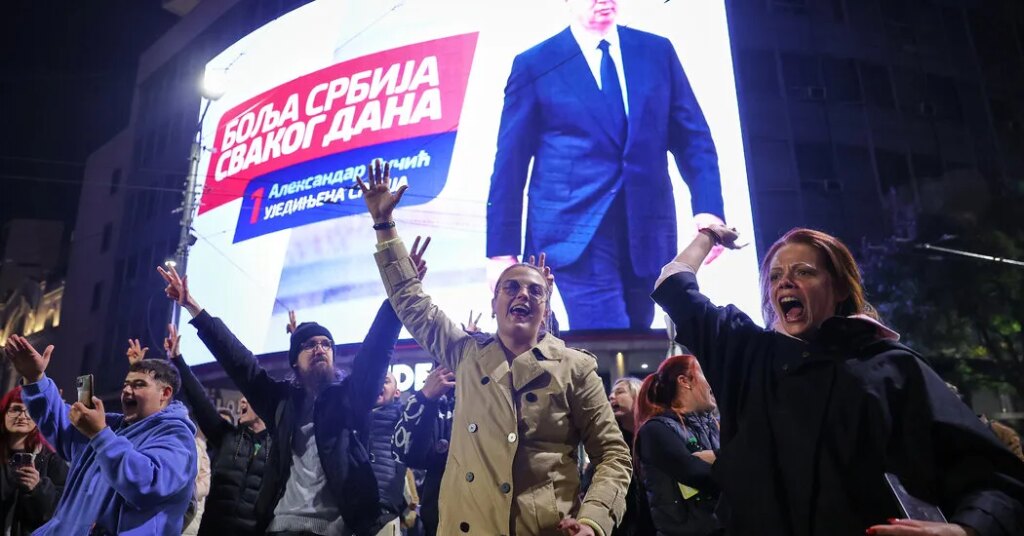
Mr. Vucic’s speech set off joyous celebrations by tens of thousands of mostly young people in central Belgrade, the Serbian capital. Car horns honked and fireworks lit the sky as the crowd, waving Serbian flags and cheering, welcomed a day that many feared would never arrive.
“For the first time in my adult life, I’m seeing a change of government. After so many years under the same leadership, I’m happy that I’ll finally get to live in a free, normal country,” said Milos Milutinovic, 24, an engineering student.
Mr. Vucic, Europe’s longest-serving leader outside the former Soviet Union, has been Serbia’s dominant political figure since 2012, serving as both president and prime minister, a post he had hoped to regain after Sunday’s election.
Amid widespread reports during the day of violence and irregularities at polling stations, many feared that Mr. Vucic might follow the example of his former mentor, Slobodan Milosevic, Serbia’s nationalist leader during the Balkan wars of the 1990s, who declared victory in a contested election in 2000 before huge street protests forced him to accept that he had in fact lost.
“What happened in Serbia tonight is not the electoral defeat of one government but a tectonic blow to the political order established in 1987,” said Ratko Knecevic, a former diplomat from Serbia’s neighbor Montenegro. That was the year Mr. Milosevic visited Kosovo and vowed to defend Serbs against ethnic Albanians in what was then a region of Serbia.
“Milosevic built” an order in which Serbia’s neighbors all became enemies and “every criticism of power is treason,” Mr. Knecevic said, adding that “Vucic perfected it,”
On many contentious issues, however, like the status of Kosovo, (which declared independence from Serbia in 2008) and relations with Russia and the European Union, little divides Mr. Vucic’s party and Sunday’s victors. European Serbia, the only party that openly campaigned for speeding up Serbia’s stalled application to join the European bloc, failed to reach the 3 percent threshold of votes needed to enter Parliament.
During the campaign, opposition candidates pointed to Serbians’ complaints about rampant corruption. Mr. Vucic tried to keep the focus on his construction of new highways and the relatively strong economy.
In the end, the vote was largely a referendum on Mr. Vucic.
He and his governing Serbian Progressive Party — known as SNS, but rebranded for the election as “Aleksandar Vucic–United Serbia” — are deeply detested by their opponents.
“SNS is a big evil that we have to rip out,” Nina Dordevic, 29, a psychology student, said after casting her vote for the Student List in Belgrade
“Nobody should be in power for so many years,” she said.
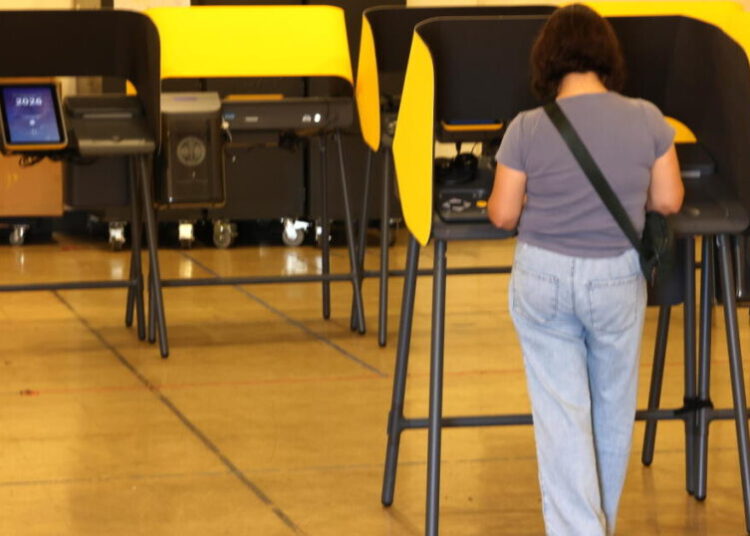
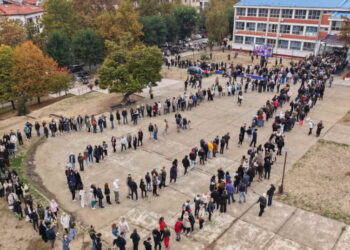
At polling stations in Belgrade, only a few people were ready to acknowledge voting for Mr. Vucic, and some refused to give their names.
An older woman who spent time in Beijing as the spouse of a diplomat at the Embassy of Yugoslavia, of which Serbia was formerly part, said her experience of the 1989 student protests in Tiananmen Square and the military assault that ended them had left her “scared of all protests.” She was wary of supporting the Student List, she said.
A retired military office who gave only his first name, Ivan, said he had voted for Mr. Vucic because “students should be studying, not playing politics.” He also said he admired Mr. Vucic for refusing to condemn Ratko Mladic, a Serb general convicted of genocide by an international tribunal. Mr. Mladic died in custody in The Hague in September and was buried with military honors in Belgrade last month.
Mr. Vucic, who was Mr. Milosevic’s information minister, began his career in politics as a radical nationalist committed to “Greater Serbia,” but later moderated his views somewhat. However, he continued to embrace many of the authoritarian methods and the narratives of Serb victimhood used by his former boss.
“No force can forever overpower a people who have decided to take their destiny into their own hands,” one Student List candidate, Radomir N. Saicic, a chemistry professor at Belgrade University, said after Mr. Vucic’s concession speech. “Almost every citizen of Serbia, whether at home or far away, cast their vote and showed that they care about this country’s future,” he said.
The post Serbia’s Longtime Strongman Concedes Defeat in Parliamentary Election appeared first on New York Times.