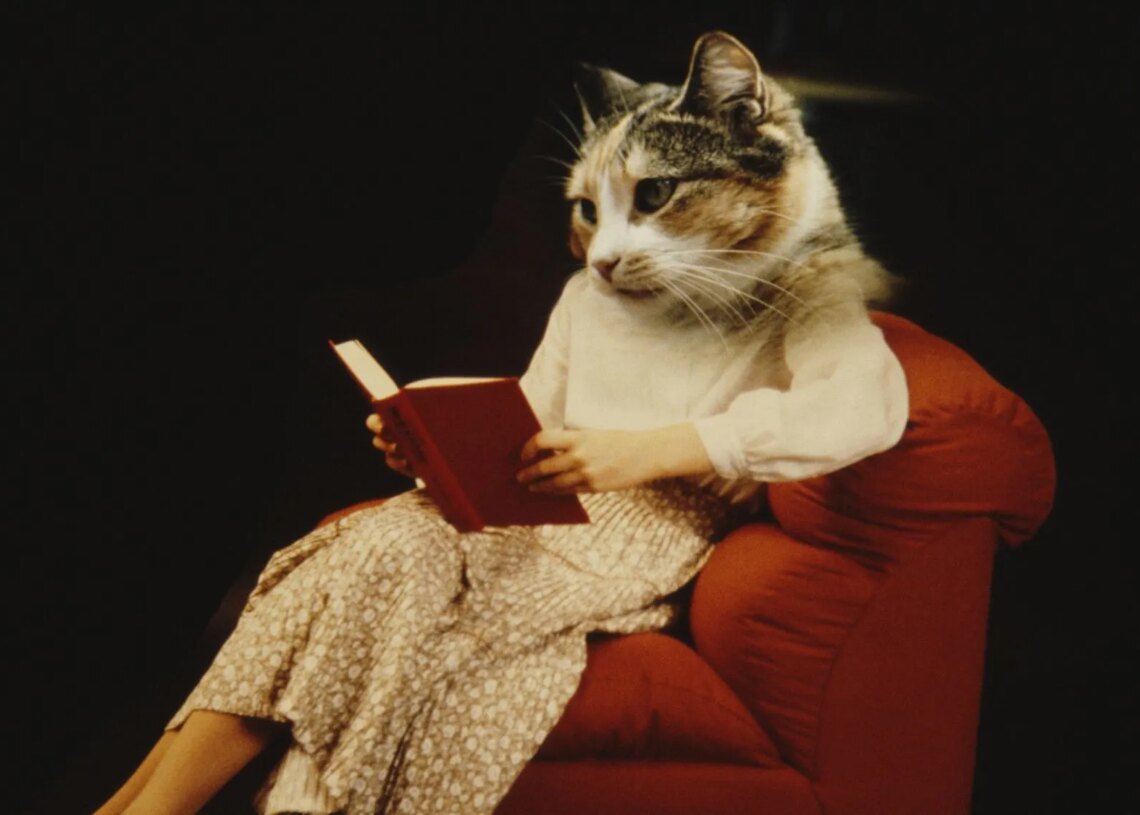
Horror might not be everyone’s cup of tea, and that’s okay. The genre has fallen victim to epic cheesiness of the cheapest and most inauthentic variety. It’s really enough to give true lovers of the arts a heart attack. Thus, I have decided to present a list of 5 horrifying books (by authors other than the immortal Poe) that should appeal to even those who don’t especially fancy horror: The beauty of their language and profundity contained, even in the occasional midst of grotesquerie and hedonism, should be enough to dazzle any semi-intelligent lifeform. Horror comes in all kinds, including existential and moral, thus I believe it would be pointless to simply focus on literal monsters.
An honorable mention must be given to Justine, or The Misfortunes of Virtue (1791) by the infamous Marquis de Sade, who spent a good portion of his life imprisoned. This milestone played a role in getting its author locked up for the final time in 1801 on Napoleon’s wretched orders. The Thief’s Journal (1949) by Jean Genet will likewise always inevitably provoke gasps from pearl-clutchers. In addition, I highly recommend the “Indiscreet Jewels” (to make a Diderot reference) constituting the body of work of the outrageous Mr. Jean Lorrain, a gay author like Genet, whose achievements have proved both highly transgressive and timeless. Perhaps no one is quite as good at provoking nausea as Jean-Paul Sartre, who incidentally penned an excellent volume on Genet — sometimes, reading the rewarding yet frustrating Sartre is enough to make you want to jam a knife into your arm. His short story The Wall (1939) is guaranteed to send shivers down your spine.
Now, in the capricious interest of thoroughly repulsing you, here is a little description of the corpse of the eponymous protagonist from Émile Zola’s Nana (1880):
“She was fruit of the charnel house, a heap of matter and blood, a shovelful of corrupted flesh thrown down on the pillow. The pustules had invaded the whole of the face… and on that formless pulp, where the features had ceased to be traceable, they already resembled some decaying damp from the grave. One eye, the left eye, had completely foundered among bubbling purulence, and the other, which remained half open, looked like a deep, black, ruinous hole. The nose was still suppurating. Quite a reddish crush was peeling from one of the cheeks and invading the mouth, which it distorted into a horrible grin… Venus was rotting. ”
Without further ado, let’s dive into our main list as we look forward to (or dread) upcoming Halloween festivities.
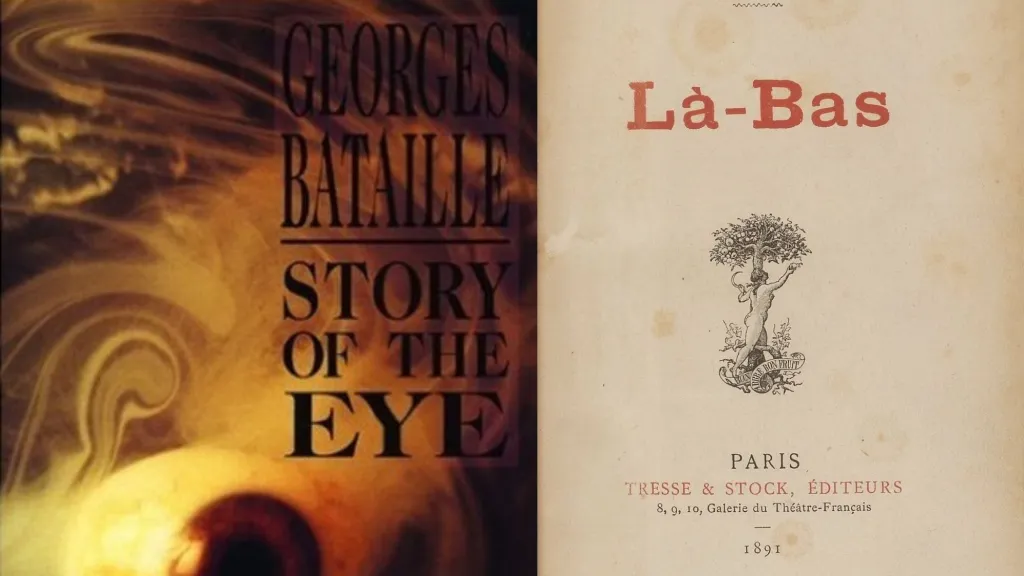
1. Georges Bataille’s The Story of the Eye (1928)
Blue of Noon (1957) might just be my favorite book by Georges Bataille, but the violent and sexually depraved The Story of the Eye seems to be his most disgusting. (Granted, Bataille did force us to look upon his beloved lingchi photos in The Tears of Eros, completed in 1961 as his final feat…) The Story of the Eye is remembered as the naughty French librarian’s most famous work — inspiration from the masterpiece has even been incorporated into a Marilyn Manson video. Thus, it’s a great entry point into the catalog of, in my immodest opinion, one of the most rewarding thinkers. As for the content, I find it too utterly appalling to repeat here, therefore you will just have to read the graphic novella for yourself and in the protection of a safe space in case it activates your gag reflexes or causes you to faint; the whole ghastly must-read smells of rotten eggs, and I’ll just say that it does feature eggs being used for some questionable purposes.
Before moving on, I’ll add that one of the most heartbreaking horrors is the story of how Bataille’s blind and paralyzed father died during WWI; Georges himself would be plagued by pulmonary tuberculosis and cerebral arteriosclerosis.
2. Joris-Karl Huysmans’ Là-Bas (1891)
Is there anything that feeds pestilently dark thoughts and feelings like the absinthine delirium of fin de siècle literature? Reading Huysmans can be enough to give you a neurotic fit — he possesses the superpower of even making an impossible menace out of the assailing (and, in my view, quite lovely) scent of frangipane. Despite the crippling anxiety he summons, Huysmans remains one of my most highly recommended authors for good reason. His nuanced descriptions, which induce sensory overload, are truly one of a kind; Huysmans was his own brand and belonged in his own category, even if À rebours (1884) arguably equates to the most perfect example of Decadent literature.
Just as Bataille would later become obsessed with the serial killer Gilles de Rais, Huysmans includes some dizzying and hallucinatory scrawlings on the abhorrent pedophile in Là-Bas. In Là-Bas, the wayward genius digs into his unhealthy preoccupations with Satanism and the occult. If you are a Satanist or even a nihilist, watch out before befriending Huysmans. All roads just might lead to Cavalry: Là-Bas led Huysmans to convert to Roman Catholicism in 1892, and this personal choice was reflected in his output. In other words, Huysmans can potentially alter your worldview and whisk you along on his spiritual path in ways you might find horrifying right now.
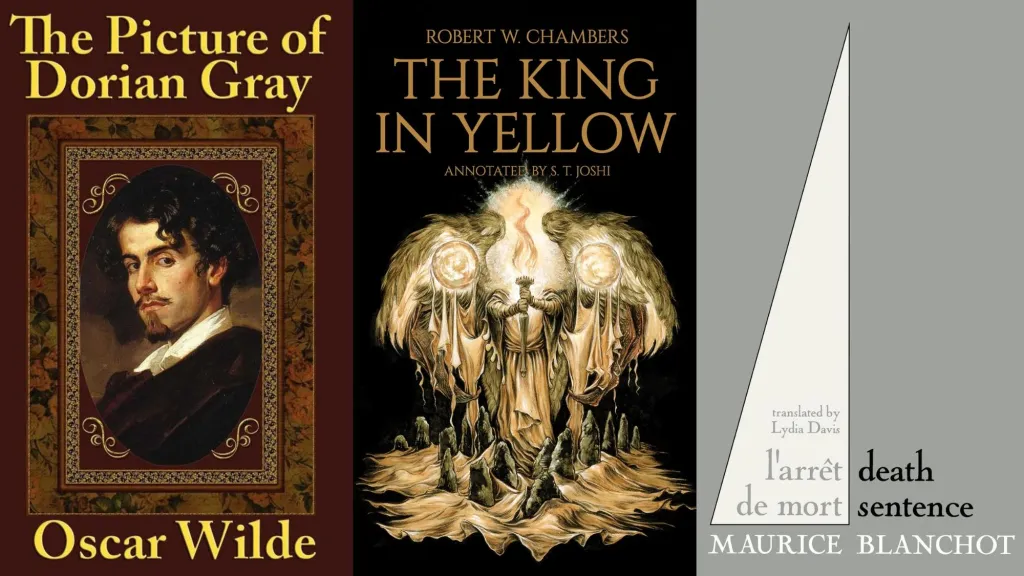
3. Oscar Wilde’s The Picture of Dorian Gray (1880)
Oscar Wilde, the embodiment of wit and charm, is one of the few beloved authors who actually deserves his place in history. Put down whatever cheap modern literature or bland, teacher-approved “classic” you might be reading, and take it upon yourself to ravenously consume the entirety of Wilde’s delicious catalog.
As most of us know by this point, The Picture of Dorian Gray presents a terrifying cautionary tale for chasers of youth, beauty, and vice. The plot takes its ill-fated turn after the impressionable Dorian falls victim to the magnetic Lord Henry’s dangerous influence. Even if you’ve already experienced this canonical work, read it again!
That said, my most beloved offering by Oscar Wilde is probably De Profundis, a letter written in 1897 during Wilde’s imprisonment that reveals the blinding beauty of his soul. It might sound cliché, but it is truly terrifying to fathom what man can do to his fellows.
4. Robert W. Chambers’ The King in Yellow (1895)
A bestseller during his lifetime, the bafflingly prolific Robert W. Chambers represented an odd case of a cultural contributor of genuine worth appealing to the masses during his lifetime without any major problems. This American visual artist and writer was incredibly versatile, diving into romance, sci-fi, history, war, (of course) horror, etc. The Art Nouveau charm often coloring Chambers’ inventive gems as well as his distinctively lively way with the pen continue to make him an irresistible hero, worthy of several places of honor on the bookshelf.
The engaging collection of short stories that compose The King in Yellow prove unforgettable, unshakably bizarre, troublingly mysterious, and darkly gorgeous. As demonstrated here, Chambers was particularly gifted at painting the depths of madness. In short,The King in Yellow is indeed one of the greatest horror books ever created.
5. Maurice Blanchot’s Death Sentence (1948)
Blanchot seems to be one of the most overlooked literary giants, perhaps because he strips away a lot of those components we regard as essentially human and to which we remain so childishly attached. As Bataille boasts the ability to completely transform your way of thinking, Blanchot could totally alter your approach to language. No one explored absence quite like Blanchot, and Death Sentence is bound to carve an everlasting void into your chest. The oddly immersive Death Sentence‘s depictions of the suffering and bravery of a woman dubbed “J.,” for example, return every now and then to haunt me. Blanchot’s stunning lines will cause you to keep pausing to reflect upon (and either photograph or screenshot) their uncanny content.
After you’ve completed Death Sentence and while you’re bracing yourself for your second reading, discover Blanchot’s Thomas the Obscure.
The post 5 Horrifying Books for People Who Hate Horror (And Other Mentions) appeared first on vice.