This is an edited transcript of “The Ezra Klein Show.” You can listen to the episode wherever you get your podcasts.
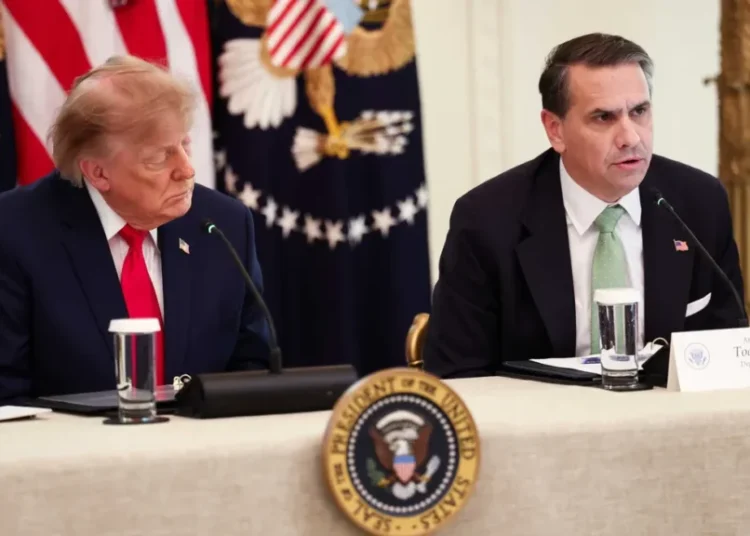
Since he took office in 2025, Donald Trump’s net approval rating has collapsed, falling by more than 30 points. As we head into the midterms, Democrats now have the opportunity to do something that seemed unthinkable just a year ago: to take back not just the House but the Senate, possibly even winning in places like Texas and Kansas.
So how did Donald Trump go from winning his first popular vote victory ever to, in less than two years, what now looks like it could be an electoral wipeout for Republicans?
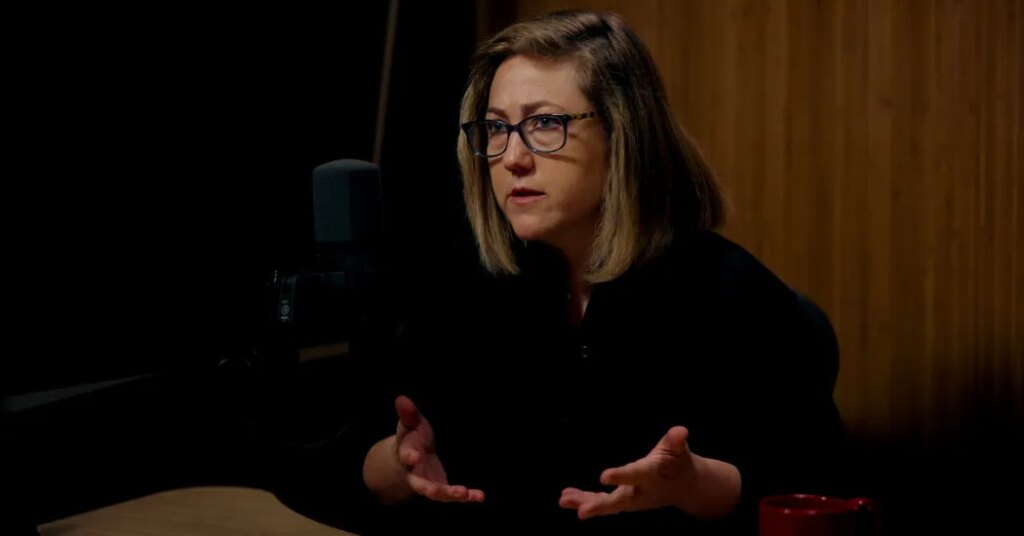
Sarah Longwell is a political consultant and the founder and publisher of The Bulwark. Since the 2016 election, she has conducted hundreds of focus groups with thousands of voters across the political spectrum that have become this really extraordinary source of qualitative evidence of how voters have evolved in the Trump era — particularly voters who had leaned toward Trump but maybe now don’t.
Longwell is also the host of “The Focus Group Podcast” — you can hear some of these groups there — and author of the recent book “How to Eat an Elephant.” She joins me now.
Ezra Klein: Sarah Longwell, welcome to the show.
Sarah Longwell: Thanks for having me. I’m superexcited to be here.
Donald Trump takes office again in January 2025. His approval rating is above 50 percent. He has his biggest electoral victory ever.
He’s now at 36 percent.
I think you’ve probably personally done more focus groups with Trump voters of different flavors and variants than anybody else in America.
So what happened?
It’s easy, actually. This is the easiest question in politics right now. Donald Trump made some very specific choices, and they were his choices, and everyone knows they were his choices.
The first one was when he did all of the unilateral tariffs, didn’t consult Congress and just got into trade wars with a whole bunch of people. And the second was starting the war with Iran.
Voters completely identify those two things with Trump. You can’t say Joe Biden did that. You can’t say it was someone else or Congress. There was nothing else.
The deep state went to war on Iran.
Donald Trump made these choices, and voters know it.
The consequences of both have been to raise prices for the American people at a time when they elected Donald Trump to do one thing: lower prices.
And as a secondary matter, they said: No more stupid wars.
So the voters right now recognize that their life is not getting better and that Donald Trump has broken his promises. That is the easiest way to explain what’s happening right now.
Tariffs were a promise from Donald Trump. He ran for office saying again and again and again: Tariffs on everyone, tariffs in all directions.
I can imagine, if you’re him, you look at your tariff policy as promises kept. So when his supporters tell you what they don’t like about them, what do they say?
Well, the thing about voters is that they are often not interested in the policy minutiae of how one gets to a place. They’re just saying: What are we going to do to lower prices?
The thing that has shocked me the most listening to voters — not even shocked, it’s more the thing that I find has changed my relationship with voters — is that the first thing we do is ask people: How do you think things are going in the country?
And every focus group, every single time, doesn’t matter — whether left, right or center — right now, people say: bad. And then they immediately start talking about the prices of something.
They talk about the prices of gas. They talk about the prices of beef. But they talk about something they did: I walked into the store today, and the beef cost X dollars, and that’s $2 more than it did, and it wasn’t even the good stuff.”
Americans don’t necessarily connect policy rhetoric to the outcome. They live through something, see the outcome, and then they decide how they feel about it.
On that point, about the ground beef, I want to play a clip that your team shared with me from one of the focus groups. This is someone who voted for Trump in 2024.
Archival clip: I grocery shop every week, so I know when prices are going down and up, and I’m like: He’s lying. Nothing has changed — OK, maybe the eggs have gone down, but that’s it.
I’ve never paid $9 for ground beef before — ever — even the good kind. So that is really, really crazy and getting very scary. I really thought that it was going to be about us here at home.
When that woman says to you: “I really thought it was going to be about us here at home” — what did she think?
What did the people who had swung toward Trump in 2024 see in him that they maybe hadn’t seen in 2020?
Well, this is the promise of “America first.”
“America first” has a lot of racist origins. But for the voters, “America first” is an idea that the president is going to prioritize them — Mr. and Mrs. American — and they like that promise. They like the idea of not sending all this money to other places.
I hear versions of this in basically every group that I do, which is: We want to be taken care of. We want money spent on our schools.
It’s interesting watching Abdul El-Sayed, because he’s doing a version of this right now, his own version of “America first.”
Often when he gets asked the question about Israel, he says: I don’t want our money going overseas. I want it spent here in Michigan. I want it spent on our schools, on taking care of our people.
Archival clip of Abdul El-Sayed: I’m opposed to unconditional military aid for any country. That is Israel, yes, but that’s also Egypt, where my family immigrated from. That’s Pakistan, that’s Saudi Arabia, that’s U.A.E. And that’s not because of a focus on what’s happening anywhere except for a focus on what’s happening here. We’ve got communities in my state where the median income is $14,000. And I believe they have a right to their tax dollars.
And that is something that appeals to Americans deeply. They say: Yes, we want to be taken care of.
They feel like, in the big maelstrom of conversations — whether it’s sort of the weird social issues that people get wrapped around the axle about or whether it’s the big geopolitical questions that politicians are always talking about — what they really want to know is: What are you going to do for me?
That disconnect between people whom we talk about as elites — but let’s just say you and I — we should admit this. We do not walk into the grocery store and say: I can’t buy this now because it’s $2 more expensive.
Nobody in Congress has that experience. Nobody who is in a lot of decision-making authority has that experience. And so it is so easy to forget that is the thing everybody wants.
I think this is a problem that ends up afflicting both sides. It happened to the Biden administration during their term, and now it’s happening to Trump, which is: You get elected, and the voters who crucially put you over the top — not your big base of voters who are always going to vote for you but the people who made the difference in the election — they hire you to do often a job that is maybe not the job that you’re most excited about doing.
Voters want lower prices. They’re maybe not as bought-in on climate change questions as Democrats are.
And there are all these people around you who have your ear — who, in fact, do not have problems buying groceries in the grocery store. They have things they are much more excited about doing. So you have this constant pressure to get off the course of what the swing voters wanted from you.
That seems, to me, to be a lot of the Trump story here. He won because inflation was high, but he didn’t really care about inflation. That’s not what gets him out of bed in the morning.
No, what gets Donald Trump out of bed in the morning is Donald Trump’s interests in enriching himself. This goes back to the earlier question: Why do Americans think that Donald Trump is in it for them?
The way that I heard so many voters characterize it is that the process was so slow and sclerotic, and they felt like nothing was changing, and the way that politicians talked all sounded the same.
But mostly, they thought: This guy is a businessman — and that means that he is going to figure it out. Because this is what Donald Trump pitched all the time: I’m going to cut deals for you. I know how this system works. It’s rigged against you. I’m going to unrig it.
And voters really did think, whether it was because of “The Apprentice” — and I cannot tell you how important “The Apprentice” is and was to the lore that sits inside voters ——
Still, by 2024, it was so important?
He lived, in their living rooms, at the top of a boardroom where he made decisions about business, and that is what voters really internalized about Donald Trump.
So when inflation was high, they thought he was going to come in, and in some way that is magic from him — sort of like the Kool-Aid Man busting through the window — and say: Here, I’m going to lower grocery prices on Day 1.
They think he has some secret sauce that allows him to do that. When, of course, it is just a lie. He couldn’t do it.
There are a lot of ways that the people who interpret politics publicly — my job, for instance — end up having a lot of trouble understanding voters.
One of the ways is that we think of the primary divide in the electorate as left or right. But the primary divide in politics, I always think, is between interested and uninterested. The hard-core left and the hard-core right, MAGA, the liberals, resistance, whatever it is, they’re all interested. They’re all following some media source constantly.
But a lot of voters don’t like politics. And they’re not that interested.
So I’d like to hear you talk about the different ways that people who decide elections but do not follow politics that closely in between elections — that difference in the electorate and how they then understand what is happening.
We talk in political science terms. We’re always slicing and dicing the electorate, and we often talk about “low-information voters.” I always think that is an unfair term to people who are just not sick in the head like us, who are not following everything, who don’t let their nervous systems be hijacked on a daily basis by the vicissitudes of political wrangling.
Low neuroticism voters. [Laughs.]
Yeah, that’s right. I think it’s a perfectly acceptable thing to be like: Actually, I’m going to focus on my family and getting my kids out the door, and then I’ve got to go to a job that’s quite demanding. And both parents in the household are working.
One of the things we ask about in the focus groups all the time is: Where do people get their information?
And it is unsatisfying now, because it used to be that people would be pretty clear. They’d be like: I watch Fox News. Or: I watch CNN. I read this newspaper. I read The New York Times. Or: I read my local newspaper.
The majority of people would often say that they watch their local news. But now what people mostly say is: I don’t know where I saw that.
They’re scrolling. They’ve got their favorite cooking influencer, or they’re scrolling on Instagram or TikTok — an algorithm-driven information environment where they mostly want basketball or sports. But then there’s Stephen A. Smith talking about politics.
So this is why, when people said: The left needs its own Joe Rogan — and they tend to reach for people who are actually political pundits. But that’s not what Joe Rogan is.
Joe Rogan is a comedian. I mean, I don’t watch a ton of his content, but I do think there’s a fair amount of getting stoned and figuring out who would win between a shark or a gorilla if they fought each other. And then they have a guest, and the guest says whatever, and Joe Rogan really doesn’t challenge him because he’s not a subject matter expert in much.
That’s about culture. There are cultural people all over the place where politics is injected.
There used to be this phrase: Politics is downstream from culture. I think, increasingly, the overlap between politics and culture combines into something that is a deeply nonpolitical-science term, which we would call a vibe.
And that vibe is what a lot of the low-information voters are getting. Something that washes over them, that is algorithmically injected into the cultural things that they imbibe.
Say more about that. What changes in politics — or what have you watched change in politics — as it has become more, in your language here, vibe oriented?
I think it’s the big difference between news seekers and news receivers.
We used to live in a world where you spent time with the news, and it was a specific time. You sat down at the breakfast table, and you read a newspaper. You watched the evening news. You made time for the news.
I just think that the news receiver means: I didn’t sit down to find something out. Information just washed over me, and there was no mechanism to verify it. I didn’t really sit and spend time with it and ask: Is this true? Does it even matter to me? It just hit me for a second.
It just flashes over them. So they wake up with an opinion without any idea of how it was formed.
I want to talk about something that seems to have begun breaking through. And I don’t really know why it’s finally breaking through now, but it is: corruption.
I want to play a clip from a Trump voter talking about corruption and how it has changed in his view.
Archival clip: I’m a Republican. I’m just saying he’s front and center now. And he’s just blatant with corruption. But we tolerated corruption in a way, or looked the other way. Even their own politicians look the other way at each other. But because it was more minimal or more obscure … every now and then you heard of a big corruption thing here or there, whatever, a pay-for-play.
But now it’s just like: bang! He just does it blatantly. He just says what he wants to do. He’s investing in crypto. His sons are invested in drones, just before the war started with Iran. It’s ridiculous. It’s so obvious and blatant now.
This Fox News poll from October asked voters how concerned they were about key issues. More expressed concern over corruption in government than any other issue. It came out higher in this Fox News poll than prices and health care, the war in Iran and immigration.
Corruption has just been constant in the Trump administration. I was watching corruption in polls through the whole administration, waiting for it to attain salience.
It was just like nothing, nothing, nothing, nothing, nothing — and then suddenly, it’s the top issue.
What broke through?
It’s prices again. Everything comes back to people’s relationship to the economy. And this is a bummer, actually, of an observation, but the American people — especially Trump voters and more low-information voters — would probably let Trump get away with corruption. In fact, we know they would — he was doing a lot of corrupt things in his first term.
People didn’t really care. You couldn’t get them to care about how much he was spending on golf or having big meetings at all of his hotels with the rich.
All the insane crypto stuff during the 2024 election, that was the one I always thought was crazy — the Trump family getting involved in crypto scams and meme coins during the election and the post-electoral period.
They don’t care. But again, it comes down to people’s relationship with their own money. If they thought Trump could do something for them — and you can see this especially with people who are superengaged on the crypto stuff — if they think they can make some money off Trump, they don’t care about his corruption.
There are two reasons that corruption is breaking through right now. The first is, people are suffering economically.
And so all of Trump’s focus on his ballroom and the Reflecting Pool frustrates voters that he is not focused on them — he’s focused on himself.
But also, the enriching himself is becoming difficult to ignore because it’s so out in the open. And when people are not doing well, they’re angrier about it.
The second reason, though, that corruption is now a very high-salience issue, is the same reason that democracy became a high-salience issue.
To some of your work on polarization, there’s a backlash effect that happens when Democrats start accusing Republicans of being corrupt because Donald Trump is doing this brazen corruption.
The thing that happens for Republicans is that they do the “What about…?”
So they say: No, Democrats are corrupt. Or: They’re all corrupt.
Part of what happens is this national conversation where one side is accusing the other of something, and so the other side does: What about…? — and then quickly it becomes a dominant issue.
Democrats were also accusing Republicans of being a threat to democracy after Jan. 6. But Republicans were accusing Democrats of having stolen the election. And pretty soon, democracy is the No. 1 issue.
And Democrats think: Oh, look, everyone cares about democracy. And I’m going: No, no, no, no, no — they don’t care about it the way you want them to care about it.
The Democrat who seemed to really figure out how to make the corruption case against Trump and get people to pay attention to it this cycle is Jon Ossoff.
And Ossoff, in Georgia, is fascinating because that should be, in theory, a swing state. It’s a close state. We don’t even talk about it as a swing state this cycle. It’s like: Is he going to beat his opponent by eight points, by 10 points, by 12 points?
There’s more interest in whether or not he’s going to run for president than in whether he’s going to win in Georgia.
So what worked there?
Well, first of all, Jon Ossoff has the thing. He is a very talented person. He writes those speeches himself. He appears to believe it deeply.
But he understands something about storytelling. I think oftentimes Donald Trump’s scale of corruption, scale of venality, leaves Democrats sputtering to make the longest list that they can make of all of the horrible things. And it leaves people just with their arms up.
Jon Ossoff is taking it slow. He’s taking it one bite at a time, and he is writing to say: Hey, you’ve heard about this.
Archival clip of Jon Ossoff: Now maybe you saw Trump’s so desperate, he’s begging Putin for diesel. But listen to this.
Maybe they have, maybe they haven’t. But he’s inviting them into a story that he’s going to tell where he’s going to give them information about what Donald Trump is doing.
Archival clip of Ossoff: Y’all remember Jared Kushner, the president’s son-in-law, the so-called special envoy responsible for diplomacy with Russia and in the Middle East? Do you remember the other special envoy, Steve Witkoff, who co-founded the president’s crooked crypto business, World Liberty?
OK, so follow me through on this. What Jared and Steve are doing right now is negotiating with Putin to sell billions in Russian oil fields and refineries and gas stations to the president’s friends.
You’ve got Sheikh Tahnoon, the Emirati spy chief, who paid half a billion to the Trump-Witkoff crypto business. Then you’ve got the Al-Khayyat brothers, two Syrians who are financing Jared and Ivanka’s multibillion-dollar Albanian resort project.
And then the third partner, a billionaire megadonor to Trump’s campaign. Oh, and the U.S. government would take a 15 percent stake, by the way. Are you getting the picture?
He’s just very adept at saying: I’m going to walk you through what’s happening.
Archival clip of Ossoff: Amid a global energy crisis, the president’s son-in-law and the president’s business partner are brokering the sale of Russian oil fields to the first family’s friends.
The same friends who have poured hundreds of millions of dollars into Trump family businesses. […]
They are literally the elites they pretend to hate.
More Democrats need to figure out how to talk about this. Because I do think Americans — whether it is all the court cases, all the lawsuits against Donald Trump — when there is scale, they get lost, and it becomes white noise. It’s why Hunter Biden, the specifics of it, Republicans can make a meal out of it.
But the level of Donald Trump’s corruption is so big and so multifaceted and so difficult to follow, that it can become white noise if you don’t lay it out step by step. And that’s what he’s doing.
How much did Jeffrey Epstein matter here?
I think it mattered in terms of setting up Donald Trump to fail his base immediately.
One of Donald Trump’s promises to his voters was that he was going to be the most transparent president in history. And this is something that I think people miss about Trump voters’ relationship with Trump.
They think he’s their guy on the inside. There’s the deep state, there’s the elite cabals, and he is there to take it all and show it to the American people. He’s going to share it with you.
So they thought Trump was going to come in, and he was going to open J.F.K. and the aliens and Epstein, and he was going to lay it all bare for the American people.
For him not to do that, not come through on that, broke trust with a specific strain of Trump voter, and many of them were swingier kind of voters.
This was one of the early fights I had, both in The Bulwark and other places — people say: Epstein is not going to matter.
And I’m like: Disagree.
I hear voters, especially young men, male voters of Donald Trump, talk about it all the time — how mad they are that he has not made the Epstein files available. It still comes up now.
There is an analogy here to something you were saying right at the beginning of our conversation, which is that Trump has made a series of decisions — war in Iran, tariffs — and everybody knows it’s him.
One thing that has always seemed meaningful about Epstein — and has been harder for Trump in his second term is that: In his first term, Trump did this slight magic trick, but there was also some truth to it — he was the president, but he was up against the deep state.
There was a reality that he didn’t really quite have control of the government he led. And it wasn’t a deep state in the way he put it, but the sense that Trump could somehow be the president and still be anti-establishment was real.
In that world, Epstein has become this synonym for a corrupt, pedophilic, untouchable elite.
And the fact that it seemed to people that Trump was more on the side of whatever that was than on their side seems to get to this larger reality of him — that he’s the establishment now. MAGA is in charge. So he can’t say: These guys over here are stopping me from doing it.
It’s all just him.
I think that’s right. I talk a lot about the schism that I see between the MAGA establishment and the America firsters.
There is this new break in the party, and the America firsters are sort of like: Real America first has never been tried.
This is your Marjorie Taylor Greenes, it’s your Tucker Carlsons. These are the people who are anti-Israel. They think that Trump really broke faith over the Iran war. That’s the thing that caused them to go out on him and to really start taking him on.
The MAGA establishment, though, is Trump. It’s Rubio. It’s Mike Johnson. These are people for whom Trump is the sun and the moon, and whatever their public policy, it’s going to be dictated by Trump.
So you get somebody like Kash Patel and Dan Bongino. Why is Dan Bongino back out after being the deputy at the F.B.I.? He’s back out because he can’t release the Epstein files, and it was ruining his street cred on his podcast.
Kash Patel is not really doing the job. He just runs around and hangs out with his girlfriend. And that’s how Donald Trump wants it because he wants a heat shield. It’s why Pam Bondi had to go, right?
He needs these heat shields for why he’s not releasing the Epstein files, and I think his voters are hip to it. They know there’s no reason this shouldn’t be coming out.
Why is Pete Hegseth still there?
Well, I do think that Donald Trump needs somebody to take the fall for the war.
My guess is that Pete Hegseth goes after the midterms.
But nobody buys that it was Hegseth’s war.
I mean, Pete Hegseth would like it to be Pete Hegseth’s war. So he’s out there stumping for it pretty hard. But it’s difficult to change course in the middle of this. Actually, I don’t even know why I’m trying to explain this, because it’s preposterous that Pete Hegseth was in that role in the first place. It’s preposterous he’s still there.
What do you do when you’re losing a war to Iran, and then you give these weird Pattonesque speeches where you talk about “no trannies, no fatties, no beardos, no weirdos?”
And livestream the execution of a paralyzed guy?
It’s all preposterous. We should not become numb and treat it like it’s regular analysis here. I have no idea why he’s still there. He shouldn’t be.
But also, that tries to take into account that Donald Trump is some rational actor and not just somebody who thinks: Hey, he still looks good on TV, and he’s out there defending me on this.
Can’t take that away from Pete. He’s handsome.
I want to go back to something you were saying a few minutes ago, which is that there is this portion of MAGA, his real America first, that has never been tried portion — the Tucker Carlsons, the Marjorie Taylor Greenes — who began to break with Trump over the Iran war.
Maybe let’s start this way: The Iran war has been going on for a good number of months now. What has been the trajectory of people’s interpretation of Trump and the Iran war over the months since it began?
The first thing that happened was Venezuela and Maduro. And because that was such a smash-and-grab job — we went in, we grabbed him, we walked away — voters thought Iran was going to be like that. And Trump thought it was going to be like that.
Sure did.
One of the things that you hear from voters is: I thought it was going to be like Venezuela. It’s going to be short. He’s going to get in, he’s going to get out.
But now that we’re so deep in it, they look back and say: I think Trump thought it was going to be something he could do in a short period of time, but it’s getting away from him.
Voters know that it has gotten away from him. In part, if you think about it from their perspective, they care about it mainly because of gas prices and because they don’t want us to be at war.
But the thing that they have seen is Trump say over and over again that it’s over — and then have it definitely not be over. And voters have noticed that it continues not to be over.
Why do his voters think he did it? I want to play a 2024 Trump voter from one of your focus groups who is saying something that I’ve heard a lot of people say.
Archival clip: My main concern is the war with Iran and everything. I think it’s very saddening because, in my opinion, I think, actually, there’s conspiracy theories here and there, but I think that, realistically, Israel controls President Trump and a lot of the decisions that are made for Americans, and I think that’s a hard reality that people are slowly coming to realize.
I’ve heard that a lot. That’s from one of your groups. How present is that?
It’s incredibly present. I can tell that person is on the younger side, and that really tracks with Trump voters who are under 35 — who have a very different perspective on Israel than people who are older. They believe that Netanyahu walked Trump into this war.
I think there are two ways to have that belief. One is to say that Trump and Netanyahu are allies, and Netanyahu persuaded Trump that this war was a good idea, that the Iranian regime would fall easily, smoothly.
The second one, the way it was said here by this woman — Israel controls President Trump — is different than that.
Yeah.
And what I see happening on the right, though not only on the right, that maybe Trump is holding back a little bit: There’s a real pressure for a story that Israel is in control, and that’s why all these things are going wrong in American politics. In a way that strikes me as actually quite dangerous.
But it feels like it has stuck as a kind of interpretive frame that I suspect is going to outlast Trump.
It has stuck, and it’s a big part of the conversation right now, in both political parties. The left is dealing with this antisemitism problem. There’s this schism between old-school Dems who want to support Israel and a rising tide of folks on the Democratic side who want to re-evaluate America’s relationship with Israel.
There is the anti-Israel faction, but then there’s also just the people who’ve now become convinced, in part because of Iran, who say: I don’t want us sending money to Israel. Or: Why are we doing so much? Why are we so involved in their foreign policy?
So I hear that a lot on the left.
On the right, though, what I hear, especially from younger voters, is closer to a very blatant kind of antisemitism.
And it is related to the idea that Trump can never fail — he can only be failed.
So you have to have a — and I use this term advisedly — “scapegoat” for why Trump is failing. It’s funny because, in part, it’s a dual admission. In this frame, you have to say Trump is so weak and so not smart that he can just be dog walked into a war with Iran.
But that frame really has stuck among younger people on the right, who basically share their counterparts on the left’s suspicion of the role that Israel is playing in American politics right now.
The other main way that the war in Iran has become a bigger problem than just a failed war for Trump is that it’s another example of his raising your prices, doing something you didn’t want him to do, that has been bad for the price at the pump.
It seems like a distraction from what you elected him for. I often think that people connect to issues, sometimes not so much about the issue itself, even if it’s failing, but because it reveals something larger. And to me, the war in Iran seems like it has become the ultimate example of Trump doing his own thing — not your thing.
Yeah. What really activates voters is when an issue hits them in several different places. So the Iran war is both Trump getting into a war in the Middle East — and let me tell you, Americans do not want to be at war in the Middle East. They remember. This activates something deep inside of them: Do not get us into a forever war in the Middle East.
Indeed, Trump ran on that promise and that critique.
It was literally how he ran against Jeb Bush in 2016.
Archival clip of Donald Trump: The war in Iraq: We spent $2 trillion, thousands of lives. We don’t even have it. Iran is taking over Iraq, with the second-largest oil reserves in the world. Obviously, it was a mistake. So George Bush made a mistake. We can make mistakes, but that one was a beauty. We should have never been in Iraq. We have destabilized the Middle East.
So that is one part of it.
Then the other part of it is when voters are experiencing direct negative personal consequences, and that is obviously at the gas pump, and they can connect, right? I listen to voters all the time. They can’t quite pronounce or even conjure the Strait of Hormuz, but they know about it. They know there’s this reason that gas isn’t getting here, and that’s why everything is more expensive.
They also understand that gas prices aren’t just about gas, especially in a place like Iowa.
None of these things are in a vacuum. You get these higher gas prices that are also raising food costs, that are also raising farmers’ costs, that are having an effect on the supply chain and the trucks that drive it. Americans actually understand more of that type of thing than they do a lot of the complexities around health care or other issues.
They understand that prices are rising across the board in a lot of different ways that are squeezing them. They experience it like a cavalcade of prices going up across the board that they feel. And then they look, and they see the war, and it gives them a place to say: That’s the thing doing it.
I think we are in an era of price politics that we were not in for a very long time, because inflation was so low for so many years in America.
Yeah.
If you look at inflation statistics during the Trump era, during Trump’s second term, it’s not actually that high. It’s a little bit higher than would be the ideal trend. It’s more 3 percent than it is 2 percent.
But I do think one of the things that is just going to be very difficult for politicians of all parties for an extended period is that prices went up so much over the past couple of years that now every incremental increase is just agonizing. Because what they are not doing ever is going down.
This feels to me like something that he has not internalized. It’s going to be very interesting to me to see whether Democrats have actually internalized it. Because right now, you need to treat prices as an emergency, and anything you do that seems like it is raising prices is going to infuriate people.
Trump is endlessly saying: The affordability thing is a hoax. Prices are a hoax.
And they’re being generous to what he’s saying. From what we’re discussing, you would think inflation was 7 percent right now. It’s not.
But he came into office promising to bring down prices. Instead they are going up, and he’s doing things that drive them up, and gas has been particularly bad.
I don’t think people have internalized that the price level we are now at, the base line of prices, has just completely changed pricing as a political issue.
I think that’s something that Democrats are going to have to start thinking about. Because I think that Democrats have internalized it from a messaging standpoint.
They know that they need to talk to people about affordability. And they know how to go on offense — against the Trump administration, against the tariffs, against the things he is doing to exacerbate people’s affordability woes.
What they have not done yet is said: Here’s what we’re going to do about it.
You hear about health care costs in the focus groups. I hear about health care costs in the focus groups all the time.
So Democrats, I think, are going to come in and say: The first thing we’re going to do is we’re going to get rid of Trump’s cuts to your Medicaid, and we’re going to try to make health care more affordable. We are going to get rid of the tariffs. All the things that Trump did to exacerbate it, we’re going to stop. We’re going to get rid of the war.
But I think we will be in a vortex of backlashes if one party doesn’t figure out — and I think it’s going to have to be Democrats, and this is one of the reasons I like Jon Ossoff so much — a way of explaining to the American people that you can’t just press a button and lower costs, that there is a series of choices that we need to make and that the debt is $40 trillion now.
And interest rates are very high.
And interest rates are very high.
And that matters when you go to buy a home or get a car loan.
This is why, if a Democrat wins in 2028, it is not a small task that they are up against. This is one of the things I was really frustrated with Joe Biden about. Because he wasn’t in a position to communicate well or strongly with voters, he wasn’t able to frame the economy as a recovery and to talk all the time about how we were recovering well, but it still wasn’t good. It wasn’t good enough.
Instead, they were trying to tell people: No, things are fine. Things are good.
Trump is doing the exact same thing right now, and I think whoever comes next is going to have to level with the American public about where our economy is.
I also think that something Republicans are not preparing for — I don’t see them preparing for it — that’s going to be central in politics in 2028 is that the Medicaid cuts haven’t hit yet. The Medicaid cuts are enormous. They’re going to throw millions of people off health care, millions of Trump voters off health care.
The way the One Big Beautiful Bill Act was constructed, they delayed it till after the midterms. But every state agency in the country right now is preparing to implement these cuts because it is statute, it is law.
So the Trump administration has sent Obamacare into a spiral. They’ve destroyed the expanded subsidies and a bunch of things that were keeping those markets stable, so the individual markets are moving into chaos. You have Medicaid being thrown into chaos.
Medicare for all is polling higher than it has ever polled before. Meanwhile, the left of the Democratic Party has moved off the idea that Medicare for all means abolishing all private health insurance, so they’ve moved off the more dangerous political position.
I think we’re moving back into a period of health care politics. And I don’t think the next thing is just going to be repatching Obamacare. I think that we’re past that now.
I 100 percent agree with this. And again, this has nothing to do with any of my own personal political beliefs but only what I hear from voters. Which is that I think some kind of universal health care is just an idea whose time is going to have come because of a variety of factors.
All I hear about in focus groups from voters across the political spectrum — and this is where I do think some of the reasons that the D.S.A. types are a little more ascendant, and they believe that there is a sort of new coalition out there — is that they hear Trump voters talking about wanting something to be done about health care.
We’re not talking about country club Republicans who want to talk about different insurance markets. You are just hearing rural voters or working-class voters, noncollege voters — for whom health care is an enormous expense and an enormous burden from a complexity standpoint in how they interact with their insurance companies or the health care systems.
Voters want something that is more simple, less expensive, and higher quality.
I get that sometimes people say things to me like: Well, we could never have comprehensive immigration reform. Or: We’ll never have universal health care. We had these debates, and they lost.
And I’m like: Guys, the world has changed in ways that are making people more open than ever to the idea that we need some kind of universal system.
One of my pet theories is that in the 2028 debates, you’re going to see some Republicans starting to talk about universal health care, because it is going to be such a popular thing with voters.
Well, they may talk about it, but what they never actually want to do is to do it.
They will not do it.
Health care is traditionally the strongest Democratic issue. Immigration is traditionally Trump’s strongest issue.
It is an issue where his administration — under the leadership of Stephen Miller — has been more aggressive, more thought out and more planned on immigration than on any other single issue. It’s been the place where they’ve been the most proactive.
What do you hear from Trump voters about immigration?
Trump voters are a wide range on this.
It is still Trump’s highest-polling issue, but he’s still, I think, around 43 percent on immigration, while he’s in the 20s on affordability, inflation and the war in Iran.
So it is still one of his better-performing issues because — and I think he will get some credit for this from voters on the right in the focus groups — he has closed the border. People feel like that was the right thing to do. That is the popular position broadly for people. They want the border to be closed.
There are people who I would put as Trump’s hard-core base who still think he’s not deporting hard enough, and so you do hear that from Trump voters.
But I would say the majority — especially the more independent voters who might not seem like traditional Republicans but have always been Trump voters because they find him to be a more populist, heterodox person — these are the voters you hear say: I thought he was just going to deport criminals. The masked agents in the streets are crazy.
I talk about the last-in, first-out voters — young people, Hispanics. A lot of Hispanic voters will be very tough. They have tough immigration policies. They do not want people to come here illegally. On the other hand, they live in the communities where ICE is showing up at schools and dragging parents off.
These are voters who know people who are showing up for court — they’re doing it the right way — and that’s where ICE is apprehending them. So there is an enormous frustration over the inhumane way that the deportations are being carried out.
And there’s a lot of criticism in the focus groups over those excesses.
I want to play a clip from some of his voters talking about this in some of these groups.
Voter 1: Border control for me was a very big thing. It was one of my biggest concerns with this election, cleaning up the country and getting these dangerous illegals out. But I don’t like how innocent people, professionals, have been incarcerated or taken.
Voter 2: I don’t like the way immigration’s going. It seems like there’s no rhyme or reason or system going. Are they just grabbing people and putting them in camps?
Voter 3: I do agree that we should stay on top of actual illegal immigration and criminals, but there’s plenty of criminals already here that we could do a better job with instead of focusing on people that are — even if illegal — working and kind of minding their own business.
What I hear when I hear that — and I’ve heard a lot of this also on podcasts like Rogan’s and from some of the people who swung toward Trump on this issue in 2024 — is that Democrats always have this problem where they don’t like to deal with the fact that the public has ideas of the deserving and the undeserving poor.
Democrats want to say: There’s no distinction, and everybody deserves help. But that’s not where the public usually is. They want people to work and to show up, and that often gets Democrats in trouble.
Republicans on immigration, the MAGA right at this point, don’t have “good immigrants” and “bad immigrants.” It definitely doesn’t have “good illegal immigrants” and “bad illegal immigrants.” It just really has an antipathy toward immigrants.
And now you see this spilling out into crazy things, like saying there are too many Indian American students at a college-football game. It’s going into crazier and crazier places, more and more racist places, to be blunt about it.
But Trump always sort of merged these ideas. He would sometimes talk as if he were just talking about the bad illegal immigrants and was going to be discerning — and then sometimes just promise mass deportation. He’s been much more on the mass deportation side, and people don’t seem to like it.
No, and I actually really try to speak up for the American people on the issue of immigration sometimes. Because I do think that people think everyone who is a Trump voter is just profoundly racist, and that’s where their desire to see immigration curbed is coming from.
There is a spectrum of Trump voters on this. There are racist people, and there are people who are just like: Deport harder — get every single person out of here. That is not the majority of Trump voters.
The majority of Trump voters make a couple of distinctions. One is the one we’ve talked about, where they say dangerous criminals should go. But the person who’s paying taxes and has been here for 25 years, who lives down the street — leave that guy alone. That’s part of it.
The other distinction they make, though — and I hear this all the time from voters — is a sense of fairness. They say: I want immigrants to come here, but I want them to come — and this is the key phrase you hear — “the right way.”
And what they mean, and this is very important for people to understand, is that Americans have no idea what it is to go through the immigration system.
So when they say: Come the right way — they assume that there is some easy process by which one can become a naturalized citizen. They just have no idea what it looks like, though.
When they see people coming across the border illegally, they say: Hey, somebody is standing in line over here, trying to come the right way, and this person is breaking the law coming in.
They do not want a country in which immigrants don’t come. Americans actually are quite good about talking about this. As soon as you start talking about immigration, one of the first things they will tell you is their own immigrant story: when their grandparents came here or the immigrant who they know or the person they’re married to who is an immigrant or their family.
Americans are not that hostile to the idea of immigration, they are hostile to the idea of coming here illegally across the border.
Is this another example of where people perceive Trump’s priorities diverging from their own? Because there were two instrumental arguments I would hear Republicans, including Trump, make. One was the dangerous criminal illegal immigrants. The other was that immigrants were taking your jobs, buying your homes and pushing up prices in different places.
Both of those things fit into a sense of disorder under Joe Biden. New York City was a place where there was a big swing toward Trump in the election, and something I heard from a lot of people in New York City was that they just didn’t like seeing the disorder around them.
They don’t like the sense that their government is not holding order. People prize order very highly. That is a job they entrust government with.
Trump comes in with “law and order” Republicanism. There’s a reason “order” is in that phrase.
But he, Stephen Miller and Greg Bovino created disorder. When people looked at what was happening in Minnesota and Americans getting shot by government agents, when they looked at these deployments — the Trump administration seemed to be creating disorder.
They were creating violence. They were creating frightening visuals. What instead seemed to be happening was things were getting all the more out of control, just in the other direction. Is that ——
No, I think that’s completely right. This is happening where they live. This is not abstract to them. When you talk to voters in the focus groups, they’re the people living in the places that we’re talking about on the news.
So they will say: I took my kid to school, and there were ICE agents who showed up at the school, and they had masks on, and there are kids there. What are we doing here?
And yet they’re seeing images on their TV of masked agents shooting an I.C.U. nurse in the back.
I can’t tell you how much the agents covering their faces is a problem for voters. They don’t understand why their faces are covered. That’s not something they’re used to seeing from law enforcement.
I don’t agree. I think people understand exactly why their faces are covered.
Well, I think that’s true. I think what I mean is they don’t like it. They don’t like their faces being covered. That’s not something they normally see from law enforcement.
When people say: Well, they’re worried about being targeted — people are like: That’s not a thing. We have accountability in this country.
The police go without face covers. I’ve heard this, too, and it drives me insane. Everybody knows what it means when the government begins sending people in masks after you.
It means two things. It means the thing they are doing is bad enough that maybe they are worried about being targeted. It also means the government knows the thing they are doing is bad enough that it is a problem if their faces can be seen.
When the government starts doing that, they are creating a zone of action that is wider because they are creating anonymity. They are shifting the relationship between the agents and the public because there is no face-to-face relationship between them.
Everybody knew what it meant. And God bless the people of Minnesota who stood up to push back on this. And Alex Pretti and Renee Good lost their life doing it.
But I recognize, I’ve talked to many political consultants — and you’ll probably tell me the same thing — that this was not the most salient issue to most of the American people. As you say, Trump is still doing better on immigration as an issue than he is doing on trade or prices or a million other things.
But as a signal that the country was falling into a different regime, like an equilibrium that is more like fascist takeover, that was a profound signal.
A midterm is not just where people are in the polls. There are the polls, and then there’s who’s actually going to come out to vote. And the people who had reactions to the masked men in the streets, they’re going to come out to vote.
When I listen to Trump voters in focus groups, they’re sad. They’re bummed out. They don’t like their candidates. They think they’re lame. Often in a bunch of these places — Georgia, for example — hard-core Trump voters aren’t voting for Jon Ossoff, but they understand that everyone else seems to be voting for Jon Ossoff, and that makes them annoyed.
It’s one of the reasons I like qualitative work more than I like polling. Because you can gauge an energy and the absence of enthusiasm among Republicans right now for Trump. Some of them will still defend him because it’s deep in their bones to do that. But they know things aren’t going well and that he’s not doing a particularly good job. So they stay home.
Then what animates people to come out to vote? Are they animated to come out to vote because they want to lower prices? I’m not sure people actually think a Democratic Congress is going to do something about prices.
But the things that animate them are things like America betraying its relationship to the world. Donald Trump is cozying up to all of these dictators. They’re shooting Americans in the streets.
I think that the anti-ICE sentiment is a motivating factor for people that gets them to turn out in a way that immigration has been a turnout mechanism for Republicans in the past but will not be now.
We’ve been mostly talking here about things where Trump is the central driver. He drives the war in Iran. He has a lot of space for action on prices, tariffs and immigration.
We’ve been talking about corruption, but the other thing that seems to be driving races all across the country, though doesn’t seem to be directly emanating from Trump, is data centers.
When I look at a bunch of the key Senate races — Abdul El-Sayed in Michigan, Josh Turek in Iowa — you see a lot happening around data centers.
I’m curious how those have begun playing into what you’re hearing in your focus groups.
The data center issue started to come up in 2025 in the off-season races, where you had Mikie Sherrill and Abigail Spanberger. This is again why I love focus groups. It caught me off guard.
It was the dominant thing that voters in those races were talking about. In their minds — and again, like immigration, A.I. is one of these issues that activates people across multiple vectors — their energy prices are going up. They think that the data centers themselves are a blight or disruptive in their communities in some way. And the third thing they say is: Are we building these things in our communities that are ultimately setting up to take our jobs from us?
And the companies are like: Maybe. Maybe.
Maybe — that’s right.
So in 2025, it was coming up entirely organically as a dominant issue, mainly around energy prices then. But then I have watched it just go up and up and up in salience in terms of what voters are talking about.
And it is dominant in 2026. In fact, in Ohio, Jon Husted, who is running against Sherrod Brown ——
Oh, yeah. That’s another race where it’s been central.
It has been really central. And as much as Donald Trump can talk about his rear end ——
Husted’s rear end.
Husted’s rear end. He likes talking about Husted’s [expletive]. He’s on a weird bender about men’s bodies right now.
He has been for a long time.
Yeah, I know. I think people say we’re not ready for a gay president, but I disagree. I think we’ve already kind of got one.
A bisexual president?
[Laughs.] So Husted’s big liability is that he had helped secure funding for a bunch of new data centers, and so that is how Sherrod Brown is defining him.
Archival clip of Sherrod Brown: He was the guy who was the point man for the 200-plus data centers in Ohio, $2.5 billion in tax breaks, higher electric rates. We have some of the highest electricity rates in the country now, and did this without anybody locally having any input. It really is part of the rigged system that Jon Husted has been part of and tried to increase, frankly, and make even more rigged through his whole political career.
When I go home to central Pennsylvania, in the more rural areas, that’s where you see the “No Data Center” signs. It’s another thing that is taking the rural voters, who usually show up in enormous numbers for Republicans, and diminishing their enthusiasm for Republicans. Because they don’t want the data centers. It’s in the rural communities where there’s lots of land that these are actually happening.
The other reason I think data centers are frustrating people is that they’re turning out in their local communities to vote against them. But then they’re often happening anyway, which is creating a real sense of frustration among voters that this is a thing being done to them.
I want to hold on that. We were looking at some clips of voters talking in your groups about this, and you really get at this sense of powerlessness, so I want to play them.
Voter 1: People are voting here in Pittsburgh, in these old mill sites, and they’re putting these data centers. People are saying: We don’t want them. We don’t want them. We don’t want the pollution. We don’t want this anymore. But yet they just keep coming, and there’s no stopping.
It doesn’t matter who the governor is or who the mayor is. They’re all on board because it’s job creation. And it’s just not job creation. It’s short-term gain for long-term pain.
Voter 2: We’re actually having one right now in our town. Everybody voted no on it, and then it came out that it was already in the process and a done deal. The farmers had already sold their property and everything for this to start being built. So basically, everybody that showed up to city hall was for nothing. Our word doesn’t matter.
One of the things I’ve always thought Trump really understood is how powerless people felt in politics, and he sort of presented himself as an answer to that. Like: You might be powerless, but I am powerful. I know how the system works. I have worked it. I have bribed these politicians before.
Totally.
And then this happens, and where’s Trump? Trump is completely pro-data center. He calls Jensen Huang during the All-In Summit, and they’re all just talking about how Trump isn’t going to fall for this anti-data center hoax.
Archival clip of Donald Trump: Google wants to build a big one in Finland — which I’m not happy about because they were unable to get permitting. And I’m telling you, it’s all a hoax. The data centers are great, and they make people wealthy, and they make states wealthy. And it’s the oil of the next 20, 25 years. It’s bigger than the internet and the A.I., you know, much more so.
Look, Trump is not an ideological person, and he certainly doesn’t care about regular Americans. He does care what the All-In podcast guys say about him. He cares what the donor class that he is talking to says and how they talk to him. Those are the people who stand to benefit the most from the data centers, and he is on their side.
I’m sure a lot of those people are coming in and explaining to Trump all of the long-term benefits and how we have to compete with China. That competitive instinct is something that I do think Trump gets into.
But what’s interesting about Trump is that for all the credit he gets for being a good communicator, he’s not trying to have a conversation about this with the public at all. He’s not trying to explain what the benefits might be. I mean, he throws a couple of things out there, but mostly he just tells voters: Stop caring about this. Affordability is a hoax. We’re going to do data centers. They’re great.
Archival clip of Trump: The data centers, you want to put them in the right location, but if you want to get rich as a state or as a town, and if you want to pay lower taxes, if you want to create tremendous wealth, if you want your house to be more valuable and everything else, you’re going to want a data center. If you want to go through poverty, crime and squalor, I would say don’t approve data centers. You know, you have your choice.
People give him credit for his instinct for understanding Americans. But people are extraordinarily anxious about what’s coming because of A.I.
Is this technology going to replace me? It’s something that I hear now all across these focus groups.
If Democrats come in and just say: We’re anti-data centers — but take the exact opposite role of Republicans, I think they will miss an opportunity to demonstrate that they can talk to the American people about a complicated thing that is changing in real time.
What voters really want is someone to take them through it: How should we feel about this?
The problem is — I will say this, having talked to many Democrats and Republicans in office about this — none of them actually know how they feel about it. That is the hard thing about A.I. — and the interesting thing about it as a political issue.
It is unsettled and nonpolarizing. If you look at the polling on data centers, it’s not like Democrats oppose data centers and Republicans don’t, or vice versa. Both sides poll in very, very similar numbers.
With A.I. itself, I don’t think you yet see politicians who really know what to say on this and know how to take people through it. I don’t think they know what to say, and I don’t think they know what “through it” even means — we’re so early in the first innings of it.
This is why I’m so obsessed with finding a Democratic candidate in 2028 who is a good communicator. By that, I don’t mean somebody who knows all the answers or has a firmly held opinion on this.
Americans will let you say: I don’t know, but I’m working to figure it out, and I’m going to figure it out in a way that doesn’t leave you behind. I’m not going to side against the American people on this. I’m going to figure out what is in their best interest.
I am convinced that we are in a new moment of communication, which isn’t just: Go on more podcasts, be like Joe Rogan. It is that the American people are hungry to trust someone who is going to walk them through an incredibly complicated world now with a lot of things changing and an economy that they haven’t seen before.
It’s one of the reasons that I think people want younger candidates, too. They feel like there’s a new generation of problems coming fast that older politicians don’t understand, and they want people who live in that world, too.
One of the things that voters, especially people under 40, say about the economy all the time in focus groups is: I would like a politician who understands that I’m not going to go get a job and then be at that job for the next 35 years. That’s not the economy we’re living in anymore. Will somebody talk to me about the world that we actually live in as it is?
That is why it’s not that I think Dems need better messaging around their issues. It’s that I think people desperately want somebody who’s going to level with them about the problems America is facing and be open-minded about the solutions.
Who are the Democrats that the more Trump-leaning voters in your focus groups actually like?
Right now, Jon Ossoff couldn’t have more juice with voters. In fact, when I do focus groups in Georgia, even if people aren’t voting for him, they want to talk about how he’s clearly winning people over.
A lot of that, too, is constituent services. Constituent services are his bread and butter. All these Trump voters say: I call his office, and they talk to me, and somebody helps me out.
Josh Shapiro, when I was doing focus groups in Pennsylvania the first time he ran for governor, they all had stories about dealing with him and his office, personally, where he helped them. Josh Shapiro is about to win by real margins in the largest swing state in the country, and I think people should take a serious look at him.
I think Pete Buttigieg is doing something very interesting. He’s walking into red states, holding these big town halls and refusing to say that there’s such a thing as a permanent red state.
One of the things I like about Ossoff, obviously, is that Georgia is a redder state.
This is why I’m so suspicious of California politicians who run for national office — I think you have to be surrounded by the people who live in the swing states to have an instinct for what matters to a median voter. If you’ve cultivated your political career in California, you simply don’t have the gut-level instinct to be around a Georgia, Pennsylvania or Michigan swing voter.
So I am looking at politicians who both have that gut instinct — because they come from these places and their political careers were forged there — and who are good at talking to people and have a record of good governance.
People want a candidate who feels like they care about them. And Donald Trump conned people into believing that he cared about them when he didn’t, but people were so desperate for it that they were willing to be conned.
We’ve talked a lot here about people who voted for Trump and are maybe souring on him. But obviously, he maintains support from a huge number of his voters and a lot of Republicans.
So when you hear from the people who are still very pro-Trump — they voted for him in 2024, think he’s doing a great job and don’t regret that vote at all — how do they understand him? What is different in the picture they’re seeing from what we’ve been talking about?
The number one thing that people say to indicate that they’re still appreciative of what Donald Trump is doing is that he has made it clear that there are two genders, and that he is keeping biological men out of women’s sports.
They are still deeply into a lot of the cultural fights — the places where they think that Democrats are weird or overly woke. They tend to be people who are so polarized and so deeply anti-Democrat that, out of tribal allegiance, they continue to support Trump and will brook no dissent on that because they’re very dug in.
It is part of their personality and identity. The Trump thing is who they are. Which is again why I’m a bit skeptical about the future of the Republican Party without Trump.
It is mostly on the cultural things. Which leads me to the thing I am most curious about coming up in this election — something that I’ve been pretty obsessed with: Is it vibes or turnout then?
If it’s enthusiasm, vibes or turnout, Donald Trump turns out rural voters at Assad-like margins. So what happens when he’s no longer there to turn out these voters who were never part of the political process before but are Trump-only voters?
For Democrats, who have college-educated voters, those people are much more in tune. They read everything, they closely follow the election, and they show up to vote.
Whereas a lot of these low-information voters who turn out just for Donald Trump might not turn out in the midterms. But even more, when you add on top of that people who are depressed about what Trump is doing and don’t like their Republican candidates, I think that is why you end up in wave territory.
I think that is a good place to end. Always our final question: What are three books you’d recommend to the audience?
OK, so I just read “Intermezzo” by Sally Rooney, which I really loved.
My favorite book that I have read recently is a reissue. I don’t know if it had gone out of print, but it is by John Williams, and it’s called “Stoner.”
It’s so funny, that book has just been coming up in my field a lot. I haven’t read it.
My understanding is that it had sort of been out of print, and a new publisher picked it up and reissued it. It is the best piece of fiction that I have read in a long time. It’s what I think fiction should be. It’s a wonderful book.
And then the third book — you know, I wrote a book of nonfiction, so that meant that I wanted to just surround myself with fiction — is “The Poisonwood Bible” by Barbara Kingsolver, which I had not read. I don’t know if I read it in high school or something, but I didn’t remember it at all. I just reread it — or read it for the first time, unclear to me. It is so incredibly good.
Those are my three.
Sarah Longwell, thank you very much.
Thanks.
You can listen to this conversation by following “The Ezra Klein Show” on the NYTimes app, Apple, Spotify, Amazon Music, YouTube, iHeartRadio or wherever you get your podcasts. View a list of book recommendations from our guests here.
This episode of “The Ezra Klein Show” was produced by Annie Galvin and Jack McCordick. Fact-checking by Kelsey Lannin, Michelle Harris and Kate Sinclair. Our senior engineer is Jeff Geld, with additional mixing by Aman Sahota and Isaac Jones. Our recording engineer is Aman Sahota. Cinematography by Bets Wilkins. Video editing by Julian Hackney, Britt Shacham Bernstein and Arpita Aneja. Our executive producer is Claire Gordon. The show’s production team also includes Marie Cascione, Kristin Lin, Emma Kehlbeck, Rollin Hu, Marina King and Jan Kobal. Original music by Pat McCusker. Audience strategy by Shannon Busta. The director of New York Times Opinion Shows is Annie-Rose Strasser. Transcript editing by Sarah Murphy and Marlaine Glicksman.
The Times is committed to publishing a diversity of letters to the editor. We’d like to hear what you think about this or any of our articles. Here are some tips. And here’s our email: [email protected].
Follow the New York Times Opinion section on Facebook, Instagram, TikTok, Bluesky, WhatsApp and Threads.
The post What Hundreds of Focus Groups With Trump Voters Revealed appeared first on New York Times.