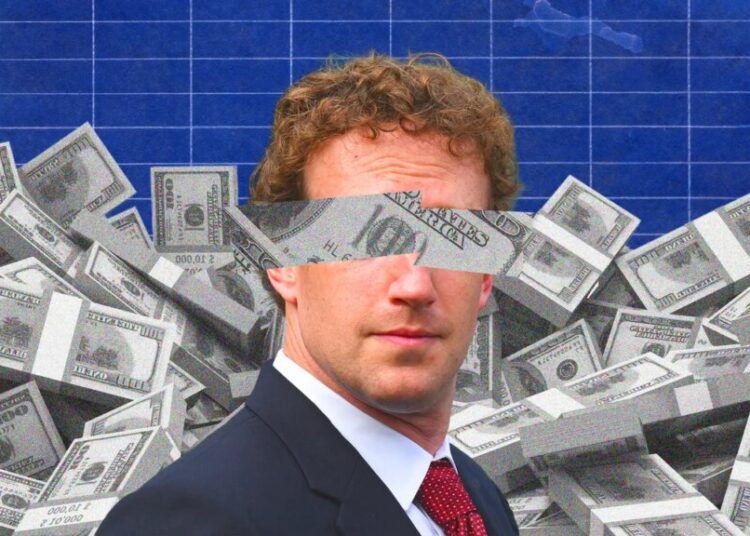
Elon Musk picked the wrong moment to lecture Indians. Frustrated that Starlink had not been cleared to launch in India, this month he accused the government of protecting Mukesh Ambani, whose telecom network, Jio, will launch its own satellite service. Musk cast himself as the champion of ordinary Indians against one of the country’s richest men.
It backfired. India’s government dismissed his accusations as baseless. An influential nationalist group close to the ruling party went further, demanding that Starlink be kept out of India altogether, citing national security concerns. Media and online reactions were similarly hostile to Starlink.
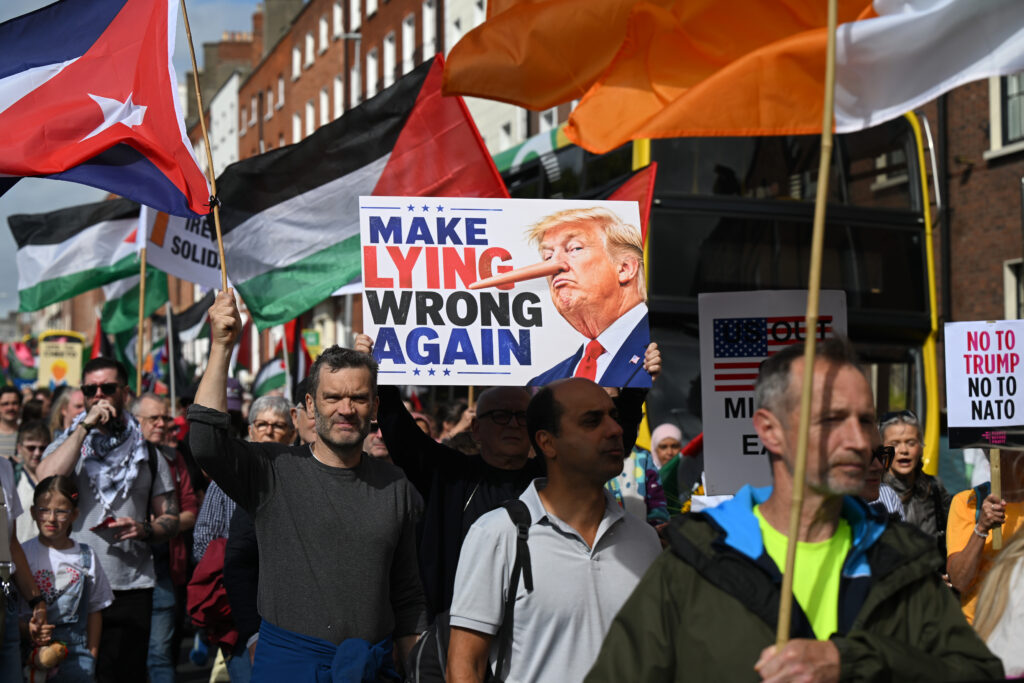
Musk did not understand that in India, as in much of the world, trust in America is collapsing. Indians have watched as President Donald Trump has discarded 25 years of bipartisan outreach to New Delhi in favor of cozying up to Pakistan and its de facto dictator, Field Marshal Asim Munir. They have watched Trump abandon Ukraine, where the military version of Starlink has been suspiciously restricted — thus crippling Ukraine’s military response to Russian aggression. Were India to find itself in another crisis with Pakistan, would it want its armed forces to be utterly dependent on a U.S. satellite system controlled by Trump and Musk?
After World War II, the United States pulled off something close to a geopolitical miracle. Japan and Germany became the second- and third-most-powerful economies on earth, yet neither sought nuclear weapons or the ability to defend itself alone. They aligned their security policy with Washington and entrusted their ultimate defense to American soldiers and American nuclear weapons.
Think how strange that arrangement was. Great powers throughout history have acquired armies to counter the top dog. Yet America’s allies agreed to depend on it for their survival. They did so not because America was invariably wise or generous but because the entire international system thus created benefited the U.S., too. American power was formidable but trust in America was priceless.
That trust is disappearing. A Pew Research Center survey conducted this year found that in 26 of 35 countries, China was viewed more favorably than the U.S.
Look at Canada. Prime Minister Mark Carney has visited Beijing to rebuild commercial ties and has moved to bind Canada more closely to Europe, including through European defense financing. His efforts to loosen dependence on America have earned his government sky-high approval ratings even as many Western governments face populations deeply unhappy with their rule.
Saudi Arabia, the United Arab Emirates and other American partners have suffered Iranian attacks in a war Washington initiated. Trump has not helped Saudi Arabia or Qatar directly, despite his recent commitments to both suggesting he would do just that. Some analysts there have begun asking whether hosting American military bases makes them safer or puts them in danger. In August, Saudi Arabia signed a mutual-defense pact with Turkey and nuclear-armed Pakistan.
In South Korea, the share of people who have favorable views of the U.S. has fallen from 77 percent in 2024 to 45 percent this year. In Japan, the number has fallen from 70 percent in 2024 to just half. These societies still fear China and North Korea and still depend on the United States. That is precisely the point: They need Washington, but no longer know whether they can trust it.
In Europe, Trump has repeatedly questioned whether he would defend NATO allies. Europeans have responded by boosting military spending, strengthening their own weapons industries and seeking greater strategic independence. France and Germany have even created a joint group to discuss nuclear deterrence and France’s arsenal. They insist this is meant to reinforce NATO, not replace it, but the very discussion tells us how much has changed.
Trump’s defenders say he is simply forcing wealthy allies to pay for their own defense, something previous presidents also demanded. Fair enough. But there is an enormous difference between asking your allies to shoulder more responsibility and telling them that your promise to defend them might be worthless.
The ultimate danger lies in nuclear weapons. In 1963, President John F. Kennedy warned that the world might have 15 or 20 nuclear powers by 1975. More than eight decades after Hiroshima, there are only nine. Arms-control treaties mattered. But more crucial was the American nuclear umbrella, which spared countries such as Germany, Japan and South Korea the need to develop their own bombs.
That restraint is already weakening. An August survey found that 65 percent of South Koreans support acquiring nuclear weapons. A recent Post report indicated that Saudi Arabia has not ruled out pursuing them. As trust in America weakens further, other wealthy nations will make the same calculation. And then we will move into a world of dozens of nuclear nations, with all the uncertainty and danger that that brings.
Trump believes he is making America’s allies pay their own bills. He may end up making them build their own bombs.
The post Trump and Musk are destroying a priceless American asset appeared first on Washington Post.