The Iranian-backed Houthi militia in Yemen is not only firing missiles and drones at Saudi Arabia, but also waging a propaganda war against the kingdom on social media.
A key character in the group’s communications campaign is, oddly, Jeffrey Epstein, the deceased American sex offender, some of whose files the U.S. Department of Justice has released.
The Houthis have recently homed in on a particular set of revelations to try to undermine Saudi Arabia’s leaders — namely, reports showing that associates of the Saudi royal court sent tapestries that had draped the holiest site in Islam to Mr. Epstein’s private island.
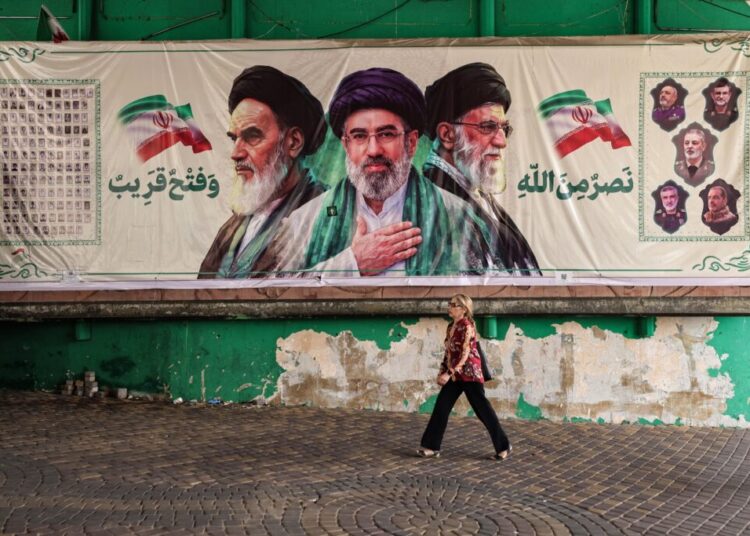
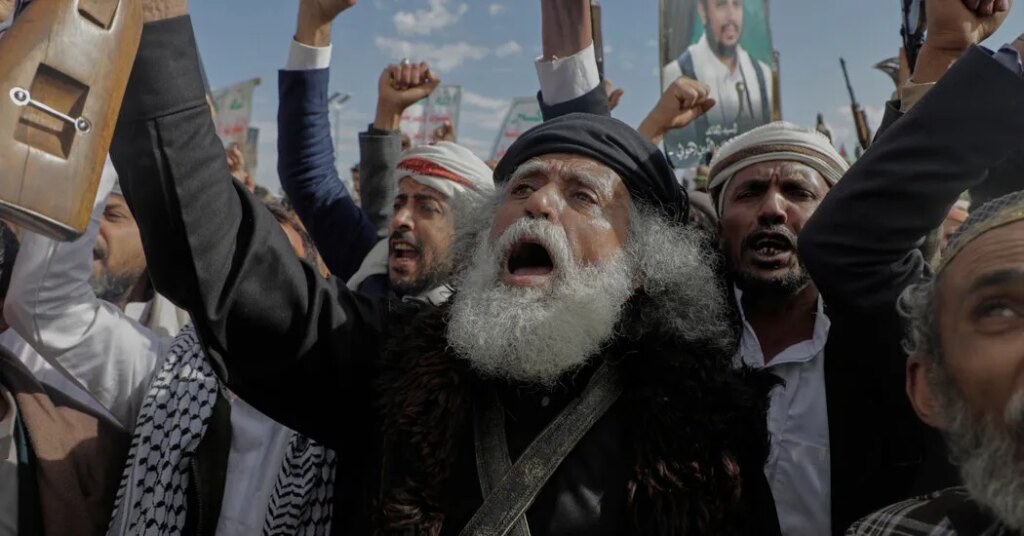
The Houthis control much of Yemen. Their communications show a profound awareness of news that their sworn enemies generate. They are willing to deploy the information in many forms — songs, videos, speeches, statements, influencer posts and more — to build support and target foes, including Saudi Arabia, which backs the internationally recognized Yemeni government they are fighting. They portray themselves as defenders of Islam against corrupt foreign influences.
Now, the group has stepped up its messaging efforts, after Yemen’s civil war reignited this summer amid the U.S.-Israeli war with Iran.
Plugged In
The Saudis last month accused the Houthis of firing a drone at the Muslim holy city of Mecca, saying the attack was a “disgraceful” act that intended to provoke Muslims. The Houthis denied the accusation.
The Houthis denied the claim. Rallying their expansive network to try to turn the accusation of religious betrayal against the kingdom, the Houthis pointed to the reports that Mr. Epstein had received tapestries that had draped the Kaba, the cubed building in Mecca that is the spiritual center of Islam.
“Those who gave Epstein the Kaba’s cover are the ones targeting Mecca,” Mahdi al-Mashat, the Houthi president, said in a statement to the group’s official news media.
Saudi officials have not responded to the Houthi accusations about Mr. Epstein or the reports about the tapestries after new Justice Department files were released this year.
Variations on Mr. al-Mashat’s message were echoed across the Houthi network, including video commentary from a Yemeni comedian with more than 270,000 followers on X and a song by a traditional musician in Yemen.
“They are very plugged in,” said Mohammed al-Basha, founder of the risk advisory firm Basha Report and a Yemen analyst in Washington who has tracked the evolution of Houthi communications over more than 20 years.
The group’s messaging operations have morphed from essentially “a two-man crew,” Mr. al-Basha said, to an organized media system. It spans television channels, websites, radio, newspapers, email campaigns and official and unofficial social media accounts. There is also a brigade of cultural influencers — a support network involving people who are ideologically aligned with the group and other Iranian proxies but not necessarily paid — who amplify a range of content in line with their ideology.
Like other groups in Iran’s “axis of resistance,” the Houthis are “obsessed” with Mr. Epstein, said Mr. al-Basha. The disgraced financier, he added, serves as shorthand for the corruption of the United States and Israel and is invoked to bolster antisemitic conspiracy theories that Jews and Zionists run the world.
A secular American Jew who officials said killed himself in a New York jail in 2019 while facing criminal charges on the trafficking of underage girls, Mr. Epstein frequently features in speeches by the Houthis’ leader, Abdul-Malik al-Houthi. He mentioned Mr. Epstein in a speech this month celebrating the Oct. 7, 2023, Hamas-led attack on Israel that sparked the Gaza war and in another in September about the Houthis’ 2014 takeover of the Yemeni capital, Sanaa.
“Epstein’s files demand serious attention,” Mr. al-Houthi said in a February address. “They unveil a Zionist incubator that trains leaders and elites.”
The Houthis have positioned their fight with Saudi Arabia as part of the broader war the Iranian axis says it is waging against the United States and the “Epstein class,” including Saudi leaders, said Moustafa Ayad, who leads research at the Institute for Strategic Dialogue in London on Islamist movements’ online ecosystems.
The Houthi motto calls for death to America and Israel. Connecting the rulers of Saudi Arabia — the birthplace of Islam — to these core enemies reinforce’s the group’s stance that, although the Saudis have no diplomatic relations with Israel, they are “one block” with the United States, Mr. Ayad said. U.S. weapons and military support were essential to the yearslong bloody bombing campaign that Saudi Arabia waged against the Houthis.
The Saudi-backed Yemeni government has its own approach to propaganda, though it does not have the same unity of messaging, Mr. al-Basha said, because its Presidential Leadership Council is made up of leaders with various ideologies and affiliations to different military groups. They are unified in their opposition to the Houthis, but “there is no one voice for these groups,” he added.
Laser-Focused
The Houthis’ messaging to the Arab world has been prolific, and their content went truly global after they targeted commercial ships in the Red Sea in 2023 in alliance with Hamas during the Gaza war. Since July, as fighting with Saudi Arabia has reignited, the group has turned back to their own conflict and shifted their messaging accordingly.
“Now, they are very specifically singling out Saudi Arabia” and “almost laser-focused on decimating” the standing of the kingdom’s de facto ruler, Crown Prince Mohammed bin Salman, said Mr. Ayad.
The Yemeni comedian Mustafa Al-Moumr was previously critical of and jailed by the Houthis, but since his release in 2023 he has aligned his content with the group’s talking points. It is not clear what is behind his new work, or whether he is operating under duress.
In the current conflict, he has produced a stream of content critical of the kingdom and Prince Mohammed, including music videos, commentary and short dramas. One music video posted in July shows him as the Saudi crown prince singing about his fear of the Houthis while aides report militia attacks, and ends with the royal captured in his palace at gunpoint. The post has had more than 300,000 views.
Another major theme in Houthi content is the toll of Saudi Arabia’s intervention in Yemen. A Saudi-led bombing campaign in support of the internationally recognized Yemeni government, which began in 2015, precipitated one of the world’s worst humanitarian crises and contributed to the deaths of hundreds of thousands of people in Yemen from violence, hunger and disease.
When Saudi Arabia’s foreign minister, Prince Faisal bin Farhan, was filmed last month in New York being berated by an activist in Arabic, a Houthi spokesman, Ameel Hayyan, posted the clip on social media, writing that Saudi Arabia is loathed globally “due to its crimes against Muslims and especially the savage massacres it committed in Yemen.”
Since the civil war in Yemen reignited in August, some 260,000 people have been displaced, according to the United Nations. Nearly 1,600 people have been killed, the World Health Organization said this week. And the Houthis have been pummeling Saudi Arabia’s aviation and energy infrastructure for weeks, killing at least 22 civilians.
Some of the content has emerged in the recent conflict is “essentially a mimicking of the Iranian approach” to propaganda, Mr. Ayad said.
Since the United States and Israel attacked Iran in late February, Iran has been adept at reaching an international audience on the messaging front.
Explosive Media, an Iranian group that has produced viral Lego videos, last month created “a Lego retelling of Yemen’s battles and victories,” a fantastical take on Houthi fighting with Saudi Arabia that shows the militia storming a Saudi military base with a golden statue of Mr. Trump and ends with a Houthi commander sipping from a mug marked “mocha,” alluding to their capture of the Red Sea port of Mokha, a gateways of early coffee trade.
The narratives are traveling far and wide, reaching seemingly unlikely sympathizers, at least some of whom share an obsession with conspiracy theories and Mr. Epstein.
Jake Shields, a retired mixed martial arts champion and popular right-wing podcaster and influencer, whom the Southern Poverty Law Center has accused of promoting “antisemitism, racism and bigotry,” posts about the Epstein files regularly. On a recent episode of his show, he spoke about the fighting between the Houthis and Saudi Arabia, expressing admiration for the militia’s resilience.
“I’m a big fan,” he said of the Houthis. “I think they’re kind of badass.”
It was precisely the kind of reputation and response that experts say the Houthis have sought to cultivate with their military and messaging campaigns.
James McManagan contributed reporting.
The post The Epstein Files Produce an Unlikely Weapon for the Houthi Messaging Wars appeared first on New York Times.