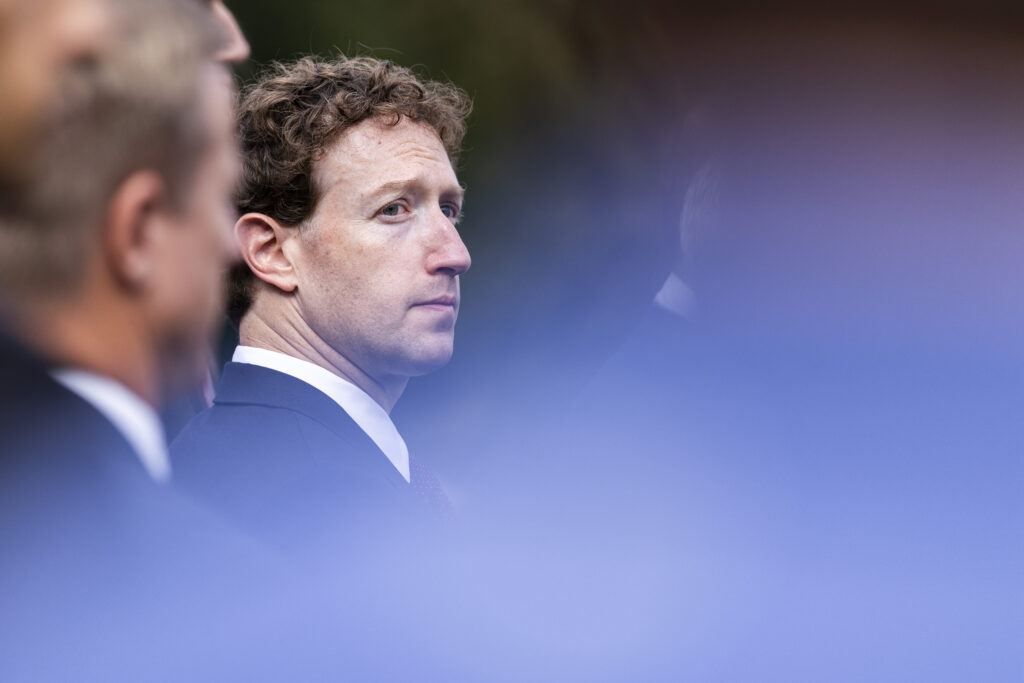
Mark Zuckerberg went to war over power and money with his own board of directors at Meta, asking for a significant pay increase and threatening to leave California in months of negotiations that saw board members contemplate resigning if the billionaire didn’t relent.
The dispute, laid bare in a financial document, offers a peek at a clash between the world’s fifth-richest person and the corporate officials who look out for stockholders in the $1.7 trillion company where Zuckerberg is chief executive.
The episode was triggered by the immense spending required for Meta to compete in artificial intelligence, the filing released by Meta on Wednesday showed. Meta’s board ended up caught between the financial pressures of the AI race and the demands of a CEO who wanted to retain his power over the company he co-founded and who directors believed was essential to its future. Zuckerberg has been the public face of the company since he co-founded it as Facebook in 2004.
A Meta spokesman declined to comment for the company and for Zuckerberg, who did not respond to a separate request for comment.
The intense boardroom negotiations had their origins late last year with a realization at Meta, according to the document: The company would need a lot more cash to pay for its AI product ambitions.
Zuckerberg told investors in October 2025 that he was spending heavily on AI despite the risk of a bust. “I think it’s the right strategy to aggressively front-load building capacity so that way we’re prepared for the most optimistic cases,” he said.
The best way to fund that outlay, the board and Meta’s management believed, was to raise cash by creating a new type of company stock to sell to investors. It would also serve as fresh currency to buy companies with stock and to dole out to employees as part of their compensation.
Zuckerberg, other company executives and the board of directors were all on board with the new type of stock in principle. But this summer, an impasse developed between the CEO and members of Meta’s board, the document said.
Zuckerberg didn’t want the new stock, or his own future stock sales, to water down his long-established power to overrule all other shareholders on important decisions at Meta.
The board members balked, arguing that it would be unfair to other shareholders if Zuckerberg could cash out stock while freezing in place his absolute control. The company had in 2017 abandoned a previous plan to create a new class of stock while protecting Zuckerberg’s control, after shareholders sued to stop it.
Then the dispute got messy, according to the document.
Over months, Zuckerberg’s attorney and three directors tasked with overseeing the new type of stock went back and forth in an attempt to satisfy both the CEO and what the directors said was their duty to other stockholders.
Zuckerberg, directly or through his lawyer, started to bring up other issues, too, the document said. More than once, his side asked the board to start talking about a new, stock-heavy compensation plan. The description of the proposed plan in the document bore similarities to Elon Musk’s usual compensation packages at Tesla and at SpaceX, which could reach up to trillions of dollars. Meta and Zuckerberg noted that he receives an annual salary of $1, according to Meta filings.
The three members of Meta’s board of directors either could not be reached for comment or referred a request for comment to Meta.
Zuckerberg also brought up that he might need money to pay a proposed one-time tax on billionaires in California, which state voters will weigh in on next month. He cited the tax as a reason he may need to sell large quantities of Meta stock.
By the beginning of September, the document said, the negotiations reached a breaking point. The three board members who were overseeing negotiations with Zuckerberg discussed what they could do if he refused to budge, the document said, including “resignation from the board.”
Zuckerberg kept raising the possibility of moving away from California, presumably as a way to avoid paying the wealth tax. Board members thought it would hurt the company if Zuckerberg were no longer based near Meta’s California headquarters.
“The Board has recognized that a significant portion of the Company’s success has been attributable to Mr. Zuckerberg’s leadership, creative vision, and management abilities,” the document said.
In early September, after months of back-and-forth talks, Zuckerberg sprung a surprise at a dinner with a larger number of directors. He planned to list his home in Palo Alto, California, for sale four days later, the document said. The implication was that the tony home listing would draw public attention and raise awkward questions about why Zuckerberg was moving away from the place where he built Meta into a colossus.
Zuckerberg’s disclosure pushed directors to move faster on negotiations over the new stock. By the middle of September, a deal was mostly done.
Each side got some of what it wanted.
Zuckerberg agreed to remain a resident of California for eight years, with an exception for unforeseen circumstance or if Meta changes its headquarters location. He can sell just a fraction of his stock in the company without watering down his voting power, but can sell more without penalty the longer he stays at Meta.
Meta issued a statement Wednesday that belied the complexity of the negotiations. The new type of stock “will continue the founder-led model that has driven the company’s success since its inception,” Meta said.
For many public companies, moving ahead to create a new class of stock would require a vote by shareholders. At Meta, Zuckerberg’s control let him personally decide the matter.
The post How Mark Zuckerberg went to war with his own board of directors over pay and power appeared first on Washington Post.