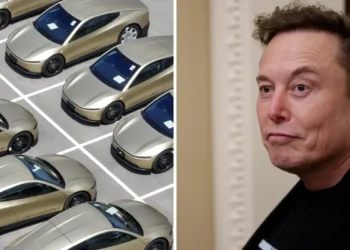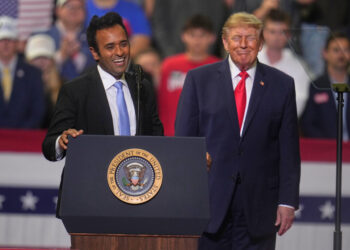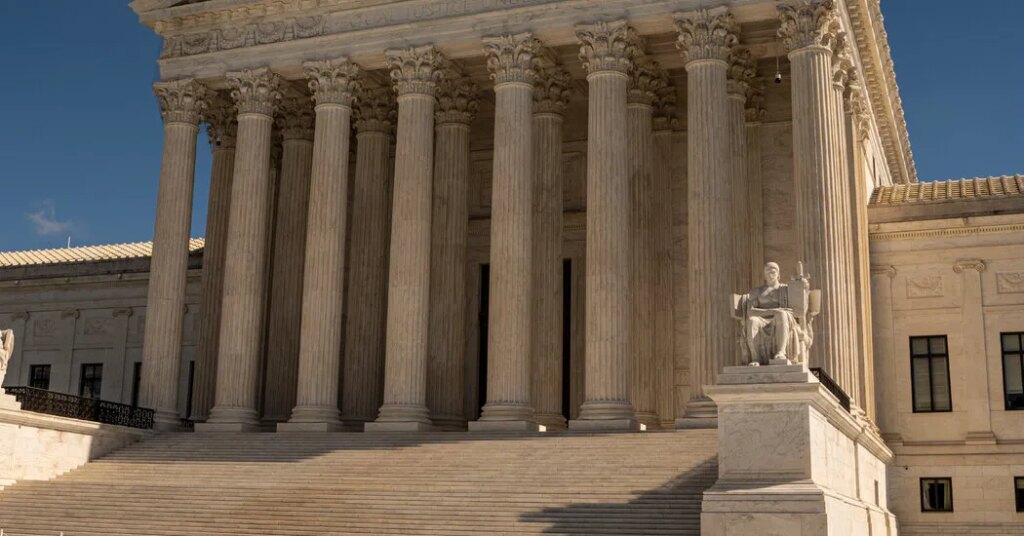
Elon Musk is pouring astounding sums into supporting Republican candidates in the midterm elections. How can it be that the richest man in the world can lawfully deploy hundreds of millions of dollars to try to install his favored politicians?
The glib answer is that everything changed in 2010, when the Supreme Court ruled in the Citizens United case that corporations and unions have a First Amendment right to spend unlimited amounts in candidate elections.
But there are many misconceptions about Citizens United. A cleareyed look at the decision undermines the conventional view that it single-handedly opened the floodgates of dark money in American politics.
It did not, for instance, establish the principle that corporations have First Amendment rights.
As Justice John Paul Stevens acknowledged in his dissent, the court had long recognized that “corporations are covered by the First Amendment.” Justice Anthony Kennedy, writing for the majority, listed more than 20 precedents to that effect.
Nor is Citizens United responsible for the rise in dark money in elections. Indeed, the court upheld the disclosure requirements in the case by an 8-to-1 vote even as it voted 5 to 4 to strike down limits on corporate spending.
Citizens United was also but a chapter in a long saga. The decision that allowed individuals to spend without limit, Buckley v. Valeo, was decided half a century ago, in 1976.
Still, a new study in The Yale Law Journal Forum demonstrates that Citizens United marked a turning point — as a galvanizing symbol that seems to have affected judicial behavior in ways untethered to its actual holding.
“A lot of the complaints people have about the role of money in politics can’t neatly be traced to Citizens United itself,” said Duncan Hosie, the director of the Stanford Constitutional Law Center and the author of the study. But, he added, the decision was a potent shorthand for the Supreme Court’s campaign finance jurisprudence and the increasing influence of money on the political system, one that amped up partisan polarization among lower court judges.
The study examined about 800 First Amendment challenges to campaign finance regulations in the two decades after Chief Justice John Roberts joined the Supreme Court in 2005.
The rate at which Republican appointees upheld such regulations remained constant, at around 40 percent. But Democratic appointees’ behavior changed after Citizens United. The rate at which they upheld campaign finance regulations increased to 73 percent from 64 percent.
In this area and many others, ideology matters more as you move up judicial ladder. There was a 15-percentage-point gap between Republican and Democratic appointees at the trial court level. It grew to 33 points in the appeals courts and to 81 points in the Supreme Court.
There was another kind of gap, too, one between appointees of different presidents. Fifty-two percentage points separated President Trump’s appointees, who upheld just 27 percent of regulations, and those of President Bill Clinton, who upheld 79 percent of them.
Before Citizens United, the politics of regulating the role of money in politics was more complicated. The formal name of the challenged law, after all, was the Bipartisan Campaign Reform Act of 2002. It was more commonly called the McCain-Feingold Act, cosponsored by Senator John McCain, Republican of Arizona, and Senator Russ Feingold, Democrat of Wisconsin.
People forget the details of the dispute. It involved a polemical documentary called “Hillary: The Movie,” a relentlessly negative look at Hillary Clinton’s career and character as she sought the Democratic nomination in 2008.
The documentary was made by a conservative advocacy group called Citizens United, which lost a lawsuit against the Federal Election Commission seeking permission to distribute it on a video-on-demand service. The McCain-Feingold law banned “electioneering communications” paid for by corporations within 30 days of a primary or 60 days of a general election.
The case divided some usual allies. Most liberal groups supported the law, while the American Civil Liberties Union backed Citizens United. That position was not popular with many A.C.L.U. members.
The group explained its stance in a 2012 statement.
“Our system of free expression,” the statement said, “is built on the premise that the people get to decide what speech they want to hear; it is not the role of the government to make that decision for them.”
A brief supporting Citizens United by the Reporters Committee for Freedom of the Press said the McCain-Feingold law, which exempted news reports, commentaries and editorials, nonetheless posed unacceptable dangers.
“By criminalizing the distribution of a long-form documentary film as if it were nothing more than a very long advertisement,” the brief said, a lower court’s ruling “created uncertainty about where the line between traditional news commentary and felonious advocacy lies.”
The court had plenty of offramps. It could have focused, as the Reporters Committee suggested, on the differences between TV ads and documentaries. It could have distinguished between messages that you have to seek out and ones that arrive uninvited. It could have drawn a line between small advocacy groups and major public corporations.
The court instead went big, unleashing corporate and labor spending. That said, rich people like Musk were already free to spend unlimited sums under Buckley v. Valeo, which struck down limits on political spending by individuals in a 1971 law that was substantially amended in 1974 in the wake of Watergate.
A 2010 federal appeals court decision issued after Citizens United and said to flow from it made it easier for people like Musk to spend money through super PACs. But Citizens United by itself, Hosie said, “is not the root cause of his ability to use his fortune to influence political outcomes.”
Other Things Worth Knowing About
Mailbag
Friends of the Court?
In the Oct. 8 issue of The Docket, you mentioned that the judge in the James Comey seashell case decided not to accept friend-of-the-court briefs. Could you expand on what a friend-of-the-court brief is? — Phillip Visha, Columbus, Ga.
Lawyers call them “amicus curiae briefs,” and they are intended to help judges navigate difficult legal and factual issues. There was a time when they were isolated and disinterested efforts, typically from law professors. No more. People who claim to be friends of the court are now, almost without exception, actually friends of one party or the other.
Still, particularly in federal appeals courts and state Supreme Courts, such briefs can provide additional perspectives overlooked by the parties. In the U.S. Supreme Court, where the parties’ briefs are almost universally comprehensive and excellent, the additional briefs are generally pointless flag-waving exercises.
“The vast majority of amicus curiae briefs are filed by allies of litigants and duplicate the arguments made in the litigants’ briefs, in effect merely extending the length of the litigant’s brief,” Judge Richard A. Posner, then of the federal appeals court in Chicago, wrote in 1997. “Such amicus briefs should not be allowed. They are an abuse.”
Justices seem to have no objection to such briefs. But they are easy to ignore.
“Normally I didn’t even read amicus briefs,” Justice John Paul Stevens told me in 2011, a year after he retired.
“That was one of the tasks I assigned to my law clerks,” he said. “Their job was, if they thought an amicus brief really should be read, they’d pull them out for me and then I’d look at them.”
Justice Antonin Scalia, who died in 2016, said something similar in 2011 at Chicago-Kent College of Law, but more pungently.
“My law clerks read all amicus briefs,” he said. “If there’s one that has a hidden truffle in there somewhere, they call it to my attention.”
I would love to hear your questions on the law, the courts or whatever is on your mind. Send them my way at [email protected].
Closing Argument
The Allure of Book Royalties Leads to a Gridlocked Court
The Supreme Court announced on Monday that it could not hear a copyright case because four justices had recused themselves. A federal law and one of the court’s internal rules require a six-justice quorum to conduct any business.
Another federal law in essence directs a quorum-less court to affirm the judgment of the court below without issuing an opinion or setting a precedent.
The court’s order did not say why Justices Sonia Sotomayor, Neil Gorsuch, Amy Coney Barrett and Ketanji Brown Jackson had recused themselves, but it was almost certainly because they had published books with imprints of Penguin Random House, which shares a parent company, Bertelsmann, with one of the parties in the copyright case.
None of the four justices responded to my request for an explanation of why they had recused themselves.
The question in the case was whether a songwriter seeking to reclaim his rights to a song could do so not only in the United States but also around the world. In turning down a petition from BMG Rights Management and other publishers, the Supreme Court let stand a Fifth Circuit ruling in favor of the songwriter.
The court’s ethics rules allow the justices only a few ways to make money off the bench. They can teach, though there is an annual cap of roughly $35,000. And they can write books. Seven of the nine justices have done so or have a project underway, and they collectively made more than $13 million, according to a tally by Fix the Court, an advocacy group.
Gabe Roth, the group’s executive director, said he had mixed feelings about Monday’s development.
On the one hand, Roth said the justices should recuse themselves from cases in which they have an economic stake.
On the other, he added, “this is not sustainable.”
It cannot be, he said, that cases involving Bertelsmann and Penguin Random House are immune from Supreme Court review.
Roth has an idea for a fix.
“The justices should place their earnings from book advances and royalties into an account that they can’t touch until they leave the high court,” he said. “Maybe they should be granted some exceptions, like for a home purchase or school tuition for their kids.”
That might solve problems arising from book royalties. But the court has lacked a quorum in other cases, too, including a 2008 appeal brought by more than 50 companies that did business in apartheid-era South Africa.
In that case, Chief Justice Roberts and Justices Samuel Alito and Stephen Breyer were apparently prevented from sitting because of their stock holdings. Justice Anthony Kennedy had a son who worked for one of the companies.
There may be broader solutions. One would be for the justices to focus on their day jobs.
Another would be for Congress to lower the quorum requirement to five. A 1943 editorial in The New York Times floated that idea after the Supreme Court was unable to act in two “cases of high importance” for want of a quorum.
“The court consists of nine members,” the editorial asked. “Why is a majority not a quorum? Why six instead of five?”
The six-justice requirement was an artifact of an era when Congress had briefly increased the size of the court to 10 justices, the editorial said. It suggested new legislation to lower the required number to five.
“If passed, as it should be,” the editorial said, “this will be not merely an apology to insulted mathematics but an end to certain unnecessary delays of justice.”
Please send me your comments on Elon Musk’s money, false friends, the cost of books or anything else at [email protected]. See you next week. — Adam
The post Is Citizens United to Blame for Everything? appeared first on New York Times.