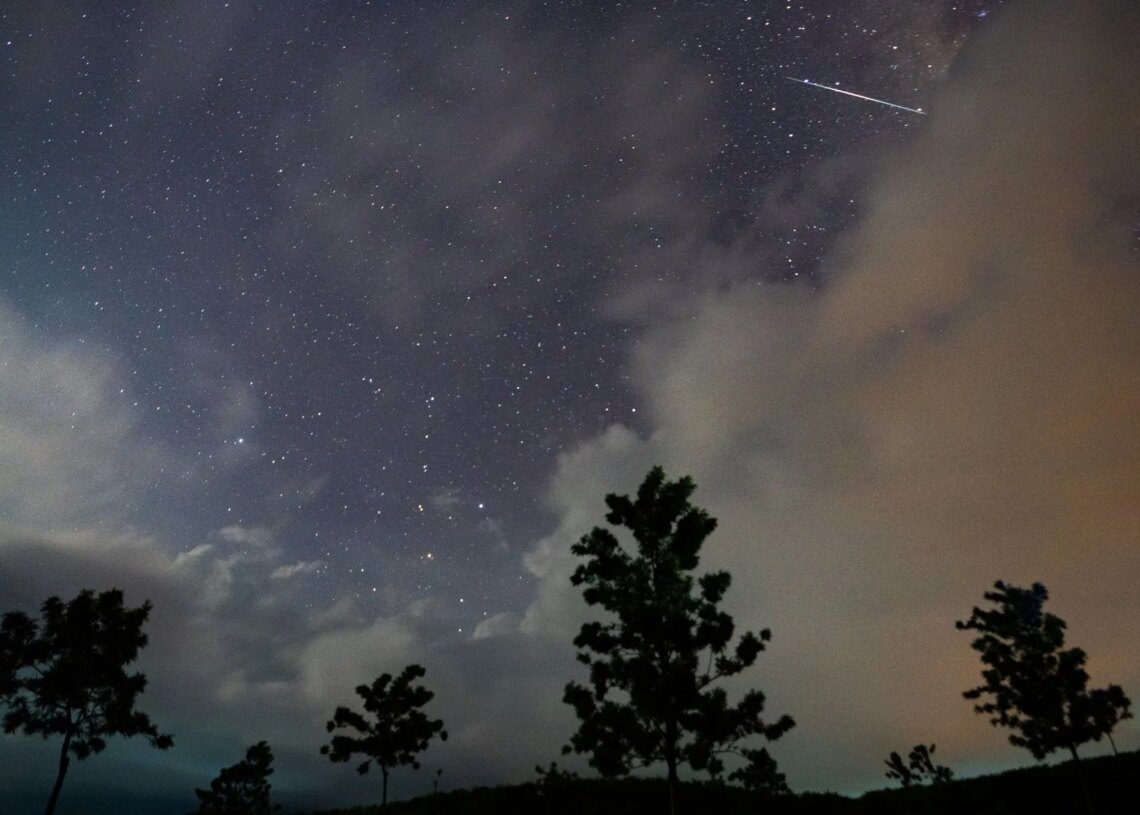
Elder millennials were technically alive the last time Halley’s Comet came around, though most of us were still learning to walk. And it won’t officially be back until 2061.
But there’s a way to see pieces of it this week. NASA meteor expert Bill Cooke suggested something for anyone who doesn’t want to wait another 35 years. “For those who haven’t seen Comet Halley, if you don’t want to wait for its return, you can at least go out and see the Orionids,” he told CNN. This year’s Orionid meteor shower peaks tonight, Wednesday, Oct. 21, into Thursday morning.
Every October, Earth passes through a trail of dust and rock left behind by Halley’s Comet. Those particles burn up in our atmosphere, giving us the Orionids. The same comet debris also produces the Eta Aquariids meteor shower in May. Meanwhile, Halley’s Comet is out near Neptune’s orbit, absolutely nowhere near us.
And these things freaking move. Orionid meteors enter Earth’s atmosphere at around 41 miles per second, making them some of the fastest meteors we can see. They can produce bright streaks, the occasional fireball, and glowing trails that hang around for a few seconds afterward.
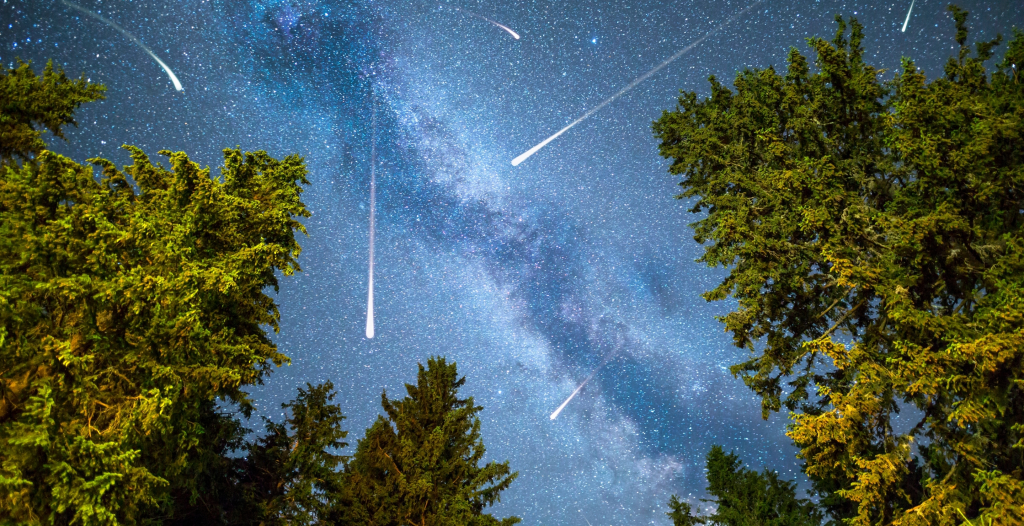
A Meteor Shower Made From Halley’s Comet Is Peaking Tonight. Here’s When to Look Up.
Unfortunately, the moon isn’t doing anyone any favors this year. A bright waxing gibbous moon will wash out many fainter meteors on Wednesday night. According to NASA, your best chance comes after it sets around 3 a.m. local time. Under ideal conditions, the Orionids can produce 10 to 20 meteors per hour, although people in suburban areas will probably see closer to three to six.
If you’re going to watch, find somewhere away from city lights and give your eyes time to adjust. Bring a blanket and something comfy to sit on, especially if you’ll be out there a while. You won’t need a telescope, and there’s no reason to stare directly at Orion. The meteors can appear anywhere in the sky.
Fun fact: Mark Twain had an interesting connection to Halley’s Comet. He was born in 1835, the year it passed, and predicted he’d die when it returned. In 1909, he wrote, “I came in with Halley’s Comet in 1835. It is coming again next year, and I expect to go out with it.” He died on April 21, 1910, one day after the comet reached its closest point to the Sun.
If you’re willing to get out of bed at 3 a.m., you might catch a few pieces of the same comet. At least you won’t have to wait another 35 years.
The post Pieces of Halley’s Comet Will Light Up the Night Sky Tonight. Here’s How to See Them. appeared first on VICE.