Good morning. Being a CFO today can require the stamina of an elite athlete. Yet many corporate leaders fail to apply one of the most important lessons athletes learn: recovery is essential to sustained performance.
Gina Mastantuono, president and CFO of ServiceNow, a Fortune 500 company, has spoken about the benefits of fitness for both personal health and leadership, while pointing to a workplace culture in which senior employees still equate overwork with commitment.
“There’s always been this idea that if you have to work 14-hour days and get four hours of sleep, that shows you’re working the hardest and deserve the most,” she said. “That is such a terrible example for the people around us.”
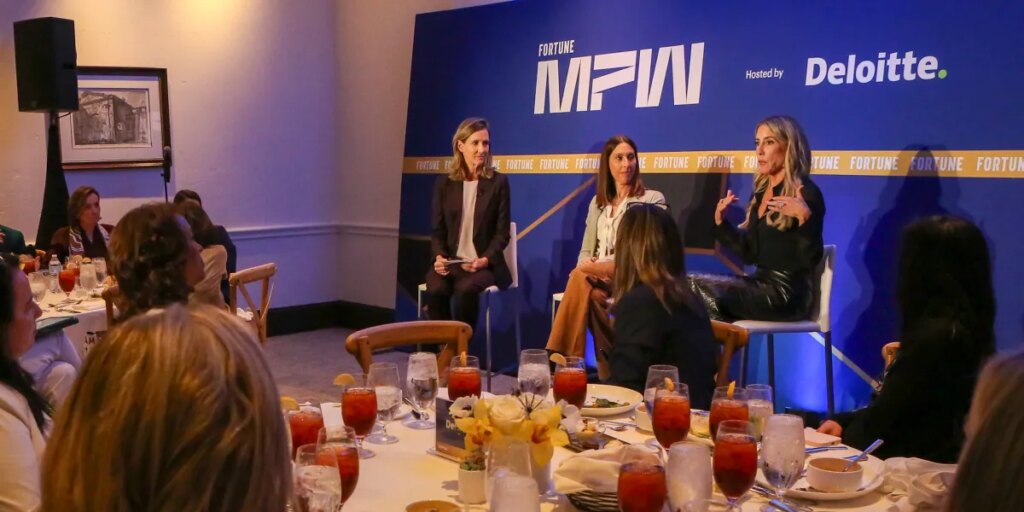
Mastantuono spoke during a panel at the Fortune Most Powerful Women Summit with Olympic champion Janet Evans, chief athlete officer for the LA28 organizing committee, and Alicia Hatch, Deloitte’s U.S. sports chief commercial officer and women’s sports leader.
For Mastantuono, recovery isn’t a distraction from high performance; it’s a prerequisite for it. Just as the body needs rest to recover from exercise, professionals need time to recharge if they want to remain effective over the long term.
Prioritizing recovery has helped her improve her work-life balance, listen more thoughtfully instead of reacting impulsively, and remain composed under pressure. Those benefits extend beyond the individual to the teams she leads.
“When we do focus on taking care of ourselves, then we are much better bosses, much better colleagues, much better parents,” she said.
But the lessons athletes bring to leadership extend beyond recovery. They also learn to make decisions under pressure, adapt to changing circumstances, and keep moving toward a goal despite uncertainty.
“How many of you have ever made a high-stakes call with incomplete information and a lot of people watching?” Hatch asked the audience. “We face this every single day.”
She continued, “94% of female C-suite executives played sports growing up. And there’s a reason for that.” Sports teaches us confidence, teamwork, resilience. “But it’s also an amazing simulator for making decisions under pressure, performing continuously, even with changing circumstances,” Hatch said.
Evans offered a practical example of how an athlete’s mindset can translate into leadership. When LA28 chairman Casey Wasserman approached her in 2015 about joining the effort to bring the Olympics to Los Angeles, she knew the city faced a formidable competitor in Paris for the 2024 Games.
Rather than abandon the goal when Paris emerged as the likely winner, the team shifted its focus to securing the 2028 Games.
Evans said that experience reflected the qualities athletes bring to leadership: persistence, faith in a goal, and the ability to pivot when circumstances change. Pursuing ambitious goals, she suggested, requires a willingness to take risks, work through setbacks, and adapt along the way.
That mindset may be particularly relevant as women’s sports gain commercial momentum. Deloitte projected earlier this year that global revenues from women’s sports would reach at least $3 billion in 2026, a 340% increase over four years. Soccer and basketball are expected to lead, each accounting for 35% of global women’s sports revenue.
As women’s sports continue to grow, the leadership lessons associated with athletics are increasingly relevant beyond the playing field. For executives, that means not only developing the resilience to perform under pressure, but also recognizing when to step back and recover.
You can watch the complete panel session here.
Sheryl Estrada [email protected]
The post ServiceNow CFO: Overwork doesn’t make you a better leader appeared first on Fortune.