The battle for India’s democratic future is moving from the ballot box into the streets.
On Oct. 10, thousands of police and paramilitary forces locked down parts of the capital, New Delhi, to thwart youth-led protests against voter-roll revisions that have disenfranchised millions and shaken faith in Indian elections. The police stormed an aircraft to arrest leaders of the Cockroach Janta Party, the cheekily named movement that called for the protests, as they were arriving to take part.
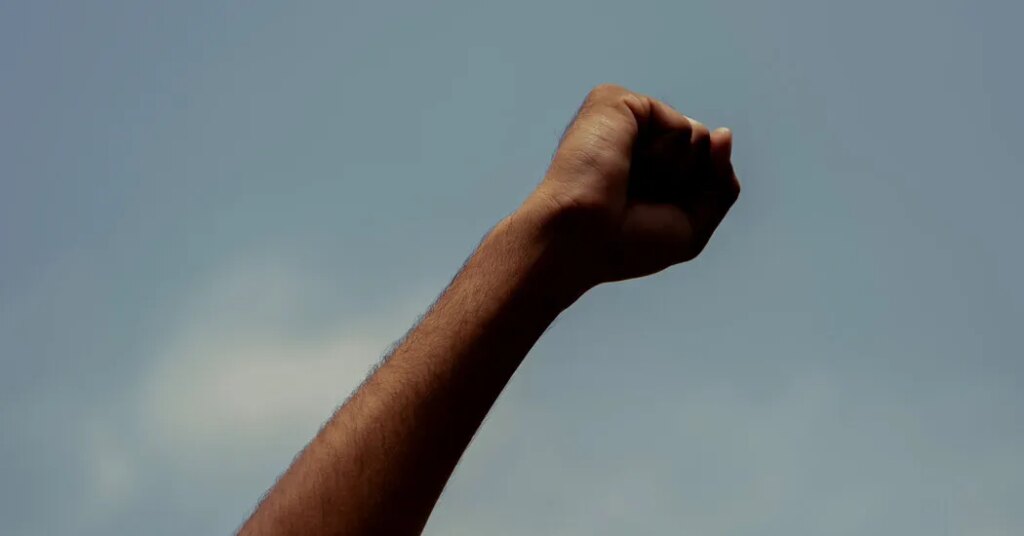
But cockroaches are pesky insects, and protesters filled the streets anyway. Thousands were detained, some beaten by the police. Two days later, in a powerful act of defiance, opposition politicians, student leaders and civil society activists joined forces in a march of tens of thousands of people through central New Delhi.
This moment for Indian democracy is both sobering and thrilling.
It is sobering because after more than a decade of democratic backsliding under Prime Minister Narendra Modi, institutions throughout India have been so hollowed out that public trust in the country’s electoral process and a once-respected election commission is crumbling, while brutal state repression is all too common.
Yet it is also a thrilling time. India’s democratic spirit has found a fresh lease on life thanks to protests led by the Cockroach Janta Party since July. There is an unmistakable sense of democratic renewal as a younger generation finds its voice through social media and street mobilization, drawing in a political opposition that has struggled to defeat Mr. Modi at the ballot box.
For the governing Bharatiya Janata Party, the protests against what government officials have called the “cleansing” of electoral rolls pose the greatest political challenge to Mr. Modi in his 12 years in power.
The Hindu-nationalist governing party has long wielded its extraordinary electoral success as a defense against criticism that it has tightened its grip on state institutions, intimidated critics, muzzled the media and fueled religious divisions by vilifying and marginalizing the country’s estimated 200 million Muslims.
But that defense rests on the promise that elections are free and fair. In that sense, the voter-roll overhaul — known as the Special Intensive Revision — is a crisis of the ruling party’s own making, undermining its most potent claim to democratic legitimacy.
Since independence in 1947, the Indian state has embraced the principle that the onus was on the government to actively bring citizens into the electoral process through voter enrollment, rather than place the burden on voters to prove their right to participate. That commitment to inclusion, based on the idea of equal citizenship, has been a source of India’s democratic strength.
The Special Intensive Revision turns this principle on its head, requiring many voters to prove their eligibility through verification forms and by producing other documents, which are verified by centralized software, leaving voters at the mercy of algorithms.
Many Indians, including myself, do not possess the mass of paperwork that is needed. A minor difference in the spelling of a person’s name across their documents — common in a country with many languages, scripts and inconsistent record-keeping — can knock them off the rolls. Restoration requires navigating a labyrinthine appeals process. The courts offer little recourse. In the case of the state of West Bengal, where 2.7 million deletions were still under review as the state held elections in April, the courts casually suggested that those who are excluded can simply vote in the next election.
India’s election commission has conducted such overhauls before, most recently across much of the country between 2002 and 2004. The commission says the current exercise, which has cut more than 130 million names from voter rolls, is intended to eliminate dead and ineligible voters and duplicate registrations. That is a noble goal, but the sweeping, opaque and disruptive nature of the current exercise has raised alarming questions.
Critics say the real objective is to disqualify tens of millions of Muslims, other minorities, and poor or lower-caste communities that are viewed as unlikely to vote for the ruling party. The government denies the allegation.
Whatever the intent, the exclusions further Hindu nationalism’s vision for India, in which Muslims are portrayed as outsiders or even — as Mr. Modi once said — “infiltrators.” Those whose documents are not verified and recognized by the election commission are marked as “deleted” or “doubtful” voters, a label that readily slides into casting doubt over the constitution’s promise that they are equal citizens.
India’s season of political turmoil began in May after the leak of questions from a fiercely competitive medical school exam taken by more than two million students. Authorities scrapped the results, angering young Indians who had prepared for years and stoking wider frustration in a generation anxious about dwindling economic opportunity.
A few days later, when India’s chief justice referred to some unemployed youth as “cockroaches,” the student activist Abhijeet Dipke embraced the slur to form the Cockroach Janta Party, catalyzing an irreverent Gen Z movement that has breathed new life into a suffocated democracy. Protesters have taken to the streets and, using a new grammar of humor, joy and hope, voiced their frustrations over the exam system, joblessness, women’s safety, Mr. Modi’s religiously polarized authoritarian politics and now the voter-roll revisions.
For the moment, Mr. Modi and his party appear to be in no mood for dialogue. They may choose to crack down more while betting that victories in several state elections early next year will shore up their democratic legitimacy and quell the protests. But when the process itself is suspect, each victory means less.
More protests and repression seem inevitable. How that struggle unfolds will shape the next chapter of India’s democratic history.
Yamini Aiyar is a public policy scholar and visiting professor at Brown University. She was previously president and chief executive of the Centre for Policy Research, a New Delhi think tank.
The Times is committed to publishing a diversity of letters to the editor. We’d like to hear what you think about this or any of our articles. Here are some tips. And here’s our email: [email protected].
Follow the New York Times Opinion section on Facebook, Instagram, TikTok, Bluesky, WhatsApp and Threads.
The post Indian Democracy Has Found New Life in the Streets appeared first on New York Times.