Albertans voted overwhelmingly to remain in Canada on Monday, but the result may do little to quiet the separatist movement that helped bring the question to the ballot.
Preliminary results early Tuesday showed that roughly 76% of voters rejected beginning the process toward a future binding referendum on separation. While approval would not have authorized Alberta’s independence from Canada, it would have allowed the province to take the next steps in the process of separation.
Even before the vote, most Albertans expected the debate to continue. Polling from the nonprofit Angus Reid Institute, released last week, found that 62% of people in the province think that “there will never be an end to the separatist movement.”
Responding to former Alberta Premier Jason Kenney’s suggestion that the movement should end if the referendum were to fail, Keith Wilson, one of the most prominent separatist leaders, said at a rally on Oct. 17, “That’s not happening.”
“We are going to build on our successes, build on our relationships,” he added.
Speaking to TIME before the results came in on Monday, Jared Wesley, a professor of political science at the University of Alberta, said that even if the referendum were to fail, “it seems unlikely that separatism as a political strategy, if not an actual objective, is going anywhere soon.”
He added that the next provincial general election is next year, so it’s possible that voters could be faced with a similar question on the ballot then.
“The country is very familiar with western alienation and western grievances—that is a very long-standing political phenomenon in Canada,” Andrew McDougall, an associate professor of political science at the University of Toronto Scarborough, tells TIME. “There’s been a long history of regional tensions in Canada where the west feels disaffected from what, historically, has been the larger and, in many ways, sometimes more prosperous central Canada.”
“The idea, though, of having a vote on separatism—that is a little bit new,” he continues.
The Alberta independence campaign got more traction after the Liberal Party, headed by Prime Minister Mark Carney, won the federal election last year, with many Albertans expressing frustration that their views aren’t sufficiently represented by the Liberal government.
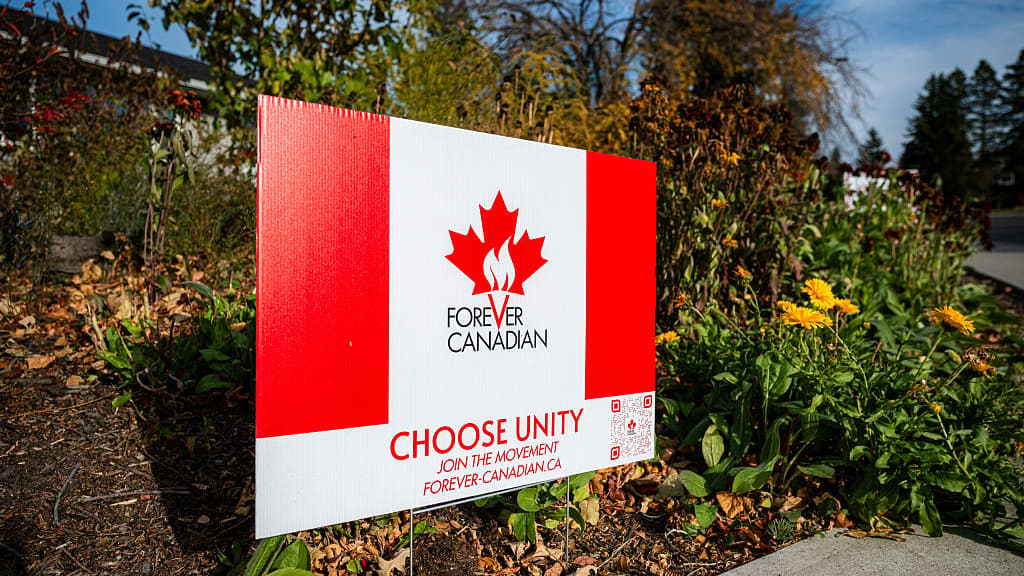
That dissatisfaction, driven in large part by the federal government’s energy policies, comes as Canadian leaders are placing particular emphasis on national unity.
Why did Alberta hold this referendum?
Alberta is an oil-rich province; mining, quarrying, and oil and gas extraction made up about a quarter of the province’s GDP in 2025. But Albertans have expressed dissatisfaction with the level of support the industry has received from Ottawa, criticizing the federal government for blocking pipeline projects, among other industry initiatives.
The feeling among some residents in the province, McDougall says, is “that central Canada is taking advantage of Alberta; that the central government has, at times, through environmental regulations, for example, hindered the development of the oil resources that exist in Alberta.”
He adds that the independence campaign may also have been fueled by Albertans’ dissatisfaction with representation in the federal government.
Alberta is considered a conservative stronghold, but the Liberal Party has led the country for over a decade. The western province has about 5 million residents, compared to 16 million in Ontario and 9 million in Quebec, which means “it could be difficult sometimes for the West to get representation in the government,” McDougall says.
At the beginning of May, separatists turned in a petition with hundreds of thousands of signatures to push for a vote on leaving Canada, while opponents collected signatures in support of staying. A court ruling on May 13 complicated matters: A judge halted the petition, finding that the province could not advance the discussion without consulting First Nations.
The government instead asked voters whether it should take the steps needed to hold an independence referendum later, leading to this month’s vote. Alberta Premier Danielle Smith supported staying in Canada.
Polling suggests that, for many voters, support for the referendum was not necessarily about wanting to leave Canada—it was a way to underscore dissatisfaction with the federal government.
The Angus Reid Institute found that 60% of respondents who were in favor of holding a future independence referendum said their motivation was sending a message to Ottawa, compared with 37% who wanted Alberta to take the necessary steps toward secession.
As early results emerged Tuesday, Wilson, the separatist leader, observed: “It’s fair to say that at least a quarter of Albertans feel that Alberta needs to be treated better.”
Carney stressed unity amid tensions with U.S.
Alberta’s independence referendum came as Carney’s government promotes national unity amid a trade war with the U.S.
McDougall says that the issues behind the referendum are “longstanding grievances,” but the fact that it advanced at a time of strong pro-Canada sentiment is “a little out of step with the times.”
The trade dispute escalated after negotiations between the two nations broke down in August. On Sept. 8, Canada responded to new tariffs from the U.S. with matching, retaliatory levies.
Tensions have continued to escalate in recent weeks as Trump repeatedly insists that Canada is ripping off Americans and should join the U.S. He said at a rally in Arizona on Oct. 14 that Canada will “end up being the 51st state, because it’s the only way it works.”
The following day, Carney spoke at a rally in Calgary, emphasizing the importance of Canadian unity amid outside tensions, though he did not explicitly reference Trump’s remarks.
“The stakes are high. This referendum, it comes at the worst possible time. The world has become more dangerous and divided,” Carney said. “There are some outside our borders who are working to break us, so they can own us.”
The speech was another effort by the Carney government to promote national unity, just days before the referendum in Alberta.
The message became especially poignant that weekend when four service members died in a fire at a military base in Alberta. The nation came together to provide resources and support for the province. At a press conference on Sunday, Carney emphasized that “Canadians come together in crisis.”
Wesley says he believes that “the vast majority of Albertans are viewing this referendum through a broader global lens.”
“They know their votes send a message—not just to governments here in Alberta or Ottawa, but to Washington,” Wesley says. “Albertans are overwhelmingly opposed to Trump’s trade war and even more averse to becoming the 51st state. They know that voting to destabilize Canada makes it harder to weather the economic storm and easier to fall into the American orbit.”
“Albertans made a clear choice,” Carney said Tuesday after preliminary results became available. “They chose unity, to build together, and to take care of each other. Above all, Albertans chose Canada.”
The post Alberta Voted to Stay in Canada. That Doesn’t Quite Settle the Separatist Debate appeared first on TIME.