Matthew Lynn, a Post Opinions contributor, is a financial columnist and author who writes for the Daily Telegraph and the Spectator in London.
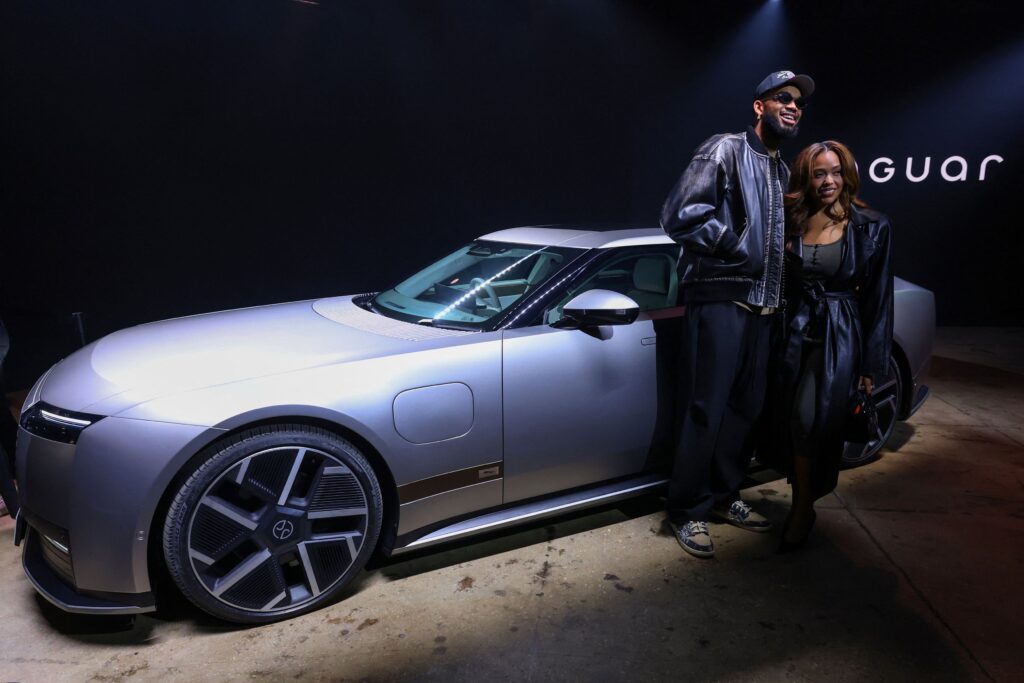
For around $130,000, you could be the first person in your neighborhood to own the new all-electric Jaguar Type 01, which was unveiled this month. And for nearly $400,000, you could rock up to the country club in a brand-new Rolls-Royce Spectre. If you pay $240,000 more, you could be the only person cruising down to Palm Beach in a Ferrari Luce, its sleek form crafted by iPhone designer Sir Jony Ive. Anyone in the market for a high-end electric vehicle is suddenly spoiled for choice. There is just one problem: The market for luxury EVs doesn’t exist, and it never will.
These cars have all been about as well received as a Dodge Ram at a climate change conference. One industry professional called the new Jaguar model an “unmitigated catastrophe.” The bright-pink concept car that preceded the Type 01 in 2024 was immediately dubbed the “Barbie-mobile.”
The Ferrari Luce provoked its own backlash and a storm of online jokes. (The best was a mock-up of a vacuum cleaner with a Ferrari dancing horse logo.) “I wonder what Enzo Ferrari would say,” Italian Transport Minister Matteo Salvini wrote on X, while a former chief executive at Ferrari, Luca di Montezemolo, worried that “we’re risking the destruction of a legend.”
The sales numbers for the high-end EVs already on the market suggest that customers feel much the same way. Purchases of the battery-powered Rolls-Royce dropped 47 percent from 2024 to 2025. Porsche’s luxury EV, the Taycan, has performed so badly that the company has already dropped two of the models in the United States, and it is reportedly planning to discontinue production of the entire line by 2030. Lamborghini decided to shelve its plans for the electric Lanzador, an EV unveiled as a concept car in 2023, because the demand was not there. This is hardly a great track record.
The luxury EV has been a much-sought-after prize in the global auto business for the past few years. Most traditional manufacturers have been trying to figure out how they can replicate the prestige that once came with owning a Jag, a Roller or a Merc for a battery-powered market. It is not hard to work out why. When you can charge $300,000-plus for an automobile, the margins are, to put it mildly, generous. There are huge profits to be made for anyone who can get it right.
The problem is, the cars keep flopping. A coincidence? Maybe. New products are always hit and miss — that’s business. Even so, it is hard to escape the suspicion that something deeper is at work. Perhaps there is no such thing as a luxury EV?
High-end electric vehicles have three big issues. To start with, EVs are essentially utilitarian devices. They don’t have any of the quirks, smells, noises or power of the traditional internal combustion engine. When people dismiss them as vacuum cleaners with wheels, they miss an important point: That is precisely what these automobiles are supposed to be. Your EV quietly does its job — in this case getting you around without too much fuss — just like a vacuum cleaner sucks up dust. It’s a tool, not a luxury item.
Next, although EVs have evolved over the past 20 years, the roots of the industry are in the environmental movement. They were designed to combat the carbon emissions of gas-guzzling automobiles, and conspicuous consumption is at odds with saving the planet. A luxury EV may well be a contradiction in terms.
Finally, the innovation in the auto industry is all somewhere else. The business is moving toward what are essentially self-driving pods made by the likes of Waymo and Tesla. Drivers may not even want to “own” the vehicle that runs them to the office or picks up the kids from school. People will just schedule their ride with an app. There is not much point to a “luxury” if you can’t flaunt it.
Add the challenges all up, and it is hard to see any space for the Type 01, the Luce or the Spectre. Of course, people will always want a way to show off their wealth. It might be with an expensive handbag, a wristwatch or a work of art. But unlike in the gasoline era, it won’t be with luxury cars. Those days are over, and even the most stylish vacuum cleaner on wheels won’t bring them back.
The post There’s no such thing as a luxury EV market. And there never will be. appeared first on Washington Post.