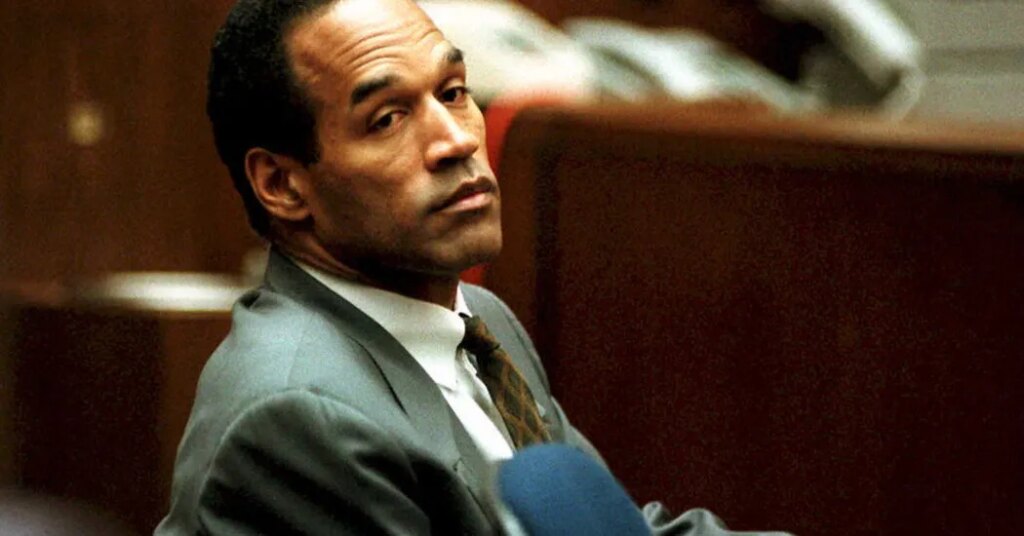
On the night of June 12, 1994, Nicole Brown Simpson and her friend Ronald Goldman were brutally murdered in Los Angeles. The killings have remained unsolved for more than three decades, and have occupied a singular place in American pop culture, whetting the nation’s true-crime appetite and its obsession with violence and celebrity.
Books, television shows and an Oscar-winning documentary have cropped up in the decades since the 1995 trial, examining the fateful night and the actions of an entertainment and sports celebrity: O.J. Simpson.
Mr. Simpson was the Pro Football Hall of Famer turned commercial superstar who was charged and later acquitted in the murder of Ms. Brown Simpson, his ex-wife, and her friend Mr. Goldman.
No one has been criminally convicted in the double murder, although Mr. Simpson was found liable in a civil suit. Many of the people implicated or involved in the case have died, including Mr. Simpson in 2024.
A New York Times investigation published Sunday has added fresh intrigue to the “trial of the century.” It challenged the popular narrative about the case and raised questions about a possible accomplice who may have divulged information to investigators about the location of a murder weapon.
Here are some of the key players involved in the case, which captivated the country:
O.J. Simpson
Revered by fans as “the Juice,” Mr. Simpson was a record-breaking N.F.L. running back and an American phenomenon. He was one of the first Black athletes to make inroads into corporate America, serving as a pitchman for the rental car giant Hertz and as an actor in multiple movies, including the comedy “Naked Gun” and its sequel. Despite mounting evidence against him, Mr. Simpson was acquitted of the murders.
Nicole Brown Simpson
The ex-wife and mother of two children with Mr. Simpson, Ms. Brown Simpson was stabbed repeatedly at her condominium in the Brentwood neighborhood of Los Angeles. In 1977, she met Mr. Simpson as an 18-year-old working at a Beverly Hills nightclub. Mr. Simpson, who was married at the time, began an affair with Ms. Brown. The two married in 1985 and divorced in 1992. Allegations of domestic violence by Mr. Simpson continued through their marriage and until her death.
Ron Goldman
Mr. Goldman was a waiter and friend of Ms. Simpson Brown. He had returned a personal item to Ms. Simpson Brown’s residence on the night of the crime and was found with a fatal knife wound.
Al Cowlings
A former professional football player and friend of Mr. Simpson. Mr. Cowlings drove Mr. Simpson in his white Ford Bronco on a Los Angeles freeway as a phalanx of police cruisers trailed behind. Inside the cab, Mr. Simpson oscillated between thoughts of suicide and of turning himself into the police. The televised slow-speed chase gripped the nation and was broadcast at Madison Square Garden, as the New York Knicks faced the Houston Rockets in the N. B. A. finals.
Marcia Clark
The lead prosecutor for the Los Angeles District Attorney’s Office in the trial against Mr. Simpson, Ms. Clark resigned in disgrace after losing the case. The public has long scrutinized how the case against Mr. Simpson was lost, given the evidence. Investigators found Mr. Simpson’s blood and hair at the crime scene, as well as footprints that matched the size and model of his Bruno Magli shoes. They also discovered a glove at Mr. Simpson’s home, with the blood from both victims on it.
Christopher Darden
The second disgraced member of the prosecution team, Mr. Darden has been portrayed in documentaries as having been goaded into creating the trial’s most dramatic moment: when Mr. Simpson tried on the two bloodied gloves in court, before a jury. Ms. Clark was against the plan. The gloves did not fit.
Johnnie Cochran
Mr. Cochran was the defense team’s lead lawyer, known for his flamboyant style and verbal panache. In his closing arguments, he hinged his remarks on the moment when Mr. Simpson failed to put on the recovered gloves, telling the jury, “If it doesn’t fit, you must acquit.”
Although Mr. Cochran, who died in 2005, was ultimately successful, his legal strategy was controversial. He cast the charges against Mr. Simpson as a case about race relations in Los Angeles. That turned the trial into a referendum on local law enforcement, which had lost public support after the beating of Rodney King.
The post Key Players in the O.J. Simpson Trial appeared first on New York Times.