France is reeling from its largest unrest in years, after anti-government demonstrations devolved into riots and looting that caused nationwide damage and deepened a sense of national reckoning.
As the chaos subsided on Sunday, political leaders blamed each other for the unrest and citizens looked on with shock at their cities, littered with broken glass and the charred skeletons of burned cars.
The violence marked a convergence between a weeks-old student movement for better school conditions, an emerging national movement to protest high living costs, and opportunistic rioters who used the demonstrations as a cover for looting.
The protests have heightened a sense of fiscal and social crisis in France, the European Union’s second-largest economy. The government is trying to pass an unpopular belt-tightening budget while facing public anger that has helped position Marine Le Pen, a far-right leader, as the favorite to win the presidency in an election next spring.
What happened this weekend?
More than half a million people joined some 110 marches throughout France on Saturday, the interior ministry said, in the biggest day of protest since the demonstrations began about a month ago. A major union, the C.G.T., gave a higher estimate, saying 800,000 protesters had turned out.
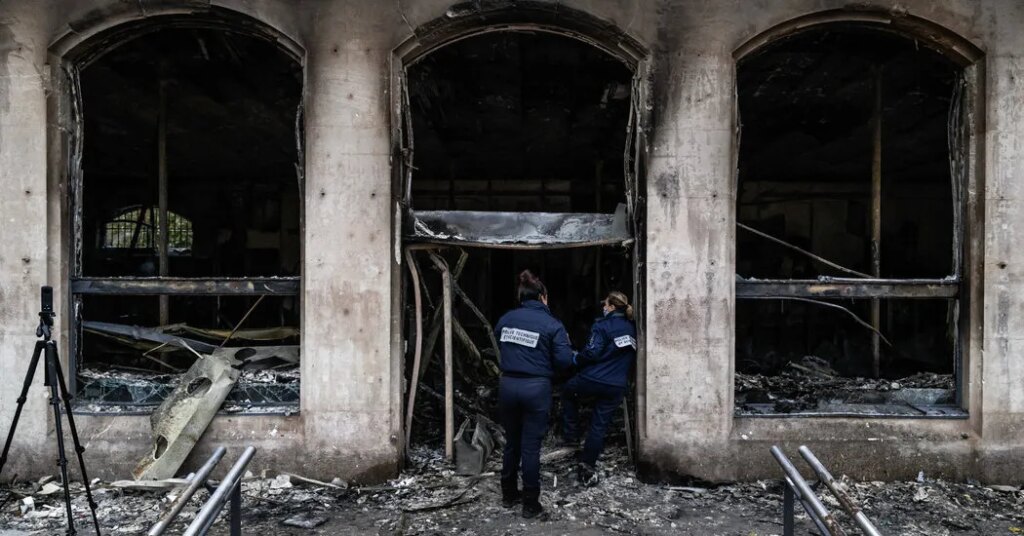
Amid many peaceful demonstrations, rioters vandalized roughly 1,500 shops and many symbols of the French state, leading to roughly 2,000 arrests. An arson attack largely destroyed the town hall in Limoges, in central France. In Marseille, the second-largest city, masked people broke into a government building and tipped over a bust of Marianne, a symbol of the Republic.
Why are students protesting?
High school students started protesting last month to express frustration with the condition of their schools.
They have pointed to crumbling infrastructure, overcrowded classrooms, overloaded schedules, a shortage of teachers and staff, and underfunding in schools. Many are also calling for an overhaul of state-run admissions platforms for higher education and universities that they call unfairly selective.
Students have blockaded hundreds of schools. They have set fire to, or damaged, at least 24 of them, according to the government. Thousands have been arrested since September and over 1,000 police officers, students and school staff have been hurt.
The students’ anger has been exacerbated by the police’s forceful response. Prosecutors and a police watchdog are investigating at least 34 cases involving accusations of police misconduct during the protests.
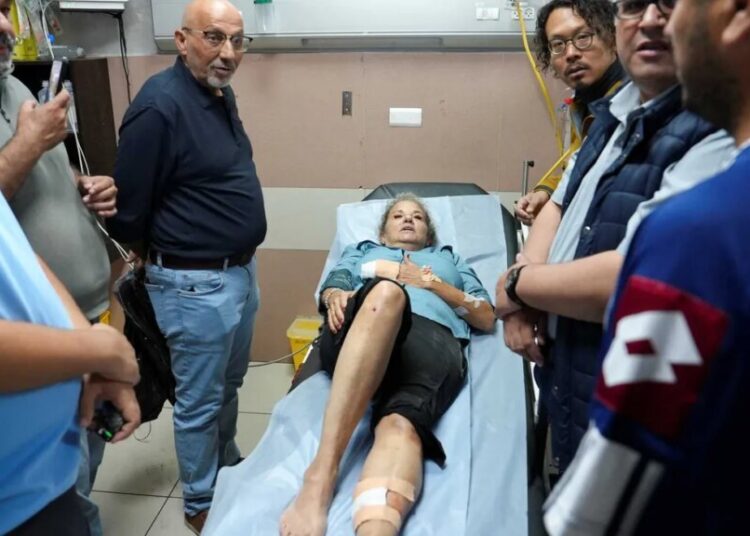
The cases include a 15-year-old boy whose left hand was ripped off, officials said, likely by the explosion of a police stun grenade; and a 14-year-old boy maimed by a tear-gas grenade that an officer had fired at close range.
Why did other groups join the students?
Throughout October, labor unions and other campaign groups have increasingly joined the students’ demonstrations. They have held bigger rallies to express solidarity with the students as well as to protest a broader range of issues.
Some are angry over the cost of living and rising fuel prices that have surged, in part, because of the Iran war. Farmers have joined in, angry at agricultural costs.
Social media accounts associated with the “yellow vest” protest movement, which roiled France nearly a decade ago with roadside demonstrations against high gas prices and other issues, have joined calls for demonstrations.
And left-wing parties have also seized on the protests as part of a wider expression of discontent at President Emmanuel Macron, who is limited to two terms and is nearing the end of his time in office.
Such discontent has a long history in France, where student-led protests in 1968 nearly toppled the government and helped transform French society.
What is the political fallout?
On Sunday, far-right leaders and the centrist government blamed the far left for the chaos. They pointed in particular to a major far-left party, France Unbowed, that they said provoked the unrest.
Prime Minister Sébastien Lecornu has accused party leaders of sowing distrust about the police among student protesters, and said some rioters were members of the “ultra-left.”
France Unbowed has rejected that accusation and its leader, Jean-Luc Mélenchon, has instead blamed the government for actions that he said made the unrest more likely.
Mr. Mélenchon said on social media that Prime Minister Sébastien Lecornu was “responsible for the chaos, because of “incompetence or a worst-case strategy to create a party of order that would make people forget his failure in public finances.” Mr. Lecornu did not respond to that accusation.
Giulia Imbert, Ségolène Le Stradic and Zane Irwin contributed reporting.
The post Huge Riots and Anti-Government Protests Roil France: What to Know appeared first on New York Times.