In a parking lot next to Cornell University’s football stadium, dozens of students sipped beer, played cornhole and, at times, danced on the bed of a pickup truck on Saturday afternoon during a spirited but orderly homecoming tailgate party.
By nightfall, few signs of the postgame revelry had spilled out onto the streets. Only a handful of students walked past the quiet Gothic revival and Tudor mansions that house fraternities, which were banned last week from having parties.
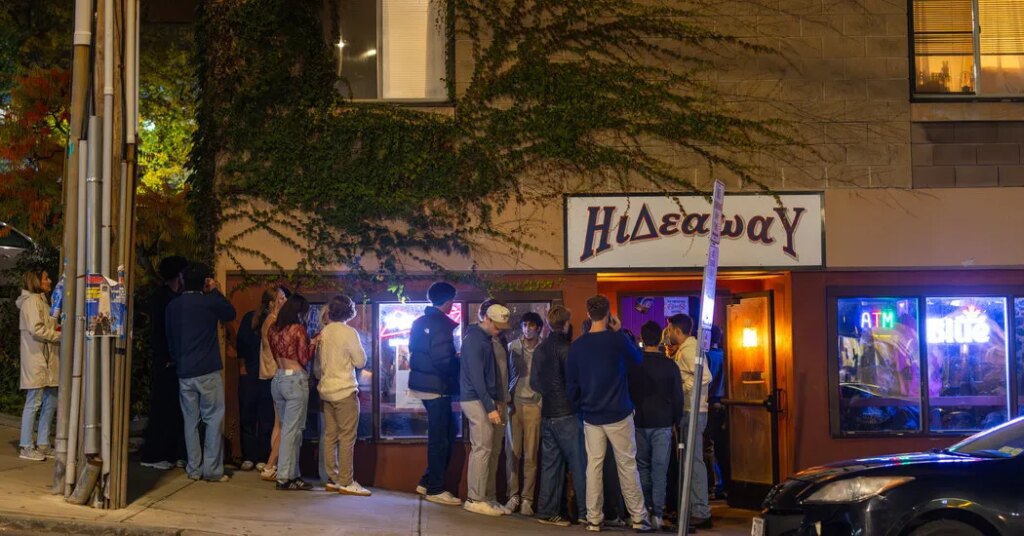
The stillness continued early Sunday, except for a handful of local haunts including Hideaway, a popular bar among undergraduates in the Collegetown neighborhood near campus in Ithaca, N.Y. Even there, the line to enter was only about 10 people at what would normally be its busiest hours.
It was the first weekend since school administrators implemented the ban on parties at fraternity houses through the end of the academic year, a response to nationwide outrage over a sexual assault lawsuit filed last month by a former student.
The student, known as Jane Doe, accused seven members of Cornell’s Chi Phi chapter of sexually assaulting her at the now-shuttered fraternity house in 2024. The men have all denied wrongdoing, and none have been charged with a crime.
The ban has caused a shift in the campus social scene that coincided with homecoming weekend at the Ivy League school, when thousands of current students, their families and alumni gather to celebrate their connection to Cornell.
“Collegetown was a ghost town compared to previous years,” said Jarin Sanzana, 20, a junior, who attributed the more subdued scene to the ban. “A lot of people feel like they are missing out on the college experience.”
Ms. Sanzana said some of her closest friends who went to fraternity parties in the past are frustrated and “do not feel it’s fair to punish students for the actions of a few men.”
“I don’t think people blame Jane Doe,” she said. “They blame the administration.”
Michael I. Kotlikoff, the president of Cornell, who announced the ban, acknowledged that Greek life has long been a draw for students, where about 3,000 undergraduates — a third of the undergraduate student body — belong to its more than 50 recognized fraternities or sororities.
Mr. Kotlikoff has since faced questions from alumni concerned about the impact of the Greek system, which has had a presence at the university since 1868. On Thursday during his State of the University address, he told alumni that the fraternity system has “been part of Cornell since the beginning, and it’s brought an enormous amount of benefit to generations of Cornellians.”
“But more and more in recent years, we’ve seen a disturbing culture emerge in some of these fraternities,” Mr. Kotlikoff said during his speech.
“We have to hit reset, and we have to do it now, with measures that will keep our students safe, and give us the time to understand where we are, look more deeply into how we got here, and find ways to do better,” he added.
There were hints of normalcy even with the ban. An outdoor party erupted early Saturday afternoon along Catherine Street near College Avenue, about half a mile from Chi Phi and other fraternity houses. The gathering was shut down by the Ithaca Police Department with the help of the Cornell police, according to Rebecca Valli, a spokeswoman for the university.
Still, that celebration paled in comparison to last year, said Logan Roberts, 21, a senior majoring in mechanical engineering, calling the weekend “more sad, more bleak, more serious.”
Last year, Mr. Roberts said, “you could walk on any street on Collegetown and there’ll just be a bunch of people there, music blasting everywhere.”
“Housewarming parties have been canceled because people don’t want to risk getting in trouble, even if they’re not associated with Greek life or frats,” he added.
On Sunday morning on Edgemoor Lane, officers in a Cornell University Police Department patrol car parked near former Chi Phi house to keep an eye on neighboring fraternity houses. Another patrol car cruised around campus.
“I think the frats are lying low for now,” said Gabriel Sekeres, a Ph.D. economics student and the vice president of the university’s graduate students’ union. “But the sentiment among undergrads is that one of them is going to screw up and throw something, and get everyone banned.”
Henry Fernandez contributed reporting.
The post At Cornell, a Subdued Scene on First Weekend of Fraternity Party Ban appeared first on New York Times.