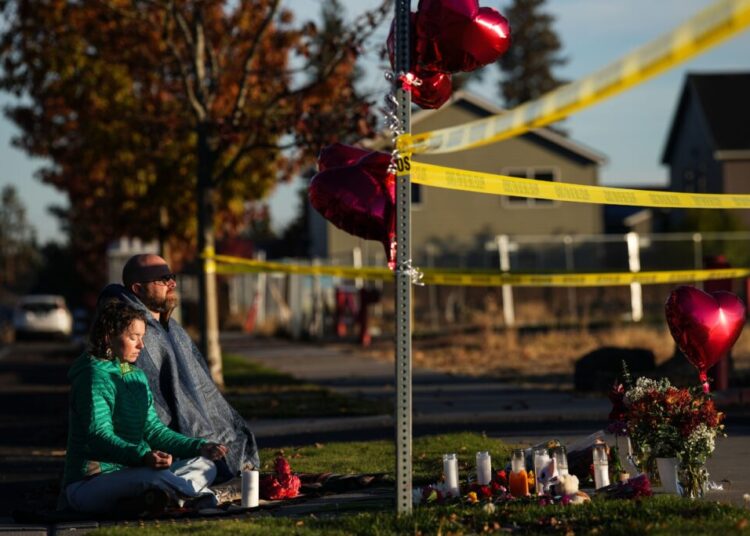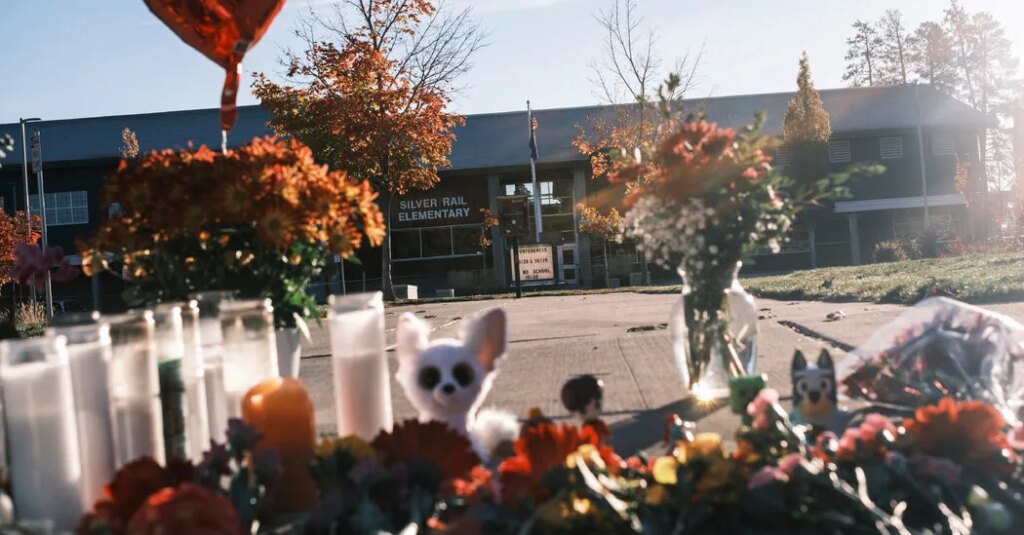
The attack at Silver Rail Elementary School in Oregon was the 149th school shooting in the United States this year, according to David Riedman, a data scientist who tracks gun violence in schools.
At this rate, the total by the end of 2026 would continue a decrease in recent years. By Mr. Riedman’s tally, which he maintains in his K-12 School Shooting Database, there were 235 school shootings in 2025 and 336 in 2024.
Mr. Riedman uses this definition of a school shooting: “When a gun is fired, brandished with intent to harm, or a bullet hits school property for any reason, regardless of the number of victims, time or day of the week.”
The downward trend in his totals appears to be consistent with recent declining rates of crime and gun violence in the nation. But he has cautioned people about reading too much into one set of numbers, saying that definitions of school shootings are “messy” ways to describe gun violence at schools.
For instance, his data shows, school shootings are still much higher than the average of about 80 per year in the five years before the Covid-19 pandemic.
And what Mr. Riedman calls “near-misses” have been increasing at a significant rate, he said. Those include attempts at violence that stalled after a person had pointed a gun or fired initial shots, such as when a gun jams, or a shooting is foiled; in April, for instance, a principal in Oklahoma tackled a would-be shooter who had entered a high school and tried to shoot two students.
Mr. Riedman said that tracking those numbers and studying those cases help figure out how to stop school shootings, like the one that killed three pupils and a teacher in Bend, Ore., on Thursday.
“The concept of near-miss reporting is what has made commercial aviation so much safer because it’s those almost-crashes that you end up learning a tremendous amount from because they happen far more than real crashes,” he said.
Ron Avi Astor, a professor at U.C.L.A. who has been studying school safety for more than 30 years, said counting failed attempts is important, but what matters most about school shootings is the bigger picture of how “our culture sees it and is responding to it.”
He likened mass shootings to terrorism, adding that students are bombarded with news about them.
“When you ask kids in California, and in many other states, ‘Is your school safe?’ they’re going to say, ‘Yeah, my school is safe,’” Mr. Astor said. “And then you ask, ‘What’s your greatest fear?’ and they say, ‘Getting shot at school.’”
He added that fear ripples through communities because mass shootings receive widespread news coverage.
“The vast majority of violence day to day is going down,” he said. “But the perception of it going up is due to these mass shootings.”
Mr. Riedman, the data scientist, said he did find some encouraging news: Since 2018, almost 250 school attacks were averted when potential shooters were stopped by people like community members, relatives or classmates, who noticed a problem before the person moved ahead.
“People are educated about warning signs, and are taking actions based on them,” he said.
Shaila Dewan and Dana Goldstein contributed reporting.
The post School Shootings Have Dropped Lately, but One Number Is on the Rise appeared first on New York Times.