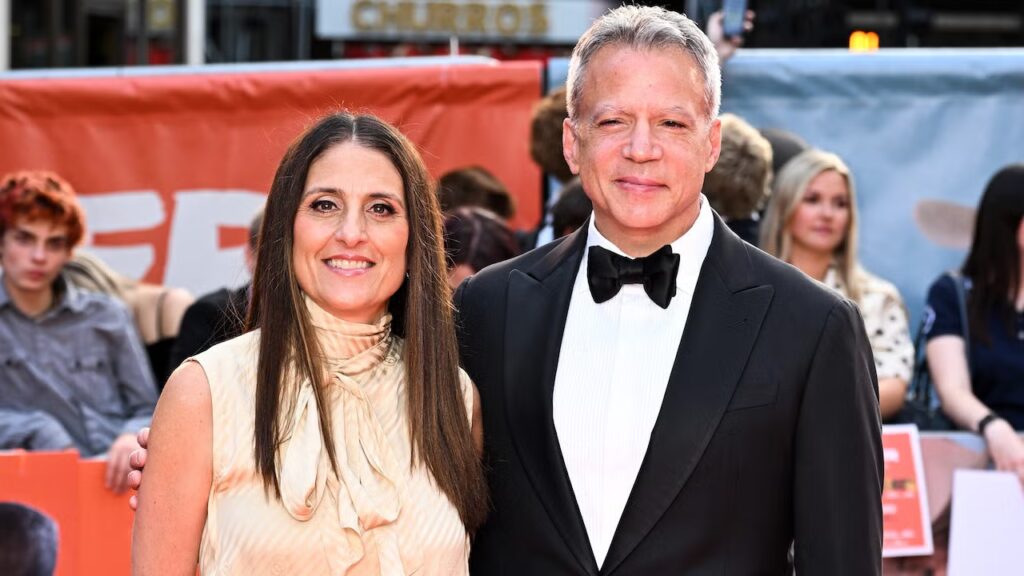
When Mike De Luca and Pam Abdy’s whirlwind tenure at Warner Bros. ended on the sourest note possible with the estimated quarter-billion loss of “Digger”, it kicked off a bigger question: Who left in Hollywood is willing to take big creative risks?
It’s a relevant question with many C-suite studio execs shaking their heads at the perceived recklessness, even as cinephiles and creatives mourned Abdy and De Luca’s departure.
The former co-chairs and CEOs of the Warner Bros. Motion Picture Group are a rare breed in this town, and what can’t be denied by anyone is that they took big swings with original, auteur-driven films with the public acknowledgement of possible financial failure.
“Not all of the films are going to work,” Abdy said at CinemaCon. “But not all of the films worked in 1927, or 1977, or 1997.”
Now, with the duo gone from Warner Bros. and Skydance inheriting dozens of films they greenlit, creatives will be on the hunt for executives willing to take the sort of risks that De Luca and Abdy did.
While their box office track record this year was atrocious, it’s those kinds of original films that have a shot at standing out in the increasingly crowded pack of IP-based movies. And as we saw with “Obsession,” “Backrooms” and even Christopher Nolan’s “Odyssey,” audiences are hungry for fresh ideas and strong directorial vision. Studios willing to make those bets have been rewarded time and time again.
To be clear, there were levels to the “big swing” films that De Luca and Abdy took. “Digger,” a film with a tentpole budget for a bleak, Brechtian deconstruction of satire in an era of climate disasters, was on the extreme end of the pair’s risk-taking.
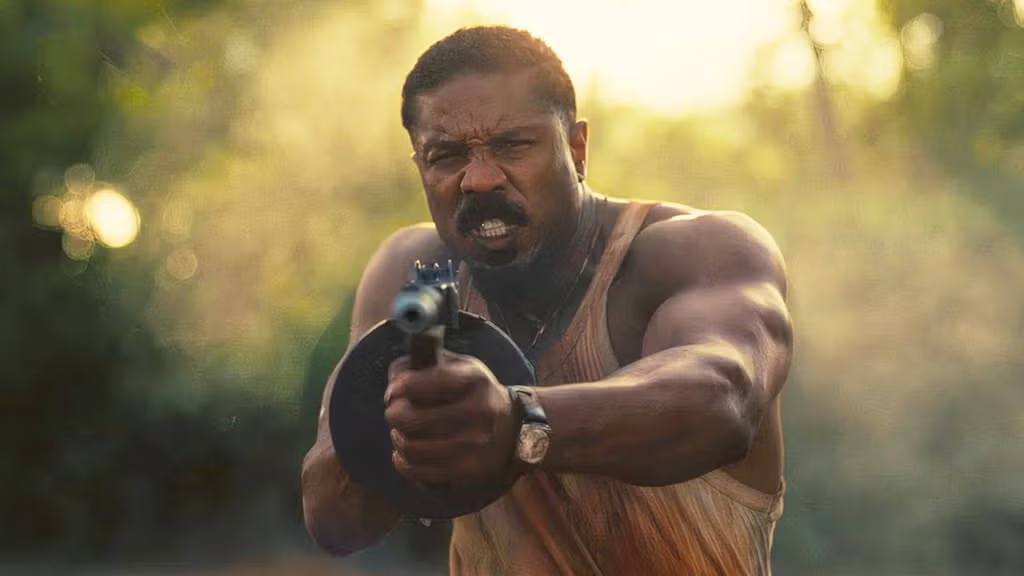
On the other end, there were films like the acclaimed “Sinners” and the misfire “The Bride!,” which had net budgets of around $80 million and premises that, regardless of their disparate results, could potentially intrigue a mass audience with vampires attacking a Mississippi juke joint and a reimagining of “The Bride of Frankenstein” set in depression-era Chicago.
At the budget level of those films, we have seen other studios take comparable risks in recent years. In 2023, Disney released Gareth Edwards’ original sci-fi film “The Creator” through 20th Century Studios, and though it received generally positive reviews, it only grossed $104 million worldwide against an $80 million budget. That same year, Sony Pictures produced its own original sci-fi film with the Adam Driver vehicle “65” that made just $60 million against a $45 million budget.
But these didn’t come at the frequency or with the high profile that De Luca and Abdy gave to their original films, and right now the films from major studios that could qualify one way or another as a “big swing” are few and far in between.
What the other studios are doing
On Disney’s theatrical slate, there are still hundreds of millions of dollars bet regularly on original animated tentpoles like Walt Disney Animation’s “Hexed” and Pixar’s “Gatto,” but the original, auteur-driven offerings are essentially confined to the small handful of Oscar hopefuls put in theaters by Searchlight Pictures such as Martin McDonagh’s CIA thriller-comedy “Wild Horse Nine” and Tony Gilroy’s Pedro Pascal vehicle “Behemoth!”
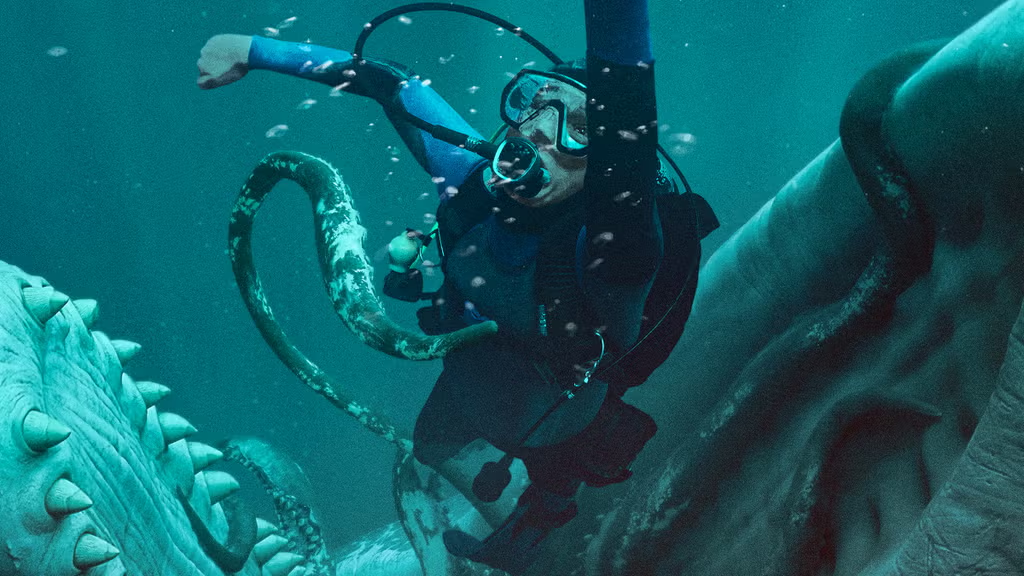
The non-IP films currently on the theatrical slate for 20th Century Studios include this weekend’s survival thriller “Whalefall” and next summer’s romantic comedy “Beach Read,” both literary adaptations with budgets of less than $55 million. The other slated non-IP films from 20th Century are direct-to-streaming.
Sony also tried original animation in theaters with “Goat” and the upcoming Adam Sandler comedy “Buds,” but rarely takes big original swings outside of that. The studio’s 2027 slate primarily consists of big-name IP like “Spider-Man,” “The Legend of Zelda” and “Helldivers” along with lower-budget literary adaptations like Dakota and Elle Fanning’s “The Nightingale.”
But Sony will have a big swing of a different kind in April 2028 when it releases a quartet of films about The Beatles, each one focusing on a different member of the legendary rock band. One music biopic about the most famous band of all time probably wouldn’t be seen as a big risk. An attempt to see if a wide audience would pay movie ticket prices — or join a theater subscription program like AMC A-List — to see what is essentially a four-part miniseries in cinemas instead of at home would certainly count as one.
Amazon MGM is the wild card of the bunch. One marketing executive told TheWrap that he wouldn’t be surprised if Courtenay Valenti’s film team tries a few off-the-wall original ideas or big-budget literary adaptations like their first tentpole hit, “Project Hail Mary.”
“At the budget they made it at, ‘Project Hail Mary’ easily could have been a bust. Sci-fi is always tough,” the exec said. “But credit to them, they made it work.
Amazon MGM’s next big original film will come next month with the David Leitch heist thriller “How to Rob a Bank,” followed by a lower budget heist film in “The Roots Manoeuvre” courtesy of specialty wing Orion, whose upcoming slate also includes a reimagining of the 1967 Japanese yakuza film “A Colt Is My Passport.” The studio will also try to find an “American Sniper”-esque hit with the true story Afghan War film “Alone at Dawn” in December 2027, though it remains to be seen if the studio will try anything as risky as “Project Hail Mary” as it launches its overseas distribution model and selects the next James Bond.
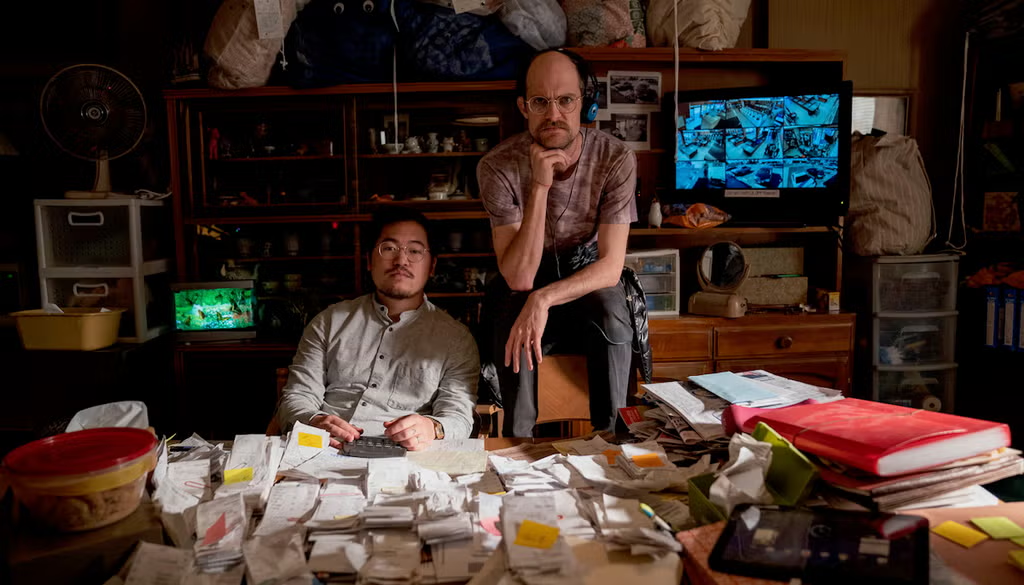
But if there’s any Hollywood studio that is taking a Mike and Pam-style risk on a proven filmmaker’s original idea, it’s Universal. Along with being in business with Nolan and Steven Spielberg, who basically have carte blanche to make any film they want, Donna Langley’s studio is set to release the next movie from Daniel Kwan and Daniel Scheinert, the Oscar-winning duo behind “Everything Everywhere All at Once.”
While the title of that movie isn’t known yet, data from the California Film Commission shows that the Daniels’ film has a net budget of at least $65 million after state tax credits. Those credits do not include the Daniels’ salaries or pay for an ensemble cast led by Matt Damon and Sandra Oh, which is likely to put the film’s final net production spend in the $80 million range of “Sinners,” well above the $25 million net spend of their Oscar-winning A24 project.
Universal’s sister studio, Focus Features, has also shown willingness to team up with a co-producer on a film with a “The Bride!”-sized budget, as they did on Robert Eggers’ $70 million Viking epic “The Northman,” which needed post-theatrical revenue to make its money back in 2022.
Despite that, they stuck with Eggers and distributed his 2024 follow-up, “Nosferatu,” which was produced by Maiden Voyage and Studio 8 at around $50 million and became Eggers’ top grossing film ever with $182 million worldwide. With Eggers now known among horror fans, Focus is back to working with him as a co-producer on his next film, “Werwulf,” which insiders say has a similar budget level to “Nosferatu.” Focus is already betting on him again with an adaptation of “Romeo & Juliet” as his next project.
And then there’s Netflix. While the megastreamer has pulled back on the kinds of expensive auteur projects it used to bankroll, like Martin Scorsese’s “The Irishman” or Alfonso Cuarón’s “Roma,” it will still get behind a passion project like Guillermo del Toro’s “Frankenstein” and is taking a big bet on Greta Gerwig’s “Narnia: The Magician’s Nephew,” which will be the streamer’s first global theatrical release with a robust 45-day window when it hits theaters in February. With a reported budget north of $250 million and plans for an expansive universe in the works — all as Netflix faces tough scrutiny from Wall Street — the risk is palpable.
Before swinging big, you have to get on base
When it comes to the finances of risky original films, context always affects how they’re viewed. When “One Battle After Another” failed to turn a theatrical profit with $213 million grossed worldwide against a $130 million budget, it came out following a record seven consecutive $40 million-plus domestic openings for Warner Bros., including “Sinners,” “Weapons,” and franchise tentpole “Superman.” So it was fine for that film to be director Paul Thomas Anderson’s highest grossing movie and to turn to post-theatrical revenue from its Best Picture Oscar win to turn a profit.
But the immense box office collapse of “Digger” has come at a time when Warner Bros. has yet to release a film that has grossed more than $250 million at the global box office this year while pricey films like “Practical Magic 2,” “The End of Oak Street” and, most prominently, “Supergirl,” have all fallen flat, turning the estimated $250 million loss of “Digger” into the nadir of a brutal final year for the studio.
“A film slate is like baseball. A player with a .333 batting average is a superstar, and you need to get on base enough times to win. Sometimes you hit a home run, but most of the time it’s either singles or strikeouts, and the hope is that the singles outnumber the strikeouts. Ultimately, you need to take those big swings to succeed, since they finance the rest of the at bats,” said Producers Guild of America CEO and National Executive Director Susan Sprung.
And for Skydance, the on-base percentage will need to be immensely high given the roughly $80 billion in debt it took on to complete the acquisition of Warner Bros. Discovery and its plans to release 30 films per year. Among that early batch of films will be one more De Luca/Abdy big swing: J.J. Abrams’ “The Great Beyond,” an original sci-fi film that the execs had pushed to 2027 in the hopes of giving it an event release reminiscent of “Sinners,” complete with 35mm, 70mm and even Imax 70mm prints.
There will also be a big swing from Skydance film chiefs Dana Goldberg and Josh Greenstein with “High Side,” a motorbike heist film from James Mangold starring Timothée Chalamet as a former MotoGP racer who turns to a life of crime. Certainly more commercial on paper than many of De Luca and Abdy’s original ideas, but Paramount will be spending big on the belief that a film with Tom Cruise-style action can be built around Chalamet’s rising star power.
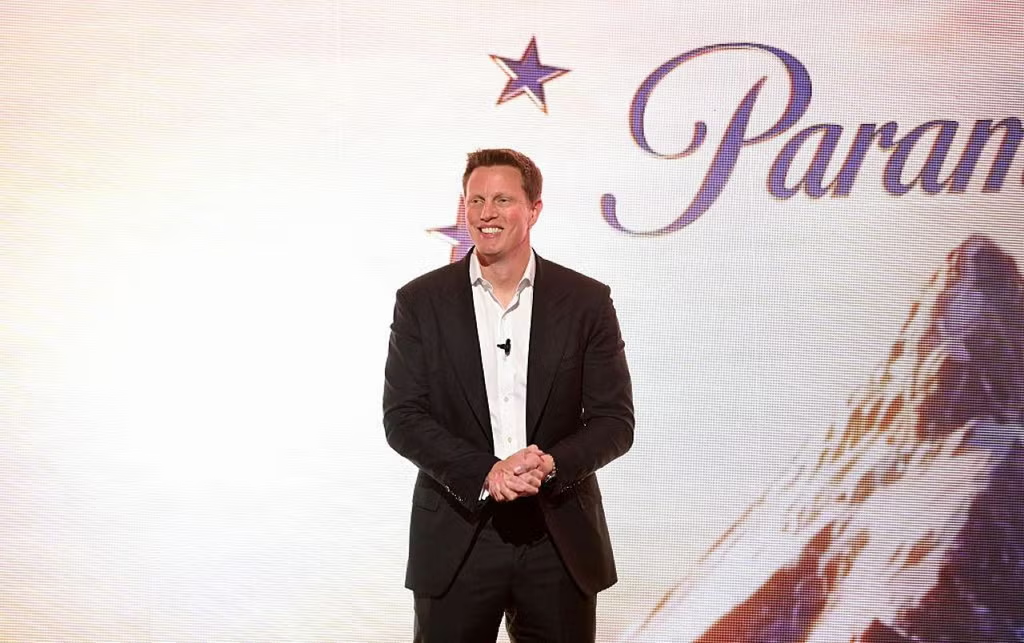
But beyond that, it is still very unclear what original titles will emerge from Paramount and Warner under Skydance’s ownership. The company has touted partnerships with filmmakers like Jon M. Chu and The Duffer Brothers since it closed its merger, and at a press conference last week, CEO David Ellison made vague promises of trying fresh ideas while praising a 2025 film championed by the execs he let go in the face of many naysayers.
“We are going to make a completely diverse slate, and one of the things I’ve been a big believer in is original storytelling,” Ellison said. “Warner’s had incredible success with ‘Sinners’ and that was actually my favorite movie last year. From that standpoint, you absolutely will see us tell original stories, continue our franchises and produce across all genres.”
Skydance, and all of Hollywood for that matter, will also likely be able to take advantage of something that De Luca and Abdy did not have available to them: a federal film tax credit. With Congress expected to pass a minimum 20% credit for all productions shot in the U.S., original films like the Daniels’ “Everything Everywhere All at Once” follow-up will have another boost to their bottom line that may lower the financial risk studios take on them.
“It’s not going to open the floodgates, but if the right filmmakers and talent are involved, I could see studios willing to spend a bit more on an original film than they currently are,” said one producer who currently has a production deal with a major studio and asked to remain anonymous. “The execs will tell you, ‘If you can’t make it at $40 million, then we’re not going to make it.’ With a federal credit, maybe that figure starts inching up to $50 million or $60 million on a film-by-film basis.”
But one insider with knowledge of Ellison’s leadership style was skeptical that anything like “Sinners” would come out from Paramount or Warner Bros. again.
“David is so wedded to his closest relationships that it defines his decision-making on films,” the insider said. “Unless someone like Ari Emanuel is telling him that he really needs to give a certain actor or director a chance, I don’t think anything like ‘Sinners’ is going to come from him or Skydance.”
The post With De Luca and Abdy Gone, Where Will Hollywood’s Next Big Swings Come From? appeared first on TheWrap.