In June 2020, when Covid was surging in New York City and indoor dining was prohibited, the designer Penny Hardy took to the streets. Thanks to the city’s Open Restaurants program, which had relaxed building codes and public permits in an effort to keep businesses afloat, tens of thousands of establishments across all five boroughs built their own outdoor dining spaces, with wide-ranging results.
Camera in hand, Hardy — a lifelong New Yorker — spent the next few years photographing these new, creative, often whimsical structures that had sprouted up on sidewalks and in curb lanes: places where people could come together and connect in a semblance of pre-Covid normalcy.
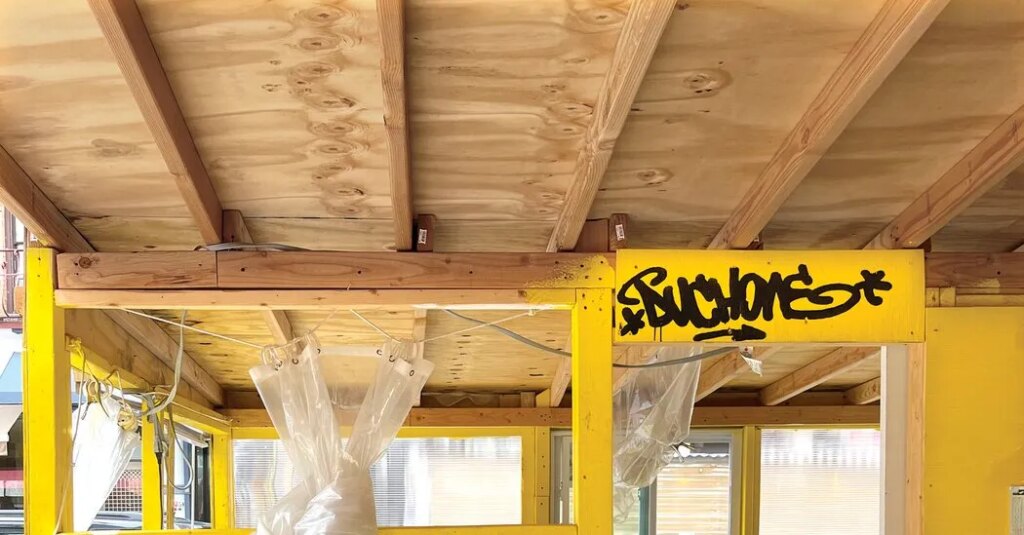
PANDEMIC ARCHITECTURE: NYC Dining Sheds 2020-2024 casts an almost nostalgic eye on New Yorkers’ ingenuity in crisis. “I was consumed by the diversity of the sheds and how they activated the street in a way I had never seen before,” Hardy says in an interview included in the book. “There’s something about the spirit of the sheds, the D.I.Y. aspect of it. Suddenly, everyone could be an architect.”
There were minimalist plywood boxes, imitation beach huts with thatched tiki roofs and striped umbrellas, suburban picket fences. From cafes and diners to Michelin-star restaurants, the entire industry was moved onto the concrete. According to Michael Bullock, who wrote an introduction to the book: “It was a democracy of building” that “the city had not seen in modern memory.”
In the handful of years since, regulation has tightened, and only a fraction of these makeshift structures remain standing today. Hardy’s work therefore serves as an important archive of this brief spurt of temporary, untethered architecture.
The post When Dining Took to the Streets in New York City appeared first on New York Times.