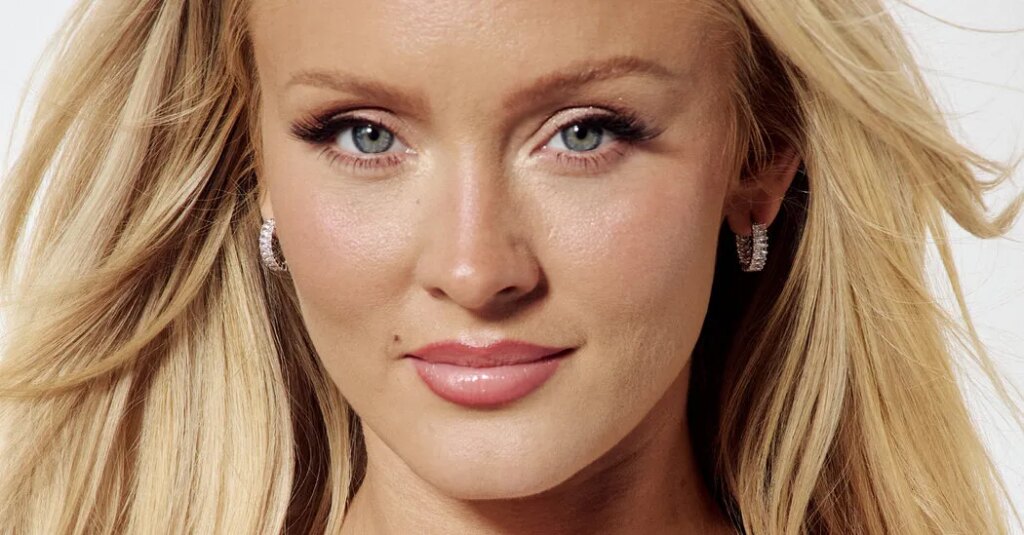
Zara Larsson never gave up on being a pop star.
Since the age of 10, when she won the reality competition show “Sweden’s Got Talent,” the Stockholm-born singer has lived every level and style of aspiring pop stardom. She tried her hand as a prepackaged teenage product, a dance-music hired gun and an eccentric auteur. Larsson was famous, but maybe not in a sticky way.
Only in the last year, as she combined her technical proficiency as a singer and dancer with her zanier bubbliness onstage and on social media, have things truly clicked for Larsson, 28. The “Girls Trip” deluxe edition of her 2025 album “Midnight Sun” gave several of her songs new life, including collaborations with Tyla, Kehlani and Shakira. Her 2015 single “Lush Life” was also revitalized via TikTok dancing, reaching its pop peak. And her remix version of “Stateside” by PinkPantheress was skated to by the gold medalist Alysa Liu at the 2026 Winter Olympics.
“Things happened for me in culture, that I was a part of, that I’ve never really been in before,” Larsson said on Popcast, The New York Times pop culture chat show.
All of those moments together took Larsson from pop hanger-on to bona fide superstar. And it happened just in time.
A documentary filmed in the lead-up to the release of “Midnight Sun” saw Larsson having tough conversations at her then-record label, Epic, with the legendary executive Sylvia Rhone telling the singer that after years of investment it was “time to cash in.”
But Larsson felt like her relationship with that label had stalled. “Psychologically you’re just that, like, old cousin in the corner at the Christmas party,” she said.
She has since moved to RCA Records, a different label under Sony Music.
In a characteristically Larssonian jumbled metaphor, the singer compared RCA to “my mom’s amazing new boyfriend” who happens to “have a boat.” The change in perspective has been a long time coming, she said.
“I get to be on the boat, finally,” Larsson said. “And it just breathes new air into me. You feel reborn as an artist.”
In conversation with Jon Caramanica and Joe Coscarelli, Larsson spoke about taking joyful music seriously, learning to embrace self-promotion, and whether any amount of money is worth trading for being politically outspoken.
JOE COSCARELLI It’s only now, as you’ve begun showing more and more of your personality in an extremely public way — whether that’s onstage or on TikTok — that things have come back around to give your music new life. I think people who see you on the internet feel so fondly toward you, they want to root for you, and that helps them invest in the songs. When did you realize that the more of yourself you put out there, the better it was going to be for your music career?
ZARA LARSSON Well, it’s so interesting, because here in America, people don’t really know my lore like that. Because when I started off in Scandinavia, I used to run a blog before I released my music. And on my blog, I used to be very vocal and very outspoken about a bunch of things. I was a very polarizing person. This was sort of before feminism truly became mainstream. And I would just fight with people, and be having debates in newspapers and on TV. So I feel in Sweden, people have always known me as a musician, but also someone who is a personality.
JON CARAMANICA You think you are a natural conversationalist and interpersonal entertainer first, and then you’re a singer, which then takes advantage of the first thing?
ZARA LARSSON I feel like if I wasn’t good at singing, I would 100 percent find some sort of job that would have put me in a position where I’m public-facing or where I get to talk. I’ve had some podcasts on my own, with my sister and with my best friend, just about pop culture, our lives, what happened in the week, yada, yada, yada. Because I’ve just always had this sort of compulsive need to express myself and my opinions. And I think I’ve channeled that energy a little bit, actually, more into the music now.
COSCARELLI I’m interested in the way that what you’re describing about your personality runs counter to the Scandinavian nature. I know this concept of jantelagen — basically an allergy to self-aggrandizement. What was it like growing up in a society like that when you had the total opposite impulse?
LARSSON Total opposite. And it’s funny, because both of my parents are from smaller towns, and the culture in smaller towns, they’re even more jantelagen. They’re more conservative. So especially my mom, she was just like, where the [expletive] is this coming from?
COSCARELLI Did people try to put you in your place?
LARSSON Inside, I knew exactly what I wanted to do. But I remember being in school and simultaneously going to the studio when I was 14, 15. And when my friends would ask me, ‘so what are you going to do today? Do you want to hang out?’ I would just be like, no, I can’t, I’m going to study. There was something embarrassing about it. Maybe I felt like, I don’t have to tell you that I’m going to the studio because if something amazing happens, you’re going to see that anyway.
I’ve always thought of myself as someone who is special or has the potential to be special. I have just always, always, always believed that it’s going to happen for me. Like, I am special.
COSCARELLI There’s something a little bit American about that worldview. What was your path through American culture, and in particular, Black American music? When you think back to these Max Martin songs from the late ’90s, early 2000s, when he was writing for Backstreet Boys, ’N Sync and Britney Spears, he was trying to make R&B music.
LARSSON I think that’s the reason why I wanted to go and make it big in the United States of America. I really bought into that propaganda machine. I mean, my No. 1 idol since I can remember is Beyoncé. Whitney Houston, Céline Dion — Canadian — and Christina Aguilera, of course, who I also feel like was really inspired herself by Black culture. And it just did something to me. You know, when you’re young — I was maybe 7, 8, 9 — I don’t even know what it was that really caught my attention, but it made me feel, like, that’s different. That’s not something you’ll see on the TV in Sweden. And this is expressive in a different way. It just moves me.
CARAMANICA When you would go to the studio when you were young, were there people with whom you could share the dream?
LARSSON My studio friends were basically the people that signed me. At least when I started out in Sweden, everyone was very professional, and they really, really took care of me. But also, I was 14, and my A&R-slash-manager at that point, he’s like 45, you know? Like, that’s not my peer.
CARAMANICA You had no age-appropriate peers?
LARSSON No, and I think that’s actually the biggest difference in me starting out really, really young. In hindsight, perhaps too young. Because what’s really the point of making music with these grown people? And again, they were great, but it was just really hard to find my own voice in that.
I would never release anything I didn’t want to release, and I would always push for what I wanted, and they would listen and respect me, but even so, it’s like, I didn’t write my songs. You know, we’re going to give you this amazing stylist, we’re going to give you this amazing choreographer, we’re going to give you this amazing director — and then all their opinions were obviously influencing me. And I think now I have these amazing collaborators that I work with — they’re now really my friends, and they’re my peers, and not what used to feel like they were my parents.
COSCARELLI Did it take you a long time to grow out of that? Because child stars often get frozen in the moment when they became entertainers.
LARSSON Yeah, it’s hard to know, because I’ve been doing this my whole life. I’m a grown woman now, I am 28. I think something definitely happens around 25, 26, where you’re like, wait a minute, something’s changing in my brain. I am more confident in myself. And I think also externally, a lot of things changed for me. I bought back my masters. I have a new team. I just had to step up a little bit.
COSCARELLI You’re also going out there and selling yourself. You make TikToks like it’s your job, right? A lot of artists seem stressed out about making content.
LARSSON But the only way to not make it feel like it’s my job is just to do it for funsies. A few years back, I would just be anxious about having to post. I would post one Instagram post: my single is out.
COSCARELLI How did you break that feeling in yourself, to allow yourself to express this side of your personality?
LARSSON I stopped posting on my “Close Friends” [Instagram story].
COSCARELLI Live every day like you’re posting on “close friends.” Dance like nobody’s watching!
LARSSON Literally. And this might be really personal, but I’ve always been someone who, for as long as I can remember, I have this person that is watching me. They’re sort of my muse, I guess you can call it. Like a crush in life, but it’s not necessarily sexual.
CARAMANICA And you want them to see the best version of you?
LARSSON Yes. Because I want to impress them. But really who I want to impress is myself, because what I want them to feel is like, ‘wow, Zara is amazing,’ but I think I want to see myself being amazing through them.
CARAMANICA When you have spoken openly and honestly about political, or otherwise frisky, subjects, you’re willing to do that, and, if anything, eager to do that, because it creates a self-selecting group of people who want to hear you talk about abortion rights, about what’s going on in politics — the class is in session.
LARSSON Exactly — this is my team. Why would you try to cater to someone that is not your vibe? So my cool people, they will find me, and they will think I’m cool, and I will think they’re cool, and the people who don’t vibe with me — I think they’re all so scared because they’re jealous that I can express myself like this.
COSCARELLI And yet, you’ve spoken about losing business opportunities speaking up for abortion rights, for Gaza. How do you weigh those things against each other, especially as your offers get more and more lucrative and high-profile?
LARSSON Coming back to my blog, I didn’t give a [expletive]. I didn’t care. Like, brands aren’t going to want to work with me, or what corporate businesses is going to shut me out — because I didn’t have those opportunities. So I had no reason to censor myself or to be scared of saying anything. And I think the bigger you get, and the bigger sums of money that you are offered, I think you can lose that integrity a little bit. You’re like, how can I say no to this? If I say yes, that’s five music videos — that’s how I think about things. What can I do with this creatively? But I hope that I never reach a point where I sort of lose my soul and who I am for a bag.
COSCARELLI But you’re also at a level of your career where your stage can be taken away. We saw this with Macklemore recently on the Ed Sheeran tour. He says “Free Palestine,” and now he’s no longer performing in stadiums.
LARSSON But now he is also going out on his own tour. Macklemore, he’s independent, he doesn’t have a label, he doesn’t have anyone telling him what to do or not — that’s real power to me, and no one can really take that away from you. But of course, I want to be on the big stages, and I want a huge following, but this isn’t new to me, to be expressive or to say how I feel. This is just a part of who I am. And it’s always going to be a part of who I am. I’ll just find another stage who will accommodate it.
CARAMANICA. You’ve spoken about the difference between having hits and having cultural relevance. Now that you’re in this new phase of your career, your cultural relevance is extremely high. When you look back at a prior era when you had hits but didn’t have that, what do you know now was missing?
LARSSON I think my problem is I love everything. I love every style, every genre, everything. I can never truly make up my mind for what I want to do. And I think what’s really important as an artist is that you have to be disciplined enough to refine it, so it’s easy for people to recognize you. And I think before this era — when people say, ‘oh, I love the rebranding,’ it’s like, I didn’t have a [expletive] brand.
CARAMANICA There was no brand to rebrand.
COSCARELLI When will you have a chance to make new music and how will you move that forward?
LARSSON As I’m moving into the next era of writing, I definitely am going straight back in with MNEK, Helena [Gao] and Margo [XS], who I did “Midnight Sun” with. And we have a very clear path, actually, on what I want to do and how it’s going to sound. I want to be pushing myself, sonically, lyrically. I want to try to be more experimental, more organic in the instruments. I’m making it my mission to truly bring back joy.
COSCARELLI So you’re not going to go and make a singer-songwriter-y, depressed Swedish album? Getting deeper and more personal to you doesn’t mean changing modes?
LARSSON I’m not a sad person, guys. I don’t know if you noticed. I’m emotional, but I’m not sad.
Credits
Popcast is hosted by Jon Caramanica and Joe Coscarelli and produced by Sophie Erickson, Kate LoPresti and Felice Leon. This episode was filmed by Bernardo Garcia Elguezabal, Dave Mayers and Pat Gunther. It was edited by Amy Marino with help from Rebecca Blandon. Our theme music is by Elisheba Ittoop. Nick Pitman is our audio engineer and Amanda Webster is our photo editor. Brooke Minters is our executive producer. Header video cinematography is by Avery Munson Clark.
Special thanks to Hannah Erickson, Sarah Bonn, Dahlia Haddad, Mike Cordero, Nicole Huber, Aaron Byrd, Carl Mazurek, Zach Caldwell, Maddy Masiello, Brad Kimbrough, Craig Hettich, Andrew Wilcox, David Malitz, Elena Bergeron, Sia Michel, Nina Lassam and Sam Dolnick.
The post The Year Zara Larsson Unlocked Pop Superstardom appeared first on New York Times.