If companies are going to mine the seafloor, they might want to pay close attention to a recently published study in Scientific Reports that was recently detailed on the United States Geological Survey website, and for good reason, as it is a particular kind of rock that can be out there that could possibly spontaneously combust when exposed to air.
According to the USGS-led investigation, in the mad rush to extract valuable metals like copper, zinc, gold, and silver, mining operations might encounter the same kind of hydrothermal rock samples researchers found from the Escanaba Trough off the Oregon-California border in 2022.
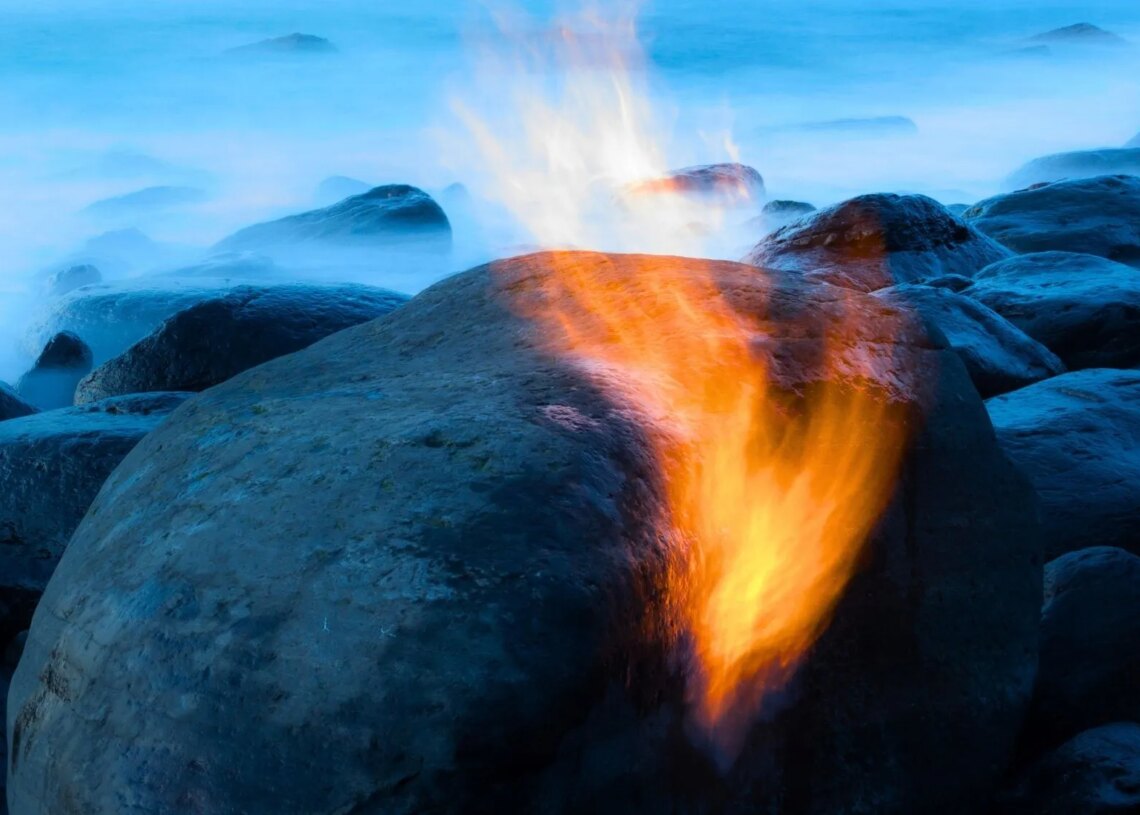
When researchers tried to freeze-dry and crush the metal sulfide samples in a lab, they broke apart as intended, quickly oxidized, and then spontaneously caught fire, reaching temperatures above 100 degrees Celsius (212 degrees F). That part was unintended.
Some Rocks From the Seafloor Can Spontaneously Combust, a New Study Finds
This bit of rock owes its spontaneous combustibility to nanocrystalline marcasite, an unstable form of iron sulfide that hates oxygen and turns processing into a potentially explosive prospect.
When these deep-sea rocks were pulled up from the crushing pressure of the ocean floor and came into contact with oxygen, heat, and grinding machinery that caused tons of friction, they can trigger rapid exothermic self-heating, a.k.a. an explosion. An all-natural, self-igniting campfire waiting to happen.
Not every rock pulled up from the seafloor will spontaneously catch fire, but the study shows that massive sulfide deposits behave quite differently from the land-based materials most mining teams will encounter on the surface. If the burgeoning seafloor-mining industry wants to make the billions of dollars it envisions, it’ll have to be mindful of the exploding rocks.
The post The Ocean Floor Has Rocks That Can Set Themselves on Fire. Here’s How It Works. appeared first on VICE.