Life feels especially expensive these days as inflation and rising costs of many essentials stretch household budgets.
However, we still need to eat. Two of my biggest money-saving strategies right now include cooking more meals at home and seeking out cheaper groceries for my family of four.
Luckily, a lot of grocery chains are betting on price cuts to attract shoppers right now — and the discount grocers Aldi and Lidl are especially on my radar.
Both German-owned retailers primarily stock their own private-label products, which allows them to cut out the middlemen and offer lower prices to customers.
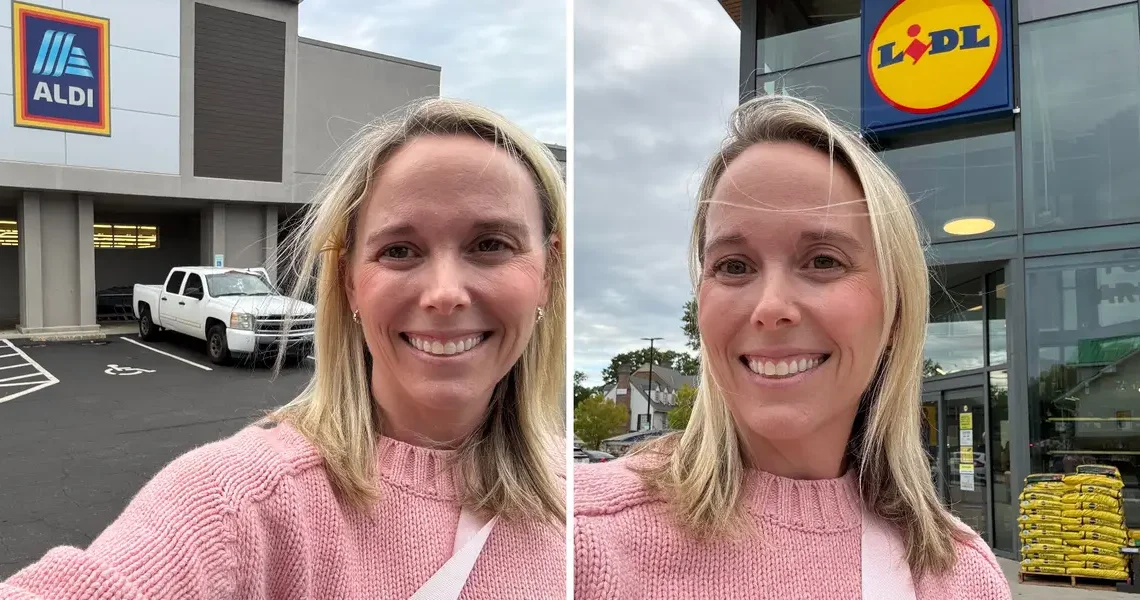
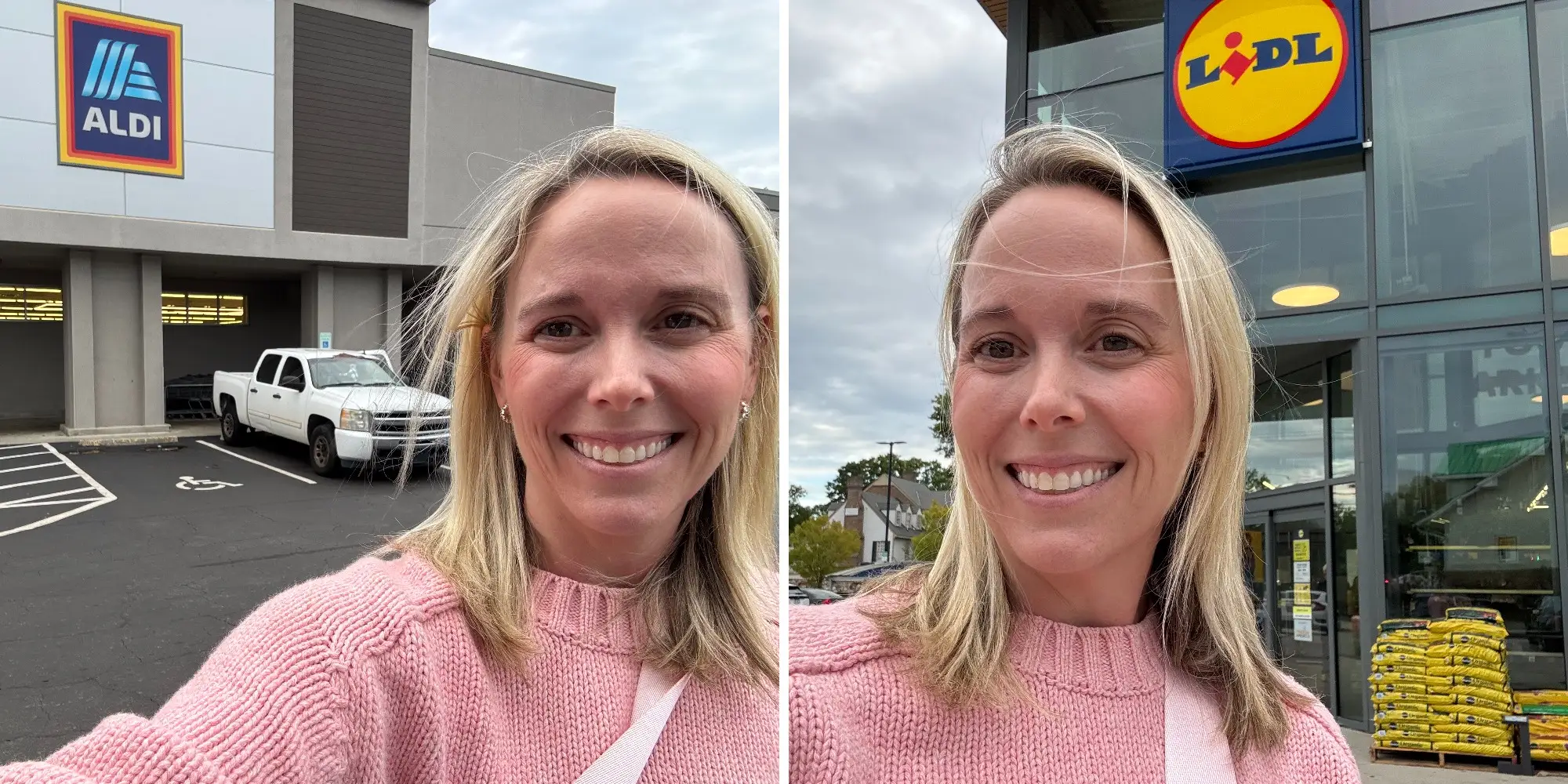
Since I have both a Lidl and an Aldi within a 10-minute drive of my house, I decided to visit each to compare the selections, shopping experience, and prices to find the better store for me.
I didn’t love that I needed a quarter to use Aldi’s carts.
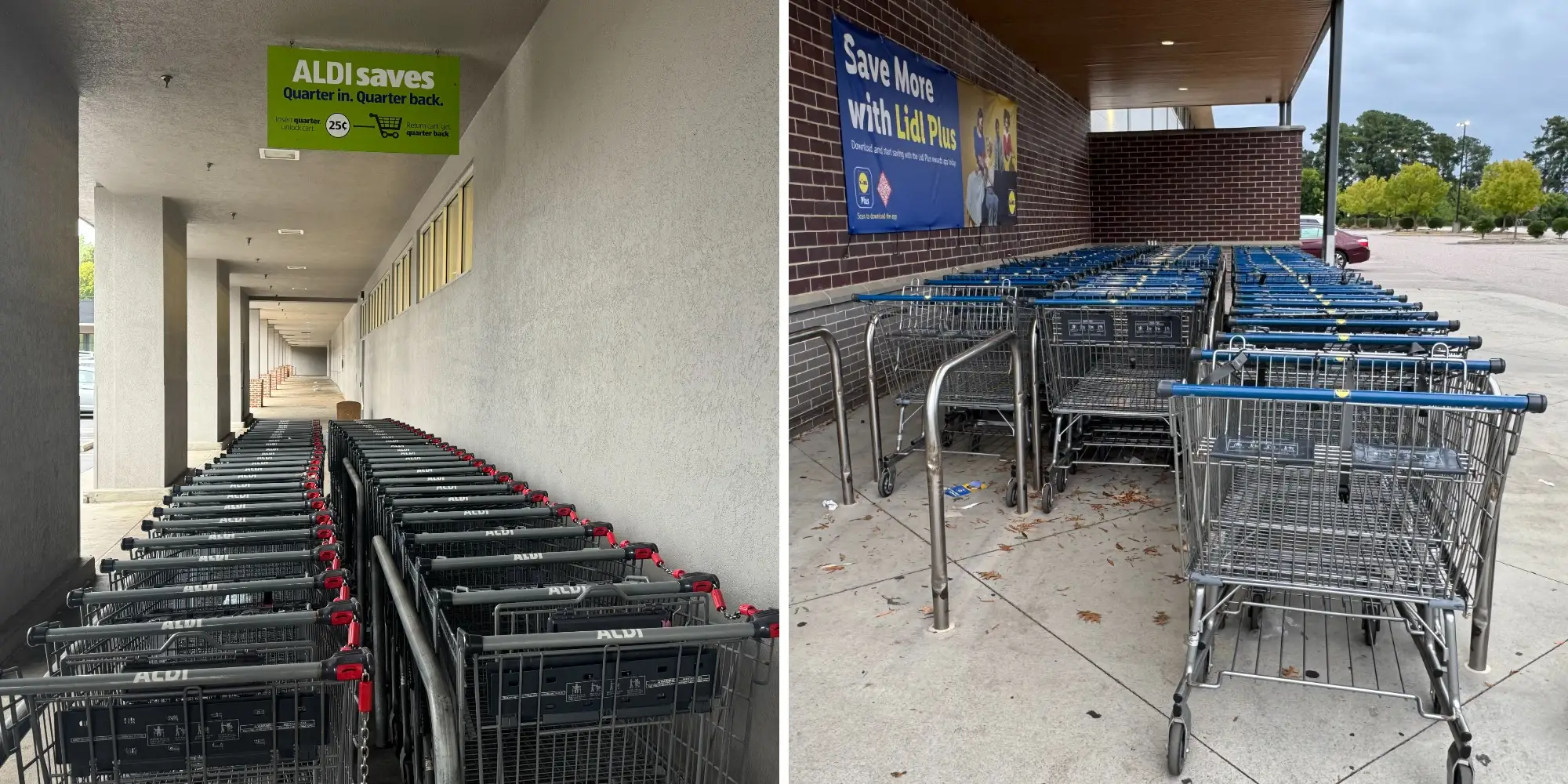
At Aldi, shoppers must insert a quarter into a special slot in order to use a shopping cart. They get their quarter back when they return it.
It sounds like a smart strategy to incentivize people to put carts back and keep the parking lot clean. Many fans of the retailer have even embraced this by carrying special keychains that hold their “Aldi quarters.”
However, I don’t always have a quarter with me and didn’t love this extra step. In comparison, my local Lidl had carts available to borrow, no quarter needed, which I like a lot better.
From the start, Lidl felt more welcoming.
The two chains originated in Germany, but Aldi has been in the United States longer. Its first US location opened in 1976, while Lidl didn’t arrive until 2017.
That said, the Lidl I visited opened in 2017, and the Aldi in 2007 — a decade prior, which could explain why it felt a bit more dated.
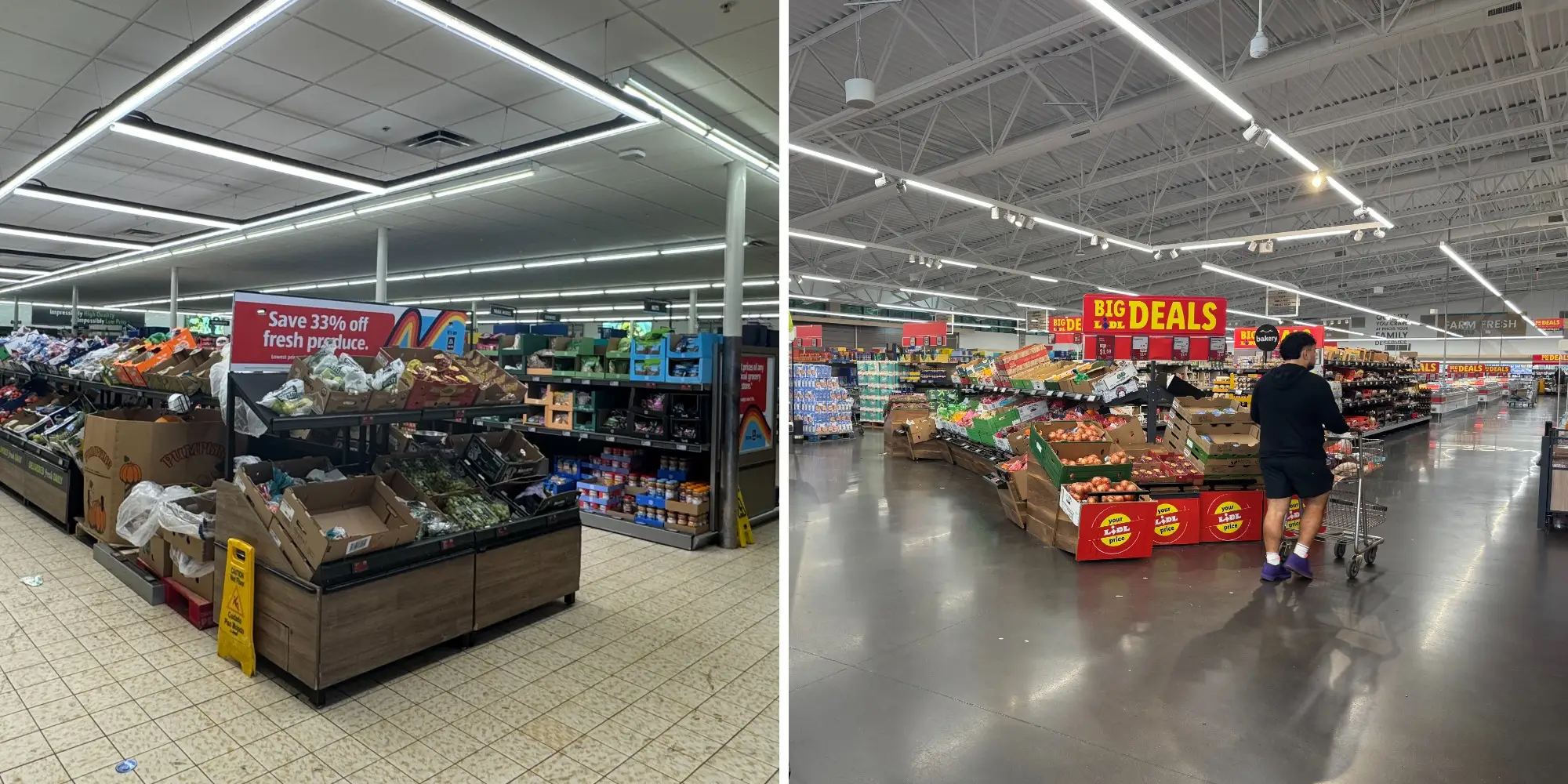
This Aldi felt like a typical discount chain to me when I walked in — the lighting seemed surprisingly dim, the floor tiles didn’t look very clean, and some areas felt cluttered, with product haphazardly strewn about on some of the shelves.
First impressions count, and it really started my shopping on a sour note.
My local Lidl felt more welcoming to me with its higher ceilings, shiny flooring, and much brighter lighting. Everything looked clean, and I didn’t necessarily feel like I was walking into a bargain store.
At both chains, most items were displayed in the ready-to-shelve boxes they’re shipped in. This differs from traditional grocery stores and is another money-saving move — it makes products quicker to stock.
Both stores had a great selection of ready-made meals.
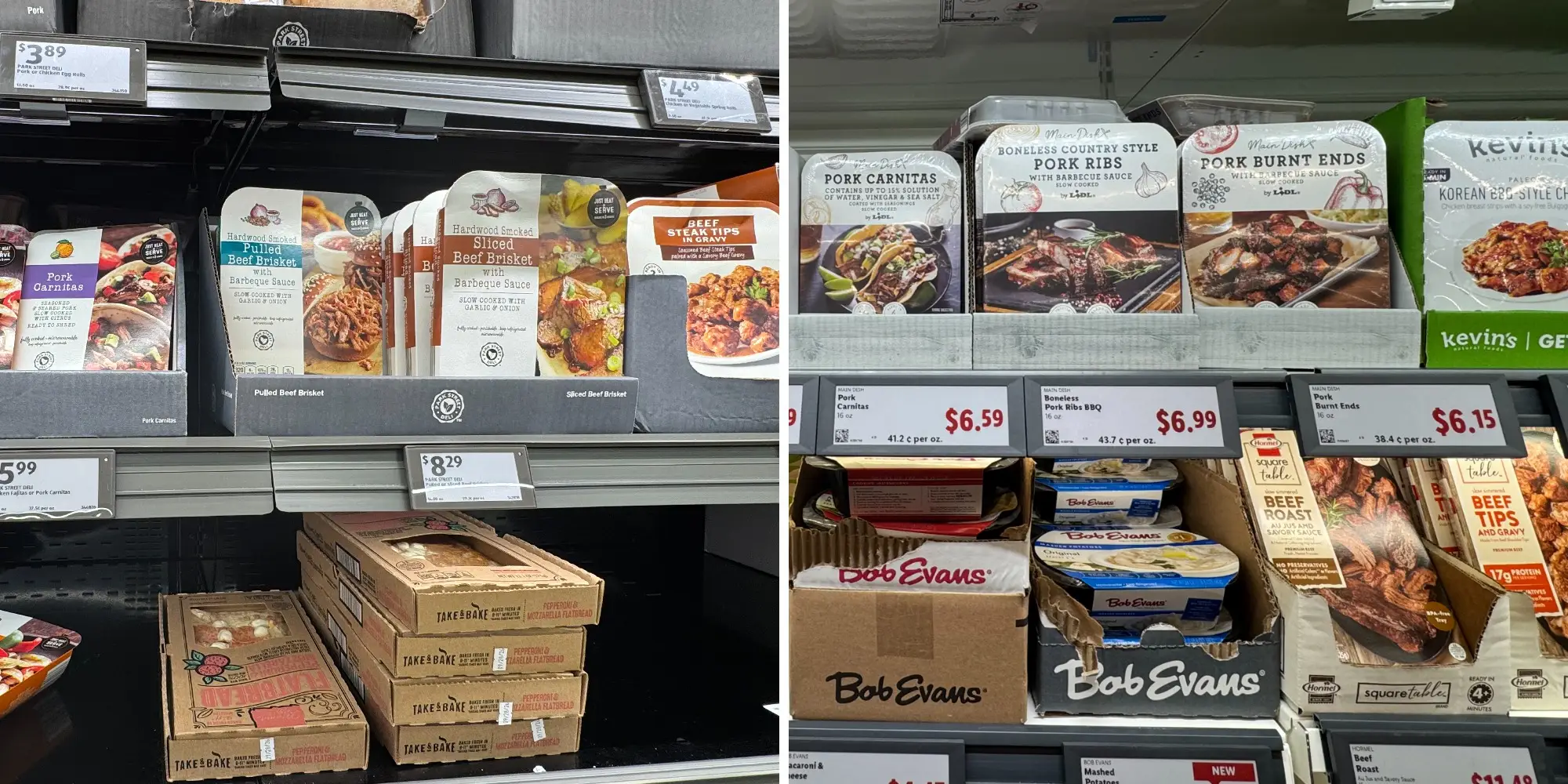
I was impressed by both stores’ selections of ready-made meals, most of which were private-label. There were a number of meals my family would eat, like the chicken fajitas from Aldi and the pulled chicken from Lidl.
The prices were generally similar, typically between $5.99 and $6.99, though Aldi beat Lidl in several side-by-side comparisons.
For example, Aldi’s 16-ounce pork carnitas were $5.99 compared to Lidl’s for $6.59.
Both stores had a ton of cereal options.
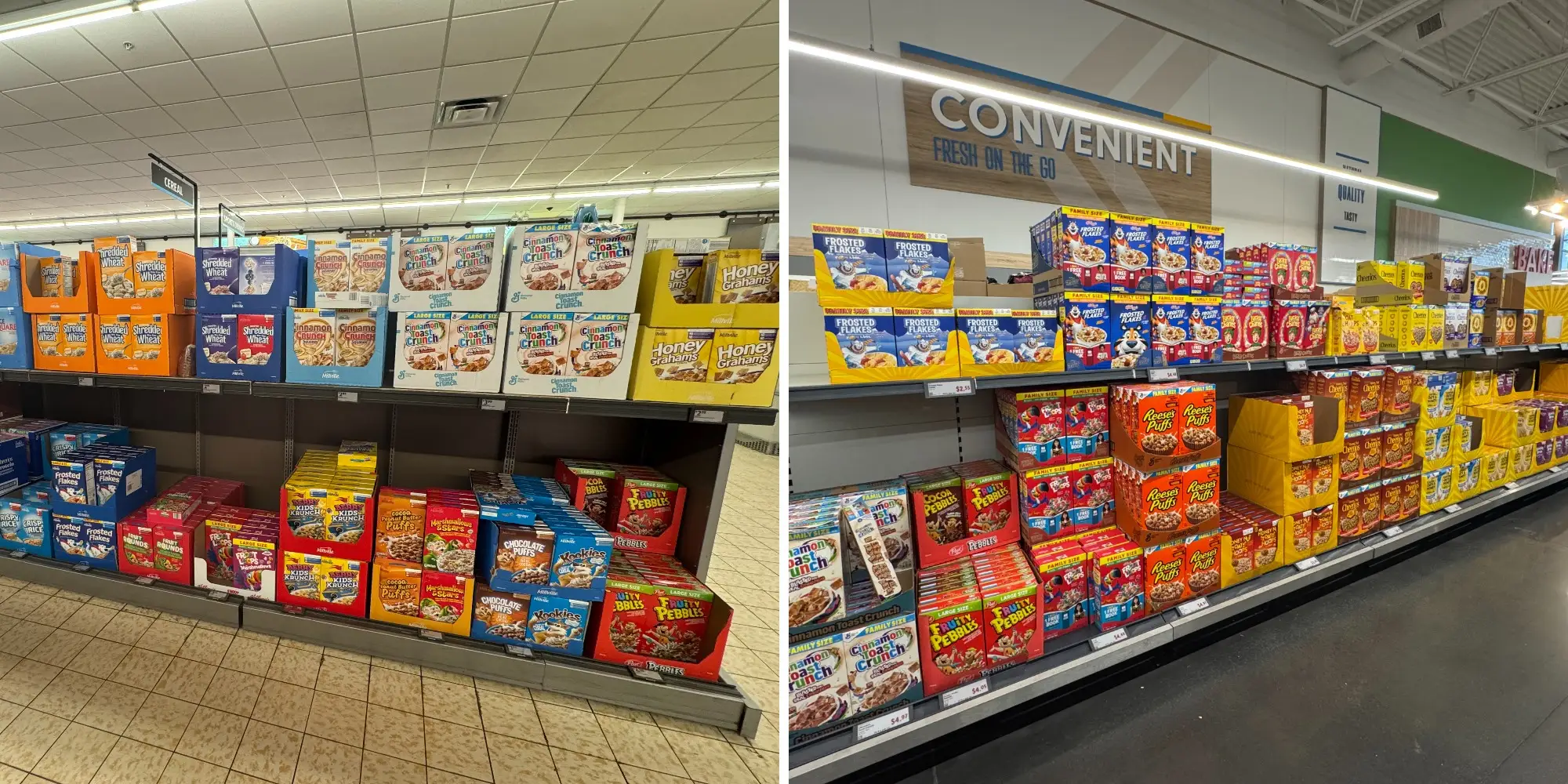
The cereal selections seemed similar and broad at both Lidl and Aldi.
Both stores had a mix of name-brand offerings like Fruity Pebbles, Honey Nut Cheerios, and Lucky Charms, plus private-label options that seemed like dupes for popular cereals like Reese’s Puffs and Honey Bunches of Oats.
However, Aldi’s cereal section impressed me just a little more.
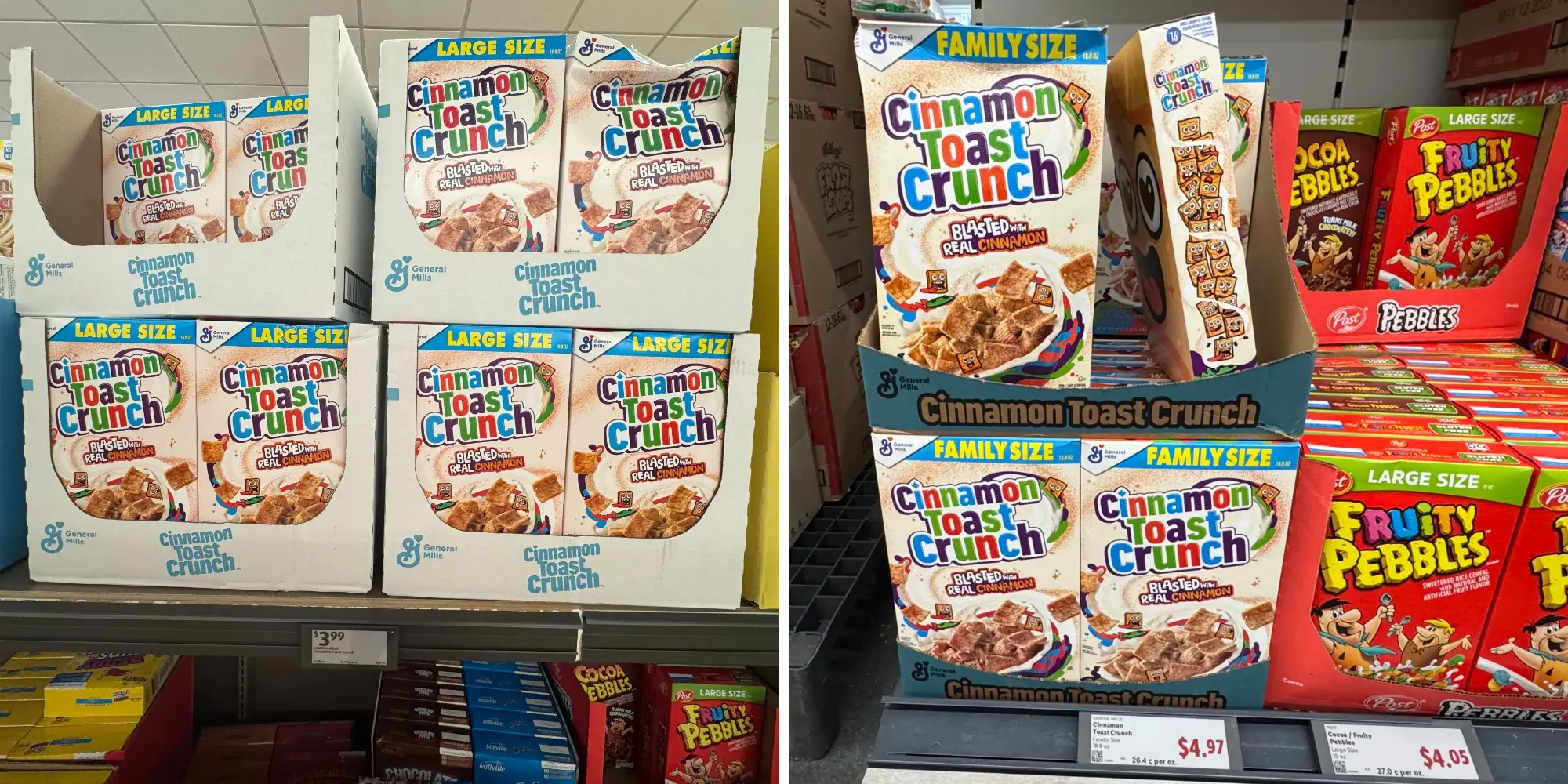
The cereals at both stores were mostly comparable in price, ranging from just under $2 for private-label options to about $5 for name-brand boxes.
However, in a few side-by-side price comparisons, Aldi just slightly came out on top.
For example, Aldi had a 16.8-ounce box of Cinnamon Toast Crunch for $3.99, or $0.24 an ounce, while Lidl had an 18.8-ounce box for $4.97, or $0.26 an ounce.
On this trip, bread and milk were slightly cheaper at Aldi.
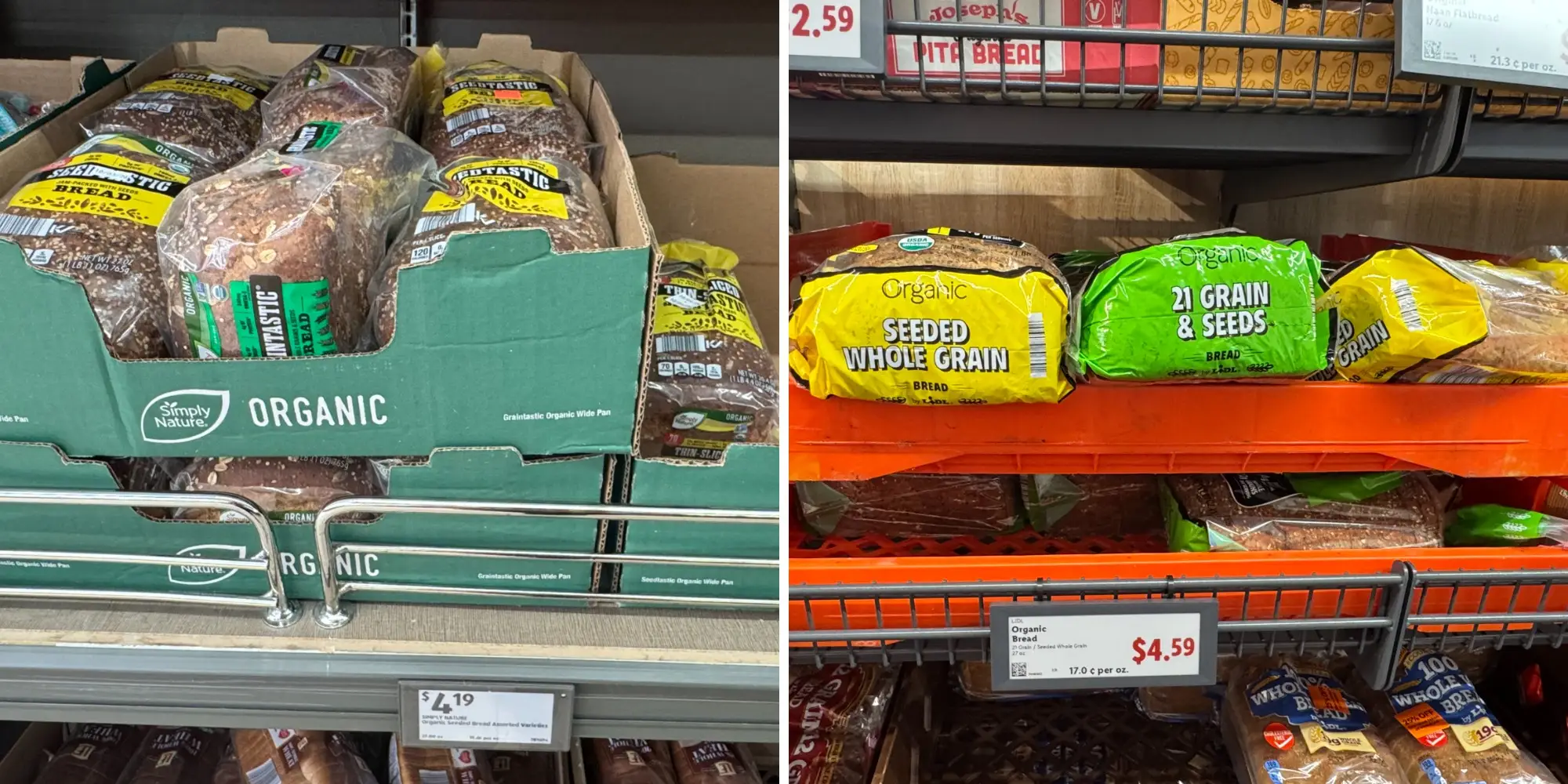
As I shopped, I noticed that both stores carried similar product assortments across several categories, and the price differences were often in Aldi’s favor, though typically only by a few cents.
On this trip, a gallon of whole milk was $0.06 cheaper at Aldi.
Both retailers had 27-ounce bags of organic seeded bread in packaging that seemed nearly identical (and resembled the packaging for the popular Dave’s Killer Bread).
A loaf of Aldi’s bread was $4.19, and Lidl’s rang in at $4.59.
Lidl’s displays continued to win me over in the produce section.
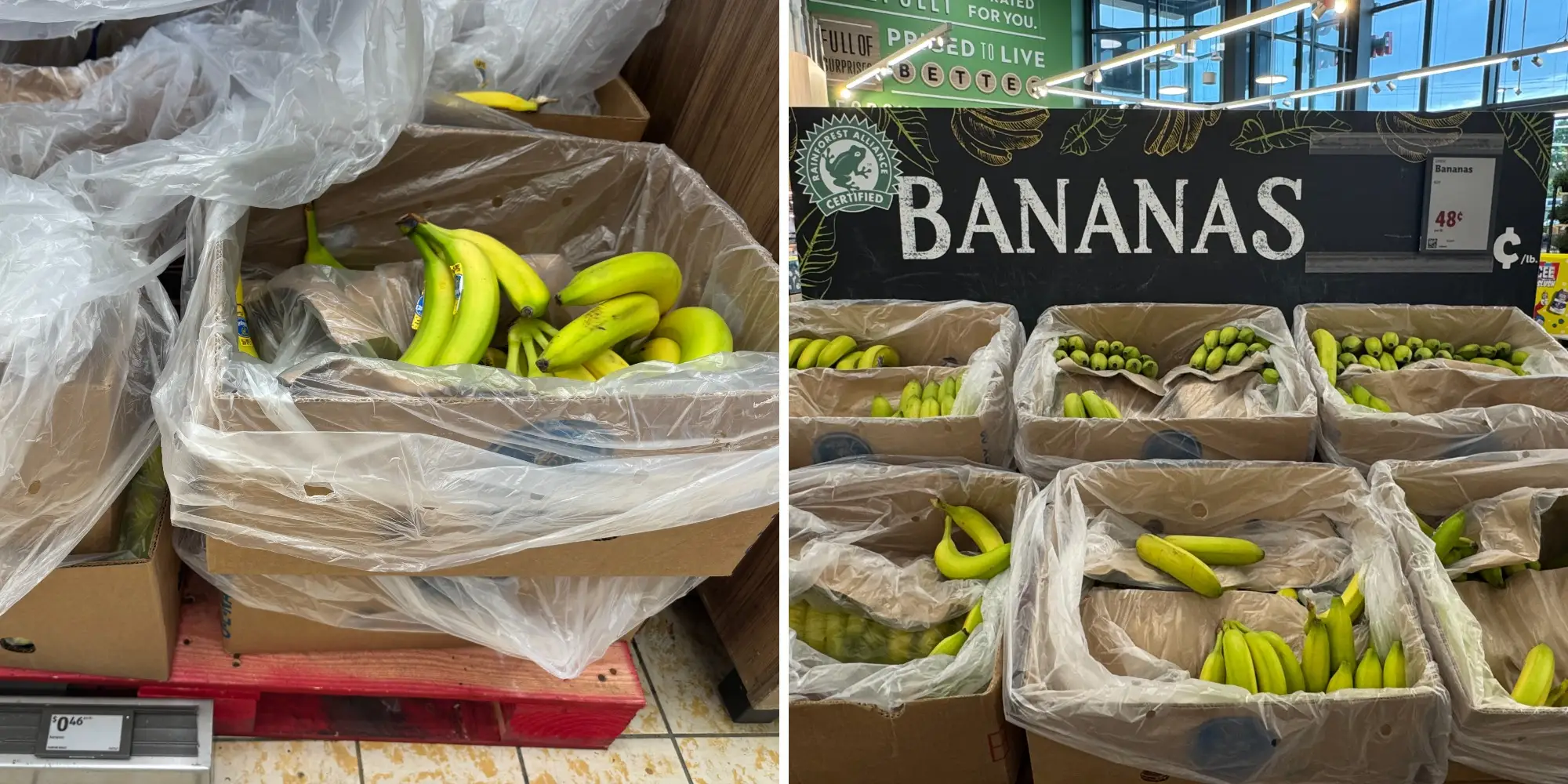
All in all, the fruit seemed priced similarly between the stores, with a few price differences here and there.
Seedless green grapes were both $1.25 a pound across stores. A 3-pound bag of Mandarin oranges, one of my family’s other favorites, was $0.04 cheaper at Aldi. Lidl’s 1-pound container of organic strawberries was $4.29, and Aldi’s was $4.65.
Aldi’s bananas were $0.02 cheaper per pound, but they were in a large box on a wooden pallet near the ground. It made me feel like I was in a budget store.
At Lidl, there was a nicer, eye-level display that felt more akin to how a traditional grocery store would display bananas.
Although the cost of food is important, presentation does matter to me. In terms of displays, Lidl’s appealed to me more — especially in the produce section.
I found applesauce and name-brand chips for the same price at both retailers.
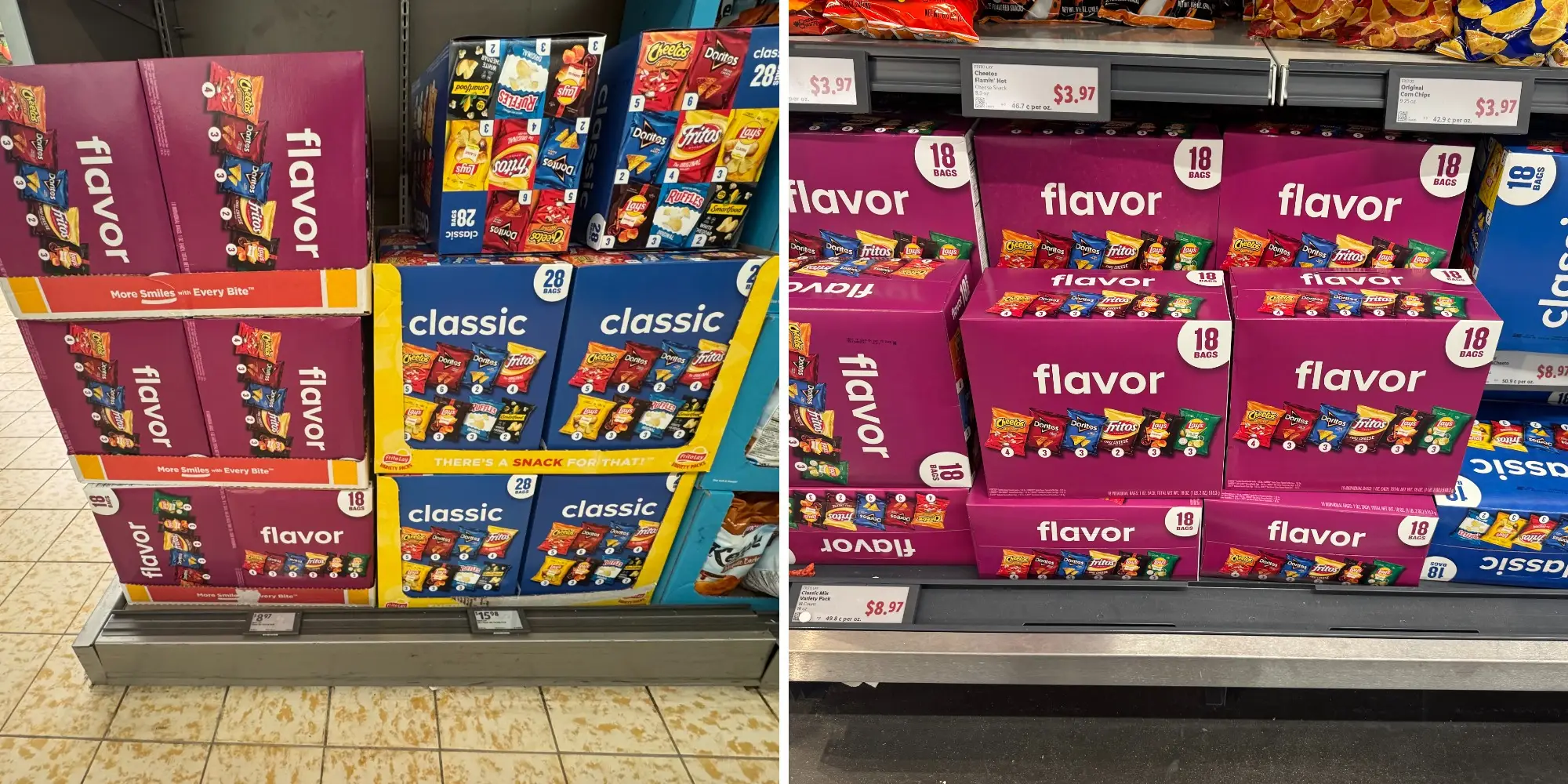
With a new kindergartener, I needed to stock up on lunchbox snacks.
I was pleased to see that the same mixed 18-pack of Frito-Lay chips, with varieties like Cheetos and Doritos, cost $8.97 in both stores.
Plus, a 12-pack of 3.2-ounce squeezable private-label applesauce pouches was $6.49 at both Aldi and Lidl.
When comparing pizzas, the chains felt fairly evenly matched.
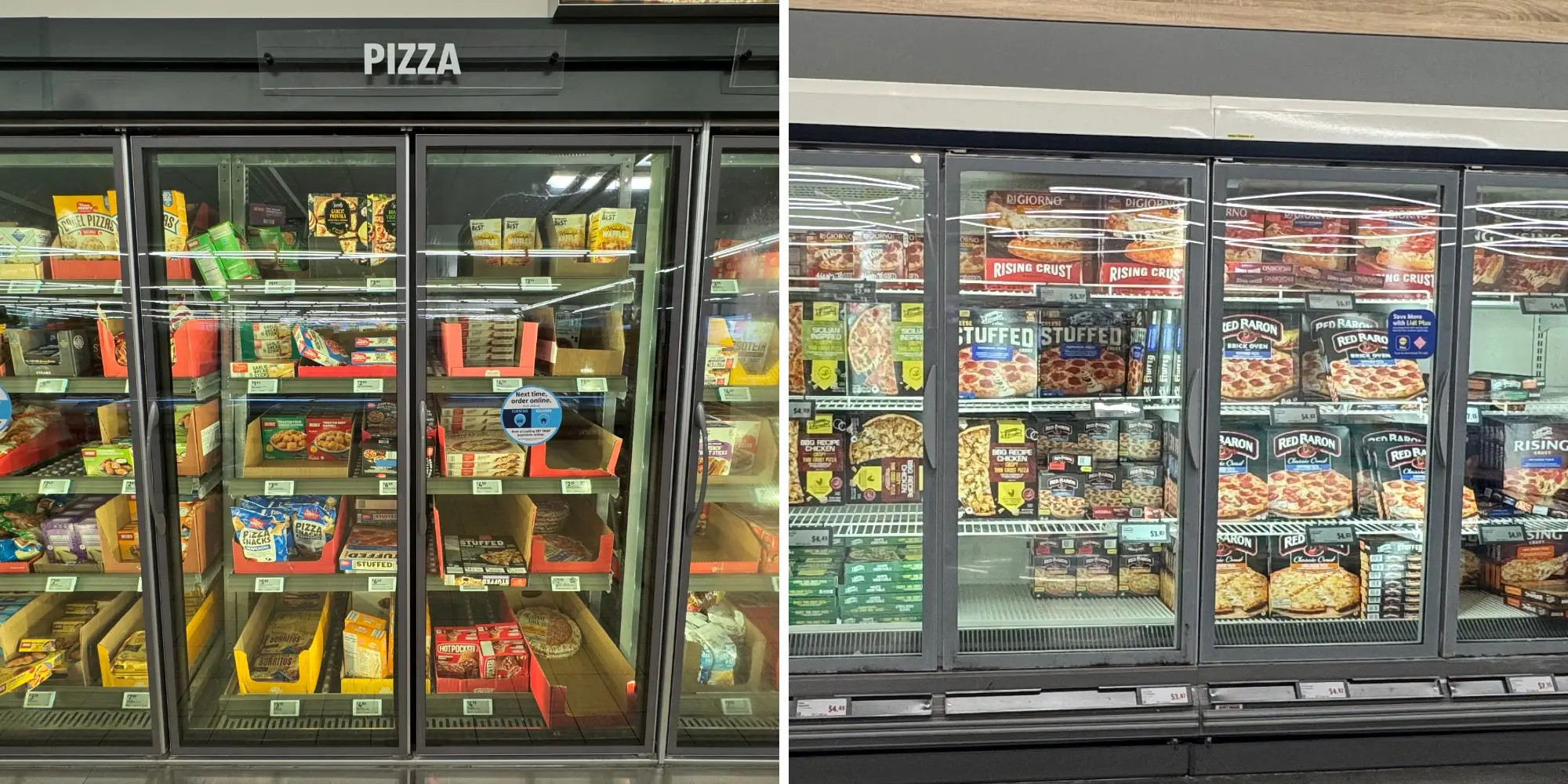
This Lidl had a much wider selection of pizzas and more of them in stock than my local Aldi. Aldi’s inventory seemed so low, I’d be worried about not being able to snag one on future shopping trips.
However, I could have also visited the store right before a restock. (And Aldi’s premade pizzas do get rave reviews — maybe that’s why so many were missing.)
Prices were generally comparable, but for the variety I wanted, Aldi’s prices were slightly better. A basic, thin-crust pepperoni pizza was $2.49 at Lidl and $2.29 at Aldi.
Both had many limited-time, nonessential products, though Lidl seemed to have a larger selection.
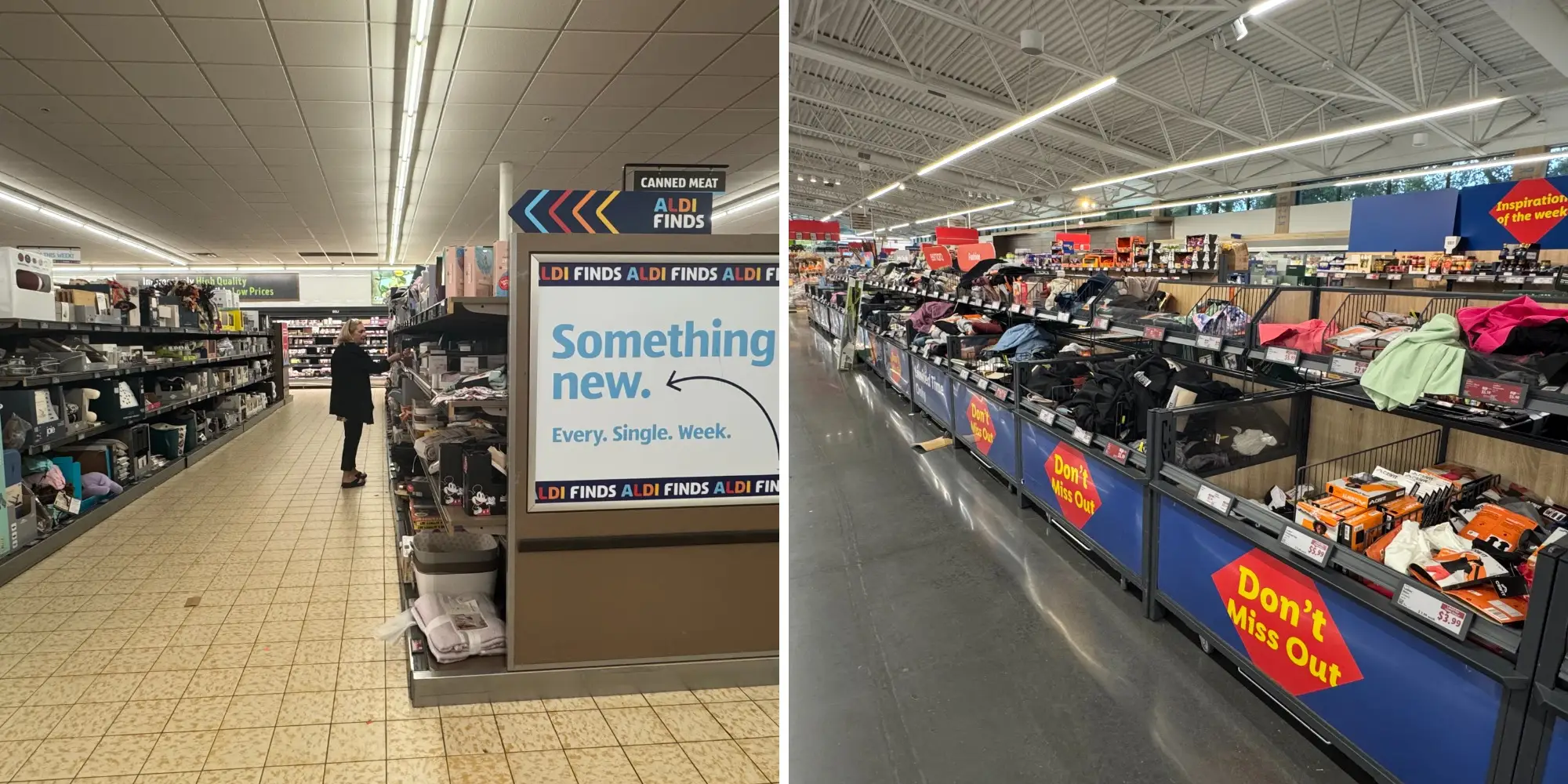
Aldi is famous for its “finds” — a rotating selection of items sold in limited quantities for a limited time.
These change weekly, and many are located in what loyal shoppers jokingly call the “aisle of shame” because going down it often leads them to make nonessential impulse buys.
My “aisle of shame” was just one aisle. In it, I found a range of items, from foam seat cushions to water bottles to seasonal doormats and kids’ activity books, all at discounted prices.
At Lidl, I found about three aisles stocked with nonessential and seasonal “finds,” from food-storage containers and frying pans to basic long-sleeved shirts and pumpkin-decorating kits.
At both chains, these selections of “finds” rotate frequently, making it fun to see what’s new every time you shop. However, since Lidl had more space dedicated to them, it felt more likely I’d find something I wanted there.
Although Aldi’s prices were slightly better, I ultimately preferred shopping at Lidl.
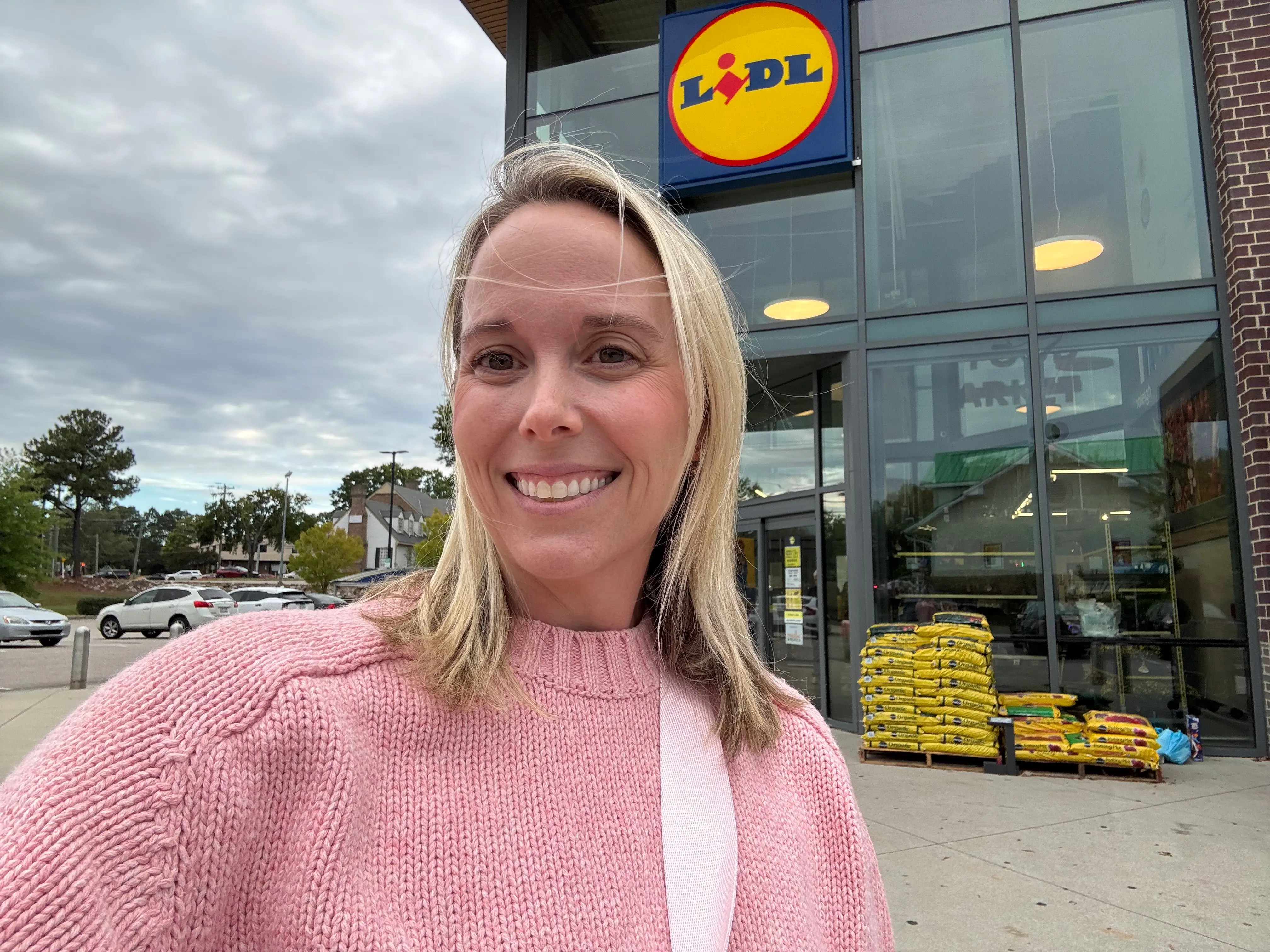
By the end of my comparison, it was clear that shopping at Aldi would have saved me a couple of dollars off my bill.
Many products I looked at were priced the same at both retailers, but most were a few cents cheaper at Aldi. It feels like the best chain for anyone who’s truly obsessed with savings.
Personally, though, I preferred my shopping experience at Lidl. The store felt more welcoming and larger, with a broader mix of products.
Lidl’s prices may not have beaten Aldi’s overall, but I’d likely still save money by shopping there rather than at a traditional supermarket.
Of course, prices vary, and this is based on my local store locations and the limited number of products I reviewed during these trips. I’d be curious to visit a newer, more recently updated Aldi to see if it changes my perspective.
I’m also aware that shopping at Lidl won’t be an option for as many people in the US. Lidl has around 200 stores in nine US states, all on the East Coast, whereas Aldi is projected to have 2,800 locations across more than 30 US states by the end of this year.
I would shop at Aldi if I didn’t have a Lidl nearby to take advantage of the savings — but for now, I’ll stick to the brighter, more welcoming store.
When reached for comment, a spokesperson for Lidl said:
When reached for comment, a spokesperson for Aldi said:
Read the original article on Business Insider
The post I shopped at Aldi and Lidl. After comparing prices and experience, I found my winning budget grocery chain. appeared first on Business Insider.