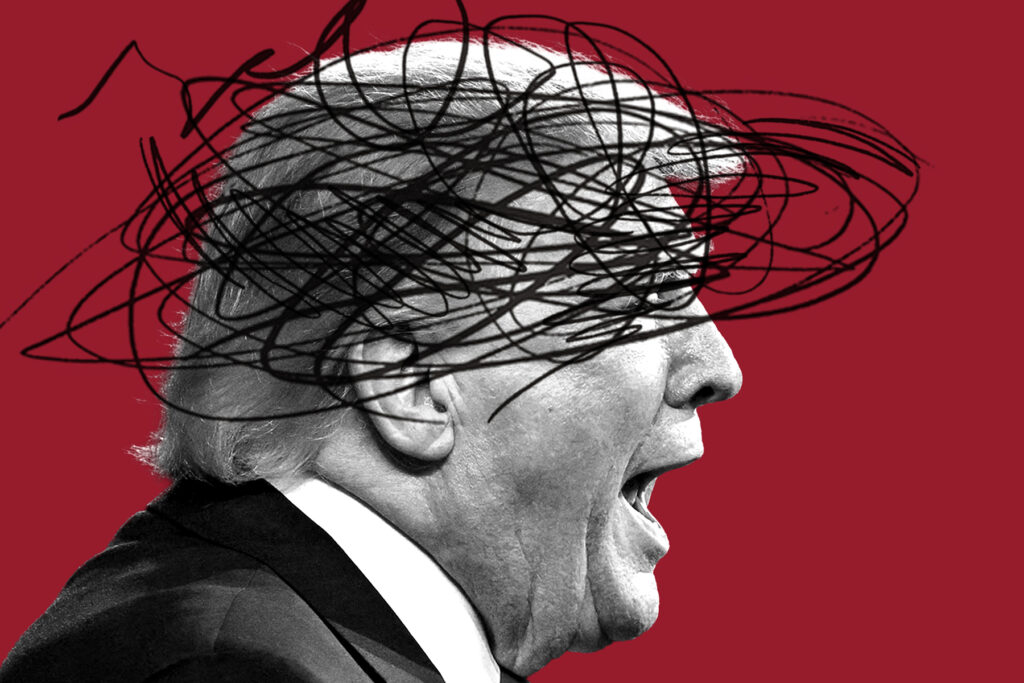
Donald Trump is struggling to make sense of the coming electoral rout. “I don’t understand it, nobody does, nobody’s been able to explain it,” the president told reportersin the Oval Office last month. “Whoever wins the presidency, Republican or Democrat, automatically does poorly in the midterms. I don’t know why … but we shouldn’t.”
He’s right on the history. The last president to hold onto a House majority in a midterm election was George W. Bush in 2002. Before him, it was Jimmy Carter in 1978. That’s partly because midterms tend to be referendums on the party in power, and Americans are motivated to air their frustrations. But Trump, an agent of chaos, should be far more attuned to why he’s unlikely to break the trend.
The turmoil of the past two years has turned the traditional political landscape on its head. Bright-red Kansas is showing the Democratic Senate candidate, Adam Hamilton, essentially tied with Republican incumbent Sen. Roger Marshall. In Texas, which voted for Trump by nearly 14 points in 2024, Democrat James Talarico is polling three points ahead of Republican Ken Paxton. The disorder the president thought he owned has spun out of his control and out of his favor. Now, all bets are off.
Chaos can be a potent political weapon, and it’s one of the president’s favorites. The administration has been relatively effective at picking battles to distract from its economic and military wars. Fights to put Trump’s name on the side of historical buildings, pharmaceutical websites and wireless phone services have served as useful diversions. But the consequences of the White House’s signature policies can’t be covered up by political pandemonium. Prices are up. Morale is down. Both are the president’s doing.
The New York Federal Reserve released a study last week about the effects of tariffs on prices. As it turns out, by February this year the import taxes that Trump announced in 2025 “contributed 2.9 percentage points to goods price inflation,” the issue that remains the top concern among voters. Without the barrage of tariffs, the New York Fed says, “goods prices would have fallen slightly.”
In other words, what Americans have always instinctively known has proved true. Despite the White House’s insistence that tariffs are paid by other countries, American businesses have borne the brunt of them and passed some costs onto consumers in the form of higher prices. (That was always the purpose of increasing taxes on foreign imports anyway: to make those products more expensive with the intent of changing the habits of American consumers.)
That the tariff regime hasn’t brought about the worst predictions of a collapsed economy isn’t exactly a pithy or convincing slogan for the campaign trail. Companies including Home Depot and Walmart stated publicly that they would try to shield their consumers from higher prices but eventually had to raise them. The administration also had to pause much of its tariff plan last spring when markets began to panic, even before the Supreme Court struck down others under the International Emergency Economic Powers Act.
The whims with which the president has approached his economic wars — hiking import taxes on allies because he felt like doing so, exempting key imports from China — have created a culture of uncertainty. Sixty percent of likely voters report that the country is on the wrong track. Consumer confidence has plummeted. America’s neighbor to the north has become so alienated that it is seriously considering watered-down membership in the European Union as a better, less headache-inducing arrangement than closeness with Washington.
The chaotic style with which Trump approached his hot war has added to that sense of insecurity. The “military operation” in Iran was supposed to be over within four to six weeks, according to the president’s original timeline. Still alive and as murky as ever, it has entered its eighth month despite being “very complete, pretty much” in March. Gas prices, which were coming down in 2025, have shot up nearly 50 percent since the war began. Diesel prices, up around 70 percent, hit $6.29 a gallon in September.
The president has since lost control of his approval ratings, too, which Reuters noted hit a record low of 32 percent last month. But the lack of discipline to stick to his promises to bring down inflation and avoid intractable foreign conflicts has also created ideological chaos, the kind that makes it nearly impossible for his administration to craft a coherent case for his policies. Candidate Trump, who pledged to do everything in his power to tame prices, couldn’t comprehend the inflationary nightmare President Trump has proposed by offering $5,000 checks to every American if they keep the GOP in control of Congress.
The decision to throw out decades’ worth of knowledge about what makes a strong economy — free-flowing trade, a light regulatory touch, the pursuit of peace and allyship — has the president’s colleagues grasping at straws for what to say on the campaign trail. Republican candidates in close races are releasing ads lambasting the tariffs. Some are reluctant to have Trump stump for them.
They can’t risk any more chaos.
The post How Donald Trump, agent of chaos, lost control appeared first on Washington Post.