Driving through Arizona on a Saturday morning, I saw a line of cars nearly a mile long stopped along a high-desert highway. I slowed, thinking there had been an accident. Then I realized that all of those people were waiting in line for food.
Weeks later, I went back to the area and met Kandy Soto. The retired administrative aide and courtroom clerk had once been a regular donor to her local food bank. But when I met her last month, she was a recipient of other people’s generosity, preparing to fill a bag with groceries that her family could no longer afford. Soto told me that the cost of canned vegetables seemed to creep up nearly every time she went to the store. After checking prices against her budget, she might buy some cheap fish fillets or canned meats, but beef or poultry were out of the question. Sometimes she left empty-handed.
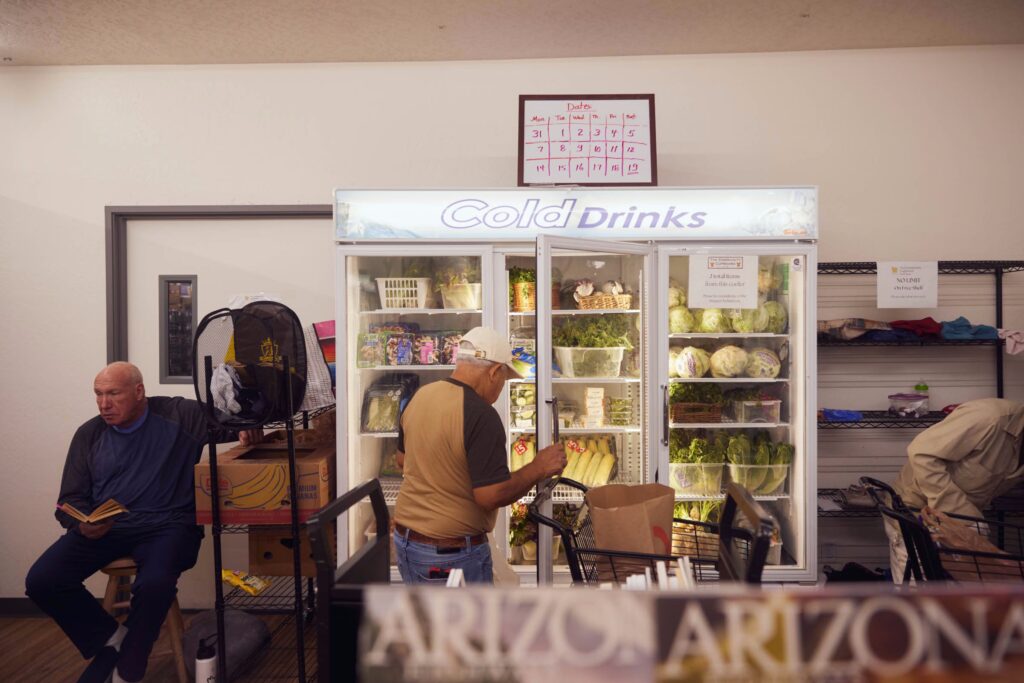
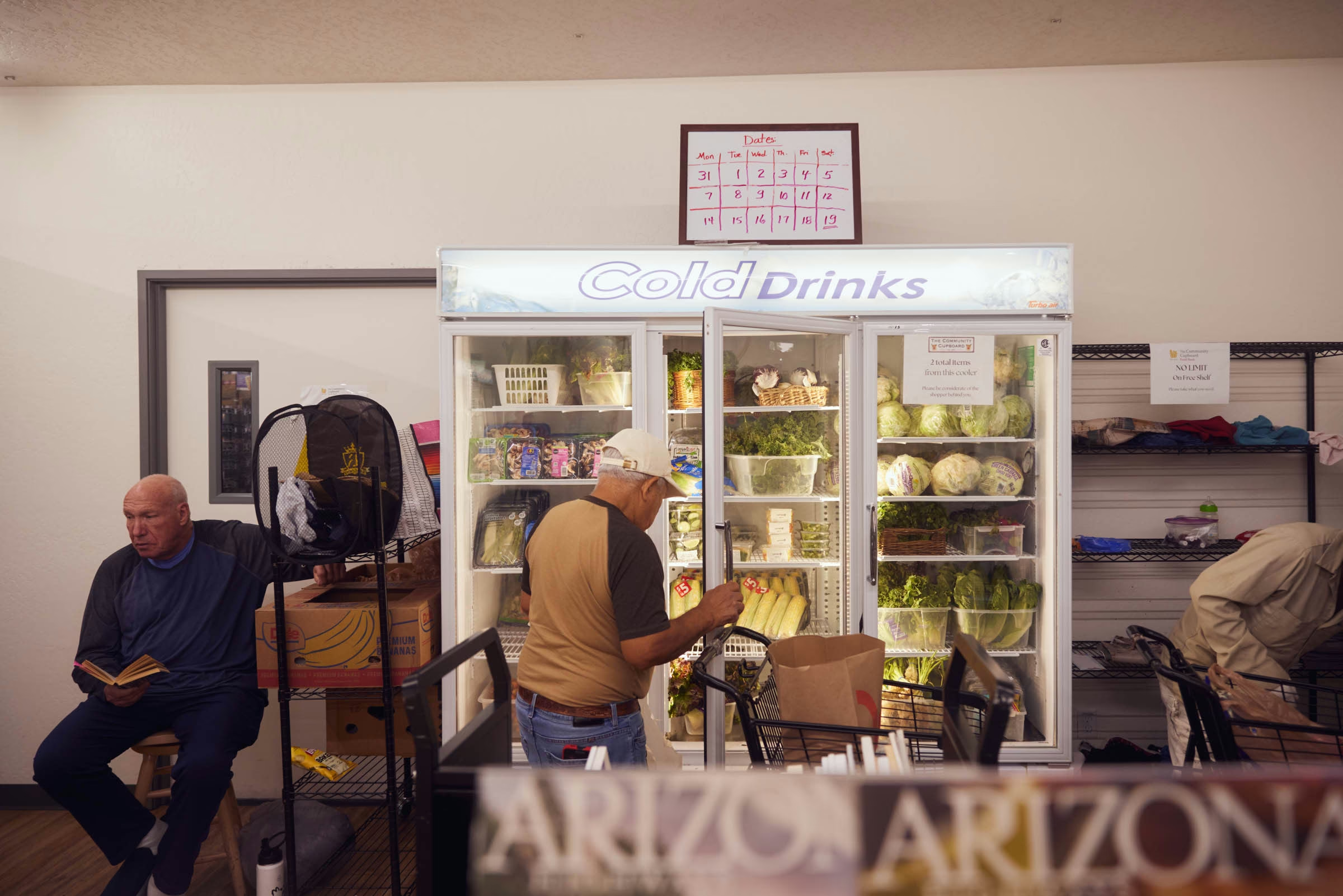
It wasn’t supposed to be this way. When she voted for Donald Trump two years ago, Soto counted on him to fulfill his promise to “make America affordable again” following painful spikes in inflation under Joe Biden. She wonders what kind of life Trump and his family are living, because she sees no signs of the roaring economy he talks about. Her own family has had a run of bad luck: Her husband had to stop working after injuring his neck and requiring surgery. Then they learned that their modest retirement income made them ineligible for public assistance. All the while, prices for gas and groceries climbed. The situation grew so dire a few months ago that the 66-year-old Soto had to set aside any feelings of shame and drive 20 miles to the Community Cupboard Food Bank in Prescott. “It takes an older person a lot of giving up to do something like this,” she said.
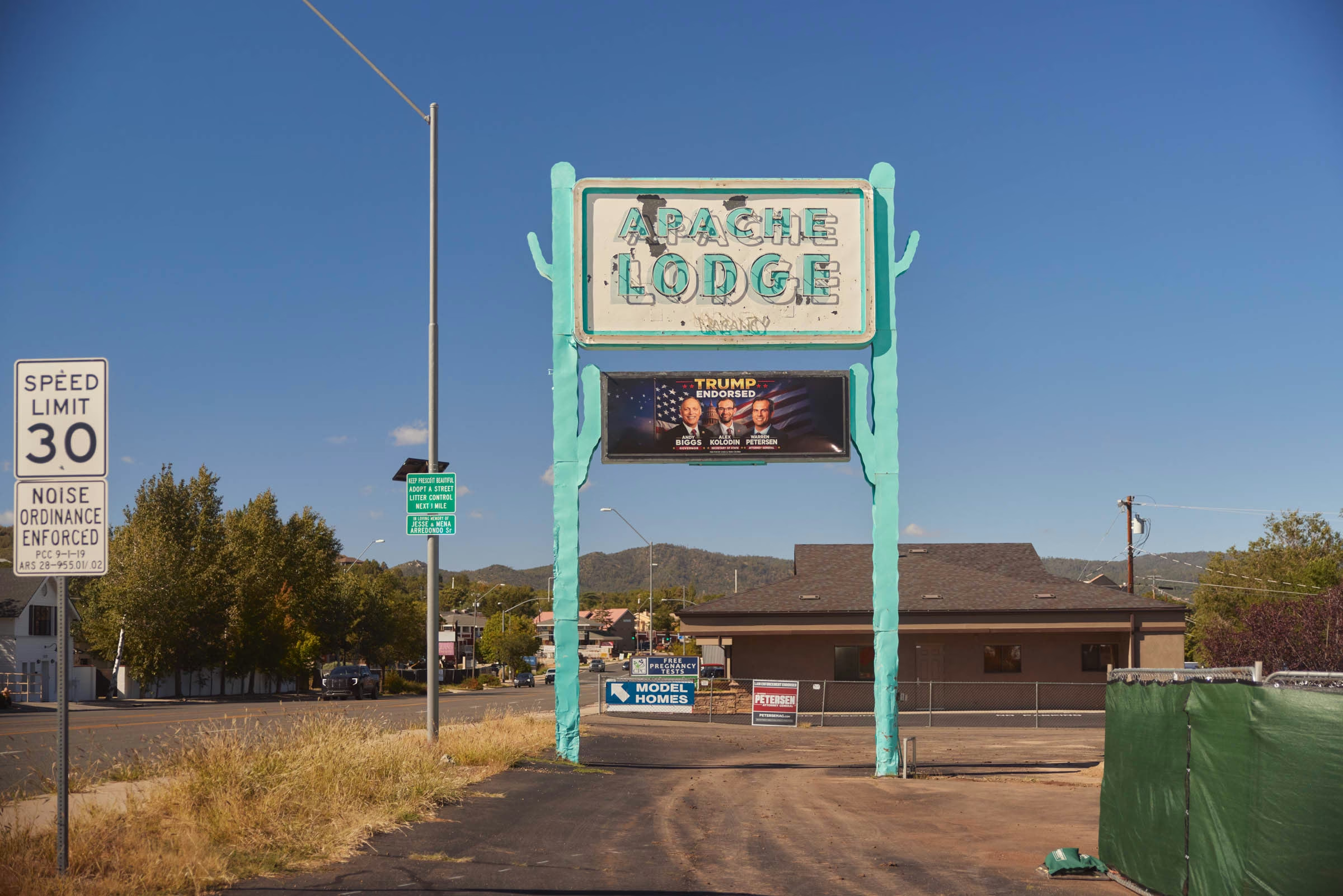
In the surrounding county, Yavapai, Trump took 66 percent of the vote on his way to winning Arizona two years ago. In 2016, he staged a final campaign rally here before Election Day. Trump is counting on the region to help blunt what polls forecast to be a Democratic rout next month, and will hold a rally Wednesday in Bullhead City, about 200 miles to the northwest. But the president’s grip appears to be loosening, and the state of the economy explains why.
The toll of rising prices has been especially acute in Arizona. About half a million residents have lost their food stamps since the summer of 2025 because of changes in Trump’s signature tax legislation, which limits assistance and penalizes states that make mistakes when they grant benefits. The law is still being phased in, and Arizona was among the first states to enact the changes.
Nearly everyone I spoke with in the area last month, including Trump supporters, said they feel worse off than they were before the 2024 election. Unemployment in Arizona stood at 3.8 percent in August 2024; this August it was 4.9 percent, according to federal data. Many people I spoke with in the county said they are working, but their paychecks haven’t kept up with increased prices for gas and food. Almost all told me they are angry about Trump’s decisions to start a war and spend hundreds of millions of dollars ornamenting a capital city they will never see. They were incredulous to hear him claim that their lives have improved with him in office. Many said they are also disillusioned with Congress and with both political parties. They lamented the corruption they see as endemic in the government and in large corporations, and denounced billionaires, who they view as capitalizing on their pain.
[Read: Trump voters are over it]
People told me they are anxious about many things: future employment opportunities, feeding their children healthy meals, keeping small businesses running, affording car repairs. Trump has said that “the American dream is back.” But not for the people I spoke with in Yavapai County.
Victoria Dombrowski has found a way to help her family in this economy: the barter system.
She lost $800 a month in food stamps after state officials, who administer the program, took aggressive action to comply with new eligibility requirements mandated by the GOP’s One Big Beautiful Bill Act. Dombrowski, a stay-at-home mother of two young children, told me she had completed the renewal paperwork and had made it all the way to the end of the process, which included an interview with a caseworker about her financial situation. But even after waiting on hold for days and enlisting help from a nonprofit group, she couldn’t get through to staff at the Arizona Department of Economic Security. “And so I just gave up,” she said. I met Dombrowski at a dollar store, where she now shops because she can no longer afford Walmart.
Dombrowski’s husband works at an auto-parts store, but his income isn’t enough to support the family. So she occasionally began picking up boxes of free food that were offered in the community. But more often than not, she said, the food was expired or the offerings were sugary desserts that didn’t give her kids the nutrition they needed. “My fridge is still empty,” she said. Dombrowski once prided herself on making her family hearty home-cooked food, such as meatloaf and potatoes. Since losing food aid, she has had little choice but to serve cheap microwavable meals. She and others have started bartering for services. For her son’s birthday this summer, she trimmed a dog’s nails; in exchange, a friend brought animals to her home for a petting-zoo-themed party.
Across Arizona, food banks are seeing profound need. They served, on average, 626,881 people monthly in 2024; about 786,366 Arizonans have used a food bank each month this year, according to the Arizona Food Bank Network. Wages aren’t rising as fast as expenses, and more Arizonans continue to lose their food stamps due to changes from the tax bill.
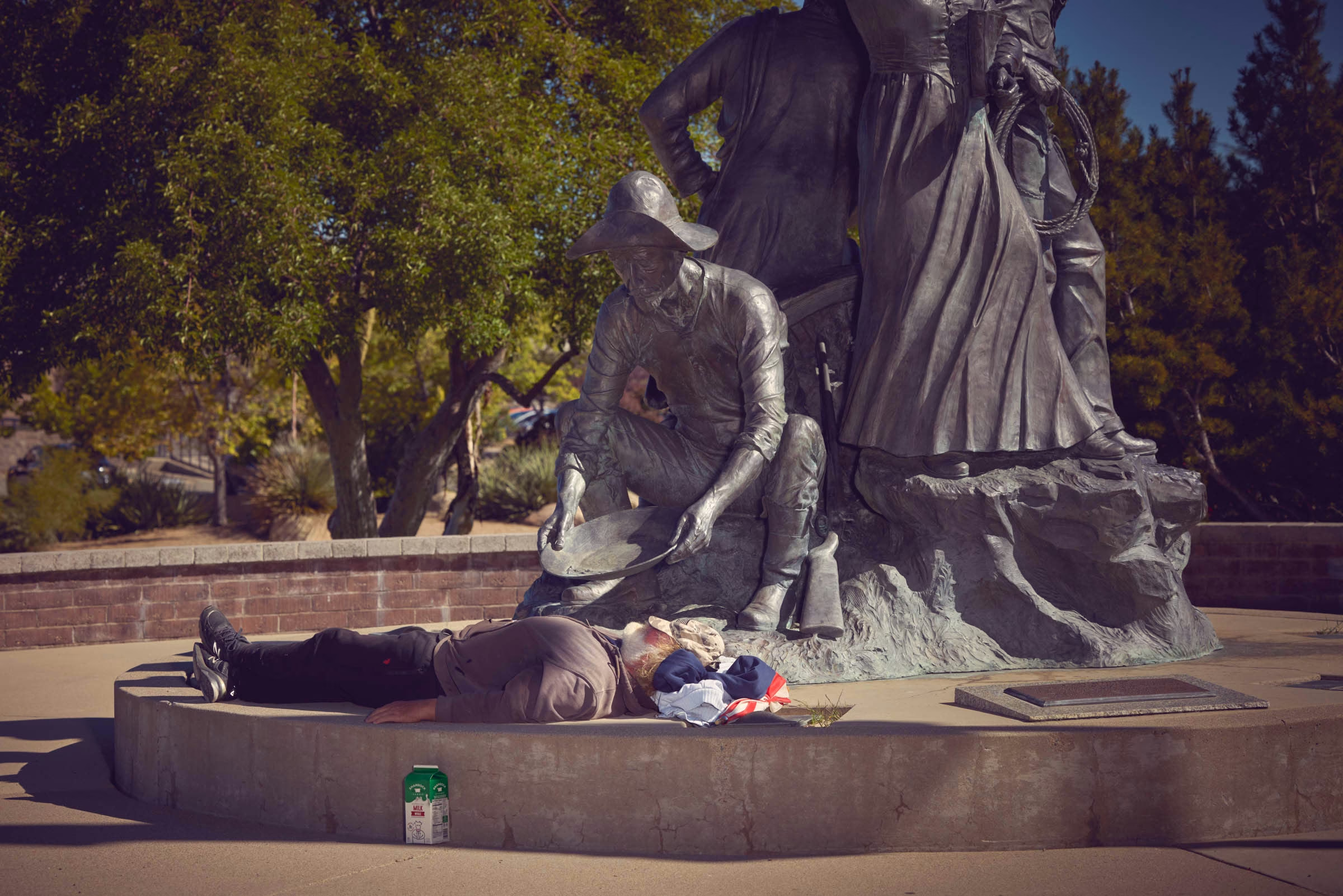
The Community Cupboard Food Bank in Prescott recently received a call on behalf of 17 veterans in the community who had “no food, whatsoever,” Jim Phelps, the organization’s executive director, told me. Workers made an emergency haul one night, packing a Tesla with two loads of food to distribute. Ron Brannon was one of the people waiting for something to eat. Brannon, a tall and lanky disabled Army veteran, told me that if he worked really hard at it, he could stretch his Supplemental Nutrition Assistance Program benefits until the tenth of each month. His monthly total was recently cut to $60, and when his balance hits $0, “I just go without,” the 68-year-old said. Sam Riske, a 32-year-old former military police officer who wore her baby in a carrier as she waited in line for food delivered by the Community Cupboard, told me that she’s been trying since February to get answers from state officials about the status of her application for temporary cash assistance for low-income families. This summer, she said, her family lost about $780 in monthly food benefits because she didn’t keep up with her eligibility paperwork. To make ends meet, she has taken up dog sitting. Her partner has taken odd jobs.
[Read: Public anger is rising]
Outside a popular carnicería in Prescott Valley where federal officials carried out immigration-enforcement operations this summer, a woman who declined to give me her full name out of fear of drawing attention to her situation complained of high food prices and a shortage of laborers that has squeezed her family’s roofing company. But all of that is the least of her concerns, she said as she loaded groceries in her car. Her husband was recently deported, and she’s just trying to make it through the day, running her household and managing employees. “It’s hard right now,” the 37-year-old said. She isn’t counting on anything to get better anytime soon. Inside of the meat shop, banda music blared. A manager politely asked me to leave, explaining that the immigration operations had made customers fearful. Business had been down since then, and she didn’t want the presence of a reporter to make it worse.
Many Republicans I talked with said they supported those immigration crackdowns, even though they brought pain and fear to many people in their community. Dawn Zimmerman, a cosmetologist who owns a studio in Mayer, Arizona, told me that Trump, whom she voted for in 2024, is “doing a lot.” But with out-of-control costs, she added, people are “freaking out.” Prices for hair products have exploded, she said, and her clients are now buying them for less at big-box retailers or online. Fewer people are coming to get their hair done. But she is reluctant to raise prices, because so many clients are older or on fixed incomes. Zimmerman didn’t vote in the primary election, she said, but does intend to vote in November. When I asked if she planned to support Republicans, she was noncommittal: “It’s hard right now because there’s a lot of—there’s more deceit.” I asked what she meant. She cited Trump’s tendency to offload blame for why people can’t see “how good the country is doing”—and how disconnected he seems from her pain.
The post Going Hungry in Trump’s Economy appeared first on The Atlantic.