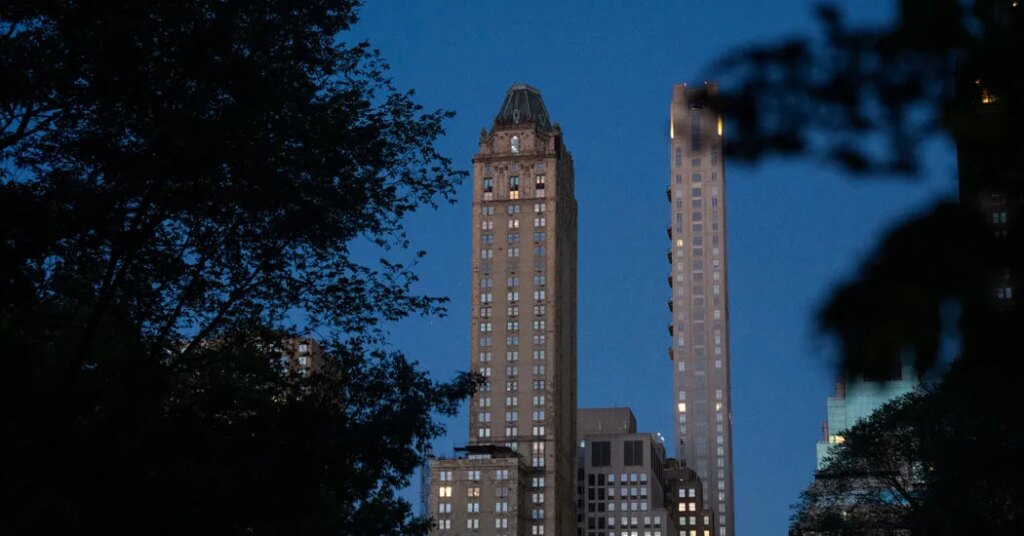
Near the southern edge of Central Park, an epic battle has raged for two years over a storied New York apartment building, featuring celebrities and business moguls, the sultan of Brunei, the U.S. commerce secretary and a band of elderly residents who have lived there for decades.
The bruising fight for the future of the Pierre appeared to end with a whimper on Tuesday evening when a Saudi investor missed a deadline to make a deposit on his proposed $2 billion purchase of the building.
The prospective buyer, Motasem Khashoggi, a Harvard-educated lawyer from a prominent Saudi family, had announced grand plans to renovate the faded landmark that would have required all its residents to sell their units and leave.
The deal’s collapse leaves the fate of the century-old building in question. Engineering studies have found that water leaks are penetrating its apartments and infrastructure, its pipes are old and corroded, and its fire safety systems are antiquated and potentially dangerous, all requiring extensive repairs.
But the missed payment also marks a reprieve for some residents who had opposed the plan pushed forward by a small group of current and retired businessmen on the Pierre’s co-op board.
Howard Lutnick, President Trump’s commerce secretary and the owner of the Pierre’s penthouse, had been a driving force behind the failed deal: He found the potential buyer, Mr. Khashoggi, and helped him craft a pitch for the building.
Mr. Lutnick, a billionaire, would have also been one of the biggest winners under the deal, netting a $60 million profit on the sale of his unit, which extends from the Pierre’s 41st to 43rd floors, records from the deal show. Newmark Group, a real estate firm Mr. Lutnick previously led that two of his sons now help run, would also have been paid a $30 million fee as an adviser.
But the deal faced aggressive resistance from a group of older apartment owners who wanted to spend their final years at the Pierre and from famous residents including the singer Art Garfunkel and the fashion designer Tory Burch.
The potential sale had also put the building’s more than 400 employees’ jobs at risk. The Pierre doubles as an apartment building with about 70 units for residents and a hotel offering rooms for overnight guests.
“I am relieved,” said Tina Beriro, one of the most vocal opponents, who has lived at the Pierre for more than 20 years and turns 86 on Thursday. “A group of old lady widows and divorcées — look what we did! And without us, we would have been gone.”
Mr. Khashoggi, who had proposed buying the building through an entity called Sabre Park Avenue LLC, said in an interview from Saudi Arabia on Wednesday that he had funds available but could not deliver the deposit because he said his bank held up the wire transfer for weeks.
His lawyer was notified by the Pierre late Tuesday that the agreement had been terminated. He said he was “extremely disappointed” and did not know whether he would try to revive the proposal.
“What’s important is I did not walk away,” Mr. Khashoggi said.
Mr. Khashoggi said he had offered the Pierre’s residents generous terms: prices for their units that were above market value, a year to relocate and an invitation to buy back into the upgraded building at a discount.
The Pierre would have been operated after a $1 billion renovation by the Dorchester Collection, a luxury hotel brand owned by Brunei, a tiny Asian country ruled by Sultan Hassanal Bolkiah. The brand also operates the Dorchester Hotel in London, and the Beverly Hills Hotel in Los Angeles.
In a statement, Dorchester said that it “remains committed to the vision for the Pierre and looks forward to continuing its partnership” with Mr. Khashoggi’s company.
Nicholas Arons, a lawyer for some residents who opposed the sale, said there were still many unanswered questions about how the deal came together and then fell apart. “We still don’t know what really happened,” he said.
The co-op board’s chairman, Michael Stern, and its president, David G. Johnson, informed shareholders in a letter on Wednesday that the deal had been terminated and that the building would now try to undertake needed repairs with a minimum of disruption.
“Our shared goal is to proceed as expeditiously as possible to restore the Pierre and the value of your homes and investments,” the letter said.
It is unclear what the repairs will cost. Negotiations are continuing with the Pierre’s current manager, the Mumbai-based Taj Hotels, over how they will be funded.
Mr. Lutnick declined through a spokesman to comment on the failure of the deal.
Throughout the sales process, opponents said they had been kept in the dark by the co-op board about the details of the deal and about Mr. Lutnick’s integral role in arranging it. Despite repeated inquiries, the residents were not told the buyer’s actual identity for many months, according to interviews and a review of internal documents.
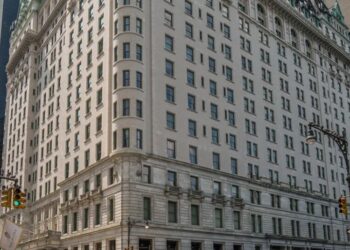
Located at Fifth Avenue and East 61st Street, the Pierre once stood as a hub of glamour and stardom. Elizabeth Taylor, Audrey Hepburn and other icons have lived or stayed there.
But the building’s woes deepened. Taj had been losing millions of dollars a year on the property as revenue from hotel stays and events failed to keep up with expenses. Residents became dissatisfied at what they saw as a reluctance to invest more money in the building.
As residents’ complaints grew, the Pierre’s board hired Newmark, an affiliate of Cantor Fitzgerald, the investment firm Mr. Lutnick led at the time, in November 2023 to explore selling the hotel portion of the building, records show.
Mr. Lutnick had purchased the Pierre’s penthouse, with 16 rooms and four terraces, for $44 million in 2017 but never lived there. At least one of his sons did for a time. After it was damaged during a storm, he installed a basketball court in the apartment and used it as an exercise space.
In the same month Newmark was hired, Mr. Lutnick brought up selling the Pierre at a small gathering at the hotel to discuss fund-raising for Mr. Trump’s campaign to retake the presidency.
“I want to get someone to buy this,” he said, remarking on the hotel’s rundown state, according to a businessman who recounted the conversation on condition of anonymity to avoid antagonizing the commerce secretary. Mr. Lutnick said he doesn’t recall such a meeting, his spokesman said.
In May 2024, the same businessman introduced Mr. Lutnick to Mr. Khashoggi in a WhatsApp chat, according to records of the conversation reviewed by The New York Times.
Mr. Khashoggi’s great-uncle was a doctor to the first king of modern Saudi Arabia. Other relatives were Adnan Khashoggi, a wealthy arms trader, and Jamal Khashoggi, a journalist murdered by Saudi operatives in 2018.
Soon after they were introduced, Motasem Khashoggi and Mr. Lutnick met in London with Christopher Cowdray, the president of the hotel group, according to the messages, which were reported earlier by Vanity Fair.
Afterward, Mr. Khashoggi and Mr. Lutnick worked together on putting together a deal.
“I am happy to arrange a video call for early next week to help you structure your proposal,” Mr. Lutnick wrote in one message reviewed by The Times.
Mr. Khashoggi asked if his son, a college student, could intern in London at BGC Group, a Cantor affiliated brokerage firm, and he expressed interest in Cantor investment vehicles. Mr. Lutnick replied that he would be “delighted” to give his son an internship and was “excited” to invest in companies together.
After several weeks of discussion about the deal, the chat thread went dark until mid-December, when Mr. Lutnick — named by the newly elected Mr. Trump as his nominee for commerce secretary — turned on disappearing messages, the chat records show.
On Wednesday Mr. Khashoggi said that he now considered Mr. Lutnick “a good friend,” but that they never did invest together. The internship had been one of his son’s best experiences, he said.
By 2025, word reached residents that a possible sale of the building was afoot. The co-op board provided no details, but promised — at first — that no one would be forced to leave.
Eventually, residents learned that the prospective buyer was planning a complete overhaul and they would have to move. Representatives for Mr. Khashoggi and Dorchester pitched the deal to residents at a meeting in July, promising to “redefine luxury living” with a raft of new amenities including a pool and spa, a cigar lounge and cinema.
The meeting, which was recorded and viewed by The Times, became contentious as residents argued with the presenters and each other. Michael Eisner, a former Disney chief executive, said he had lost faith in the hotel’s current operator and favored a deal.
“Then sell your apartment,” interjected Ms. Burch, the fashion executive. “If you’re not happy here, leave.”
“I’ll take care of myself, thank you,” Mr. Eisner responded. “I don’t need you to tell me what to do.”
“But you don’t need to force everyone else” to sell, which would result in the firing of the building’s employees, Ms. Burch told Mr. Eisner. He replied that he was not on the board and was “not forcing anybody.”
When the initial deadline for Mr. Khashoggi to pay the $100 million deposit came and went in early September, the board gave him another 30 days. After the deposit still had not arrived by 5 p.m. on Tuesday, the board decided the deal was off.
In the interview, Mr. Khashoggi, 56, said he had been “very attached” to the Pierre after visiting it with his parents as a boy and bringing his own children there.
He said the deal had been “a journey” that he had taken in good faith with an offer that he thought, aside from being a business opportunity, would benefit the shareholders, the building and New York City.
“After this termination, they have their building, which I’m sure they know the condition of,” he said, adding “And I have my money. So I don’t know who’s the bigger loser here.”
Kirsten Noyes contributed research.
The post Battle Over the Pierre Ends in Defeat for the Buyer Pushed by Lutnick appeared first on New York Times.