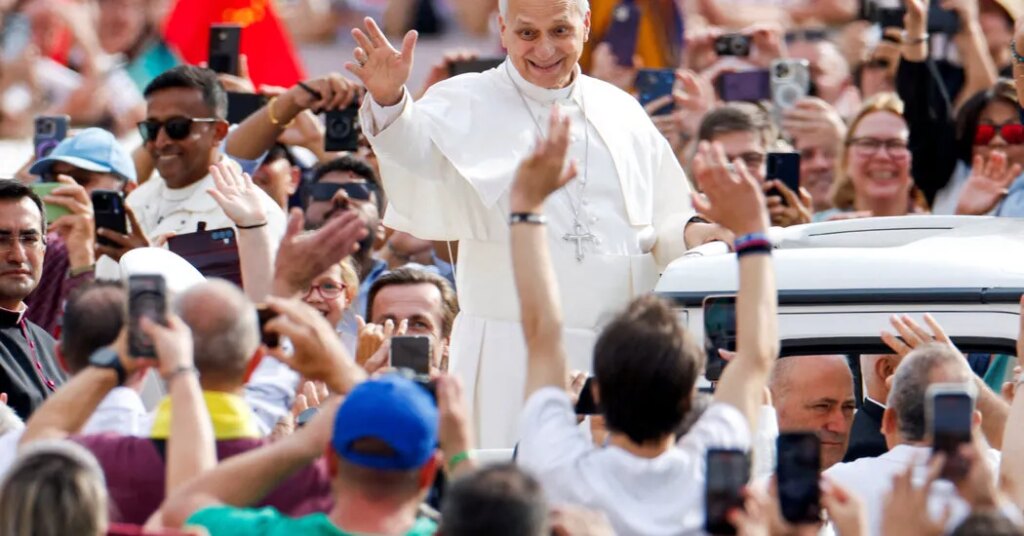
Lung adenocarcinoma, which Pope Leo XIV was diagnosed with on Tuesday, is a common form of lung cancer that can be highly treatable when caught early.
Survival rates for lung adenocarcinoma vary greatly depending on the stage of the cancer. The Vatican did not provide any information about the stage of the pope’s cancer. But the fact that the growth on his lung was described as a “localized nodule” and that the first treatment was surgery would suggest that he has early-stage cancer, said Dr. Daniel Boffa, the chief of thoracic surgery at the Yale School of Medicine.
Even within Stage 1, a patient’s exact prognosis can vary based on tumor size, pathology, the person’s overall health and the type of treatment they choose, said Dr. Jaclyn LoPiccolo, an attending physician and lung cancer researcher at Dana-Farber Cancer Institute in Boston. But five-year survival rates can be over 80 percent.
Lung adenocarcinoma most commonly occurs among adults 70 and older, according to the Centers for Disease Control and Prevention. The pope is 71.
Lung cancer is typically found in people who are current or past smokers, but an estimated one in seven patients don’t have a smoking history, Dr. Boffa said. (Pope Leo is not known to be a smoker.) People who have not smoked can develop lung cancer because of exposure to secondhand smoke and radon, or certain genetic mutations. Some research has also tied lung cancer to environmental factors like air pollution.
Lung cancer is commonly found incidentally — when someone receives a CT scan for something else, like an injury or a check of the coronary arteries for calcium deposits — or through routine screening, though that is currently recommended only for people with a heavy smoking history.
It can also be found when someone is symptomatic, though that usually doesn’t happen until the cancer is more advanced, Dr. Boffa said. Common symptoms include a cough that won’t go away for weeks, coughing up blood and chest pain.
The Vatican said that the nodule on Pope Leo’s lung had been found during routine medical checks, but it’s not clear what those checks were.
Cases of early-stage lung cancer are typically treated with surgery to remove the part of the lung where the cancer is growing. Dr. Sudish Murthy, a thoracic surgeon at the Cleveland Clinic, said that in his own practice, a standard operation for early-stage lung cancer would typically lead to a brief hospital stay, maybe two to four days, and then a few weeks of recovery at home.
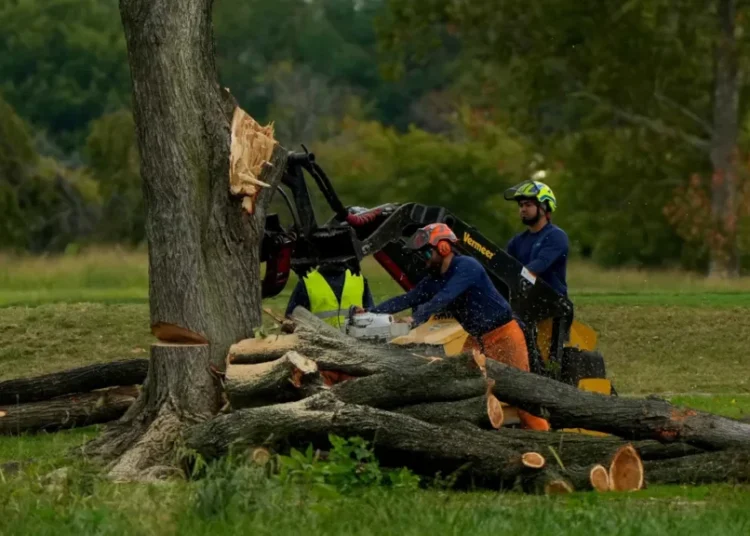
“At that time, I don’t think you’re ready to chop an oak tree down,” Dr. Murthy said. “But I bet he’s ready to bless some human beings.”
For Stage 1 cancer, no further treatment might be needed beyond the surgery, said Dr. David R. Jones, the chief of thoracic surgery at Memorial Sloan Kettering Cancer Center. A patient might simply be monitored frequently, and that patient’s prognosis would likely be good.
A patient’s prognosis worsens in later stages. If the cancer has advanced, Dr. Jones said, additional treatment would depend on the makeup of the tumor. Some tumors may be susceptible to targeted drugs taken in pill form; others might require chemotherapy or immunotherapy.
Treatment options have improved greatly in recent years, said Dr. Edward Garon, the director of thoracic oncology at the U.C.L.A. Health Jonsson Comprehensive Cancer Center. Tumors among nonsmokers with this type of cancer often have a mutation for which a targeted therapy exists. “The treatment approach differs tremendously compared to when I started my practice in 2006,” Dr. Garon said.
The post Pope Leo XIV Has Lung Adenocarcinoma. What Is It? appeared first on New York Times.