A new Democratic super PAC is spending $4 million to make four vulnerable House Republicans answer for siding with the artificial intelligence industry, and its founders are betting voters are angrier about that technology than either party realizes.
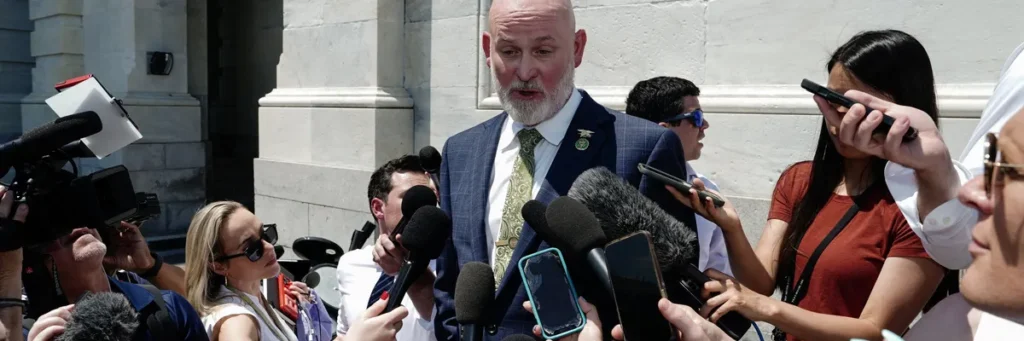
Tomorrow Together was launched last month by Rob Flaherty, former President Joe Biden’s digital strategy chief, and Karthik Ganapathy, a former communications director for Sen. Bernie Sanders (I-VT), and Politico reported that its first ad campaign targets four GOP incumbents in tight races – Rep. Rob Bresnahan (R-PA), Rep. Juan Ciscomani (R-AZ), Rep. Derrick Van Orden (R-WI) and Rep. Tom Barrett (R-MI).
All four backed last year’s failed push to block states from regulating AI. That measure was tucked into Trump’s signature tax cut bill, and Republicans defended it as a way to avoid a patchwork of state laws that could slow innovation.
“Voters hate this s—,” Flaherty told Politico. “I mean, this is like a nitroglycerin issue.”
Some of the ads warn that children could be “groomed” and “manipulated” by AI chatbots, then go after the Republicans for blocking state-level safety laws. Others link the lawmakers’ pro-industry votes to fears about data centers, job losses and even “the end of the world.” They close with the tagline, “Lining their pockets, emptying yours.”
The group’s own polling found that bans on state AI rules were even more unpopular than data center construction, which suggests voters’ complaints have grown from local worries about AI infrastructure into broader resentment of the industry.
“Republicans are on the wrong side of an 80-20 issue,” Ganapathy said, while Flaherty added, “I want Republicans to eat s— for being so wrong about this.”
The four Republicans’ campaigns didn’t immediately respond to Politico’s request for comment.
Democrats are still divided over how to handle Silicon Valley, which swung toward Trump in 2024, and some party megadonors have even funded pro-AI super PACs that push for lighter rules. Flaherty and Ganapathy want to show the party that a populist stance against the tech industry wins votes.
“It’s as much an experiment as it is an ad buy,” Flaherty said.
Ganapathy argued that there is “zero risk to being anti-Big Tech CEO at this moment.”
Data from at least one Democratic analyst backs them up. David Shor of Blue Rose Research said AI has “graduated from being this really niche issue to being something that regular people are talking about.” He pointed to a spike in fears that the technology could cause catastrophic harm.
“The first political party and the first politicians who can speak with this kind of sci-fi register will earn enormous dividends,” Shor said.
The post Democrats target four Republicans over ‘nitroglycerin’ issue that ‘voters hate’: report appeared first on Raw Story.