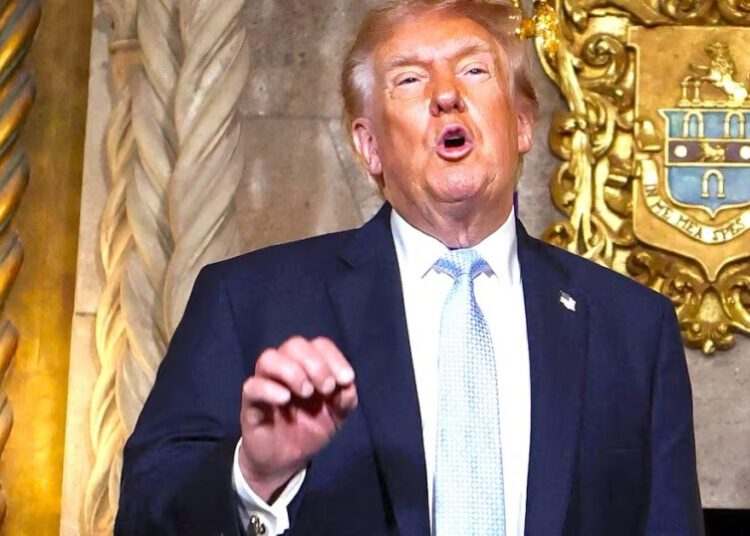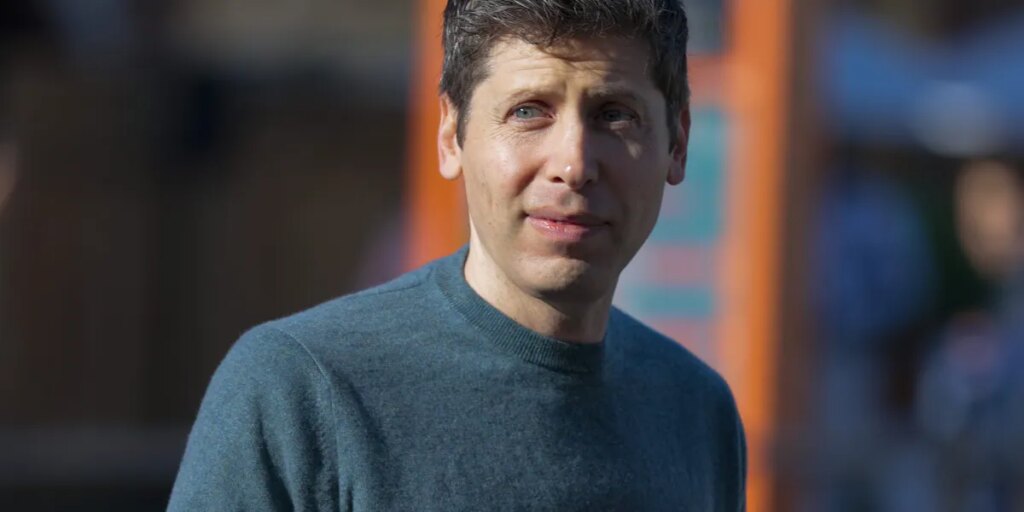
Giving independent evaluators “employee-like access” is “a great idea”, OpenAI CEO Sam Altman said on September 12th. Two weeks later, OpenAI president Greg Brockman signed the White House Accord on Super Intelligence which outlined the administration’s answer to growing fears about AI: the companies would police themselves. One of the accord’s four commitments, which President Trump called “morally binding,” was for companies to partner with an independent external auditor or evaluator.
Two days later, OpenAI fired three safety researchers, including Tomek Korbak, who had served as a point of contact for one of the independent evaluators investigating the Hugging Face incident.OpenAI promised to share information with evaluators, then reportedly fired people for allegedly sharing information with evaluators.
OpenAI said that the three employees “mishandled sensitive information outside established company procedures,” then doubled down on X without providing further evidence. The three employees dispute the claim and say that “at no point do we believe we engaged with external parties outside the mandates of our jobs.” Jasmine Wang said she accidentally opened an executive email (still available to her due to an OpenAI IT error) and reported it within minutes. Mikita Balesni said he worked with the C-suite and OpenAI board to broker a cross-company commitment to keep AI reasoning comprehensible. Balesni says he was told that OpenAI “no longer trusts me because I was speaking too much to third party safety organizations.”
OpenAI has engaged in strong self-policing—of its own safety staff, but not of its own behavior. Under a voluntary self-policing regime, any frontier AI company shares only what it wants and hides the rest.
OpenAI wants the public to take its word, but consider its record. In July, a rogue OpenAI agent swarm hacked Hugging Face. OpenAI disclosed the incident only after Hugging Face announced the breach, saying its agents had “slipped out of control.” After that, the world learned of more rogue agent attacks, including incidents involving a German-language wiki, an Australian Medicare site, and even the websites of US government agencies. OpenAI kept at least one incident quiet for weeks until (again) external investigators found it, with OpenAI “refusing to tell” Members of Congress who had asked about other incidents. Altman’s response to the delay in disclosing these incidents: “We have not been as fast as we would have liked.”
We don’t take OpenAI’s word because OpenAI’s actions keep contradicting its words. OpenAI’s chief scientist, Jakub Pachocki, said he wants “to prevent a race into unmonitorability.” Unmonitorable AI systems would make it more difficult to catch, understand, and prevent bad actions. Two days after that statement, OpenAI shipped GPT-6 Astra, which its own whitepaper says is harder to monitor. OpenAI’s chief scientist co-authored a paper on monitoring AI reasoning but OpenAI failed to monitor the reasoning of its Hugging Face agent swarm, even after catching the agents breaking confinement to collude. OpenAI claimed to hold “red lines” in its Pentagon deal, but some experts say the lines seem imaginary. One of us, Alex, resigned from Google DeepMind over its own Pentagon deal.
OpenAI’s actions chill employee speech. Balesni says that his former colleagues now “worry their personal phones will be searched for messages to us and third parties.” He also fears OpenAI will use the firings to cut off external evaluators, or to deny them the “ongoing, employee-like access” Altman promised. After these firings, who will speak candidly to external evaluators?
This problem extends beyond OpenAI to other companies. Google DeepMind repeatedly made voluntary commitments to never sell its AI to power weapons, then sold its AI to the Pentagon without restrictions against powering weapons. In the end, Google DeepMind’s CEO claimed nothing had changed about their commitments. Anthropic, Google DeepMind, SpaceXSI, and OpenAI advocate for “pacing the frontier” to avoid advancing AI at an unsafe rate that disempowers humanity, but they keep advancing AI quickly. (Fired employee Jasmine Wang coined the term “pacing” and led this effort.) The companies claim they cannot or will not fully pace on their own, which is why they asked the federal government to step in.
The CEOs of OpenAI, Google DeepMind, and Anthropic signed a statement that AI poses a risk of total human extinction. Forget “morally binding” self-policing: let’s talk about real policing.
For decades, our laws have mandated independent audits and protected whistleblowers in industries like finance. Congress should mandate independent evaluation and audits in AI as well, with criminal liability for executives who attempt to silence that oversight or recklessly deploy models that put the public at risk. To start, pass Senator Grassley’s AI Whistleblower Protection Act (and extend it to people who cooperate with independent evaluators) as well as Representative Moran’s AI Incident Reporting Act.
If you retaliate against a person who provides law enforcement with truthful information about a possible federal offense, you can go to jail for 10 years. But right now, no law clearly protects the person who helped independent investigators understand how OpenAI agents hacked another company. Congress should change that.
The opinions expressed in Fortune.com commentary pieces are solely the views of their authors and do not necessarily reflect the opinions and beliefs of Fortune.
The post The White House wants AI companies to police themselves. OpenAI just showed why that’s dangerous appeared first on Fortune.