A Letters to the Editor page is a mainstay of American journalism. It upholds the values of a paper’s readership, promotes the free exchange of ideas and serves as a vibrant snapshot of civic life. It’s also a wild means of communicating with another person.
Imagine you’re at a party and you meet someone who starts spouting off about a familiar topic in a way that strikes you as clinically boneheaded. Now imagine the host of said party steps in and decides whether your reaction is worth sharing, or if it’s better for you to sit in the corner and fume. You might never go back to that house; I don’t care if it is Thanksgiving.
The letters page of The New York Times has been engaging in this sort of behavior, selecting notes to pass from reader to writer, and paper to audience, for 175 years. Not every missive makes it. Reporter: Fewer people are keeping pet snakes these days. Reader: You tell the writer I have 30 pythons in my bathtub right now and all of them are smarter than she is. Newspaper: I’m not telling her that.
The New York Times published its first letter in 1851, by an anonymous visitor to New York City from Philadelphia. Not only is it in agreement with the article that inspired it, it also includes genteel phrasing like “I have trespassed on your columns much farther than I intended. …” Today, we live in a more openly aggrieved world. Readers write letters to the paper of record because they have an impulse to set the record straight. There’s an urgency of tone that tracks its own times, the sense of individuals as boats against the current. It’s an inherently flattering idea for The New York Times that this forum is trusted, that it has reach and value, but it comes with the risk of corresponding intellectual, emotional or ethical betrayal when the paper gets a story wrong.
The idea of being privy to every malcontented rant that finds its way into the New York Times inbox fills me with equal parts horror and envy. But the persuasive or (intentionally) amusing letters that make it to publication enhance a story with their authority — or, in some cases, with their simplicity. Take the teenager who responded to a 1964 article on Beatlemania headlined “Why the Girls Scream, Weep, Flip”: “I don’t see why people have to analyze things all the time.”
The beauty of the New York Times letters section in particular is that the audience for these conversations is a little bigger than three people at a party. It’s a delight, while reading through the letters (selected by the editors and gathered below), to see recognizable names and eloquent experts chime in, knowing they had to go through the same submission process as your local snake collector. This includes Leon Trotsky, who, in a 1939 letter about the Kremlin’s foreign policy, offered a bemused correction regarding the paper’s “too trustful Moscow correspondents,” and Gloria Steinem, who employed a similar tone nearly 80 years later when she explained that, no, she had never been a C.I.A. operative, but thanks for playing.
One could give oneself a decent lesson in American history by reading letters to the editor from Mark Twain or Richard Nixon. Or a lesson in humanity via W.E.B. Du Bois, who in 1946 wondered: “Is this the way to build a new world? Is even the atomic bomb of greater importance than the freedom and manhood of 200,000,000 black men?”
Behind each of these passionate dispatches are immeasurable hours of engagement with the world. Some letters enrich the original story. Some become the story. Some are naked cravings for the last word. But be they all-seeing eyes or myopic cranks, the people who write these things deserve a bow.
I have published more than 150 essays in my life, 26 of which have appeared in The Times (now 27) and precisely zero letters to the editor. Mostly, this is because if I’m going to complain, I’d like to get paid for it. I also prefer the more cowardly route, in which my audience may never know if I offered my opinion or was tapped to share it. Beyond that, the letter to the editor is a separate art form.
The onus is on the letter writers to prove themselves cogent and informed (first to the section’s editors, and then to their fellow readers), all within a limited space and all without anyone asking them to do this. They have to establish sanity while telegraphing that they are sitting on an arsenal of undeployed epithets. Then they must lob their objections at the very people who supported the opinions they found so ridiculous in the first place. Yet they do it every day, offering what accountability they can in a world of bias.
As for the fallout after their letters appear, well, that’s the part the public never sees. I’m sorry to disappoint all those slingers of zingers, but the writers I know derive a certain pleasure from reading letters sent in by people who got upset with us because we had the nerve to use our laptops for typing. That said, there’s a sinking feeling that one gets after reading a letter from a stranger with a point. Especially if not only do they have a point, they have the point. The one you missed. You can feel the nettle of shame, the sting of being incomplete in your thinking or, worse, incorrect in your facts. Good thing this embarrassment isn’t happening in front of the entire readership of The New York Times.
But the wound heals. And in its place? A feeling of gratitude for any institution that does not settle for publishing unilateral takes. Writers get the byline; readers get the last word. Though perhaps I will have a less moony view of the process after this essay runs. Perhaps someone will write in because, you know, actually, there’s been an uptick in reptile ownership across the tristate area. To which I humbly suggest: Call animal control, not me.
Sloane Crosley is the author, most recently, of the memoir “Grief Is for People” and the novel “Cult Classic.”
Below you’ll find a selection of letters to the editor, from the notable to the little known on issues great and small, published in The Times over the decades.
Jan. 31, 1861
The Secession Question
… The world admits that WASHINGTON was the Father of his country. What is that country of which WASHINGTON was the Father? Not South Carolina, out of the Union; much less Alabama, Mississippi and Texas — these are children by adoption; but the United States to their utmost boundaries, cemented together in our Constitutional Union, compose the nation which owes its existence to WASHINGTON.
Will the American people suffer this common and glorious inheritance to be deprived of any of its fair proportions, to be disunited by secession, or hacked to pieces by rebellion?
Will they permit WASHINGTON’S country to be portioned off into hostile confederacies — into petty State dynasties, so feeble in their separate existence, and so disgraceful in their origin, that no honest man would covet the honor of having his name placed in history as the Father of either of them?
Will Virginia permit the dismemberment of WASHINGTON’S country? Will her sons cede their glorious birthright? Will they suffer the epitaph to be inscribed on the tomb at Mount Vernon, “Here lies the man who gave liberty and union to a people who had neither the wisdom or the courage to maintain them?”
No! never! The tomb of the Father of his country will remain within the Union, honored and defended by one people, under one Constitution.
J.W.M., Morristown, N.J.
Nov. 23, 1939
Trotsky Writes of Russia (excerpt)
Several times I have encountered the allegation that Lenin characterized Trotsky as the “most clever member of the Central Committee.” I am afraid that this translation originated also from one of the too trustful Moscow correspondents. The word “clever” in this context has an ironical, a somewhat debasing connotation of which there is not a trace in the so-called Testament of Lenin. “Samiy sposobniy’,” the exact Russian words used by Lenin, can be translated into English as, “most able,” in no case as “most clever.”
Leon Trotsky, Coyoacán, Mexico
Nov. 12, 1946
Problems of Africa (excerpt)
What shall 15,000,000 Negroes in the United States, many more than the population of the Argentine, and of Belgium and Holland combined, do to secure recognition of their rights as human beings at the hands of the peoples of the world?
They are in majority disfranchised. Their disfranchisement in the South makes democracy unworkable in the nation and a third party movement impossible. Their rights of travel, domicile, use of public facilities and right to work are widely infringed. Five thousand of them in fifty years have been lynched by mobs without trial and no lyncher has been punished; because as the Attorney General of the nation admits, the law gives him no adequate ground on which to prosecute.
Is this the way to build a new world? Is even the atomic bomb of greater importance than the freedom and manhood of 200,000,000 black men?
W.E.B. Du Bois, New York
March 15, 1964
Enjoying Beatles
In reference to the article “Why the Girls Scream, Weep, Flip” (Feb. 23), by David Dempsey about the infatuated Beatle fans, I should like to run the risk of being termed a “rebellious, conforming teenager” and make a few comments in defense of the Beatles and their idolizers.
I’m not suggesting that the Beatles have outstanding talent, and they certainly aren’t sexy by any stretch of the imagination. I don’t know why girls scream and go into mass hysteria, although Mr. Dempsey seems to have it all figured out. All I know is, when I see the Beatles on television, they make me feel happy, enthused, just plain good.
I don’t see why people have to analyze things all the time. With all the stress and strain there is in our complicated society, I’m glad the Beatles arrived to take our minds off these problems.
Lynn Pollack, Teaneck, N.J.
April 5, 1964
Beatles Analyzed
Lynn Pollack complains in your Letters column of March 15, commenting on the article about the Beatles, that she doesn’t see why “people have to analyze things all the time.”
Her letter provided our family with a fascinating topic for analysis. Here is a teenager of some intelligence (she knows that the Beatles are not talented) and better than average training (her letter is well written, free of the usual grammar and punctuation errors). Yet seeing and hearing these very ordinary, untalented young people from England gave her pleasure and a sense of gratitude at having her mind taken off the problems of our “complicated society.”
We decided that people analyze things because their minds are more active than their emotions. The stresses and strains of our complicated society are caused by emotions, but are solved by brainpower. In the case of the Beatles, some people found it fascinating to explore the complications of our society that made possible their success. They could not possibly have been a success without the cooperation of naïve, unsophisticated audiences who lacked the shrewdness and the wit to see that they were being skillfully used.
Mrs. Victor M. Reusch, Bellport, N.Y.
April 8, 1968
Best Friend of Whites
I am a white Southern college student, born in Alabama and now living in Tennessee. The martyrdom of Dr. Martin Luther King Jr. has filled me with shame and fear.
I am ashamed because he was martyred in my state, that my Governor showed so little sympathy by rushing police and the National Guard to “keep order” and that Dr. King even had to come to Tennessee in the first place.
I am afraid because the white man has lost his best friend, the Negro leader who constantly urged nonviolence, trust and faith in the brotherhood of man. Too young to march in Selma and Washington, I am filled with a hopeless dread, because there is nothing I, as a white man, can do now.
The white man had his chance and blew it. May God have mercy on our souls — we certainly cannot expect the black man to.
Paul E. Thomason, Knoxville, Tenn.
July 25, 1969
Nixon’s ‘Horning In’
Your July 19 editorial “Nixoning the Moon” is superb. Nixon’s horning in is a perfect example of utter tastelessness.
What would have happened if those brave, sweating astronauts hadn’t made it?
I fear we have a President so lacking in humility it is frightening.
Gertrude Mertens, Woodstock, Vt.
July 25, 1969
Merit of Message
In your narrow-minded, petty, partisan editorial of July 19, “Nixoning the Moon” you have missed the entire point and significance of the “moon conversation.”
Man’s walking on the moon merited more than a comment from the ever-present, anonymous voice of Houston Mission Control. It required words from our elected President, our highest spokesman, to say on behalf of all mankind at that very moment — “We are with you, we are proud of you; job well done.”
Clark J. Winslow, New York
Dec. 29, 1969
Non-Stick Stamps
I have just finished two sheets of 100 stamps each. I have simultaneously finished two rolls of Scotch tape, which I had to use to keep the stamps from falling off the envelopes. Stamps still taste bad, but they won’t stick. I claim that the Post Office should supply a roll of Scotch tape with every 100 stamps, but mine won’t even sell me one. I’d like to go back to where I came from: 1902.
Ogden Nash, Baltimore
April 8, 1970
What Is Ecology?
Definition: Ecology is the science which warns people who won’t listen about ways they won’t follow of saving an environment they don’t appreciate.
L.G. Heller, New York
April 8, 1973
Deliriously Happy They’re Not
Betty Friedan’s article (“Up From the kitchen floor,” March 4) examines the fluff aspect of women’s lib. She seems totally consumed with the sexual aspects of life.
Friedan somehow fails to convince me that fulfillment lies in a paycheck. An office job (I’ve been an office manager) is as dull, or duller, than baking a cake or cleaning.
It is not too surprising that she has many followers. These are the children (females: 20 to 60 years) who want their problems solved by someone who thinks they have the answers.
If women are bored and restless, they should do something to alleviate that feeling. Finding out what causes the uneasiness is a good way to start. I don’t suggest they go to psychologist Abraham Maslow, “who spent a whole day explaining … how his concept of self‐actualization did not apply to women.” He needs help himself.
I earnestly believe that the American female must get over the idea she must be deliriously happy 24 hours a day. She must realize her mate is not having one big orgasm at his daily 9‐to‐5 bit.
(Mrs.) Helvia Jayne, Massapequa, N.Y.
Feb. 1, 1974
With the Presidency in the Balance
The most serious objection to Richard M. Nixon’s remaining in office is the bad example he sets for children.
He is the most visible and instructive father figure we have, our most impressive teacher. What does he teach our children? To give almost nothing to charity, to cheat in money matters at every opportunity, to lie, to reject all criticism, to be indifferent to the needs of strangers, to treat laws disrespectfully, to love only close friends and relatives and sports on television, and to carpet‐bomb at Christmas.
Kurt Vonnegut Jr., New York
Sept. 6, 1987
A Playwright’s Apologia (excerpt)
I wish to commend you for publishing Mary C. Henderson’s compelling and original treatise on the use of dining tables in American plays (“The Stage Dining Table: Food for Thought,” Aug. 30). As she says, “Dining-room tables, kitchen tables or bars have long remained the hoariest of dramatic devices in the theater since the advent of realism.” And, I freely admit, I have been one of its greatest hoars. But I plead innocent on the grounds that my directors and producers coerced me into using such banal devices.
In “Brighton Beach Memoirs,” I show the family sitting down at that (damnable) dining-room table. This, of course, was in 1937, when people were as cliché and trite as American drama is today. I pleaded with my director and producer to stage the scene as I had originally written it, whereby this family of seven all gather upstairs and eat their dinner over the bathroom hamper. You, Ms. Henderson, would see my point. After all, aren’t we all wet, dirty clothes anyway? …’
Please, Ms. Henderson, I urge you to see my new play when completed, ‘’Dinner at Eight in the Holland Tunnel.’‘ It will actually be staged in the Holland Tunnel. If it’s a hit, the tunnel should be closed for three or four years. Good for the theater, tough on the people who live in New Jersey. …
Neil Simon, Los Angeles
July 1, 2001
Bar Talk
In his review of Joseph Mitchell’s “McSorley’s Wonderful Saloon” (June 3), Jimmy Breslin states, “McSorley’s has been here since 1854 and is the oldest saloon in New York.”
The tax assessment records for the old 17th Ward show that the site now occupied by the building at 15 East Seventh Street (which houses McSorley’s) was a vacant lot until at least 1860. In addition, a John McSorley first appears in a Manhattan city directory at this address in 1862, as “John McSorley, Liquors, 15 ½ E 7 Street.” Also, McSorley’s is not the oldest saloon in New York. It was preceded by the Bridge Cafe (1794), Pete’s Tavern (1851) and Fanelli’s (1857) — all still standing and serving.
Richard McDermott, Bayside, Queens
April 11, 2011
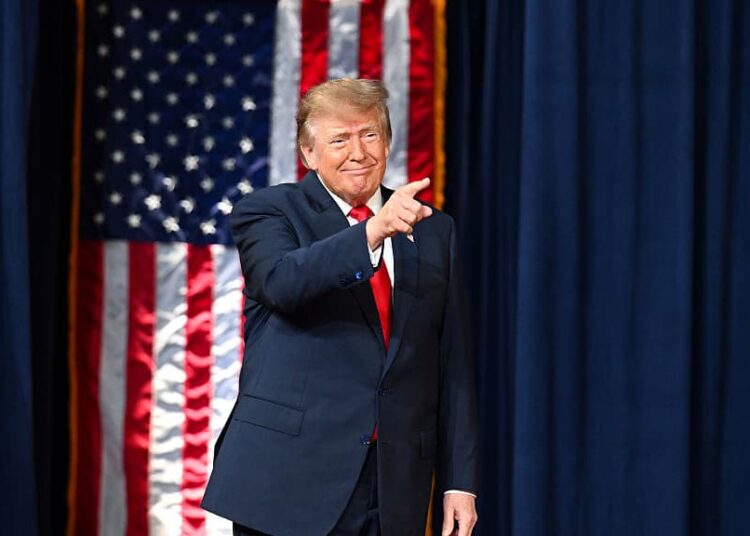
Donald Trump’s Letter: An Insight Into the Man
Re “Donald Trump Responds” (letter, New York Times on the Web, April 8):
When I first read Donald Trump’s long, unedited letter, in which he lashes out at Gail Collins, a respectable journalist and columnist, I was appalled that The Times would ignore so many of its own rules on letter length, decorum and, perhaps most important, the one about letter writers being “entitled to their own opinions, but not to their own facts.” (“The Letters Editor and the Reader: Our Compact, Updated,” by Thomas Feyer, May 23, 2004).
But on second thought, I believe that America owes The Times a big debt. Because of the publication of this would-be president’s tirade, America can now clearly see this man’s petty, thin-skinned and self-aggrandizing nature.
Mr. Trump’s irascible embrace of the widely discredited and condemned “birther” movement so early in the presidential campaign has become his own sword of Damocles — one that will eventually shatter his presidential ambitions.
Dorian de Wind, Austin, Texas
Oct. 17, 2016
A Letter From Gloria Steinem
In a titillating lead into an otherwise accurate article about why I love New York, John Leland writes that I started my career as “a C.I.A. operative,” got my “break as a Playboy Bunny” and married the father of a movie star. Only way down in the text does the reader learn that I was never told what to say or do at two Soviet-led youth festivals more than a half-century ago where American attendance was funded by C.I.A.-backed foundations, and that I worked at the Playboy Club to write an exposé of working conditions, and even that has been a lifelong burden. Readers never do find out that David Bale, the man I married, had an identity of his own.
In this age of Twitter, and in The New York Times, the newspaper of record, I especially want to make clear that I’ve never been anyone’s “operative,” but have lived a lucky freelance life in which I haven’t had to take orders from anyone — except as a waitress.
Gloria Steinem, New York
The Times is committed to publishing a diversity of letters to the editor. We’d like to hear what you think about this or any of our articles. Here are some tips. And here’s our email: [email protected].
Follow the New York Times Opinion section on Facebook, Instagram, TikTok, Bluesky, WhatsApp and Threads.
The post Since 1851, the Art of the Complaint appeared first on New York Times.