Q: Does a DCIS diagnosis mean I have breast cancer? What should I prepare myself for in terms of treatment and prognosis?
A couple of years ago, my mom, at the age of 80, insisted on undergoing “one last mammogram.” Technically, she was beyond the age range in which they’re recommended — 40 to 74 — but she had just moved to Miami and started seeing a new doctor, so she wanted a clean bill of health as she started her new life. The mammogram detected a suspicious area, though, and a biopsy revealed ductal carcinoma in situ (DCIS).
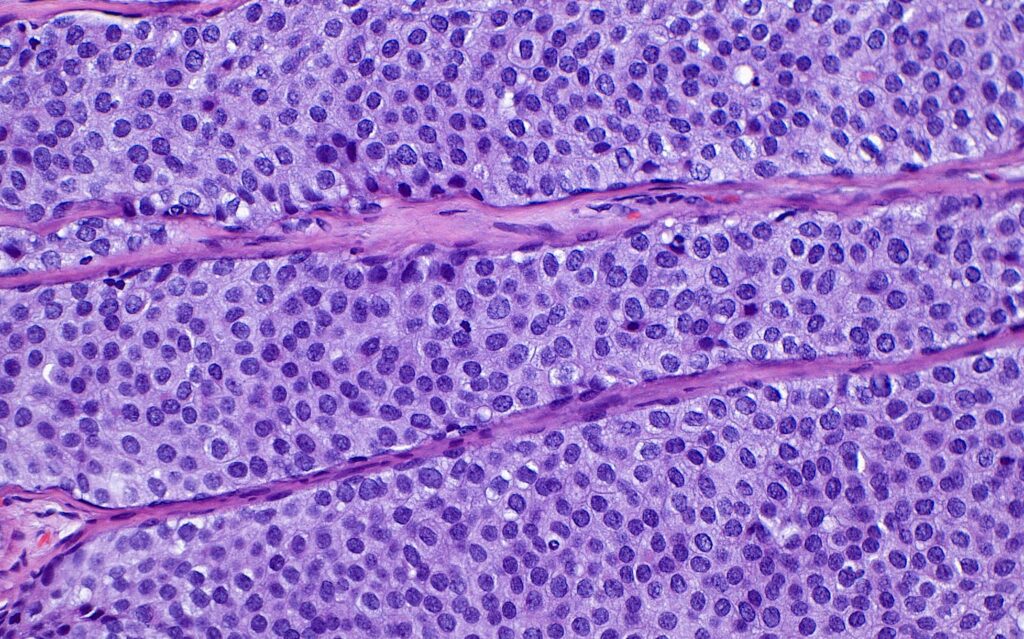
DCIS is a condition in which abnormal cells form in the lining of the milk ducts of the breast but have not spread beyond this contained area to other breast tissue.
The term DCIS is confusing: The word “carcinoma” implies that this entity is a cancer, yet the phrase “in situ” translates to “in its original place.” In other words, these cells are found only in the area where they first formed, having so far avoided the proclivity to spread and invade the cells and tissues around them, and thus not yet behaving the way cancer typically does.
According to the National Cancer Institute, DCIS is not cancer but could be considered a precancer. However, adding to the confusion, it is also commonly called “noninvasive breast cancer” or “Stage 0 breast cancer,” because there is a chance it may spread beyond the milk ducts to other parts of the breast or body and become invasive cancer.
My mom’s diagnosis led to referrals to a surgical oncologist, a medical oncologist and a radiation oncologist to learn about all of her options for treatment. We wondered, though, whether we needed to do anything at all — a question that’s being asked more often as our understanding of the condition evolves and data suggests that we may be overtreating a condition that may never progress and become a problem.
How likely is DCIS to become invasive cancer?
Each year, more than 50,000 women in the United States are diagnosed with DCIS (compared to almost 300,000 diagnosed with invasive breast cancer), and DCIS represents 20 to 30 percent of breast “cancers” identified through mammograms.
The good news is that more than 98 percent of people diagnosed with DCIS are alive five years after their diagnosis. Statistics on how often untreated DCIS can become invasive breast cancer, though, are hard to find, because most women receive some type of therapy. Small studies have estimated that up to 60 percent can go on to become invasive cancer, but for low-grade (less aggressive) DCIS, this may occur in only 20 percent of cases, and may take up to 40 years to happen.
One study conducted in more than 1,200 women with DCIS in the United States who did not undergo surgery estimated the 10-year risk of invasive breast cancer to be around 11 percent, while a more recent study in more than 1,700 women with DCIS who did not have surgery similarly reported the eight-year rate of invasive breast cancer to be around 11 percent. To put this into context: The average woman has a 13 percent lifetime risk of being diagnosed with breast cancer, or about 1 in 8.
In fact, as with men and prostate cancer, we know from autopsy studies conducted in hundreds of women over five decades that almost 10 percent have DCIS that is never diagnosed, never becomes invasive cancer and never causes problems during their lifetimes.
How is DCIS treated?
DCIS can be treated with surgery, radiation therapy and/or medications such as hormonal therapy.
More than 90 percent of cases are treated surgically, which consists of either a lumpectomy (removing just the concerning area) or a mastectomy (removal of the entire breast), with the choice guided by personal preferences and whether there are multiple areas of DCIS that make lumpectomy impossible. The risk of dying from breast cancer is low, and similar, following either surgical approach. The risk of dying from breast cancer is also low in women who don’t even undergo surgery.
Radiation therapy is often recommended for women who undergo a lumpectomy to remove DCIS, particularly with higher-risk DCIS, with multiple studies showing that radiation therapy reduces the risk of breast cancer recurring in the same breast by about 50 percent. In the largest study, which included more than 100,000 women diagnosed with DCIS, the risk of invasive breast cancer within a decade of the diagnosis was 4.9 percent for those undergoing a lumpectomy, but 2.5 percent for those receiving radiation therapy after their lumpectomy. Importantly, though, women treated with radiation did not live any longer than those who just underwent surgery.
Endocrine therapy, which is taken as an oral medication, may be recommended to treat DCIS that is estrogen-receptor positive, with a similar benefit to that of radiation therapy: It can reduce the risk of DCIS and invasive breast cancer in the future but has not been shown to improve survival.
Should we drop the ‘C’ from DCIS?
So should we call DCIS a cancer? A precancer? Or not use the word “cancer” at all? This is a question that is more than just academic, because the diagnosis can lead women to make decisions about invasive therapies that may not align with their life goals.
Words matter. In one study that surveyed almost 400 women who did not have breast cancer, investigators presented them with three scenarios that described a diagnosis of DCIS as either noninvasive breast cancer, a breast lesion or abnormal cells. The women were then asked to choose among three treatments for their fictional diagnosis: surgery, medication or active surveillance, which means continued monitoring by a doctor but no actual treatment.
When DCIS was described as “noninvasive cancer,” 53 percent of women preferred nonsurgical options. When the term “breast lesion” was used, 66 percent chose nonsurgical options. And when the term was “abnormal cells,” 69 percent chose nonsurgical options. What this shows, and what oncologists know from everyday practice, is that when people hear the word “cancer,” they often select more aggressive treatment approaches.
And maybe that’s a good thing — for you. Most DCIS is detected through screening mammography. As I have written recently, a screening test should identify cancer in its early stages, before you or your doctor even suspect it’s there, and when an intervention (such as removing a tumor with surgery) can prevent it from spreading and treat it in its entirety. If your goal is to lower the chance of invasive breast cancer, treating DCIS is the right choice.
But if your goal with therapy is to live longer, treating DCIS may not have the right balance of risks and benefits for you.
What did my mom decide to do? Following a lumpectomy, she opted for radiation therapy because, in her words, “I know I won’t live any longer from the treatment, but I want to lower the chance I’ll have to deal with breast cancer a few years from now.” She demurred, however, when offered endocrine therapy after that, because the potential side effects (such as hot flashes and fatigue) were off-putting, and not worth what she felt was a small, incremental benefit.
Whether to treat DCIS and, if so, with what is really a personal decision, based on your own risk tolerance and goals for therapy. The good news is that research is being conducted to better identify women who will benefit from therapy, using factors ranging from the biological characteristics of the DCIS to artificial intelligence.
Mikkael A. Sekeres, MD, MS, is the chief of the division of hematology and professor of medicine at the Sylvester Comprehensive Cancer Center, University of Miami. He is author of the books “When Blood Breaks Down: Life Lessons From Leukemia” and “Drugs and the FDA: Safety, Efficacy, and the Public’s Trust.”
The post I’m an oncologist. Here’s what to know about DCIS or Stage 0 breast cancer. appeared first on Washington Post.