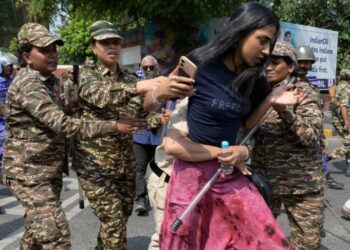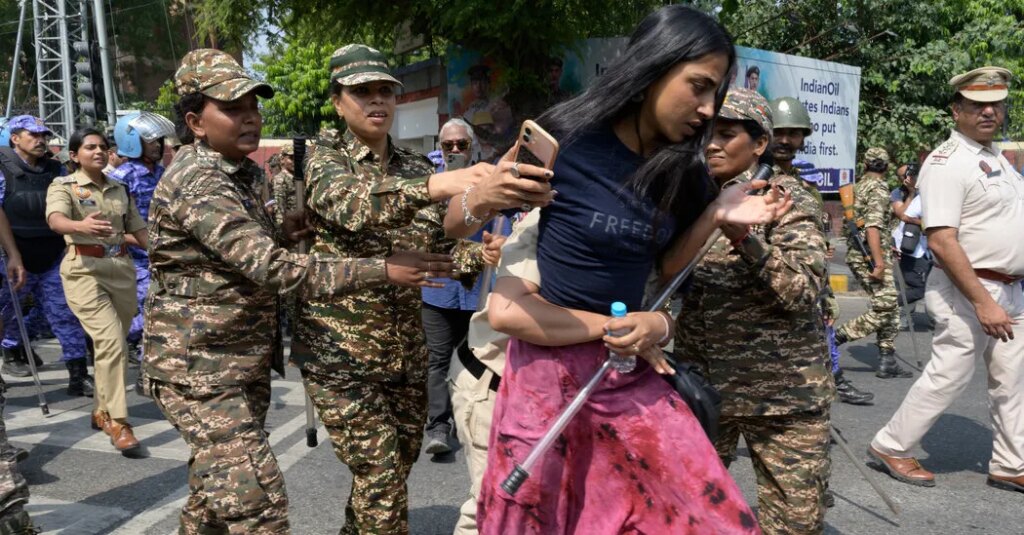
More protests were expected in New Delhi on Sunday, a day after the police there rounded up thousands of protesters angry about what they say is a politically motivated purge of the national voter roll.
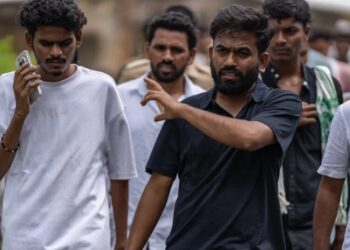
The protests were called by the Cockroach Janta Party, a popular youth movement in India. The group’s three leaders were arrested after flying into New Delhi on Saturday — and before they could join a planned protest in the city.
The three leaders were released Sunday morning on the condition that they commit “no breach of peace for one year,” according to Ratna Singh, a Cockroach leader who acts as the group’s legal director. It was not clear if that condition amounted to a gag order, or whether the men would appear at planned protests on Sunday.
On Saturday, the Indian authorities tried to prevent a planned protest in central Delhi from going ahead by erecting barricades, canceling Delhi-bound trains and ordering the closure of dozens of metro stations. Rallies were held elsewhere in the city, and the police cracked down on them by stuffing thousands of protesters into buses and vans.
Here’s what to know.
What are the protests about?
The protests stem from growing anger at a sweeping revision of the voter roll. The change, known as the Special Intensive Revision, began last summer as an effort to verify voter eligibility and remove duplicate or ineligible names. The government called it a long overdue push to clean up voter records.
It required Indians to submit multiple documents to prove that they were eligible to vote, and it ended up eliminating 130 million names. Critics said it had removed legitimate voters and forced people identified as dead to come forward to prove that they were indeed alive.
Critics have called the measure a politically motivated purge that could entrench the tenure of Prime Minister Narenda Modi, who has been in power for 12 years.
Leaders of Mr. Modi’s party reject the criticism. The home minister, Amit Shah, accused opposition lawmakers of “lies and disinformation” in a social media post. “Having lost their public support, these parties question institutions after every defeat,” he said.
What do the protesters want?
The protesters say their goal is to ensure free and fair elections.
They have demanded the resignation of the chief election commissioner, Gyanesh Kumar; an immediate halt to the voter roll revision pending an independent inquiry; and the restoration of the previous voter roll in coming elections.
A popular slogan by the Gen Z movement refers to the election chief by a diminutive form of his first name: “Gyanu. It’s done, bro.”
The anger at the election chief has been aggravated by news, reported by The Indian Express newspaper, that other officials within the election commission and the Supreme Court had expressed reservations about the exercise.
Who are the protesters?
The protest was initially organized by the Cockroach Janta Party, a Gen Z movement that emerged this summer to decry a broken college entrance exam system. It won the rare ouster of a government minister.
Several groups joined the protests on Saturday, including lawyers groups, leftist youth organizations and some opposition politicians. The protesters, though, were mostly ordinary young Indians, in their 20s and 30s, livid about a range of issues, including voting rights.
What’s at stake?
First, the irregularities in the voter roll revision has dented the reputation of the election commission, which for years had been seen as a credible institution that ran relatively fair elections.
Second, the protests reflect the force of the Gen Z Cockroach movement, which has been led by a handful of young people with no political experience and all under the age of 32. Their success regarding the college entrance system seems to have emboldened others both in the movement and outside it to speak out against the Modi administration.
The post What to Know About the Protests in India appeared first on New York Times.