This story appeared in Today, Explained, a daily newsletter that helps you understand the most compelling news and stories of the day. Subscribe here.
The first hurricane of the fall season is expected to strike the Gulf Coast overnight, marking the latest onset of hurricane season in living memory. As of early Friday afternoon, Hurricane Isaias had grown to a Category 3 storm, with sustained winds of 120 miles per hour. It will strike along the shores of the Florida Panhandle, Alabama, and Mississippi, posing a threat to life and property for millions of Americans. Weather forecasters anticipate between 8 and 12 inches of rain in the areas near where the storm makes landfall.
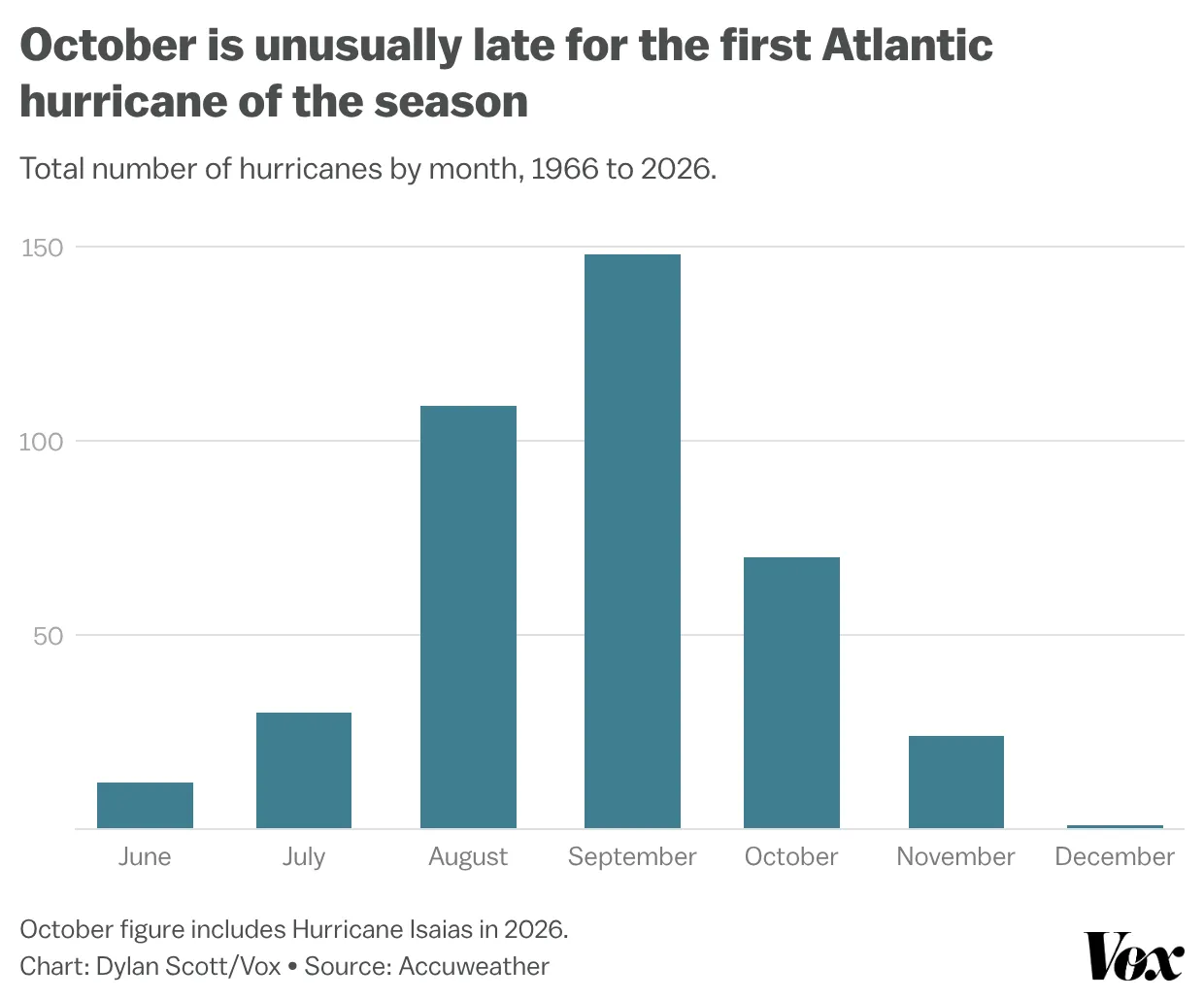
Isaias’s imminent arrival signals the end of a period of unusual good luck when it comes to hurricanes striking the United States. Last year, no hurricanes reached the US mainland at all. And this year, Isaias is breaking a more than 100-year-old record: October 9 is the latest date since 1905 for the first Atlantic hurricane of the season to take shape. August and September have historically been the busiest periods of hurricane season.
Not lately, though. It’s a strange recent phenomenon, and it’s been even more fortuitous than it would ordinarily be. That’s because the Trump administration has slashed weather forecasting and emergency relief funding over the past two years, leaving us less prepared for a disaster.
And now our luck seems to be running out — with even more rough weather on the way.
Hurricane season may be quieter than usual — but El Niño is on the way
Here’s the secret ingredient that’s pushed off hurricanes even as warming planetary temperatures raise concerns about more extreme weather events: El Niño. This notorious shift in global wind patterns, which occurs every two to seven years, moves warm water around the oceans, disrupting traditional weather patterns and leading to intense rain and sometimes disastrous flooding, as well as droughts. If there is an upside, however, it’s that this temporary change in ocean conditions prevents hurricanes from forming as frequently as they otherwise would.
The downside is, well, El Niño is still on its way. Forecasters expect this year’s version to be historically bad — using words like “super” or “Godzilla” to describe it. The worst of the bad weather is projected to arrive in December: The southern half of the continental US is expected to see unusually rainy and stormy weather, while areas of the Great Lakes and Pacific Northwest could see extreme dry spells.
It will also serve as a crucial test of our reduced capacity for predicting and responding to disasters. Trump’s “big beautiful bill” cut funding for the National Oceanic and Atmospheric Administration’s weather forecasting and public alert programs by $200 million, and 17 percent of FEMA’s workforce leftthe agency in 2025 amid the administration’s DOGE purge.
For now, if you’re in the danger zone for Isaias, please pay attention to local and national weather alerts this weekend. If you’re not, count yourself lucky — but there are storm clouds on the horizon.
One link for later
➨ These days, it feels like we’re all swimming in a sea of AI hype and hysteria — all the ways this technology will make our lives better, all the ways it could kill every single one of us. But what if the two are more related than we think? Eric Levitz’s new piece asks whether the AI companies themselves warning us about the apocalypse is part of their own marketing strategy. It’s a useful guide for how to think about all of these existential conversations.
Before you go…
- Did you know…the world’s largest penguin colony has declined by two-thirds since 2011? Scientists pin the blame on climate disruption and warming sea temperatures.
- Today’s trivia: What’s a three-letter abbreviation for the successor of tube TVs? (You can find this and other brain puzzles in Vox’s daily crossword. Look for the answer in tomorrow’s edition.)
- Yesterday’s trivia: Yesterday we asked you which fruit kills more people than sharks each year, according to long-standing urban legend. That would be the coconut, and the claim (which is unprovable, since there’s no systematic tracking of coconut deaths) appears to have been started by shark scientists.
The post America’s good hurricane luck is about to run out appeared first on Vox.